Pređi na štampu
 Pročitaj više







































 Za umetnička dela ili reprodukcije čija je bilo koja strana veća od 105 cm (približno 41 inč), okvir će biti isporučen u obliku rastavljenog seta za sklapanje. Ovaj metod osigurava bezbednu dostavu i sprečava oštećenja tokom transporta.


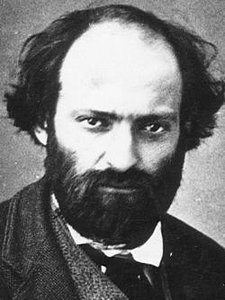
Paul Cézanne: A Revolutionary Vision
Paul Cézanne, born on January 19, 1839, in Aix-en-Provence, France, was a pivotal figure in the transition from late 19th-century Impressionism to early 20th-century Cubism. His father was a successful hatmaker who later became a banker, providing Cézanne with financial security that allowed him to pursue his artistic passions without immediate economic pressure. Initially intended to follow in his father’s footsteps and enter the legal profession, Cézanne eventually abandoned these plans to dedicate himself fully to art.
Early influences included Romanticism and the Barbizon school of landscape painting. He studied briefly at the Académie Suisse in Paris but largely developed his style independently. The works of Paul Gauguin and Georges Seurat, particularly their explorations of color and form, also played a significant role in shaping Cézanne’s artistic direction.
Early Life and Influences
Cézanne's formative years were marked by a profound connection to his familial heritage. His father, Louis-Auguste Cézanne, established Banque Cézanne et Cabassol, securing the family’s financial stability—a circumstance that contrasted sharply with the artistic realities of many contemporaries. This inheritance afforded Cézanne the freedom to prioritize his creative pursuits above conventional expectations.
His mother, Anne-Elisabeth Aubert, instilled in him a spirited and romantic worldview, shaping his perception of life’s complexities. Together with his sisters Marie and Rose, he attended Saint Joseph school, fostering friendships that would endure throughout his artistic journey—a trio known affectionately as “Les Trois Inséparables.”
The Jas de Bouffan Landscape
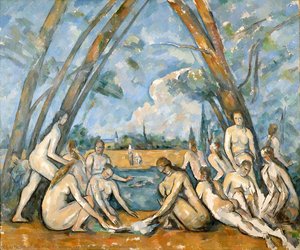
The inspiration for Tall Trees at the Jas de Bouffan stemmed from Cézanne’s residency at his family estate in Aix-en-Provence. This idyllic setting served as a catalyst for numerous paintings—including The Jas de Bouffan—which are housed at the National Gallery of Art in Washington, United States.
Cézanne’s meticulous observation of nature—a hallmark of his artistic approach—is evident in every brushstroke. He sought to capture not merely what he saw but also the underlying essence of the landscape—its structure and its emotional resonance.
Stylistic Innovation: Geometric Forms and Color Modulation
Cézanne’s groundbreaking style departed dramatically from Impressionist conventions, prioritizing geometric forms over fleeting impressions of light. He employed a technique characterized by flattened planes of color and simplified shapes—a deliberate rejection of traditional perspective.
This stylistic boldness anticipated the developments of Cubism, demonstrating Cézanne's visionary grasp of artistic possibilities. His masterful use of color modulation—the subtle blending of hues to create depth and atmosphere—further distinguished his work from its predecessors.
Symbolic Significance
“Tall Trees at the Jas de Bouffan” transcends mere representation, conveying a profound meditation on solitude and tranquility. The towering trees symbolize resilience and permanence against the backdrop of the expansive field—a visual metaphor for Cézanne’s artistic quest to distill nature's grandeur into its fundamental components.
The painting’s muted palette—dominated by greens and yellows—reflects Cézanne’s desire to capture not just color but also mood and emotion. It invites contemplation and encourages viewers to immerse themselves in the stillness of the natural world.
Conclusion
Tall Trees at the Jas de Bouffan stands as a testament to Cézanne’s unwavering commitment to artistic innovation—a legacy that continues to inspire artists and captivate audiences worldwide. For those seeking to explore more of Cézanne's oeuvre, The Ruskin Museum offers a valuable opportunity to delve into the artistic context of his time and appreciate the enduring beauty of his paintings.
Pitanja i odgovori
Koji umetnički pravac pripada delu "Tall Trees at the Jas de Bouffan"?
„Tall Trees at the Jas de Bouffan“ je delo Post-Impressionism pokreta. Ovaj pokret označava umetničku tradiciju kojoj je delo pripada.
Koja dimenzija i orijentacija štampe se preporučuju za „Tall Trees at the Jas de Bouffan”, autor Pol Sezan?
Veličina Veliki format, Pejzažni format orijentacija: ovo je preporučena postavka za štampu za „Tall Trees at the Jas de Bouffan”, autor Pol Sezan.
U kom delu doma bi se reprodukcija dela "Tall Trees at the Jas de Bouffan" lepo uklopila?
„Tall Trees at the Jas de Bouffan”, autor Pol Sezan se preporučuje za Dnevna soba. Ovaj predlog je zasnovan na temi, bojama i raspoloženju dela.
 Pregledaj u prostoru
 Pošalji
 Podeli
 Detalji o delu
 Vodič
Vodič

 Preuzmi
 Slični predmeti
 Rendgenski snimak
 Automatska prezentacija
 Pitanja i odgovori
 Statistika