
 Pregledaj u prostoru
 Pošalji
 Podeli
 Detalji o delu
 Vodič
Vodič

 Preuzmi
 Slični predmeti
 Rendgenski snimak
 Automatska prezentacija
 Pitanja i odgovori
 Statistika
The Hunt in the Forest

- 73.0 x 177.0 cm


 Pročitaj više
Giclee štampa / Umetnički otisak
Giclée štampa ili print na platnu muzejskog kvaliteta uz brzu izradu i raznovrsne opcije završne obrade. ( Kupite ručno oslikano delo Pređi na digitalnu sliku)




P118B дин10

P118H дин10

P118W дин10

P438Z дин10

P508JH дин12

P508YH дин12

P805H дин10

P805Z дин10

P919BZ дин10

P919G дин10

P919XJ дин10

P959ZH дин10

P968JZ дин12

W106C дин8

W218G дин10

W218JH дин8

W218Y дин10

W307PJ дин10

W316G дин10

W316PJ дин8

W316Y дин10

W398PJ дин8

W4111J дин10

W500HY дин15

W500JH дин15

W692G дин12

W849H дин8

W940BG дин15

W953PJ дин8




Izaberite jednu od naših unapred definisanih veličina koje odgovaraju originalnim proporcijama umetničkog dela.

Unesite željenu širinu i visinu kako bi se štampa uklopila u vaš ram ili zid. Štampu je moguće samo iseći, ali nikada povećati iznad dimenzija originalne slike, stoga format sa drugačijim proporcijama uzrokuje gubitak dela slike. Pre početka štampe, poslaćemo vam digitalni prikaz radi potvrde. Slika prikazana na ovoj stranici ne predstavlja stvarni isrez — to pokazuje samo digitalni prikaz.
Dostava širom sveta () za 2 nedelje umesto uobičajenih 4/5 nedelja. (3 новембар)

Besplatna ekspresna dostava širom sveta

Visokokvalitetno laneno platno

Potpuno osiguranje transporta

Garancija povraćaja carine i uvoznih dažbina

Garancija vernosti boja

Politika povraćaja u roku od 100 dana (samo u slučaju nedostataka)

Garancija povrata 100% novca

Popust na više proizvoda
 Opcija sa staklom dostupna je samo za dimenzije manje od 110 cm

The Hunt in the Forest
Giclee štampa / Umetnički otisak
Dimenzije reprodukcije
-


Ukupna cena
дин 8487
A Symphony of Shadow and Light: The Magic of Uccello’s Forest
Step into a world where the boundaries between reality and mathematical illusion dissolve. Paolo Uccello’s “The Hunt in the Forest,” painted around 1470, is not merely a depiction of a noble pastime; it is a breathtaking window into the soul of the Early Renaissance. As you gaze upon this masterpiece, you are immediately swept into a nocturnal landscape that feels both dreamlike and intensely structured. The scene captures the exhilarating energy of a hunting party moving through a dense, mysterious woodland, where the flickering light plays across the armor of riders and the muscular tension of horses. It is a visual symphony orchestrated with meticulous precision, designed to pull the viewer deep into the heart of the thicket, making one feel less like an observer and more like a silent participant in the chase.
The atmosphere of the painting is thick with the palpable excitement of the hunt. Uccello masterfully uses light and shadow to create a sense of drama that resonates through the centuries. There is a rhythmic movement to the composition, as figures on foot and riders on horseback weave through the trees, their weapons glinting faintly in the dim light. For the collector or interior designer, this piece offers a profound emotional depth; it possesses a quiet intensity that can anchor a room, providing a focal point that invites long periods of contemplation and discovery.
The Architect of Perspective: Mastering the Illusion of Depth
What truly sets this work apart is Uccello’s obsessive devotion to the science of linear perspective. Often described as a mathematician of the canvas, Uccello was captivated by the challenge of translating a three-dimensional world onto a flat surface. In “The Hunt in the Forest,” he employs converging lines and carefully calculated spatial arrangements to create an unprecedented sense of depth. This was a revolutionary departure from the flatter, more decorative styles of the preceding Gothic era. By utilizing these mathematical advancements, Uccello does not just paint a forest; he constructs a believable reality.
Every element, from the placement of the furthest trees to the foreshortening of the figures in the foreground, serves the greater goal of spatial illusion. This technical brilliance creates a sense of immersion that is rare even in the greatest works of the Renaissance. For those seeking a high-quality reproduction, this structural complexity translates into a stunning visual texture. The way the eye is drawn inward by the geometric arrangement of the landscape provides a dynamic energy that breathes life into any sophisticated interior space, offering a sense of architectural grandeur and intellectual rigor.
A Legacy of Florentine Innovation
To understand the weight of this painting, one must look to the golden age of Florence. Created during an era of immense humanist growth, the work reflects the intellectual curiosity that defined the period. Uccello’s ability to blend the decorative elegance of his predecessors with the new, scientific realism of his contemporaries makes this piece a bridge between two worlds. The painting likely served as a spalliera—a decorative panel intended to be viewed at shoulder height, perhaps as part of a grand chest or the elegant wood paneling of a noble Florentine residence.
Owning a reproduction of such a significant historical artifact is an opportunity to bring a piece of the Renaissance spirit into the modern home. It represents a time when art and science were inextricably linked, and when every brushstroke was an attempt to decode the mysteries of the natural world. Whether placed in a library, a study, or a grand living area, “The Hunt in the Forest” serves as a testament to human ingenuity, offering timeless inspiration through its perfect balance of movement, mathematics, and mystery.
Pitanja i odgovori
Od čega je izrađeno "The Hunt in the Forest" i u kom stilu?
„The Hunt in the Forest“ je urađeno u tehnici Tempera On Panel, u stilu Renaissance Perspective Innovation.
Koliko je godina imao/la Паоло Учело u vreme nastanka dela "The Hunt in the Forest"?
Kada je delo "The Hunt in the Forest" nastalo 1470. godine, Паоло Учело – rođen/a 1397. godine – imao/la je 73 godina.
Da li postoji prezentacija u obliku slajdova za „The Hunt in the Forest”, autor Паоло Учело?
Dostupna je i prezentacija slika: stranica Galerija slika za delo „The Hunt in the Forest”, autor Паоло Учело.
Biografija umetnika
Paolo Učelo: Matematičar platna i vizioner renesansne perspektive
Paolo di Dono, poznatiji kao Paolo Učelo, rođen je 1397. godine u malom selu Pratovecchio blizu Arezza, a umro 1475. godine u Firenci. Njegovo prezime, “Učelo” (što znači “ptica”), potiče od njegove fascinacije pticama i životinjama, koje su često figurole u njegovim delima. Iako je bio umetnik kasne gotike, Učelo se isticao svojim revolucionarnim pristupom perspektivi, što ga čini ključnom figurom u prelaznoj fazi ka renesansi. Njegov otac, hirurg i brijač, a majka plemkinja iz Firence, pružili su mu osnovu za praktičan život i ukus za lepota, ali je upravo njegov talenat i strast prema umetnosti odveli ga na put inovacija koji će zauvek promeniti način slikanja. Od 1412. do 1416. godine bio je učenik Lorenca Ghibertija, čiji radovi na bronzanim vratima firentinske krstionice ostavili su dubok utisak na mladog Učela i oblikovali njegovu ranu umetničku viziju. Iako je u početku usvojio gotički stil, brzo je počeo da istražuje nove mogućnosti prikazivanja prostora i dubine.Od Gotike do Perspektive: Putovanje Matematičkog Uma
Učelov genije nije ležao samo u njegovoj veštini slikanja, već pre svega u njegovom matematičkom razumevanju sveta oko njega. On je bio opsednut perspektivom, ne kao pukim tehničkim trikom, već kao sredstvom za otkrivanje fundamentalnih zakona vizuelnog iskustva. Dok je Filipo Bruneleski često pripisuje otkriće linearne perspektive, Učelo ju je prvi sistematski primenio u slikarstvu, pažljivo izračunavajući tačke nestajanja i ortogonalne linije kako bi stvorio iluziju dubine koja je ranijim umetnicima bila nedostupna. Giorgio Vasari, poznati renesansni pisac biografija umetnika, opisao ga je kao čoveka koji je celu noć proveo u studiji pokušavajući da razume “tačnu tačku nestajanja”. Ova posvećenost matematici i geometriji nije bila samo akademska vežba; ona je postala integralni deo njegovog umetničkog jezika, omogućavajući mu da stvori slike koje su istovremeno vizuelno privlačne i intelektualno stimulativne.Remek-dela Iluzije: “Bitka kod San Romana” i Ostali Značajni Radovi
Učelova dela odražavaju njegov jedinstveni stil, koji spaja gotičku eleganciju sa renesansnom inovacijom. Njegov najpoznatiji ciklus slika, "Bitka kod San Romana", predstavlja trijumf perspektive i kompozicije. Ove slike, naručene da proslave firentinsku pobedu, nisu samo prikazi ratovanja; one su dinamične scene ispunjene rotirajućim figurama, fragmentiranim oklopom i dramatično skraćivanim kopljima – sve to prikazano u živopisnim bojama i organizovano prema pažljivo izračunatim perspektivnim linijama. U delu "Rođenje Device", Učelo demonstrira svoju veštinu linearnog slikanja, stvarajući ubedljivu iluziju dubine unutar plitkog prostora. Njegova “Sveti Đorđe i zmaj” prikazuje živopisnu scenu legendarnog sveca, karakterizovanu hrbrim bojama i stilizovanim oblicima. Čak i u delima poput "Potopa i Nove arke", fresaka na Crkvi Santa Miniato al Monte, Učelova fascinacija arhitektonskim detaljima i složenim kompozicijama je očigledna. Njegov stil se stalno odlikuje:- Živopisnom paletom i hrabrom upotrebom boja.
- Naglaskom na linearnu perspektivu, često dovedenu do granice dramatičnog efekta.
- Stilizovanim figurama i dekorativnim uzorcima koji podsećaju na gotičku umetnost.
- Dubokim interesovanjem za geometrijske oblike i prostorne odnose.
Nasleđe i Uticaj: Trajna Moć Vizije
Paolo Učelo nije samo stvorio prelepe slike; on je revolucionisao način na koji umetnici razmišljaju o prostoru i perspektivi. Njegova pionirska istraživanja duboko su uticala na generacije umetnika, uključujući Albrehta Dürera, poznatog nemačkog grafičara i slikara, koji se posvetio proučavanju Učelovih dela i integrisanju principa perspektive u svoju umetnost. Iako je njegov stil ostao pomalo ekscentričan tokom njegove karijere – jedinstvena fuzija gotičke izdržljivosti i renesansne inovacije – njegova revolucionarna tehnika slikanja prostora učinila ga je ključnom figurom u razvoju zapadne umetnosti. Učelo je umro 1475. godine u Firenci, ostavivši iza sebe nasleđe ne samo prekrasnih slika, već i intelektualne radoznalosti i umetničke hrabrosti. Njegova dela nastavljaju da inspirišu divljenje i poštovanje, podsećajući nas na to da prava umetnost leži ne samo u onome što vidimo, već i u razumevanju kako mi vidimo.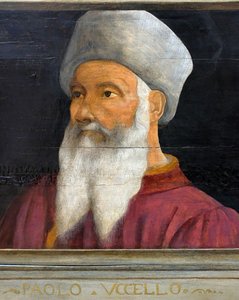
Паоло Учело
1397 - 1475 , Италија
Osnovne informacije
- Datum Rođenja: 1397.
- Datum Smrti: 1475.
- Mesto Rođenja: Pratovecchio, Italija
- Na Njih Je Uticao: ['Albrecht Dürer']
- Nacionalnost: Italijan
- Puno Ime: Paolo Uccello
- Umetnički Pokret: Rana renesansa
- Uticali Na Njega:
- Lorenzo Ghiberti
- Donatello
- Značajna Dela:
- Bitka kod San Romana
- Rođenje Device Marije
- Sveti Đorđe i zmaj
- Potop i arka
Povezani članci

Paul Cézanne: 25 Remek-dela Revolucionarnog Umjetnika | OriginalUniqueArt
Istražite 25 remek-dela Paula Cézanna, revolucionarnog slikara impresionizma i postimpresionizma. Otkrijte priče iza ikoničnih pejzaža, portreta i mrtve prirode. Kupite luksuzne reprodukcije slika na OriginalUniqueArt.com!

25 Remek-dela Džona Konstebla: Lepota Engleske na Platnu | OriginalUniqueArt
Uronite u svet Džona Konstebla! Otkrijte 25 remek-dela engleskog pejzaža, romantizma i seoske idile. Kupite reprodukcije slika vrhunskog kvaliteta za dekoraciju enterijera na OriginalUniqueArt.com.

Evocations of Place: A Historical Journey Through Landscape Art
Explore the rich history of landscape art with OriginalUniqueArt. Discover renowned artists, movements like Impressionism & Romanticism, and expert guidance for collecting timeless pieces. Find your perfect serene escape today!
Capturing Stillness: A Curated Exploration of the Most Iconic Lake Landscapes in Art History
Journey through art history's most serene lake landscapes. From Romantic vistas to light-drenched Impressionist waters, discover the stories behind these iconic masterpieces and find museum-quality, hand-painted oil reproductions for your private collection.

Glavna dela koja su definisala Romantični pejzaž: 10 remek-dela za vaš dom
Otkrijte 10 remek-dela romantičnog pejzažnog slikarstva! Uronite u svet Claude Lorraina, Caspara David Friedricha i Turnera. Ispričane priče umetnosti, inspiracija za dekoraciju doma. Kvalitetne reprodukcije na OriginalUniqueArt.com – istražite celu kolekciju online!


