

 Pregledaj u prostoru
 Pošalji
 Podeli
 Detalji o delu

 Преузми
 Slični predmeti
 Rendgenski snimak
 Slajdovi
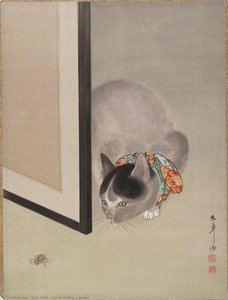
Cat Watching a Spider
 1888
1888 38.0 x 28.0 cm
 Pročitaj više
Kupite digitalnu sliku visoke rezolucije i poboljšanog kvaliteta, koja je znatno superiornija od onoga što vidite u online prikazu.
Svaka datoteka je pedantno pripremljena od strane naših stručnjaka koristeći napredne alate i profesionalnu ručnu retušu. Osiguravamo da svaka slika ima izuzetnu oštrinu, preciznu reprodukciju boja i fine detalje.
Konačna datoteka se dostavlja putem e-pošte u roku od 72 sata, optimizovana za neposrednu upotrebu u profesionalnim, izdavačkim i štamparskim okruženjima. To je isti kvalitet kojem veruju vrhunski studiji dizajna, izdavači i galerije.
Digitalna slika
Preuzmite datoteku visoke rezolucije za ličnu upotrebu, štampanje i kreativne projekte. ( Kupi print Kupi ručno naslikanu sliku)
Uključeno uz svaku porudžbinu digitalne slike
Profesionalna digitalna isporuka, zagarantovana
Kada odaberete OriginalUniqueArt.com, ne dobijate samo sliku – vi primate profesionalno unapređeno digitalno umetničko delo, izrađeno sa najvećom preciznošću i uz garanciju zadovoljstva. Evo svega što automatski dolazi uz vašu porudžbinu:

Brza dostava putem e-pošte
Vaša digitalna slika visoke rezolucije biće vam poslata putem e-pošte u roku od 72 sata od poručivanja – spremna za trenutnu upotrebu.

Digitalna datoteka unapređena veštačkom inteligencijom
Vaše umetničko delo je profesionalno optimizovano korišćenjem naprednih AI alata i ručne obrade, čime se osiguravaju maksimalni detalji, oštrina i preciznost boja.

Besplatna ponovna isporuka doživotno
Slučajno ste obrisali ili izgubili svoju datoteku? Ne brinite – poslaćemo vam je ponovo u bilo kom trenutku, potpuno besplatno.

Bez troškova uvoza – zauvek
Uživajte u svojim umetničkim delima trenutno, bez carine, dažbina ili troškova dostave – digitalni download je uvek bez poreza.

Garancija vernosti boja
Uz pomoć profesionalnih alata i upravljanja bojama, osiguravamo da vaša digitalna slika što vernije odražava originalne boje.

Garancija zadovoljstva u roku od 60 dana
Ako niste zadovoljni svojom digitalnom slikom, revidirat ćemo je ili vratiti 100% novca u roku od 60 dana – bez ikakvih pitanja.

100% garancija povrata novca
Niste zadovoljni? Obezbedite pun povrat novca u roku od 60 dana od trenutka kada ste primili svoju digitalnu datoteku – bez suvišnih pitanja.

Popusti na velike porudžbine
Kupite 3 slike, uštedite 10% - Kupite 5 slika, uštedite 15% - Kupite 10+ slika, uštedite 20%. Odlično za kreativne projekte, galerije i agencije.
Biografija umetnika
Oide Tōkō: A Master of Subtle Emotion in the Meiji Era
Born in Tokyo in 1841, Oide Tōkō (also known as Ōide Aya) emerged during a pivotal period in Japanese history – the Meiji Restoration (1868-1912). This era witnessed rapid modernization and Westernization alongside a fervent desire to preserve traditional Japanese aesthetics. Tōkō’s work stands as a compelling testament to this complex interplay, offering intimate glimpses into daily life and profound explorations of human emotion within a distinctly Japanese framework.
Early biographical details about Tōkō are somewhat sparse, though he was recognized as a skilled painter from an early age. His formal training remains largely undocumented, suggesting he may have been part of a guild system or learned through apprenticeship – common practices for artists at the time. The name “Kagyu-zuruya” (蝸牛窟), often associated with his work, translates to "snail shell cave," hinting at a secluded and contemplative artistic practice. His courtesy name, Sōkyō 素巧, meaning “simple skill,” reflects a dedication to understated elegance and naturalism in his compositions.
A Palette of Quiet Observation
Tōkō’s style is characterized by its remarkable subtlety and psychological depth. He primarily worked in ink and color on silk or paper, employing a delicate brushwork that prioritized capturing fleeting moments and nuanced expressions. Unlike the grand narratives often favored during the Meiji period, Tōkō's paintings frequently depict solitary figures engaged in quiet activities – a woman tending to her garden, a child playing with a toy, or a man gazing pensively into the distance. These scenes are not dramatic; rather, they convey a sense of serene contemplation and understated emotion.
His most famous work, “Cat Watching a Spider” (猫と蜘蛛), exemplifies this approach perfectly. The painting isn’t about action or spectacle but about the quiet observation of two creatures sharing a space. The cat's expression is ambiguous – curiosity, boredom, perhaps even a touch of melancholy – inviting viewers to project their own emotions onto the scene. This ability to evoke such complex feelings with minimal visual elements was a hallmark of Tōkō’s artistry.
Influences and Artistic Context
Tōkō's work is deeply rooted in traditional Japanese painting techniques, particularly those associated with the yamato-e style – a school emphasizing naturalism and emotional expression. However, he also absorbed influences from Western art, notably Impressionism’s focus on capturing light and atmosphere. The subtle gradations of color in his paintings, reminiscent of Monet or Renoir, demonstrate this assimilation without sacrificing the core tenets of Japanese aesthetics.
During the Meiji period, there was a conscious effort to promote both Western and Eastern art forms. Tōkō’s work gained recognition as Japan sought to establish its own unique artistic identity. His paintings were exhibited in Japan and internationally, contributing to a growing appreciation for Japanese art abroad.
Legacy and Market Value
Oide Tōkō died in 1905, leaving behind a relatively small but highly valued body of work. His paintings have been offered at auction multiple times, with prices ranging from $1,000 to $5,000, reflecting their increasing recognition as significant examples of Meiji-era Japanese art. His ability to capture the quiet dignity and emotional resonance of everyday life continues to resonate with collectors and viewers today.
His work is a poignant reminder that beauty and profound meaning can be found not in grand gestures but in the subtle details of human experience – a lesson beautifully articulated by Oide Tōkō through his evocative paintings. The Dictionary of Artists in Japan (DAJ) highlights his birthdate as May 24, 1841, and his death date as March 14, 1905, solidifying his place within the historical record of Japanese art.
oide tōkō
1841 - 1905 , Japan
Kratke činjenice
- Artistic Movement Or Style: Meiji period art
- Date Of Birth: 1841-05-24
- Date Of Death: 1905-03-14
- Full Name: oide tōkō
- Nationality: Japanese
- Notable Artworks: ['Cat Watching a Spider']
- Place Of Birth: Tokyo, Japan

