

 Pregledaj u prostoru
 Podeli
 Podeli
 Detalji
 Vodič
Vodič

 Preuzmi sliku
 Slični predmeti
 Rendgenski snimak
 Automatska prezentacija
 Statistika
Young Girl in a Blue Bonnet


 Pročitaj više
Giclee štampa / Umetnički otisak
Giclée štampa ili print na platnu muzejskog kvaliteta uz brzu izradu i raznovrsne opcije završne obrade. ( Naručite ručno oslikano reprodukciju Pređi na prodaju digitalnih slika)




P118B $10

P118H $10

P118W $10

P438Z $10

P508JH $12

P508YH $12

P805H $10

P805Z $10

P919BZ $10

P919G $10

P919XJ $10

P959ZH $10

P968JZ $12

W106C $8

W218G $10

W218JH $8

W218Y $10

W307PJ $10

W316G $10

W316PJ $8

W316Y $10

W398PJ $8

W4111J $10

W500HY $15

W500JH $15

W692G $12

W849H $8

W940BG $15

W953PJ $8




Izaberite jednu od naših unapred definisanih veličina koje odgovaraju originalnim proporcijama umetničkog dela.

Možete uneti sopstvene dimenzije kako biste umetničko delo prilagodili specifičnom okviru ili prostoru. Ako odabrani format ne odgovara proporcijama originalne slike, mi ćemo ili iscrtati deo dela ili proširiti sliku pomoću ogledane ivice ili jednobojnog popunjavanja. Digitalni prikaz će vam biti poslat na odobrenje pre početka proizvodnje.
Imajte na umu da pregled na ekranu ne odražava stvarno iscrtavanje ili proširivanje. Samo će prikaz (mockup) precizno pokazati finalnu kompoziciju.
Iako su prilagođene dimenzije dostupne, preporučujemo da odaberete dimenziju sa unapred definisane liste kako biste očuvali originalne proporcije.
Dostava širom sveta () za 2 nedelje umesto uobičajenih 4/5 nedelja. (26 септембар)

Besplatna ekspresna dostava širom sveta

Visokokvalitetno laneno platno

Sveobuhvatno osiguranje transporta

Garancija povraćaja carine i uvoznih dažbina

Garancija vernosti boja i autentičnosti pri reprodukciji

Politika povraćaja u roku od 100 dana (samo u slučaju nedostataka)

Garancija povrata 100% novca

Popust pri većoj količini
 Opcija sa staklom dostupna je samo za dimenzije manje od 110 cm

Young Girl in a Blue Bonnet
Giclee štampa / Umetnički otisak
Veličina reprodukcije
-


Ukupna cena
$ 80
Young Girl in a Blue Bonnet: A Dreamscape of Symbolism
Odilon Redon’s “Young Girl in a Blue Bonnet” stands as a quintessential example of Symbolist art, transporting viewers into a realm beyond mere representation. Painted sometime between 1898 and 1914—a period marked by profound artistic experimentation—this artwork isn't merely a portrait; it’s an invitation to contemplate the subconscious mind and explore themes of innocence, vulnerability, and hidden beauty.
- Subject Matter: The painting depicts a young woman seated at a window or doorway, gazing outwards with a serene expression. Her gaze is directed towards the viewer, establishing a connection that transcends visual perception—a hallmark of Symbolist aesthetics.
- Style & Technique: Redon employed pastel and oil paints on wood, utilizing soft hues and meticulous detail to achieve an ethereal quality. The artist’s masterful blending creates a hazy atmosphere reminiscent of dreams, prioritizing mood over precise realism.
- Historical Context: Emerging in the late 1880s and flourishing throughout the 1890s, Symbolism reacted against Impressionism's focus on capturing fleeting moments of sensory experience. Instead, Symbolists sought to express inner emotions and spiritual truths through evocative imagery—drawing inspiration from mythology, folklore, and psychoanalysis.
- Symbolism & Imagery: The blue bonnet itself is laden with symbolic significance – representing purity, chastity, and perhaps a longing for unattainable ideals. The yellowish background subtly warms the scene, suggesting comfort and nostalgia. The inclusion of leaves hints at an idyllic outdoor setting—a refuge from worldly concerns.
- Emotional Impact: “Young Girl in a Blue Bonnet” evokes feelings of tranquility, contemplation, and melancholic beauty. Redon’s deliberate use of color and composition invites viewers to delve into their own subconscious desires and anxieties—creating a lasting impression that lingers long after the artwork is viewed.
This captivating piece exemplifies Redon's ability to distill complex psychological ideas into visually arresting compositions. Its delicate pastel shades, combined with meticulous attention to detail, make it an ideal choice for interior designers seeking to infuse their spaces with artistic sophistication and a touch of dreamy enchantment. Consider commissioning a high-quality reproduction to bring this timeless Symbolist masterpiece into your home.
Exploring Odilon Redon’s Artistic Vision
Redon's fascination with Japanese art profoundly influenced his stylistic choices, mirroring the Japonisme movement that captivated European artists during the Belle Époque. He meticulously studied prints and paintings from Japan—particularly those depicting landscapes and stylized figures—incorporating these elements into his own artworks.
The Influence of Myth & Folklore
Redon’s artistic inspiration extended beyond Japanese aesthetics; he drew heavily upon mythology and folklore, particularly tales of giants and nymphs. These narratives served as conduits for exploring themes of duality—the interplay between darkness and light, reality and illusion—a core principle of Symbolist thought.
A Legacy of Dreamlike Art
“Young Girl in a Blue Bonnet” stands as a testament to Redon’s enduring legacy—a pioneer of abstract painting who paved the way for Surrealism. Its ethereal beauty and evocative symbolism continue to resonate with audiences today, cementing its place among the most treasured artworks of the Symbolist movement.
Biografija umetnika
Odilon Redon (1840-1916): Between Shadow and Light
Odilon Redon, born Bertrand Jean Redon in Bordeaux, France, on April 20, 1840, was an artist whose profound engagement with the unseen realms of imagination solidified his place as a pivotal figure in Symbolism—a movement that anticipated the Surrealist explorations of the subconscious decades later. His artistic journey began not with grand ambition but with quiet observation; at just ten years old he won a drawing prize—a foreshadowing of the visual sensitivity that would permeate his entire life’s work. Though familial expectations initially steered him toward architecture, Redon's true vocation blossomed amidst instruction from Jean-Léon Gérôme and Rodolphe Bresdin, who instilled in him the meticulous techniques of etching and lithography – skills that became foundational to his early explorations and allowed him to translate the intangible into tangible form. The disruption of the Franco-Prussian War briefly compelled him into military service, yet it was upon his return to Paris that Redon’s artistic vision truly coalesced, shaping a distinctive oeuvre characterized by haunting beauty and unsettling mystery.Early Life & Artistic Training
Redon's childhood was marked by a peculiar blend of solitude and fascination with the natural world. Raised in Bordeaux near his uncle—a botanist who nurtured his intellectual curiosity—he developed an acute sensitivity to color and form, qualities that would become central to his artistic style. At fifteen, he commenced formal study in drawing but, responding to his father’s insistence, reluctantly abandoned architectural pursuits for a more creative path. Despite failing the École des Beaux-Arts entrance examinations, Redon persevered, enrolling under Gérôme—a celebrated academic painter—who honed his skills in realistic representation. However, it was Bresdin's tutelage in etching and lithography that proved transformative, unlocking Redon’s ability to capture elusive moods and textures through printmaking – a medium he would champion throughout his career. This early training instilled in him a disciplined approach to observation and experimentation, shaping the aesthetic bedrock of his future masterpieces.The Birth of Symbolism & Monochrome Explorations
Redon deliberately distanced himself from prevailing artistic trends of his time—rejecting the pursuit of photographic realism in favor of conveying emotional resonance and spiritual contemplation. This decision led directly to his groundbreaking series of “noirs”—monochromatic compositions executed primarily in charcoal and lithography—which became instantly recognizable as emblems of Symbolism. These weren’t merely studies in darkness; they were profound investigations into the subconscious, populated by grotesque creatures, disembodied eyes, and spectral figures emerging from swirling mists – imagery heavily influenced by writers like Edgar Allan Poe and Charles Baudelaire who shared a fascination with the macabre and the suggestive power of art. Critics initially dismissed Redon’s “noirs” as morbid and unsettling, yet they nevertheless captured the essence of Symbolist aesthetics—a preoccupation with mythic themes and an embrace of dreamlike visions. The series demonstrated Redon's mastery of tonal gradation and his ability to evoke psychological depth through minimal visual elements.Lithography & Literary Influences
Redon’s artistic technique was inextricably linked to his intellectual interests, particularly his engagement with literature and philosophy. He meticulously studied the works of Baudelaire, Poe, Dante Gabriel Rossetti, and Henrik Ibsen—authors who explored themes of decay, beauty, and psychological torment—drawing inspiration from their stylistic innovations and conceptual frameworks. Lithography became Redon’s favored medium for translating these literary ideas into visual form; he skillfully manipulated stone to achieve remarkable tonal effects and textural nuances. His prints often served as reinterpretations of literary texts—such as Poe's *The Raven*—demonstrating his conviction that art could illuminate the hidden currents of human experience. The influence of Japanese printmaking, or *Japonism*, is palpable in many of his compositions—particularly those created during his Parisian years—where flattened perspectives and decorative patterns contribute to an otherworldly atmosphere.Later Works & Legacy
Throughout the 1890s, Redon experimented with pastel and oil paints, expanding his palette beyond monochrome and embracing richer hues—though he retained a preference for muted tones that conveyed melancholy and introspection. He exhibited prominently with the Nabis group in 1899—a collective of artists who championed decorative art and sought to liberate painting from academic constraints—solidifying his reputation as a visionary innovator. The Armory Show in New York City in 1913 brought Redon’s work to international attention, establishing him as one of the foremost figures in modern art. His enduring legacy resides not merely in his stylistic achievements but also in his profound contribution to the artistic dialogue of the early twentieth century—a dialogue that continues to inspire artists today. Redon's unwavering commitment to exploring the subconscious and conveying emotional truth cemented his place as a pioneer of Symbolism and Surrealism, ensuring that his haunting visions would resonate across generations.
Одилон Редон
1840 - 1916 , Франција
Brzi pregled
- Artistic Movement Or Style: Симболизам
- Artists Or Movements Influenced By This Artist: ['Суререализам']
- Artists Who Influenced This Artist:
- Жан Леон Гером
- Родоф Бресдин
- Date Of Birth: Април 20, 1840
- Date Of Death: Јул 6, 1916
- Full Name: Odilon Redon
- Nationality: Француски
- Notable Artworks:
- Центаури
- Онес
- Портрет на Жан Редон
- Place Of Birth: Бордо, Француска
Srodni članci

Beyond Reality: A Sophisticated Exploration of Symbolism and the Dreamlike Subconscious in Art History
Embark on a sophisticated journey through the dreamlike world of Symbolist painting. Explore the profound depths of the subconscious, from Odilon Redon to Dalí, and discover how these evocative masterpieces continue to inspire collectors and art enthusiasts worldwide.
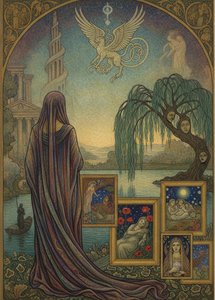
Beyond Reality: A Sophisticated Guide to the Enigmatic World of Symbolist Painting
Embark on a journey through the dreamlike realm of Symbolist painting. Discover the visionary works of Redon and Moreau, exploring themes of myth, psyche, and mystery in this expert guide for fine art enthusiasts and collectors.

The Allure of Azure: Exploring the Symbolic & Aesthetic Depths of Blue in Art History
Explore the rich history of blue in art! Discover its symbolism, from ancient pigments to modern masterpieces by Kandinsky & Seurat. Uncover the psychological impact and cultural meanings behind this captivating hue.

Slate Blue Masterpieces: 10 Iconic Paintings & Timeless Home Decor Ideas
Immerse yourself in the captivating world of slate blue! Explore 10 iconic paintings by Monet, Van Gogh & Renoir. Discover their stories, techniques & find museum-quality art reproductions for your home at .

Beyond Reality: A Definitive Guide to the Dreamlike World of Symbolist Painting
Explore the evocative world of Symbolist painting. Discover how masters like Gustave Moreau rejected realism to capture dreams, myths, and the subconscious through fine art history and expert analysis.
