

 Pregledaj u prostoru
 Pošalji
 Podeli
 Detalji o delu
 Vodič
Vodič

 Preuzmi
 Slični predmeti
 Rendgenski snimak
 Automatska prezentacija
 Statistika
Le Moulinet
 Acrylic On Canvas
- WallArt
- Rococo
 129.0 x 95.0 cm
 Schloss Charlottenburg
 Pročitaj više
Ručno rađena uljana reprodukcija
Ručno oslikano uljanim bojama na platnu u dimenzijama i okviru po vašem izboru, izrađeno po porudžbini od strane naših umetnika. ( Pređi na štampu Pređi na digitalnu sliku)




P118B дин10

P118H дин10

P118W дин10

P438Z дин10

P508JH дин12

P508YH дин12

P805H дин10

P805Z дин10

P919BZ дин10

P919G дин10

P919XJ дин10

P959ZH дин10

P968JZ дин12

W106C дин8

W218G дин10

W218JH дин8

W218Y дин10

W307PJ дин10

W316G дин10

W316PJ дин8

W316Y дин10

W398PJ дин8

W4111J дин10

W500HY дин15

W500JH дин15

W692G дин12

W849H дин8

W940BG дин15

W953PJ дин8




Izaberite jednu od naših unapred definisanih veličina koje odgovaraju originalnim proporcijama umetničkog dela.

Unesite potrebnu širinu i visinu kako bi se slika uklopila u vaš ram ili zid. Pošto je ovo ručno oslikano delo, umetnik može za dimenzije drugačijeg oblika naslikati malo više prostora oko slike ili malo skratiti ivice — izbor je na vama. Pre početka rada, poslaćemo vam digitalni prikaz radi potvrde. Slika prikazana na ovoj stranici ne predstavlja konačan rezultat — samo digitalni prikaz pokazuje stvarnu sliku.
Nakon narudžbine, tim OriginalUniqueArt.com će klijentu putem e-pošte poslati uputstva i dostaviti prikaz predloženog rešenja
Svetska isporuka () za 3/4 nedelje umesto uobičajenih 5 nedelja. (28 октобар). Bez kompromisa po pitanju kvaliteta.

Besplatna ekspresna dostava širom sveta

Visokokvalitetno laneno platno

Potpuno osiguranje transporta

Garancija povraćaja carine i uvoznih dažbina

Garancija vernosti boja

Politika povraćaja u roku od 100 dana (samo u slučaju nedostataka)

Garancija povrata 100% novca

Popust na više proizvoda
 Opcija sa staklom dostupna je samo za dimenzije manje od 110 cm

Le Moulinet
Tehnika reprodukcije
Dimenzije reprodukcije
-


Ukupna cena
дин 54246
Nicolas Lancret: A Life in Rococo Charm
Nicolas Lancret’s artistic journey began in Paris, where he was born in 1690. While detailed records of his early life are scarce, it is known that he received initial training under Pierre d’Ulin, a respected history painter. A pivotal moment arrived when he encountered the work of Antoine Watteau, whose influence profoundly shaped Lancret's artistic direction. He subsequently studied with Jean-Baptiste Gillot, who himself had been a student of Watteau, further solidifying his connection to this influential artistic lineage. This period of training laid the foundation for Lancret’s distinctive style, characterized by its lighthearted depictions of Parisian society and celebrations of *fêtes galantes*. Lancret became renowned as a brilliant portrayer of everyday life within French society during the regency of the Duke of Orleans and, later, early reign of King Louis XV. His canvases captured fleeting moments of aristocratic leisure—elegant gatherings in gardens, lively balls adorned with flowers and ribbons, and picnics amidst picturesque landscapes—reflecting the prevailing aesthetic sensibilities of the era. Unlike Watteau’s melancholic visions of Venetian fantasies, Lancret embraced a joyous optimism, imbuing his scenes with warmth and vibrancy. This stylistic divergence stemmed from Lancret's formative encounter with Gillot, who had championed Watteau's expressive approach to painting, resulting in a style that prioritized visual delight and harmonious composition.- Style: Rococo – Lancret’s oeuvre embodies the hallmark characteristics of Rococo art: delicate ornamentation, pastel hues, asymmetrical arrangements, and an emphasis on illusionistic effects. He skillfully employed techniques like *sfumato* to soften contours and create atmospheric depth, mirroring Watteau's masterful manipulation of light and shadow.
- Technique: Lancret excelled in oil painting on canvas, utilizing a loose brushstroke style that prioritized capturing the ephemeral beauty of his subjects. His meticulous attention to detail—particularly in rendering fabrics and floral decorations—demonstrated a mastery of artistic craftmanship.
- Historical Context: Lancret’s paintings flourished during a period marked by opulent court life and aristocratic patronage. The Château de Versailles served as a crucible for artistic innovation, fostering collaborations between artists like Jean Petitot the Elder and Louis Paradis de la Roche, who contributed to Vaux le Vicomte's artistic landscape.
- Symbolism: Lancret’s compositions frequently incorporated symbolic elements—such as statues of nude figures representing classical ideals—to convey moral lessons and elevate the viewer’s experience. The depiction of flowers and foliage served as emblems of fertility, beauty, and springtime, reflecting the Rococo fascination with nature's rejuvenating power.
- Emotional Impact: Lancret’s works evoke a sense of carefree elegance and sensual pleasure, transporting viewers to idealized worlds of aristocratic indulgence. His paintings capture not merely visual splendor but also the emotional resonance of social rituals and celebrations—a testament to his ability to communicate profound feelings through subtle artistic gestures.
Le Moulinet: A Masterpiece of Rococo Illusionism
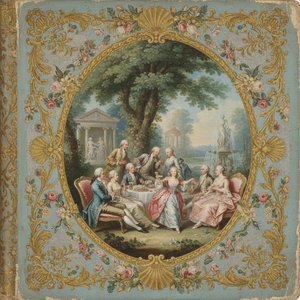
“Le Moulinet,” or “The Reel,” exemplifies Lancret’s signature style—a breathtaking depiction of a Parisian fête galante bathed in dappled sunlight. Executed with remarkable precision and infused with an irresistible charm, this oil painting captures the essence of Rococo artistry: delicate ornamentation, pastel hues, asymmetrical arrangements, and masterful illusionistic effects. The scene unfolds within a formal garden setting, populated by elegantly dressed aristocrats engaged in leisurely pursuits—dancing, conversing, and admiring a magnificent statue of Venus. Lancret’s skillful use of *sfumato* creates an ethereal atmosphere, blurring boundaries between reality and fantasy and immersing the viewer in a world of refined beauty.Detailed Analysis: Composition & Technique
Lancret's compositional brilliance is evident in the layering of planes and perspectives—a technique characteristic of Watteau’s influence—that draws the eye into the heart of the scene. The central group of dancers occupies a prominent position, framed by towering trees whose branches cast intricate shadows across the lawn. Lancret’s meticulous brushwork captures the textures of fabrics—silk gowns shimmering with sequins and embroidery—and floral decorations—bouquets overflowing with roses and lilies—adding to the painting's opulent sensory experience. The artist’s masterful blending of colors—primarily soft blues, pinks, and golds—creates a harmonious palette that enhances the overall mood of tranquility and delight.Beyond the Canvas: Lancret’s Legacy
Nicolas Lancret remains celebrated as one of France's foremost Rococo painters, whose works continue to inspire admiration for their elegance, artistry, and evocative portrayal of aristocratic life. His influence extended beyond his own time, foreshadowing the stylistic innovations of artists like Jean-Honoré Fragonard and Thomas Gainsborough—a testament to Lancret’s enduring contribution to European art history. The Château de Versailles, where Lancret adorned several halls with monumental paintings, stands as a tangible reminder of his artistic prowess and the grandeur of Louis XIV's reign. Explore Vaux le Vicomte’s artistic landscape and discover Jean Petitot the Elder, Louis Paradis de la Roche, and Jean-Baptiste Boulard’s contributions to Vaux le Vicomte's artistic landscape.Pitanja i odgovori
Da li su boje dela "Le Moulinet" intenzivne ili nežne?
Boje u delu „Le Moulinet”, autor Никола Ланкре imaju Monochromatic intenzitet.
Da li je dostupno preuzimanje za "Le Moulinet"?
Preuzimanje je dostupno za "Le Moulinet": na stranici Preuzimanje digitalnog prikaza ovog umetničkog dela možete preuzimanje digitalne slike visoke rezolucije.
Koji su format i dimenzije dela "Le Moulinet"?
„Le Moulinet”, autor Никола Ланкре je u formatu Portrait dela dimenzija 129 x 95 cm.
Biografija umetnika
Никола Ланкре: Живот у Рококо шарму
Никола Ланкре, рођен у Паризу 22. јануара 1690. године, био је француски сликар чије име остаће упамћено као симбол елеганције и безбрижности епохе Рокоа. Иако детаљи његовог раног живота нису добро документовани, знамо да је уметнички пут започео под менторством Пјера d’Улина, цењеног историјског сликара. Међутим, преломни тренутак дошао је када се упознао са радовима Антоана Ватоа, чији је утицај дубоко обликовао Ланкреов каснији рад. Након тога, студирао је код Жан-Батиста Жилоа, бившег ученика Ватоа, што је додатно учврстило његову везу са овим утицајним уметничким наслеђем. Ово рано образовање поставило је темеље за Ланкреов препознатљиви стил – карактеризован лакоћу и живописним приказима париског друштва и славља, познатих као *fêtes galantes*.Уметнички стил и значајна дела
Ланкре је постао познат као бриљантан портретиста свакодневног живота француског друштва током регентства војводе Орлеана и ране владавине краља Луја XV. Његов уметнички стил обележавају шармантне сцене балова, вашара, сеоских свадби и других друштвених окупљања, које одражавају укусе и обичаје његовог времена. Имао је изузетан таленат за хватање духа рококо елеганције и фриволитета. Његова дела нису само визуелни записи епохе, већ и прозори у начин живота аристократије и буржоазије. Међу његовим најзначајнијим радовима издваја се *Le Déjeuner de Jambon* (Шантили, Музеј Конде, 1735), квинтeсенцијални пример његових жанровских сцена, који приказује друштвени ручак уз веселе фигуре. Слика *La Servante Justifiée* (1735-1740) демонстрира Ланкреову способност да портретише кућне сцене са духовитошћу и шармом, док *Le Jeu des Quatre-Coins* представља игрив приказ популарне игре, хватајући енергију и забаву друштвених интеракција. Портрет *Marie-Anne de Camargo* (1730) показује његову вештину у приказивању модне фигуре, истичући детаље одеће и фризуру типичне за то доба.Утицаји и наслеђе
Ланкреов уметнички стил носи јазбу сходост са стилом Ватоа, што често доводи историчаре уметности да их поредију. Иако су неки критичари сматрали да је Ланкреов рад мање дубок од Ватоовог, његова способност да зароби суштину француског друштва у 18. веку обезбедила му је значајно место у историји уметности. Његове слике се славе по лакоћи и шарму, нудећи драгоцене увиде у друштвене обичаје и естетику рококо периода. Ланкреов утицај може се видети код каснијих уметника попут Франсоа Бушеа. Његови радови се чувају у престижним колекцијама широм света, укључујући Националну галерију и Музеј Орсе, обезбеђујући да његово наслеђе настави да инспирише цењење француске рококо уметности.Развој и историјски значај
Током своје каријере, Ланкре је показао постепенну еволуцију у свом уметничком приступу. Иако је првобитно био снажно под утицајем Ватоа, развио је преpoznatljiviji стил који се карактерише живописнијим бојама и већом хармонијом између фигура и околине. Његови каснији радови, као што су *Montreir de lanterne magique* и *Family in a Garden*, сматрају се врхунцем његовог уметничког достигнућа, демонстрирајући растућу способност да створи дубину и интимност у својим композицијама. Ланкреов историјски значај лежи у његовом доприносу рококо покрету и способности да документује друштвени живот и културне вредности Француске у 18. веку кроз своје шармантне и приступачне слике. Он је био мајстор у приказивању лепоте, грације и безбрижности епохе која је остала запамћена као симбол елеганције и раскоши.
Никола Ланкре
1690 - 1743 , Француска
Osnovne informacije
- Artistic Movement Or Style: Рококо
- Artists Or Movements Influenced By This Artist: ['François Boucher']
- Artists Who Influenced This Artist:
- Pierre d’Ulin
- Jean-Baptiste Gillot
- Antoine Watteau
- Date Of Birth: 22. јануар 1690.
- Date Of Death: 14. септембар 1743.
- Full Name: Никола Ланкре
- Nationality: Француски
- Notable Artworks:
- Le Déjeuner de Jambon
- La Servante Justifiée
- Le Jeu des Quatre-Coins
- Marie-Anne de Camargo
- Place Of Birth: Париз, Француска
Povezani članci

Rokoko: 10 Remek Dela Koja Su Definisala Eleganciju i Ukus
Otkrijte 10 remek dela koja su definisala rokoko umetnost! Uronite u svet Boucher-a, Watteau-a i Fragonarda. Istorija, stil i inspiracija za vaš dom. Kvalitetne reprodukcije i kuratorski odabiri na OriginalUniqueArt.com!

Illuminating the Enlightenment: A Comprehensive Exploration of 18th-Century Painting
Explore the captivating world of 18th-century painting! Discover Rococo's playful elegance & Neoclassicism’s Enlightenment ideals with expert insights into Fragonard, David, and more. A comprehensive guide for art enthusiasts.

The Rococo Aesthetic: Opulence, Rebellion & the Pursuit of Pleasure in 18th-Century Art
Explore the opulent world of Rococo art! Discover its origins, key artists like Watteau & Boucher, and lasting influence on design. Expert insights for collectors & enthusiasts.

The Elegance of Rococo: A Journey Through Pastel Dreams and Ornate Splendor
Embark on an elegant journey through the Rococo era. Discover the delicate beauty of pastel masterpieces, the intricate artistry of 18th-century French masters, and how this era of ornate splendor continues to inspire timeless luxury in fine art collecting.
The Rococo Style: Aristocratic Leisure & the Pursuit of Delight in 18th-Century Art
Explore the opulent world of Rococo art! Discover Watteau, Boucher & Nattier's masterpieces. Expert insights for collectors seeking museum-quality reproductions and custom portraits at OriginalUniqueArt.