

 Pregledaj u prostoru
 Podeli
 Podeli
 Detalji
 Vodič
Vodič

 Preuzmi sliku
 Slični predmeti
 Rendgenski snimak
 Automatska prezentacija
 Statistika
The student


 Pročitaj više
Umetničko delo prikazano na ovoj stranici zaštićeno je autorskim pravima, što znači da zakonski nismo u mogućnosti da kreiramo niti prodajemo identičnu reprodukciju. Ova zaštita se sprovodi u skladu sa međunarodnim sporazumima kao što su Bernska konvencija i nacionalnim zakonima, uključujući i one koji su definisani u Američki zakon o autorskom pravu – Naslov 17.
Ovaj metod je u potpunosti usklađen sa regulativama o autorskim pravima jer ne podrazumeva kopiranje ili dupliranje zaštićenih umetničkih dela. Umesto toga, reč je o kreativnoj reinterpretaciji – novom slikarskom delu koje je inspirisano originalom, ali nije identično njemu.
Giclee štampa / Umetnički otisak
Giclée štampa ili print na platnu muzejskog kvaliteta uz brzu izradu i raznovrsne opcije završne obrade. ( Naručite ručno oslikano reprodukciju Pređi na prodaju digitalnih slika)




P118B дин10

P118H дин10

P118W дин10

P438Z дин10

P508JH дин12

P508YH дин12

P805H дин10

P805Z дин10

P919BZ дин10

P919G дин10

P919XJ дин10

P959ZH дин10

P968JZ дин12

W106C дин8

W218G дин10

W218JH дин8

W218Y дин10

W307PJ дин10

W316G дин10

W316PJ дин8

W316Y дин10

W398PJ дин8

W4111J дин10

W500HY дин15

W500JH дин15

W692G дин12

W849H дин8

W940BG дин15

W953PJ дин8




Izaberite jednu od naših unapred definisanih veličina koje odgovaraju originalnim proporcijama umetničkog dela.

Unesite širinu i visinu koja vam je potrebna, kako bi se uklopili u vaš ram ili na vaš zid. Štampa se može samo iseći, nikada ne može biti veća od originalne slike, stoga format sa drugačijim proporcijama gubi deo slike. Poslaćemo vam digitalni prikaz radi potvrde pre nego što započnemo štampu. Slika prikazana na ovoj stranici ne pokazuje stvarni rez — to pokazuje samo digitalni prikaz.
Dostava širom sveta () za 2 nedelje umesto uobičajenih 4/5 nedelja. (25 октобар)

Besplatna ekspresna dostava širom sveta

Visokokvalitetno laneno platno

Sveobuhvatno osiguranje transporta

Garancija povraćaja carine i uvoznih dažbina

Garancija vernosti boja i autentičnosti pri reprodukciji

Politika povraćaja u roku od 100 dana (samo u slučaju nedostataka)

Garancija povrata 100% novca

Popust pri većoj količini
 Opcija sa staklom dostupna je samo za dimenzije manje od 110 cm

The student
Giclee štampa / Umetnički otisak
Veličina reprodukcije
-


Ukupna cena
дин 8248
A Quiet Introspection: The Soul of Mario Sironi’s The Student
In the quiet corners of art history, certain works possess the power to halt time, inviting the viewer into a sanctuary of thought and stillness. The Student, a masterful creation by the Italian maestro Mario Sironi, is one such masterpiece. This evocative portrait captures a woman lost in a moment of profound introspection, seated at a table that serves as an altar to intellect and solitude. Clad in somber black attire, her dark hair framing a face of contemplative depth, she sits before a mirror—a classic symbol of self-reflection and the duality of identity. The scene is not merely a depiction of a person, but an invitation into a private, cerebral world where the boundaries between the physical room and the internal mind begin to blur.
The composition is rich with an atmosphere of scholarly elegance. Surrounding the central figure is a curated landscape of artistic and intellectual artifacts: statues that stand like silent sentin Riens, vases that anchor the space with classical grace, and a single book resting near her hand, suggesting a life dedicated to the pursuit of knowledge. The presence of these objects transforms the setting from a simple room into an atelier of the soul. For the discerning collector or interior designer, this painting offers more than just visual beauty; it provides a focal point of sophisticated gravity, making it an ideal centerpiece for spaces dedicated to study, libraries, or refined living areas where conversation and thought are encouraged.
Technique and the Luminosity of Divisionism
To understand the emotional weight of The Student, one must look closely at Sironi’s early mastery of Divisionism. Before his later shifts toward more monumental and architectural styles, Sironi utilized this technique to breathe life into his subjects through a delicate interplay of light. Rather than blending colors on the palette, he applied small, distinct strokes of pigment that, when viewed from a distance, coalesce in the eye of the beholder to create a shimmering, luminous effect. This method allows the shadows in the woman's black clothing to feel deep and velvety, while simultaneously capturing the subtle glints of light reflecting off the porcelain vases and the smooth surfaces of the surrounding sculptures.
This meticulous approach to color and light creates a sense of vibrating stillness. The technique lends a dreamlike quality to the scene, where the air itself feels heavy with the scent of old paper and the quiet dust of a sunlit studio. For those seeking a high-quality reproduction, this complexity of texture is what makes a hand-painted version so captivating; the physical layering of paint recreates the rhythmic energy of Sironi’s brushwork, ensuring that the light seems to dance across the canvas just as it does in the original work.
A Legacy of Intellectual Elegance
Mario Sironi’s journey from a student of engineering to a titan of modern Italian art is reflected in the structural integrity of this piece. There is an architectural precision to how he places the statues and objects within the frame, creating a balanced, harmonious environment that feels both grounded and ethereal. The Student serves as a bridge between the classical traditions of his heritage and the burgeoning modernism of the early 20th century. It captures a moment of transition—much like the subject herself—between the external world of objects and the internal world of ideas.
Integrating a reproduction of this caliber into a contemporary interior allows for a profound connection to the history of European modernism. It is a piece that speaks to the timelessness of human curiosity and the beauty found in solitude. Whether placed in a sun-drenched gallery or a moody, dark-toned study, The Student brings with it an aura of prestige and a deep, resonant emotional intelligence that continues to inspire art lovers and decorators across the globe.
Pitanja i odgovori
Da li su boje dela „The student”, Марио Сирони živopisne ili prigušene?
Boje dela „The student”, Марио Сирони pokazuju Muted zasićenost uz Monochromatic intenzitet.
Kako mogu da preuzmem sliku dela „The student”, Марио Сирони?
Preuzimanje je dostupno za "The student": stranica Preuzimanje ovog umetničkog dela nudi preuzimanje digitalne slike visoke rezolucije.
Koju temu i atmosferu spaja „The student”, Марио Сирони?
„The student“ prikazuje woman, black clothing, mirror, statues, vases, book, table, a njegov upečatljiv raspoloženje je Classic.
Biografija umetnika
Марио Сирони: Живот и уметнички пут једног италијанског модернисте
Марио Сирони, рођен 12. маја 1885. године у Сасарију на Сардинији, био је један од најзначајнијих представника италијанског модерног сликарства. Његов живот и стваралаштво обележили су дубоки преломи, трагичне околности и константно потраживање новог израза. Отац му је био инжењер, али је утицај на његов каснији уметнички развој имао деда по мајчиној линији, Игнацио Вила, уважени архитекта и вајар, који га је рано упознао са лепотом и изражајним моћима визуелних уметности. Сирони је започео студије инжењерства на Универзитету у Риму, али их је 1903. године напустио након тешког нервног слома – преломни тренутак који је означио његов потпуни окрет ка свету уметности. Убрзо затим, приступио је Школи за слободно нудо Академије лепих уметности у Риму, где је упознао Ђакома Балу, свог првог значајног учитеља и ментора.Рани радови и трагање за стилом
Почетни период Сирониевог стваралаштва био је под снажним утицајем дивизионизма – технике која се карактерише раздвајањем боја ради постизања веће светлости и визуелног ефекта. Један од раних примера овог стила је слика “Студент”. Међутим, Сирони није остао дуго верни следбеник дивизионизма. Кратко време је експериментисао са футуризмом око 1914. године и учествовао на изложби у Галерији Спровјери у Риму. Ипак, брзо се одвојио од футуристичке заљубљености брзином и динамиком, тражећи другачији пут изражавања. Први светски рат је имао огроман утицај на његов рад. После рата, Сирони је развио препознатљив стил карактеристичан по масивним, непокретним формама и геометријским облицима. Ово је био резултат искустава са фронта и растућег осећаја изолације и отуђености. Међу његове кључне утицаје спадају Ђакомо Балу (рани тренинг), Ђорђо де Кирико и Карло Кара (утицај метафизичког сликарства на обликовање форми) као и елементи неокласицизма и примитивног класицизма.Новеcento Italiano и зрели стил
Године 1922, Сирони је постао оснивач покрета Новеcento Италиано – покушаја повратка реду у послератној европској уметности, са нагласком на јасноћи и традицији. Овај покрет тежио је да обнови класичне вредности и створи нову националну естетику. Сирониев зрели стил обележен је:- Наглашеним геометријским облицима и поједностављеним формама.
- Намерно неспретним естетиком у каснијим радовима.
- Темама самоће, отуђености и људског стања.
- Истраживањем индустријских пејзажа и живота радничке класе.
Политички ставови и каснији живот
Сирони је био присталица Бенита Мусолинија и активно је доприносио фашистичким публикацијама, објављујући преко 1700 цртежа. Веровао је у интеграцију уметности и архитектуре, стречећи да створи монументална дела за јавне просторе – што је одражавало идеале фашистичког режима. Након Другог светског рата, његова повезаност са фашизмом довела је до пада популарности и критичке прихватљивости. У каснијим годинама живота, Сирони се углавном повукао из јавног живота и наставио да слика у релативној изолацији све до своје смрти 13. августа 1961. године у Милану.Наслеђе и историјски значај
Марио Сирони је оставио неизбрисив траг на италијанском модернизму, повезујући футуризам са каснијим уметничким развојима. Његово истраживање тема као што су самоћа и отуђеност одразило је анксеозности 20. века. Упркос контроверзама око његових политичких ставова, његова уметност била је представљена на значајним изложбама широм света, укључујући и у Центру Жорж Помпиду (1981) и Краљевској академији у Лондону (1989). Сирониево наслеђе лежи у његовој јединственој стилској синтези и моћним приказима људског стања у брзо променљивом свету.
Марио Сирони
1885 - 1961 , Италија
Brzi pregled
- Datum Rođenja: 12. maj 1885.
- Datum Smrti: 13. avgust 1961.
- Mesto Rođenja: Sasari, Italija
- Nacionalnost: Italijan
- Puno Ime: Mario Sironi
- Umetnici Koji Su Uticali: ['Giacomo Balla']
- Umetnički Pokret/Stil: Modernizam, Novecento Italiano
- Značajna Dela:
- La Lampada (1919)
- Venere (1921-1923)
- Solitudine (1925)
Srodni članci
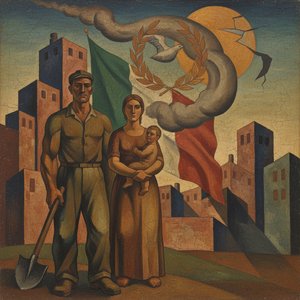
Mario Sironi: A Poetic of Modern Italian Identity Through Symbolism & Social Commentary
Explore the profound works of Mario Sironi, a key figure in Italian Modernism. Discover his evolution from Futurism to Metaphysical painting and his powerful social commentary. Learn about his legacy at OriginalUniqueArt.
Reflections of Reality: Exploring the Metaphysical Power of Mirror Images in Fine Art
Explore the profound symbolism of mirror images in fine art. From Surrealist distortions to classical self-portraits, discover how masters use reflections to explore reality, identity, and the infinite through a sophisticated art-historical lens.
Reflections of Reality: The Metaphysical Power of Mirrors in Fine Art History
Explore the profound symbolism of mirrors in fine art history. From Surrealist distortions to Vanitas themes, discover how masters use reflections to capture reality and the metaphysical soul.
The Mirror Stage of Art History: Exploring Reflection & Identity in Painting
Explore the captivating history of reflection in art! Discover symbolism, technique & psychological depth in masterpieces from Renaissance self-portraits to modern works. Expert insights for discerning collectors.

Mirroring the Soul: A Curated Exploration of Reflection and Self-Perception in Art History
Embark on a sophisticated journey through art history's most captivating masterpieces of reflection. Explore how legendary artists used mirrors to explore identity, surrealism, and the soul through expert art historical analysis.
