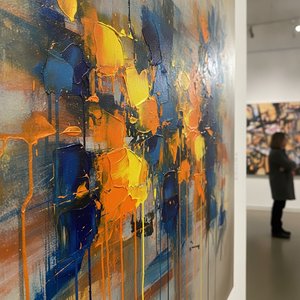
Fuoco
Light Sculpture
Installation
Contemporary Art
2011
Contemporary
30.0 x 58.0 cm
Fondazione Hospice Seràgnoli Onlus
Ručno rađena uljana reprodukcija
Ručno oslikano uljanim bojama na platnu u dimenzijama i okviru po vašem izboru, izrađeno po porudžbini od strane naših umetnika. ( Kupi print
Kupi digitalnu sliku)
Izaberite jednu od naših unapred definisanih veličina koje odgovaraju originalnim proporcijama umetničkog dela.
Можете унети сопствене димензије како бисте прилагодили дело одређеном оквиру или простору. Ако одабрана величина не одговара пропорцијама оригинала, слика ће бити исечена или проширена додатним елементима који се ручно насликавају. Дигитални prikaz ће вам бити послат на одобрење пре почетка производње.
Имајте на уму да преглед на екрану не одражава стварно исецање или проширење. Само приказ (mockup) ће тачно приказати коначну композицију.
Иако су доступне прилагођене величине, препоручујемо да одаберете димензију из дефинисане листе како бисте сачували оригиналне пропорције.
Nakon narudžbine, tim OriginalUniqueArt.com će klijentu putem e-pošte poslati uputstva i dostaviti prikaz predloženog rešenja
Isporuka širom sveta () za 3/4 nedelje umesto uobičajenih 5 nedelja. (22 август). Bez kompromisa po pitanju kvaliteta.
Besplatna ekspresna dostava širom sveta
Visokokvalitetno laneno platno
Kompletno osiguranje transporta
Garancija povraćaja carine i uvoznih dažbina
Garancija vernosti boja
Politika povrata u roku od 60 dana (samo u slučaju nedostataka)
Garancija povrata novca od 100%
Popust pri grupnoj kupovini
Fuoco
Tehnika reprodukcije
Dimenzije reprodukcije
-
Konačna cena
$ 300
Opis umetničkog dela
A Radiance Reborn: The Luminous Energy of Fuoco
In the contemporary landscape of sculptural light, few works command attention with the visceral intensity found in Maria Christina Hamel’s Fuoco. Created in 2011, this striking neon installation serves as a profound meditation on the intersection of form and luminosity. The piece presents a captivating dance of light, where a bright, curving yellow neon tube arcs gracefully from a structured white base, topped with a singular, pulsing red bulb. It is an artwork that does not merely sit within a space but actively transforms it, casting a dramatic glow that blurs the line between physical object and ephemeral atmosphere. The composition is centered and intimate, drawing the viewer into a close-up encounter with a subject that feels both modern and timelessly elemental.
The visual language of Fuoco is one of fluid motion and saturated emotion. As the eye follows the organic, sweeping curves of the neon tubing, it encounters a background of deep reds and pinks—a gradient that suggests a twilight sky or the glowing embers of a dying fire. This choice of palette creates a sense of profound depth despite the studio-like flatness of the perspective, evoking a surrealist dreamscape where light becomes a tangible substance. The smooth, reflective surfaces of the glass and metal interact with the intense artificial lighting to create sharp highlights and velvety shadows, lending the sculpture a tactile quality that invites both scrutiny and wonder.
Technique and the Language of Modernity
Technically, Fuoco is a masterclass in the controlled use of light and material. By utilizing neon tubing—a medium deeply rooted in the urban iconography of the twentieth century—Hamel pays homage to the bold aesthetics of Pop Art while pushing the medium toward a more abstract, spatialist expression. The precision of the glasswork, paired with the geometric stability of the base, creates a tension between the rigid and the flowing. This interplay of materials allows the artist to explore how light can define shape without the need for traditional mass or volume. For the discerning collector or interior designer, this piece offers a sophisticated way to introduce movement into a room, acting as a focal point that radiates energy and contemporary elegance.
Beyond its physical components, the symbolism within Fuoco—which translates to "Fire" in Italian—resonates on an emotional level. The work captures the very essence of heat, vitality, and the spark of creation. There is a certain kinetic energy trapped within the static glass, a feeling of a single, frozen moment of ignition. It evokes feelings of modernity and urban pulse, yet its soft, glowing curves offer a sense of warmth and comfort. Whether placed in a minimalist gallery setting or as a statement piece in a luxurious residential interior, Fuoco serves as an enduring symbol of the light that persists within the darkness, making it an incomparable acquisition for those who seek art that breathes life into their surroundings.
Biografija umetnika
Keith Haring: A Revolutionary Voice in Pop Art
Born on May 4, 1958, in Reading, Pennsylvania, and raised in the small town of Kutztown, Keith Allen Haring’s artistic journey began not with formal training but with a profound connection to drawing—a skill nurtured by his father, a keen amateur cartoonist. This early passion, coupled with influences ranging from Disney and Dr. Seuss to the raw energy of punk rock and the social commentary of artists like Jean Dubuffet and Andy Warhol, laid the foundation for an explosive career that would forever alter the landscape of pop art.
Haring’s formative years were spent in New York City, a crucible of artistic innovation. He enrolled at the School of Visual Arts (SVA) but quickly recognized that his true calling lay outside the confines of traditional commercial art. It was within the vibrant, underground scene of downtown Manhattan—a melting pot of graffiti writers, performance artists, and musicians—that Haring truly flourished. Clubs like Club 57 became vital spaces for experimentation, collaboration, and the development of his signature style: bold lines, simplified figures, and a playful use of color that resonated deeply with the city’s youth.
Haring's breakthrough came unexpectedly in 1980, when he began drawing directly on the blank advertising panels adorning subway stations. These spontaneous creations—often depicting iconic images like dancing figures, dogs, and hands reaching out—quickly gained a devoted following among commuters. The immediacy and accessibility of this public art form established Haring’s unique visual language and cemented his reputation as an artist who spoke directly to the people. His work was not merely decorative; it carried social messages, particularly concerning safe sex practices and awareness of AIDS, reflecting a deep commitment to using his art for positive change.
The Rise of Pop Art and Social Activism
By the mid-1980s, Keith Haring had transitioned from subway chalk drawings to gallery exhibitions, solidifying his position as a major figure in the burgeoning pop art movement. His early works, characterized by their energetic lines and playful imagery, were met with both critical acclaim and controversy. Some critics dismissed his work as simplistic or commercial, while others recognized its innovative approach to form and color.
Haring’s artistic output during this period was remarkably diverse, encompassing large-scale murals commissioned for hospitals, schools, and community centers, animated films, posters, and limited edition prints. He deliberately sought to democratize art by making it accessible through mass production and public display. His iconic “Crack is Wack” mural, a powerful indictment of drug addiction, became one of his most recognizable works, demonstrating his willingness to address pressing social issues with directness and urgency. Similarly, "Tuttomondo," created for the Venice Biennale in 1989, was a collaborative piece that celebrated unity and diversity through a series of interconnected figures.
Major Exhibitions and International Recognition
Haring’s career trajectory was marked by rapid ascent to international recognition. He participated in prestigious events such as Documenta 7 in Kassel (1982), the Whitney Biennial in New York (1986 & 1989), the São Paulo Biennial (1988), and the Venice Biennale (1989). These exhibitions provided a platform for his work to reach a global audience, solidifying his status as a leading contemporary artist. His collaborations with galleries like Tibor de Nagy and Tony Shafrazi further propelled his career.
Beyond these major events, Haring’s art was consistently showcased in smaller, independent venues, reflecting his commitment to engaging with diverse communities. He established The Pop Shop in 1986, a retail space designed to make his artwork accessible to a wider audience and to challenge the traditional boundaries between art and commerce. This venture, though initially met with resistance from some within the art world, ultimately demonstrated Haring’s belief that art should be enjoyed by everyone.
Legacy and Lasting Impact
Keith Haring's untimely death on February 16, 1990, at the age of 31 due to complications from AIDS, tragically cut short a brilliant career. However, his legacy endures as one of the most influential artists of the late 20th century. His vibrant imagery, coupled with his commitment to social activism and democratic art practices, continues to inspire generations of artists and activists.
In 1997, the Whitney Museum held a retrospective exhibition dedicated to Haring’s work, cementing his place in the canon of American art. More recently, in 2014, he was honored with a Rainbow Honor Walk in San Francisco, recognizing his contributions to LGBTQ+ rights and visibility. Keith Haring's art remains a powerful reminder of the potential for creativity to transform society and to bring joy and awareness to the world.
maria christina hamel
1958 - , India
Osnovne informacije
- Artistic Movement Or Style: Pop art, graffiti art
- Artists Or Movements Influenced By This Artist:
- Kenny Scharf
- Jean-Michel Basquiat
- Artists Who Influenced This Artist:
- Jean Dubuffet
- Andy Warhol
- Date Of Birth: May 4, 1958
- Date Of Death: February 16, 1990
- Full Name: Keith Allen Haring
- Nationality: American
- Notable Artworks:
- Crack Is Wack
- Untitled Series
- Tuttomondo
- The Valley
- Place Of Birth: Reading, Pennsylvania, USA

Opcija sa staklom dostupna je samo za dimenzije manje od 110 cm