
 Pregledaj u prostoru
 Pošalji
 Podeli
 Detalji o delu
 Vodič
Vodič

 Preuzmi
 Slični predmeti
 Rendgenski snimak
 Automatska prezentacija
 Pitanja i odgovori
 Statistika
To Have the Apprentice in the Sun


 Pročitaj više
Umetničko delo prikazano na ovoj stranici zaštićeno je autorskim pravima, što znači da zakonski nismo u mogućnosti da kreiramo niti prodajemo identičnu reprodukciju. Ova zaštita se sprovodi u skladu sa međunarodnim sporazumima kao što su Bernska konvencija i nacionalnim zakonima, uključujući i one koji su definisani u Američki zakon o autorskom pravu – Naslov 17.
Ovaj metod je u potpunosti usklađen sa regulativama o autorskim pravima jer ne podrazumeva kopiranje ili dupliranje zaštićenih umetničkih dela. Umesto toga, reč je o kreativnoj reinterpretaciji – novom slikarskom delu koje je inspirisano originalom, ali nije identično njemu.
Giclee štampa / Umetnički otisak
Giclée štampa ili print na platnu muzejskog kvaliteta uz brzu izradu i raznovrsne opcije završne obrade. ( Kupite ručno oslikano delo Pređi na digitalnu sliku)




P118B дин10

P118H дин10

P118W дин10

P438Z дин10

P508JH дин12

P508YH дин12

P805H дин10

P805Z дин10

P919BZ дин10

P919G дин10

P919XJ дин10

P959ZH дин10

P968JZ дин12

W106C дин8

W218G дин10

W218JH дин8

W218Y дин10

W307PJ дин10

W316G дин10

W316PJ дин8

W316Y дин10

W398PJ дин8

W4111J дин10

W500HY дин15

W500JH дин15

W692G дин12

W849H дин8

W940BG дин15

W953PJ дин8




Izaberite jednu od naših unapred definisanih veličina koje odgovaraju originalnim proporcijama umetničkog dela.

Unesite željenu širinu i visinu kako bi se štampa uklopila u vaš ram ili zid. Štampu je moguće samo iseći, ali nikada povećati iznad dimenzija originalne slike, stoga format sa drugačijim proporcijama uzrokuje gubitak dela slike. Pre početka štampe, poslaćemo vam digitalni prikaz radi potvrde. Slika prikazana na ovoj stranici ne predstavlja stvarni isrez — to pokazuje samo digitalni prikaz.
Dostava širom sveta () za 2 nedelje umesto uobičajenih 4/5 nedelja. (6 новембар)

Besplatna ekspresna dostava širom sveta

Visokokvalitetno laneno platno

Potpuno osiguranje transporta

Garancija povraćaja carine i uvoznih dažbina

Garancija vernosti boja

Politika povraćaja u roku od 100 dana (samo u slučaju nedostataka)

Garancija povrata 100% novca

Popust na više proizvoda
 Opcija sa staklom dostupna je samo za dimenzije manje od 110 cm

To Have the Apprentice in the Sun
Giclee štampa / Umetnički otisak
Dimenzije reprodukcije
-


Ukupna cena
дин 8493
A Bicycle Sonata: Duchamp’s Provocative Meditation on Art and Leisure
Marcel Duchamp's To Have the Apprentice in the Sun, created in 1914, is not merely a depiction of a man riding a bicycle; it’s a carefully constructed paradox, a deliberate disruption of conventional artistic expectations. This seemingly simple image—a figure on sheet music against the backdrop of a piano—resonates with layers of meaning that speak to Duchamp's core philosophy: challenging the very definition of art and questioning its relationship to everyday life. The year 1914, a period marked by immense global upheaval, provides a crucial context for understanding Duchamp’s work – a world on the brink of war, prompting artists to reconsider established norms and explore new modes of expression.
The Composition: Music, Movement, and the Unconventional Subject
The artwork immediately arrests the viewer with its unusual subject matter. A man, dressed in a helmet – a detail that subtly suggests both protection and a certain vulnerability – is engaged in the act of cycling on what appears to be a sheet of music. The positioning is deliberate; the bicycle isn’t simply placed beside the piano, but actively occupies the space *of* the music itself. This fusion of the mechanical and the musical creates an intriguing tension. Duchamp masterfully utilizes black and white, lending the image a stark, almost photographic quality that emphasizes the geometric forms and the figures' placement. The lack of color further directs attention to the composition’s inherent structure and the interplay between the bicycle and the music.
- The Bicycle: Represents movement, progress, and perhaps even a rejection of traditional artistic conventions.
- Sheet Music: Symbolizes art, creativity, and the established order of artistic practice.
- Piano: Suggests harmony, structure, and the potential for both beauty and rigidity.
Dadaist Roots and a Rejection of Representation
Created during Duchamp’s involvement with the Dada movement, To Have the Apprentice in the Sun embodies Dada's core tenets: anti-art, absurdity, and a rejection of traditional artistic values. Dada artists sought to dismantle established hierarchies and expose the arbitrary nature of aesthetic judgment. Duchamp’s work directly reflects this ethos by presenting an image that defies easy interpretation. It isn’t a portrait, a landscape, or a still life; it's a conceptual arrangement designed to provoke thought rather than provide visual pleasure in the conventional sense. The bicycle, a symbol of modernity and industrial progress, is juxtaposed with the music, representing the artistic realm, creating an unsettling yet compelling dialogue.
Symbolism and Duchamp’s Philosophical Inquiry
Beyond its Dadaist context, the image operates on a deeper symbolic level. The “apprentice” – a term suggesting someone in training or learning – could be interpreted as representing the artist himself, grappling with the challenges of forging his own artistic path. The act of riding a bicycle *on* music suggests an attempt to integrate the mundane and the extraordinary, the practical and the aesthetic. Duchamp wasn’t simply depicting a scene; he was engaging in a philosophical inquiry into the nature of art, its relationship to reality, and the role of the artist within society. The helmet worn by the cyclist adds another layer – is it protection from the world, or a shield against the judgment of established artistic norms?
To Have the Apprentice in the Sun remains a powerfully evocative work, demonstrating Duchamp’s genius for disrupting expectations and inviting viewers to reconsider their assumptions about art. A reproduction captures not only the image's striking composition but also the spirit of intellectual rebellion that defines this pivotal moment in modern art history.
Pitanja i odgovori
U kojoj je tehnici izvedeno delo „To Have the Apprentice in the Sun”, autor Марсел Дјушан?
Tehnika dela „To Have the Apprentice in the Sun”, autor Марсел Дјушан je Acrylic On Canvas. Reprodukcije imaju za cilj da dočaraju izgled ove tehnike.
Koja je paleta boja korišćena u delu „To Have the Apprentice in the Sun”, autor Марсел Дјушан?
„To Have the Apprentice in the Sun”, autor Марсел Дјушан koristi Pastels paletu boja. Ova paleta sažima opšti koloristički karakter dela.
Postoji li vodič za „To Have the Apprentice in the Sun”, autor Марсел Дјушан?
Stranica Vodič za učenike za delo „To Have the Apprentice in the Sun”, autor Марсел Дјушан nudi štampani informativni list u dve stranice: sam rad sa tabelom identifikacije, vremensku traku koja ga smešta u period života umetnika, druga dela istog umetnika, izmerenu paletu boja i citate spremne za kopiranje u četiri stila.
Biografija umetnika
Марсел Дјушан: Револуционар уметности који је поставио нова питања
Марсел Дјушан, рођено име Анри-Робер-Марсел Дјушан, рођен 1887. године у близини Руана, Француска, био је више од уметника; био је филозофски провокатор који је дубински изменио ток модерне уметности. Иако је потекао из породице која цени уметност – са браћом који су били успешни уметници – Дјушан је рано показао тенденцију да изазива, да руши усталене норме. Није био задовољан само приказом света; желео је да изазове како га посматрамо и шта чини уметничку вредност. Та немилосрдна интелектуална љубопитљивост дефинисала је његову плодну каријеру.Од кубизма до дадаизма: Одбацивање конвенција
Уметничко путовање Дјушана било је обележено сталном еволуцијом, свесним одбацивањем устаљених норми. Његов рани ангажман са кубизмом, видљив у делима као што је *Портрет играча шаха* (1911), показао је интересовање за фрагментиране облике и више перспектива – одступање од традиционалног представљања. Међутим, брзо је прешао даље од чисто естетских брига, препознајући да једноставно преуређивање визуелних елемената није довољно да се решавају дубинска питања која су га занимала. Ужаси Првог светског рата наговелили су тај немир, што је Дјушана довело до прихватања дадаизма, покрета који је настао из разочарања и одбацивања логике, разума и традиционалних уметничких вредности. У оквиру дадаизма Дјушан је заиста почео да руши конвенционалне идеје о уметности. Није био заинтересован за стварање лепих објекта; желео је да провоцира размишљања, изазове претпоставке и разоткрије произвољност естетског суђења.Реади-мејди и подривање уметности
Увођење реади-меја – обичних производа који се бирају и представљају као уметност – било је Дјушанова најзначајнија доприноса 20. веку. То нису били само пронађени објекти; то су била свесне чинове уметничког подривања. Узимањем свакодневног предмета, као што је увез (*Фонтана*, 1917), потписивањем га „Р. Мут“ и слањем на изложбу уметности, Дјушан је поставио питање саме дефиниције уметничке вештине и ауторства. Да ли је рука уметника створила дело или је идеја уметника? Ово питање постало је централно за његову праксу и положило основу за Концептуалну уметност. Други познати реади-меји као што је *L.H.O.O.Q.* (1919), постерна репродукција Моне Лизе коју је исцртао мустаћем и брадом, били су шаљиви али проницни критике уметности и утврђених културних икона. Ова дела нису била намењена да се цене по естетским квалитетима; била су намењена да провоцирају дебату и натерају гледаоце да преиспитају своја предрасуду о томе шта чини уметност. Дјушан је веровао да уметност треба да борави у уму, а не само у оку.Наслеђе и трајни утицај
Утицај Марсела Дјушана на касније генерације уметника неизмерив је. Он је фундаментално променио наше разумевање уметности, отварајући пут за покрете као што су Концептуална уметност, Минимализам, Поп арт и безброј других. Његов нагласак на идеји иза дела – концепту иза рада – уместо његових естетских квалитета наставља да инспирише уметнике данас.- Кубизам: Раније истраживање фрагментираних облика и просторне репрезентације.
- Дадаизм: Одбацивање логике, разума и традиционалних уметничких вредности као одговор на Први светски рат.
- Концептуална уметност: Нагласак на идеји иза дела уметности, а не на његовим естетским квалитетима.

Марсел Дјушан
1887 - 1968 , Francuska
Osnovne informacije
- Datum Rođenja: 28. jul 1887.
- Datum Smrti: 2. oktobar 1968.
- Istaknuta Dela:
- Fontana
- L.H.O.O.Q.
- Veliko staklo
- Boîte-en-valise
- Mesto Rođenja: Blanvil-sur-Mer, Francuska
- Nacionalnost: Francusko-Američki
- Puno Ime: Marsel Dšoampa
- Umetnici Ili Pokreti Pod Uticajem Ovog Umetnika:
- Konceptualna umetnost
- Pop Art
- Minimalizam
- Umetnički Pokret Ili Stil:
- Kubizam
- Dadaizam
- Konceptualna umetnost
Povezani članci

The Symphony of Canvas: Capturing the Timeless Resonance of Musical Instruments in Fine Art Masterpieces
Explore the profound connection between music and fine art. From ancient iconography to Impressionist masterpieces, discover how legendary instruments are captured on canvas with unparalleled artistry and historical depth for the discerning collector.

Dadaism Explained: The Anti-Art Movement That Redefined Modernity
Explore the radical origins of Dadaism. From the chaos of WWI to Marcel Duchamp's revolutionary readymades, discover how this anti-art movement dismantled tradition and birthed modern conceptual art. An essential guide for students and collectors of fine art history.
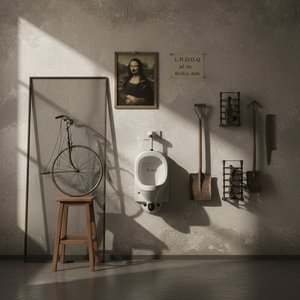
Marcel Duchamp: Challenging Conventions & Redefining Art in the 20th Century
Explore the revolutionary art of Marcel Duchamp! Discover how his Dadaist readymades challenged artistic conventions & redefined modern art. A deep dive into 'Fountain', conceptual shifts, and his lasting impact.
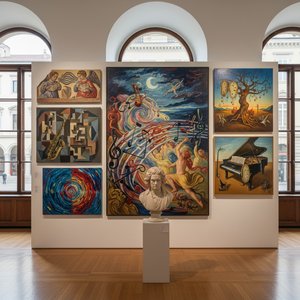
Harmonies on Canvas: Exploring the Visual Representation of Music in Art History
Explore the fascinating history of music's visual representation in art! From ancient symbolism to modern abstraction, discover how artists have captured sound and emotion on canvas. Expert insights & stunning examples.
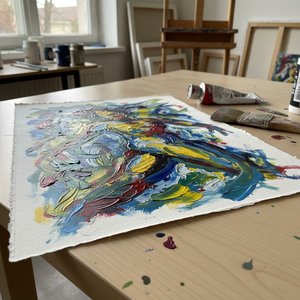
Acrylic on Paper: A Modern Canvas for Contemporary Expression
Explore the versatility of acrylic painting on paper! Discover expert techniques, artist insights & archival practices for creating stunning contemporary art. Learn more at OriginalUniqueArt.


