

 Pregledaj u prostoru
 Podeli
 Podeli
 Detalji
 Vodič
Vodič

 Preuzmi sliku
 Slični predmeti
 Rendgenski snimak
 Automatska prezentacija
 Statistika
ЛХООК, Моана Лиза са мушком
 Akril na platnu
- Umetnost za zidove
- Dadaism
 1919
1919- Moderna umetnost
 19.0 x 12.0 cm
 Pročitaj više
Umetničko delo prikazano na ovoj stranici zaštićeno je autorskim pravima, što znači da zakonski nismo u mogućnosti da kreiramo niti prodajemo identičnu reprodukciju. Ova zaštita se sprovodi u skladu sa međunarodnim sporazumima kao što su Bernska konvencija i nacionalnim zakonima, uključujući i one koji su definisani u Američki zakon o autorskom pravu – Naslov 17.
Ovaj metod je u potpunosti usklađen sa regulativama o autorskim pravima jer ne podrazumeva kopiranje ili dupliranje zaštićenih umetničkih dela. Umesto toga, reč je o kreativnoj reinterpretaciji – novom slikarskom delu koje je inspirisano originalom, ali nije identično njemu.
Giclee štampa / Umetnički otisak
Giclée štampa ili print na platnu muzejskog kvaliteta uz brzu izradu i raznovrsne opcije završne obrade. ( Naručite ručno oslikano reprodukciju Pređi na prodaju digitalnih slika)




P118B дин10

P118H дин10

P118W дин10

P438Z дин10

P508JH дин12

P508YH дин12

P805H дин10

P805Z дин10

P919BZ дин10

P919G дин10

P919XJ дин10

P959ZH дин10

P968JZ дин12

W106C дин8

W218G дин10

W218JH дин8

W218Y дин10

W307PJ дин10

W316G дин10

W316PJ дин8

W316Y дин10

W398PJ дин8

W4111J дин10

W500HY дин15

W500JH дин15

W692G дин12

W849H дин8

W940BG дин15

W953PJ дин8




Izaberite jednu od naših unapred definisanih veličina koje odgovaraju originalnim proporcijama umetničkog dela.

Unesite širinu i visinu koja vam je potrebna, kako bi se uklopili u vaš ram ili na vaš zid. Štampa se može samo iseći, nikada ne može biti veća od originalne slike, stoga format sa drugačijim proporcijama gubi deo slike. Poslaćemo vam digitalni prikaz radi potvrde pre nego što započnemo štampu. Slika prikazana na ovoj stranici ne pokazuje stvarni rez — to pokazuje samo digitalni prikaz.
Dostava širom sveta () za 2 nedelje umesto uobičajenih 4/5 nedelja. (25 октобар)

Besplatna ekspresna dostava širom sveta

Visokokvalitetno laneno platno

Sveobuhvatno osiguranje transporta

Garancija povraćaja carine i uvoznih dažbina

Garancija vernosti boja i autentičnosti pri reprodukciji

Politika povraćaja u roku od 100 dana (samo u slučaju nedostataka)

Garancija povrata 100% novca

Popust pri većoj količini
 Opcija sa staklom dostupna je samo za dimenzije manje od 110 cm

ЛХООК, Моана Лиза са мушком
Giclee štampa / Umetnički otisak
Veličina reprodukcije
-


Ukupna cena
дин 8248
A Provocative Smile: Deconstructing Beauty with Duchamp’s L.H.O.O.Q.
Marcel Duchamp's *L.H.O.O.Q.*, a seemingly simple alteration of Leonardo da Vinci’s iconic *Mona Lisa*, is far more than just a playful prank. Created in 1919 during the tumultuous years of Dadaism, this work represents a radical challenge to the very definition of art and its relationship with the viewer – a provocation that continues to resonate powerfully today. The piece begins with a humble postcard reproduction of the *Mona Lisa*, an image already imbued with notions of feminine beauty, serenity, and idealized perfection. Duchamp’s intervention—the addition of a bold, assertive moustache and beard—immediately subverts this established iconography, injecting a distinctly masculine element into the traditionally feminine portrait. This isn't merely a humorous alteration; it’s a deliberate dismantling of artistic conventions and a questioning of the power dynamics inherent in art historical representation. The act itself – taking an existing image and transforming it through simple addition – is precisely what defined Duchamp’s concept of “readymades,” objects or images selected for their ready-made status and presented as art.The Dadaist Rebellion: Context and Conceptual Shift
Duchamp's creation emerged from the heart of the Dada movement, a reaction born out of disillusionment with the horrors of World War I and the perceived failures of reason and logic that had led to such widespread devastation. Dada artists sought to dismantle established norms – not through grand gestures or revolutionary techniques, but through subtle disruptions and unsettling juxtapositions. *L.H.O.O.Q.* embodies this spirit perfectly. The title itself, a deliberately misspelled French phrase (“Elle a chaud au cul”), is laden with meaning. Pronounced aloud, it translates to “She has fire down below,” a suggestive and somewhat vulgar expression hinting at unrestrained desire. This playful wordplay underscores Duchamp’s rejection of traditional artistic values and his embrace of the absurd – a core tenet of Dadaism. The choice of the *Mona Lisa* as the subject was also significant; it represented the pinnacle of Renaissance art, embodying ideals of beauty, harmony, and classical perfection. By defacing this revered image, Duchamp directly challenged these established values, asserting that art could be found in the unexpected and the deliberately provocative.Symbolism and Subversion: A Deeper Layer
Beyond its immediate humor, *L.H.O.O.Q.* is rich with symbolic meaning. The moustache and beard represent a forceful assertion of masculinity within the traditionally feminine image of the *Mona Lisa*. This deliberate inversion challenges conventional gender roles and exposes the constructed nature of identity. Duchamp’s act can be interpreted as a critique of patriarchal art history, which has historically privileged male perspectives and representations. Furthermore, the use of a postcard – a mass-produced, disposable object – elevates its status to that of fine art. This highlights Duchamp's belief that the artist's intention and concept were more important than the materials or techniques used. The act of simply adding a moustache transforms an everyday image into something profoundly thought-provoking, demonstrating that art could be found in the most unexpected places.Legacy and Reproduction: A Timeless Masterpiece
The impact of *L.H.O.O.Q.* is undeniable. It has become one of the most recognizable and frequently referenced artworks of the 20th century, inspiring countless imitations, reinterpretations, and parodies. Artists across various mediums have responded to Duchamp’s challenge, continuing to question traditional notions of beauty, representation, and artistic value. The work's influence can be seen in Conceptual Art, Pop Art, and beyond, demonstrating its enduring relevance as a foundational piece in the history of modern art. OriginalUniqueArt offers meticulously crafted oil painting reproductions of *L.H.O.O.Q.*, allowing you to experience this iconic artwork firsthand – a testament to Duchamp’s revolutionary vision and a celebration of art's capacity for provocation and intellectual engagement. Explore our collection today and bring this seminal work into your space.- Marcel Duchamp: L.H.O.O.Q, Mona Lisa with moustache
- L.H.O.O.Q. on Wikipedia
- Marcel Duchamp: Paris Air
- Mona Lisa replicas and reinterpretations on Wikipedia
For a deeper understanding of the Michael C. Carlos Museum of Emory University in Atlanta, United States, visit: Exploring the Michael C. Carlos Museum of Emory University
Pitanja i odgovori
Da li je "ЛХООК, Моана Лиза са мушком" dostupan kao umetnička štampa?
„ЛХООК, Моана Лиза са мушком“ je dostupno kao umetnička štampa na pamučnom platnu ili arhivskom kanvas papiru. Porudžbine se vrše na stranici Umetski print, u dimenziji po vašem izboru.
Koja boja najviše dolazi do izražaja u delu "ЛХООК, Моана Лиза са мушком"?
Siva bež (#efdbc5) je dominantna boja dela „ЛХООК, Моана Лиза са мушком”, Марсел Дјушан.
Postoji li informativni list o delu „ЛХООК, Моана Лиза са мушком”, Марсел Дјушан namenjen studentima?
Stranica Vodič za delo „ЛХООК, Моана Лиза са мушком”, Марсел Дјушан nudi štampani informativni list u dve stranice: sam rad sa tabelom identifikacije, vremensku traku koja ga smešta u period života umetnika, druga dela istog umetnika, izmerenu paletu boja i citate spremne za kopiranje u četiri stila.
Biografija umetnika
Марсел Дјушан: Револуционар уметности који је поставио нова питања
Марсел Дјушан, рођено име Анри-Робер-Марсел Дјушан, рођен 1887. године у близини Руана, Француска, био је више од уметника; био је филозофски провокатор који је дубински изменио ток модерне уметности. Иако је потекао из породице која цени уметност – са браћом који су били успешни уметници – Дјушан је рано показао тенденцију да изазива, да руши усталене норме. Није био задовољан само приказом света; желео је да изазове како га посматрамо и шта чини уметничку вредност. Та немилосрдна интелектуална љубопитљивост дефинисала је његову плодну каријеру.Од кубизма до дадаизма: Одбацивање конвенција
Уметничко путовање Дјушана било је обележено сталном еволуцијом, свесним одбацивањем устаљених норми. Његов рани ангажман са кубизмом, видљив у делима као што је *Портрет играча шаха* (1911), показао је интересовање за фрагментиране облике и више перспектива – одступање од традиционалног представљања. Међутим, брзо је прешао даље од чисто естетских брига, препознајући да једноставно преуређивање визуелних елемената није довољно да се решавају дубинска питања која су га занимала. Ужаси Првог светског рата наговелили су тај немир, што је Дјушана довело до прихватања дадаизма, покрета који је настао из разочарања и одбацивања логике, разума и традиционалних уметничких вредности. У оквиру дадаизма Дјушан је заиста почео да руши конвенционалне идеје о уметности. Није био заинтересован за стварање лепих објекта; желео је да провоцира размишљања, изазове претпоставке и разоткрије произвољност естетског суђења.Реади-мејди и подривање уметности
Увођење реади-меја – обичних производа који се бирају и представљају као уметност – било је Дјушанова најзначајнија доприноса 20. веку. То нису били само пронађени објекти; то су била свесне чинове уметничког подривања. Узимањем свакодневног предмета, као што је увез (*Фонтана*, 1917), потписивањем га „Р. Мут“ и слањем на изложбу уметности, Дјушан је поставио питање саме дефиниције уметничке вештине и ауторства. Да ли је рука уметника створила дело или је идеја уметника? Ово питање постало је централно за његову праксу и положило основу за Концептуалну уметност. Други познати реади-меји као што је *L.H.O.O.Q.* (1919), постерна репродукција Моне Лизе коју је исцртао мустаћем и брадом, били су шаљиви али проницни критике уметности и утврђених културних икона. Ова дела нису била намењена да се цене по естетским квалитетима; била су намењена да провоцирају дебату и натерају гледаоце да преиспитају своја предрасуду о томе шта чини уметност. Дјушан је веровао да уметност треба да борави у уму, а не само у оку.Наслеђе и трајни утицај
Утицај Марсела Дјушана на касније генерације уметника неизмерив је. Он је фундаментално променио наше разумевање уметности, отварајући пут за покрете као што су Концептуална уметност, Минимализам, Поп арт и безброј других. Његов нагласак на идеји иза дела – концепту иза рада – уместо његових естетских квалитета наставља да инспирише уметнике данас.- Кубизам: Раније истраживање фрагментираних облика и просторне репрезентације.
- Дадаизм: Одбацивање логике, разума и традиционалних уметничких вредности као одговор на Први светски рат.
- Концептуална уметност: Нагласак на идеји иза дела уметности, а не на његовим естетским квалитетима.
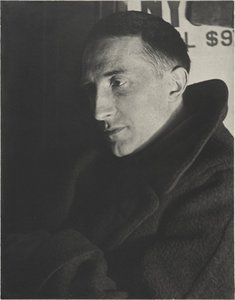
Марсел Дјушан
1887 - 1968 , Francuska
Brzi pregled
- Datum Rođenja: 28. jul 1887.
- Datum Smrti: 2. oktobar 1968.
- Istaknuta Dela:
- Fontana
- L.H.O.O.Q.
- Veliko staklo
- Boîte-en-valise
- Mesto Rođenja: Blanvil-sur-Mer, Francuska
- Nacionalnost: Francusko-Američki
- Puno Ime: Marsel Dšoampa
- Umetnici Ili Pokreti Pod Uticajem Ovog Umetnika:
- Konceptualna umetnost
- Pop Art
- Minimalizam
- Umetnički Pokret Ili Stil:
- Kubizam
- Dadaizam
- Konceptualna umetnost
Srodni članci
Leonardo da Vinci: 25 Remek-dela Genija za Vaš Dom | OriginalUniqueArt
Istražite 25 remek-dela Leonarda da Vince, od Mona Lize do Poslednje večere. Otkrijte priče iza slika renesanse i inspiraciju za dekoraciju enterijera. Kvalitetne reprodukcije na OriginalUniqueArt.com!
Marcel Duchamp: Challenging Conventions & Redefining Art in the 20th Century
Explore the revolutionary art of Marcel Duchamp! Discover how his Dadaist readymades challenged artistic conventions & redefined modern art. A deep dive into 'Fountain', conceptual shifts, and his lasting impact.
Dadaism: A Rebellion Against Reason – Exploring the Origins, Characteristics, and Enduring Legacy of an Anti-Art Movement
Explore the revolutionary Dada art movement! Discover its origins in WWI, key artists like Duchamp & Höch, core principles, and lasting impact on modern and contemporary art. A comprehensive guide for enthusiasts.

Beyond the Bristle: The Cultural Significance of Iconic Mustaches in Art History
Explore the profound cultural symbolism of iconic mustaches in art history. From classical portraiture to avant-garde movements, discover how facial hair has shaped identity and visual language through a scholarly, reflective lens.
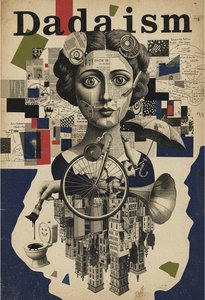
Dadaism Unveleid: The Radical Art Movement That Defied All Rules and Redefined Modernity
Explore the radical world of Dadaism with our expert-led deep dive. From Duchamp's readymades to the aesthetics of chaos, uncover how this anti-art movement redefined modern creativity and paved the way for Surrealism. A must-read for art students and history enthusiasts alike.


