Cubist Sculpture · 1914
Bottlerack (Марсел Дишан, 1914)
Марсел Дишан (1887–1968) je napravio Bottlerack. Datirano je iz 1914. Pripada pokretu Cubist Sculpture. Izrađeno je u Found Object Art. Dimenzije su 59 × 37 cm.
- 1914
- Found Object Art
- 59 × 37 cm

 Ručno oslikano uljanim bojama
 Pošalji
 Podeli
 Informativni list


 Preuzmi
 Slični predmeti
 Automatska prezentacija
 Pitanja i odgovori

 Statistika
Bottlerack, ukratko
- Naslov
- Bottlerack
- Umetnik
- Марсел Дишан (1887–1968)
- Rođen/a u
- Бленвил Кревон, Француска
- Datum
- 1914
- Tehnika
- Found Object Art
- Dimenzije
- 59 × 37 cm
- Pokret
- Cubist Sculpture
- Period
- Modern
- Tema
- metal sculpture, industrial art, geometric form, conceptual art, shelf structure, hook arrangement
Šta prikazuje Bottlerack?
The Radical Simplicity of the Everyday
In the early twentieth century, a profound shift occurred in the landscape of modern art, one that moved away from the pursuit of traditional beauty toward a deeper, more intellectual engagement with reality. At the heart of this revolution stands Marcel Duchamp’s Bottlerack, a work created in 1914 that continues to challenge our very definition of what an artwork can be. On its surface, the piece presents a deceptively simple subject: a stack of metal shelves or racks, reminiscent of industrial utility rather than high art. Yet, within this mundane structure lies the seed of a conceptual explosion. By selecting a mass-produced object and elevating it to the status of sculpture, Duchamp bypassed the need for traditional virtuosity, instead inviting us to find profound meaning in the most commonplace of items.
The sculpture embodies the rebellious spirit of Dadaism, an avant-garde movement that emerged as a visceral reaction against the chaos and perceived irrationality of the era. Through the lens of this piece, we see the rejection of established aesthetic conventions in favor of a new, provocative logic. The technique employed—primarily the use of steel tubing and hooks—emphasizes a stark, industrial materiality. There is no attempt to hide the object's utilitarian origins; rather, Duchamp celebrates its geometric precision and structural honesty. This deliberate choice underscores his rejection of "retinal art"—art intended only to please the eye—and instead directs our attention toward the intellectual act of selection and the transformative power of the artist's gaze.
Symbolism and the Birth of the Readymade
Beyond its physical presence, Bottlerack carries a heavy symbolic weight that resonates through the decades. It serves as a primary example of the "readymade," a term Duchamp used to describe ordinary manufactured goods that become art through the mere act of choice and repositioning. The stack of hooks acts as a metaphor for the artist’s intervention into the realm of the everyday, asserting that creativity can be found in appropriation and conceptual thought rather than just skillful execution. This piece is not merely a rack; it is a declaration of independence from the constraints of representation, a monument to the idea that art can exist entirely outside the boundaries of beauty or narrative.
For the modern collector or interior designer, a high-quality reproduction of Bottlerack offers more than just a visual accent; it provides a conversation piece that evokes feelings of detachment, curiosity, and intellectual rigor. The sculpture’s stark lines and industrial aesthetic lend themselves beautifully to contemporary spaces, where they can act as a focal point of minimalist sophistication. To display this work is to invite the spirit of Duchamp into one's environment—to celebrate the beauty of structure and to honor the revolutionary moment when the boundaries between life and art were forever dissolved.
Slike visoke rezolucije za Bottlerack
Zaštićeno autorskim pravima: slika je prikazana samo u informativne svrhe.
Ostale veličine, isečci i citiranje →Марсел Дишан, Bottlerack (1914).
Odgovori na pitanja o Bottlerack
Kada je nastalo delo „Bottlerack”, autor Марсел Дишан?
„Bottlerack“ potiče iz 1914. Ovaj datum smešta delo u okviru karijere umetnika Марсел Дишан i same ere.
U kojoj je tehnici izvedeno delo „Bottlerack”, autor Марсел Дишан?
"Bottlerack" je urađeno u tehnici Found Object Art.
Kolikih je dimenzija originalnog dela "Bottlerack"?
„Bottlerack“ u svom izvornom obliku ima dimenzije 59 x 37 cm. Originalne dimenzije su koristan pokazatelj pri odabiru veličine reprodukcije.
Koje su teme prikazane u delu „Bottlerack”, autor Марсел Дишан?
„Bottlerack”, autor Марсел Дишан prikazuje: metal sculpture, industrial art, geometric form, conceptual art, shelf structure, hook arrangement, dada aesthetic.
Da li je delo „Bottlerack”, autor Марсел Дишан u javnom vlasništvu?
Što se tiče autorskih prava, delo "Bottlerack" je i dalje je zaštićeno autorskim pravima.
Ko je autor dela "Bottlerack"?
Delo "Bottlerack" je kreirao/la Марсел Дишан. Informacije na ovoj stranici opisuju originalno delo umetnika Марсел Дишан.
Koji umetnički pravac obuhvata „Bottlerack”, autor Марсел Дишан?
„Bottlerack”, autor Марсел Дишан pripada pravcu Cubist Sculpture. Ovaj pravac pruža stilski kontekst dela.
U kojoj fazi stvaralaštva umetnika Марсел Дишан se nalazi delo "Bottlerack"?
„Bottlerack“ pripada Dada Era u karijeri umetnika Марсел Дишан. Ova klasifikacija povezuje delo sa razvojem samog umetnika.
Koliko je godina imao/la Марсел Дишан kada je kreirao/la "Bottlerack" 1914. godine?
Kada je delo "Bottlerack" nastalo 1914. godine, Марсел Дишан – rođen/a 1887. godine – imao/la je 27 godina.
O umetniku, Марсел Дишан

1887–1968, Француска
Марсел Дишан
Марсел Дјушан: Револуционар уметности који је поставио нова питања Марсел Дјушан, рођено име Анри-Робер-Марсел Дјушан, рођен 1887. године у близини Руана, Француска, био је више од уметника; био је филозофски провокатор који је дубински изменио ток модерне уметности. Иако је потекао из породице која цени уметност – са браћом који су били успешни уметници – Дјушан је рано показао тенденцију да изазива, да руши усталене норме. Није био задовољан само приказом света; желео је да изазове како га посматрамо и шта чини уметничку вредност.
Takođe i Марсел Дишан
 Гола жена која силази степенице, бр. 21912
 Tužni mladić u vlaku1911
 Дано: 1. Водопад, 2. Гас за осветљење1966
 Fontana1917
Eseji o delu Bottlerack
 Industrial Revolution on Canvas: 10 Artworks That Define a Modern AestheticExplore 10 iconic artworks capturing the Industrial Revolution’s grit & beauty. From Monet to Manet, discover realism, impressionism & powe…
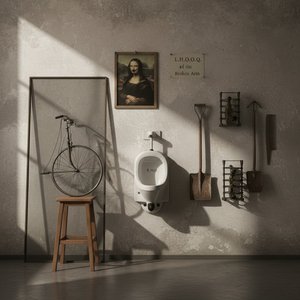 Marcel Duchamp: Challenging Conventions & Redefining Art in the 20th CenturyExplore the revolutionary art of Marcel Duchamp! Discover how his Dadaist readymades challenged artistic conventions & redefined modern art…
 The Radical Evolution of the Bottle in Still Life: From Cubist Deconstruction to Pop Art BoldnessTrace the evolution of bottle still life from Cubism to Pop Art with expert insight. Explore how masters redefined everyday objects now.