

 Pregledaj u prostoru
 Podeli
 Podeli
 Detalji
 Vodič
Vodič

 Preuzmi sliku
 Slični predmeti
 Rendgenski snimak
 Automatska prezentacija
 Statistika
Self Portrait with Palette
 Acrylic On Canvas
- WallArt
- Expressionist Painting
 1924
1924 100.0 x 79.0 cm
 MoMA - Muzej moderne umetnosti
 Pročitaj više
Giclee štampa / Umetnički otisak
Giclée štampa ili print na platnu muzejskog kvaliteta uz brzu izradu i raznovrsne opcije završne obrade. ( Naručite ručno oslikano reprodukciju Pređi na prodaju digitalnih slika)




P118B дин10

P118H дин10

P118W дин10

P438Z дин10

P508JH дин12

P508YH дин12

P805H дин10

P805Z дин10

P919BZ дин10

P919G дин10

P919XJ дин10

P959ZH дин10

P968JZ дин12

W106C дин8

W218G дин10

W218JH дин8

W218Y дин10

W307PJ дин10

W316G дин10

W316PJ дин8

W316Y дин10

W398PJ дин8

W4111J дин10

W500HY дин15

W500JH дин15

W692G дин12

W849H дин8

W940BG дин15

W953PJ дин8




Izaberite jednu od naših unapred definisanih veličina koje odgovaraju originalnim proporcijama umetničkog dela.

Možete uneti sopstvene dimenzije kako biste umetničko delo prilagodili specifičnom okviru ili prostoru. Ako odabrani format ne odgovara proporcijama originalne slike, mi ćemo ili iscrtati deo dela ili proširiti sliku pomoću ogledane ivice ili jednobojnog popunjavanja. Digitalni prikaz će vam biti poslat na odobrenje pre početka proizvodnje.
Imajte na umu da pregled na ekranu ne odražava stvarno iscrtavanje ili proširivanje. Samo će prikaz (mockup) precizno pokazati finalnu kompoziciju.
Iako su prilagođene dimenzije dostupne, preporučujemo da odaberete dimenziju sa unapred definisane liste kako biste očuvali originalne proporcije.
Dostava širom sveta () za 2 nedelje umesto uobičajenih 4/5 nedelja. (11 октобар)

Besplatna ekspresna dostava širom sveta

Visokokvalitetno laneno platno

Sveobuhvatno osiguranje transporta

Garancija povraćaja carine i uvoznih dažbina

Garancija vernosti boja i autentičnosti pri reprodukciji

Politika povraćaja u roku od 100 dana (samo u slučaju nedostataka)

Garancija povrata 100% novca

Popust pri većoj količini
 Opcija sa staklom dostupna je samo za dimenzije manje od 110 cm

Self Portrait with Palette
Giclee štampa / Umetnički otisak
Veličina reprodukcije
-


Ukupna cena
дин 8085
Lovis Corinth’s Self Portrait with Palette: A Window into Expressionist Soul
Lovis Corinth's "Self Portrait with Palette," completed in April 1924, stands as a cornerstone of Expressionism and a poignant reflection on the artist’s own inner landscape. Executed in oil on canvas measuring 39 3/8 x 31 5/8 inches (100 x 80.3 cm), this artwork resides within MoMA's impressive collection, offering visitors a captivating glimpse into Corinth’s artistic vision and personal struggles. The painting’s acquisition by Curt Valentin underscores its significance as a pivotal piece of the early 20th century canon.- Subject Matter & Composition: At first glance, the portrait depicts Corinth himself seated before a large canvas bearing an unfinished landscape scene – a deliberate juxtaposition that immediately establishes a dialogue between inner contemplation and artistic creation.
- Style & Technique: Corinth’s signature Expressionist style is evident in every brushstroke. Bold, impasto textures dominate the surface of both the self-portrait and the backdrop painting, conveying a palpable sense of urgency and emotional intensity. The muted color palette—primarily browns, ochres, and greens—further enhances the mood, prioritizing tonal variation over precise representation.
- Symbolism: The unfinished landscape serves as a visual metaphor for Corinth’s own creative endeavors – perpetually striving but never achieving complete fulfillment. The palette rests prominently in his lap, representing not only the tools of his craft but also the artist's intellectual and emotional engagement with his work.
- Emotional Impact: “Self Portrait with Palette” transcends mere visual depiction; it communicates a profound sense of melancholy and introspection. Corinth’s gaze conveys both sorrow and resolve, inviting viewers to contemplate the complexities of human experience and the enduring power of artistic expression.
Pitanja i odgovori
Koji raspoloženje izražava „Self Portrait with Palette”, Ловис Корнит unutar pokreta Expressionist Painting?
Unutar pokreta Expressionist Painting, delo "Self Portrait with Palette" je zabeleženo sa Reflective tonom.
Šta prikazuje „Self Portrait with Palette”, Ловис Корнит?
„Self Portrait with Palette”, Ловис Корнит prikazuje: self-portrait, palette, painting, dutch art, expressionism, artist reflection, symbolic imagery.
U kojim godinama je Ловис Корнит stvorio/la "Self Portrait with Palette"?
Kada je delo "Self Portrait with Palette" nastalo 1924. godine, Ловис Корнит – rođen/a 1858. godine – imao/la je 66 godina.
Koja boja dominira kompozicijom dela „Self Portrait with Palette”, Ловис Корнит?
Dominantna boja dela „Self Portrait with Palette”, Ловис Корнит je Driftwood (#aa8f55).
Ko je kreirao "Self Portrait with Palette"?
Delo "Self Portrait with Palette" pripisuje se umetniku Ловис Корнит.
Da li je "Self Portrait with Palette" jedno od najpopularnijih dela umetnika Ловис Корнит?
Nivo popularnosti zabeležen za „Self Portrait with Palette”, Ловис Корнит iznosi Recognized.
U kojoj godini je nastalo delo „Self Portrait with Palette”, Ловис Корнит?
„Self Portrait with Palette“ potiče iz 1924. Ovaj datum smešta delo u okviru karijere umetnika Ловис Корнит i njegove ere.
Biografija umetnika
A Life Forged in Paint: The World of Lovis Corinth
Lovis Corinth, born Franz Heinrich Louis on July 21, 1858, in the Prussian province of East Prussia, was a figure who embodied the tumultuous transition from the 19th to the early 20th-century art world. His journey wasn’t one of immediate acclaim but rather a gradual evolution fueled by relentless study, diverse influences, and ultimately, personal tragedy. Corinth's beginnings were rooted in the rural landscapes of his birthplace, Tapiau, where his father worked as a tanner. This early exposure to the physicality of labor and the raw beauty of nature would subtly permeate his later work, even amidst more sophisticated stylistic explorations. He initially pursued studies at the Academy of Königsberg in 1876, but quickly realized that academic tradition alone wouldn’t satisfy his artistic ambitions. A period of travel followed, taking him to Munich, Antwerp, and finally Paris – each city serving as a crucial stepping stone in his development. In Munich, he absorbed the meticulous realism championed by Ludwig von Löfftz, honing his observational skills and mastering technique. Antwerp introduced him to the dramatic Baroque intensity of Rubens, while Paris exposed him to the burgeoning Impressionist movement, though his initial response was one of cautious observation rather than immediate embrace. He wasn’t interested in idealized beauty; instead, he sought to capture the untamed power and inherent drama of the landscape. Corinth's formative years instilled in him a profound appreciation for both classical tradition and naturalistic representation—a duality that would shape his artistic vision throughout his life. His early paintings, like “In the Slaughterhouse” (1878), demonstrated an uncompromising commitment to depicting reality with unflinching honesty, confronting viewers with uncomfortable truths about mortality and decay. Yet even within this stark realism, a nascent emotional depth hinted at a willingness to explore psychological complexities—a characteristic that would become increasingly prominent in his later oeuvre. The influence of Courbet’s earthy palette and expressive brushwork was palpable in these early works, establishing Corinth as a disciple of the Barbizon School and signaling his initial engagement with avant-garde currents.From Naturalism to a Synthesis of Styles
Corinth's artistic development wasn't marked by swift revolutions but by a gradual assimilation and synthesis of diverse influences. His unwavering dedication to mastering technique—combined with an acute sensitivity to color and composition—allowed him to transcend stylistic boundaries and forge his own distinctive path. The Impressionist movement, initially viewed with skepticism, ultimately captivated Corinth’s imagination, prompting him to experiment with broken color and fleeting light effects. However, he didn't simply adopt these techniques wholesale; instead, he integrated them into his existing artistic framework, creating a style that blended impressionistic vibrancy with a distinctly German sensibility. This synthesis—evident in paintings like “Female Semi-Nude with Hat” (1906)—represented a pivotal moment in Corinth’s artistic evolution and foreshadowed the emergence of Expressionism as a dominant force in European art. He skillfully combined Rubensian dynamism with Impressionist luminosity, achieving unparalleled expressive power while maintaining compositional rigor.A Master of Portraiture and Landscape
Corinth's oeuvre encompassed a remarkable range of genres—from biblical scenes to mythological subjects—but he is perhaps best remembered for his portraits and landscapes. His approach to portraiture extended beyond mere likeness; it was an attempt to penetrate the psychological depths of his sitters, revealing their inner lives through subtle gestures, expressive eyes, and carefully considered poses. He possessed a remarkable ability to convey character and emotion with astonishing economy of means—a hallmark of Corinth’s artistic genius. Similarly, his landscapes weren't merely scenic representations; they were emotional responses to nature—infused with Corinth’s own passionate engagement with the natural world. The Walchensee region in Bavaria became a particular source of inspiration, providing him with a wealth of motifs that he explored repeatedly throughout his later years. These paintings—characterized by their bold colors, dynamic brushwork, and palpable energy—represent Corinth's mature style at its most powerful and expressive.Tragedy, Resilience, and Lasting Legacy
A transformative event in Corinth’s life occurred in December 1911 when he suffered a debilitating stroke that left him paralyzed on his left side. Despite facing immense physical challenges—and the looming threat of professional ruin—Corinth demonstrated unwavering determination and resilience, refusing to succumb to despair. With Charlotte Berend-Corinth by his side, he embarked upon a grueling regimen of rehabilitation exercises, relearning to paint with painstaking effort and adapting to his limitations—a testament to Corinth’s indomitable spirit. This period yielded some of his most poignant and emotionally resonant works—including “Self-Portrait” (various years)—reflecting the artist's profound introspection and confronting him with the realities of mortality. The experience profoundly deepened his artistic vision, prompting him to embrace a looser brushstroke and intensify color palette—anticipating many of the stylistic innovations that would define Expressionism. Corinth’s influence extended beyond his own painting; he served as president of the Berlin Secession from 1915 until his death in 1925, championing progressive artistic ideals and fostering a vibrant creative community. Lovis Corinth's legacy transcends mere aesthetic achievement—he remains a pivotal figure in German art history, embodying the spirit of artistic integrity and transforming personal adversity into profound expressive power. His enduring influence continues to inspire artists today, securing his place as one of the most significant painters of the early 20th century. ## Key Works & Their Significance- In the Slaughterhouse (1878): Demonstrates Corinth’s early mastery of technique and unflinching commitment to depicting reality with honesty—a bold confrontation with mortality and decay.
- Self-Portrait (various years): Offers a chronicle of Corinth's evolving self-perception and artistic style—revealing profound introspection and fearless exploration of identity.
- Female Semi-Nude with Hat (1906): Exemplifies Corinth’s blending of classical motifs with Impressionistic techniques—creating a sensuous portrait imbued with psychological complexity.
- Walchensee Series (various years): Represents Corinth's mature style at its most powerful and expressive—characterized by bold colors, dynamic brushwork, and palpable energy.

Ловис Корнит
1858 - 1925 , Немачка
Brzi pregled
- Artistic Movement Or Style: Impressionism & Expressionism
- Artists Or Movements Influenced By This Artist: ['Expressionism']
- Artists Who Influenced This Artist:
- Courbet
- Rubens
- Date Of Birth: Jul 21, 1858
- Date Of Death: Jul 17, 1925
- Full Name: Franz Heinrich Louis Corinth
- Nationality: German
- Notable Artworks:
- In the Slaughter House
- Self-Portrait
- Female Semi-Nude
- Place Of Birth: Tauwade, Netherlands
Srodni članci

Golden Light & Dutch Skies: The Timeless Magic of Dutch Golden Age Landscapes
Discover the breathtaking beauty of Dutch Golden Age landscapes. Explore the mastery of light, chiaroscuro, and 17th-century realism through an expert art history lens, celebrating the enduring legacy of the Dutch Masters for discerning collectors and art lovers.

The Enduring Legacy of Oil on Canvas: Technique, History & Aesthetic Impact
Explore the rich history & techniques of oil painting – from Renaissance masters to Impressionism. Discover pigments, layering methods, and why this timeless medium endures. Expert insights for artists & art enthusiasts.

Oil on Canvas: A Historical & Technical Exploration of a Timeless Artistic Medium
Explore the rich history & enduring techniques of oil painting on canvas. Discover the science behind its longevity, conservation practices, and contemporary relevance. Expert insights for art enthusiasts.

Lovis Corinth: Bridging Impressionism & Expressionism – A Study of Artistic Evolution
Explore the fascinating artistic journey of Lovis Corinth, a pivotal figure bridging Impressionism & Expressionism. Discover his evolution, key works, and lasting impact on modern art with OriginalUniqueArt.
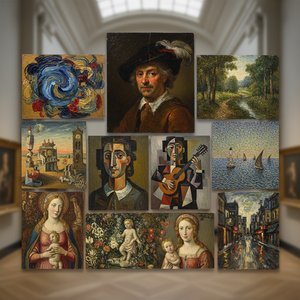
Oil on Board Masters: 10 Paintings That Redefined Art | OriginalUniqueArt
Explore 10 legendary 'Oil on Board' masterpieces by Van Gogh, Monet & more! Discover art history, iconic styles like Impressionism, and find museum-quality reproductions to elevate your home decor. Explore the full collection online at OriginalUniqueArt.com.
