

 Pregledaj u prostoru
 Pošalji
 Podeli
 Detalji o delu

 Преузми
 Slični predmeti
 Rendgenski snimak
 Slajdovi
Herdboy and ox
 Socialist Realism
 48.0 x 31.0 cm
 Hong Kong Museum of Art
 Pročitaj više
Giclee štampa / Umetnički otisak
Giclée štampa ili print na platnu muzejskog kvaliteta uz brzu proizvodnju i fleksibilne opcije završne obrade. ( Kupi ručno naslikanu sliku Kupi digitalnu sliku)




P118B $10

P118H $10

P118W $10

P438Z $10

P508JH $12

P508YH $12

P805H $10

P805Z $10

P919BZ $10

P919G $10

P919XJ $10

P959ZH $10

P968JZ $12

W106C $8

W218G $10

W218JH $8

W218Y $10

W307PJ $10

W316G $10

W316PJ $8

W316Y $10

W398PJ $8

W4111J $10

W500HY $15

W500JH $15

W692G $12

W849H $8

W940BG $15

W953PJ $8




Izaberite jednu od naših unapred definisanih veličina koje odgovaraju originalnim proporcijama umetničkog dela.

Možete uneti sopstvene dimenzije kako biste umetničko delo prilagodili specifičnom okviru ili prostoru. Ako odabrani format ne odgovara proporcijama originalne slike, mi ćemo ili iscrtati deo dela ili proširiti sliku pomoću ogledane ivice ili jednobojnog popunjavanja. Digitalni prikaz će vam biti poslat na odobrenje pre početka proizvodnje.
Imajte na umu da pregled na ekranu ne odražava stvarno iscrtavanje ili proširivanje. Samo će prikaz (mockup) precizno pokazati finalnu kompoziciju.
Iako su prilagođene dimenzije dostupne, preporučujemo da odaberete dimenziju sa unapred definisane liste kako biste očuvali originalne proporcije.
Dostava širom sveta () za 2 nedelje umesto uobičajenih 4/5 nedelja. (30 август)

Besplatna ekspresna dostava širom sveta

Visokokvalitetno laneno platno

Kompletno osiguranje transporta

Garancija povraćaja carine i uvoznih dažbina

Garancija vernosti boja

Politika povrata u roku od 60 dana (samo u slučaju nedostataka)

Garancija povrata novca od 100%

Popust pri grupnoj kupovini
 Opcija sa staklom dostupna je samo za dimenzije manje od 110 cm

Herdboy and ox
Giclee štampa / Umetnički otisak
Dimenzije reprodukcije
-


Konačna cena
$ 80
Biografija umetnika
The Soul of Ink: The Life and Legacy of Li Keran
In the vast tapestry of twentieth-century Chinese art, few threads shine with as much profound depth and luminous intensity as those woven by Li Keran. Born Li Yongshun in 1907 amidst the storied landscapes of Xuzhou, Jiangsu province, his journey was one of remarkable self-reliance and artistic evolution. Coming from a family where his parents could not read or write, Li’s early life was defined by an innate, hungry curiosity for the visual world. Guided initially by the local master Qian Shizhi, he began to grasp the delicate language of traditional Chinese landscape painting, yet his spirit was far too expansive to be confined solely to the classical canon. His path would eventually lead him to bridge the ancient wisdom of the literati with the bold, structural innovations of Western oil painting, creating a visual dialect that felt both timeless and strikingly modern.
The formative years of Li Keran’s education were marked by a series of pivotal encounters with artistic giants. His enrollment at the Shanghai Art Academy in 1923 opened doors to a new world of perspective and light, while his later studies at the National Academy of Arts in Hangzhou introduced him to the transformative techniques of Lin Fengmian and André Claudot. This exposure to Western oil painting principles was not a departure from his roots, but rather an enrichment of them. He learned to manipulate volume, shadow, and light, which he would later reintegrate into the medium of ink. As he moved through the turbulent decades of the Second Sino-Japanese War, serving the Nationalist government through powerful propaganda posters and murals, Li developed a sense of social purpose that would forever inform his subject matter, grounding his ethereal landscapes in the palpable reality of human existence and national identity.
A Master of Light and Shadow
What truly distinguishes the oeuvre of Li Keran is his revolutionary approach to guohua (traditional Chinese painting), specifically through his mastery of what is often termed "backlighting." While traditional landscape painting often relied on flat washes and linear clarity, Li sought to capture the atmospheric drama of nature. He utilized accumulated ink and layered textures to create a sense of profound depth, where mountains do not merely sit upon the paper but emerge from a misty, luminous void. His technique allowed him to depict the interplay of light filtering through heavy clouds or the stark contrast of dark silhouettes against a glowing sky, a feat that brought a sculptural, almost cinematic quality to the medium of ink and wash.
This technical brilliance is perhaps most beautifully realized in his depictions of rural life and the natural world. In works such as Herdboy and Ox, one can witness the harmonious marriage of his influences. The heavy, textured application of ink on the buffalo’s body echoes the strength of Western realism, yet the composition remains deeply rooted in the poetic, rhythmic flow of classical Chinese aesthetics. Under the mentorship of legends like Qi Baishi and Huang Binhong, Li learned to respect the spontaneous vitality of the brushstroke, ensuring that even his most structurally complex landscapes retained a sense of organic, breathing life.
Historical Significance and Enduring Influence
Li Keran’s impact extends far beyond the borders of his own canvases; he was a foundational architect of modern Chinese art education. As a professor at the Central Academy of Fine Arts, he nurtured a new generation of painters, instilling in them the same courage to experiment that had defined his own career. His ability to synthesize the traditional literati spirit with contemporary global movements ensured that Chinese landscape painting remained a living, evolving tradition rather than a static relic of the past.
The enduring value of his work is reflected not only in its profound emotional resonance but also in its monumental presence in the global art market. His masterpiece, Thousands of Hills in a Crimsoned View, stands as a testament to his ability to evoke both grandeur and intimacy, commanding record-breaking valuations that speak to his status as a titan of the twentieth century. Today, Li Keran is remembered as an artist who did not merely paint landscapes, but who captured the very breath of the earth, leaving behind a legacy of light, shadow, and an unyielding devotion to the transformative power of art.

Li Keran
1907 - 1989
Osnovne informacije
- Artistic Movement Or Style: Guohua (Traditional Chinese Painting)
- Artists Or Movements Influenced By This Artist: ['Contemporary Chinese Landscape']
- Artists Who Influenced This Artist:
- Qi Baishi
- Huang Binhong
- Date Of Birth: March 26, 1907
- Date Of Death: December 5, 1989
- Full Name: Li Keran
- Nationality: Chinese
- Notable Artworks:
- Landscape in Red
- Magnificent Mountains With Gushy Cascades
- Shaoshan
- Place Of Birth: Xuzhou, Jiangsu
Povezani članci

25 Remek-dela Džona Konstebla: Lepota Engleske na Platnu | OriginalUniqueArt
Uronite u svet Džona Konstebla! Otkrijte 25 remek-dela engleskog pejzaža, romantizma i seoske idile. Kupite reprodukcije slika vrhunskog kvaliteta za dekoraciju enterijera na OriginalUniqueArt.com.

Cultivating Visions: A Historical Journey Through Rural Landscapes in Art
Explore the rich history of rural landscape painting with OriginalUniqueArt. Discover Impressionist masterpieces, key artists & movements. Find your perfect serene artwork and bring nature's beauty home.

Glavna dela koja su definisala Romantični pejzaž: 10 remek-dela za vaš dom
Otkrijte 10 remek-dela romantičnog pejzažnog slikarstva! Uronite u svet Claude Lorraina, Caspara David Friedricha i Turnera. Ispričane priče umetnosti, inspiracija za dekoraciju doma. Kvalitetne reprodukcije na OriginalUniqueArt.com – istražite celu kolekciju online!

Evocations of Place: A Historical Journey Through Landscape Art
Explore the rich history of landscape art with OriginalUniqueArt. Discover renowned artists, movements like Impressionism & Romanticism, and expert guidance for collecting timeless pieces. Find your perfect serene escape today!
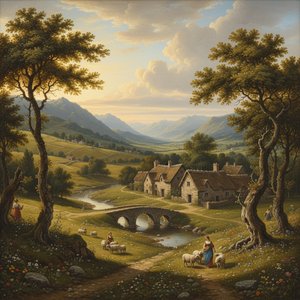
Evoking Arcadia: A Historical & Aesthetic Exploration of Rural Landscape Art
Explore the rich history of pastoral landscape art, from classical Arcadia to Impressionism & beyond. Discover key artists, movements, and how to collect serene rural scenes for your home. Expert insights at OriginalUniqueArt.

