Pređi na štampu
 Pročitaj više







































 Za umetnička dela ili reprodukcije čija je bilo koja strana veća od 105 cm (približno 41 inč), okvir će biti isporučen u obliku rastavljenog seta za sklapanje. Ovaj metod osigurava bezbednu dostavu i sprečava oštećenja tokom transporta.


The Intertwining Flesh and Form: Exploring Lee Bul's Vision
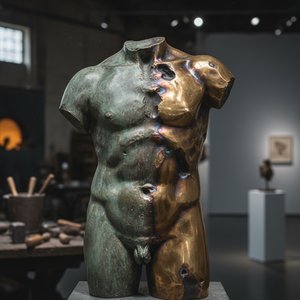
To stand before Lee Bul’s sculpture, Chrysalis, is to enter a liminal space—a place suspended between emergence and dissolution. This monumental work does not merely depict figures; it captures the very tension of becoming. The piece presents an intricate ecosystem where organic life meets industrial structure. At its heart lies a magnificent tree, a scaffold woven from disparate materials—the warmth of aged wood juxtaposed with the cool, assertive lines of metal. It is upon these branches and roots that human forms interact, some clinging, others seemingly suspended in moments of precarious grace. The sheer density of the composition forces the viewer into an immediate, almost breathless engagement, compelling us to trace the paths of connection and separation within the sculpture’s embrace.
Symbolism of Constraint and Becoming
Lee Bul's artistic language has always been deeply engaged with the societal pressures that shape the human condition. In Chrysalis, this dialogue is palpable. The tree itself functions as a potent symbol—a nexus point where life draws sustenance, yet also where forms become entangled and constrained. The figures interacting with it echo her lifelong critique of societal coercion; they are caught within a structure that simultaneously supports and limits. One senses the struggle for autonomy against invisible, yet powerfully felt, boundaries. The human body, in Lee Bul’s hands, is never simply presented; it is always contextualized—a site of both profound vulnerability and latent, untamed energy.
Materiality and Technique: A Dialogue Between Nature and Artifice
The technical mastery displayed here is breathtaking. The artist has achieved a remarkable synthesis by combining materials that traditionally speak to different realms: the mutable, yielding nature of wood against the permanence and rigidity of metal. This juxtaposition is not merely decorative; it is conceptual. The roots and branches suggest natural growth patterns, while the incorporation of manufactured metals speaks to the modern, engineered world. For those considering a reproduction for a sophisticated interior or collection, understanding this material dialogue is key. It promises an object that feels both ancient in its thematic weight and startlingly contemporary in its execution.
Emotional Resonance and Collecting Inspiration
Chrysalis resonates with the universal experience of transition—the moment between one state of being and the next. It evokes a complex emotional palette: there is the beauty found in interdependence, yes, but also the quiet ache of necessary separation. For the collector or designer, this piece offers more than mere ornamentation; it provides a focal point for contemplation. It asks profound questions about where we find strength—in our connections to others, or in the solitary act of reaching upward? Owning such a work is acquiring a dialogue with one of the most vital voices in contemporary global art.
Pitanja i odgovori
Kako "Chrysalis" balansira svetlo i tamno?
„Chrysalis“ ima ukupnu osvetljenost od deep_shadow, dok je luminansa Dark.
U kojoj je tehnici izvedeno delo „Chrysalis”, autor Ли Бул?
Tehnika dela „Chrysalis”, autor Ли Бул je Sculpture. Reprodukcije imaju za cilj da dočaraju izgled ove tehnike.
Gde se preporučuje izlaganje dela "Chrysalis" u formatu Portrait?
Sa svojim Portrait oblikom, reprodukcija dela "Chrysalis" idealna je za Living Room.
 Pošalji
 Podeli
 Detalji o delu
 Vodič
Vodič

 Preuzmi
 Slični predmeti
 Automatska prezentacija
 Pitanja i odgovori
 Statistika