- Početna strana

- Digitalna slika
- Kenyon Cox
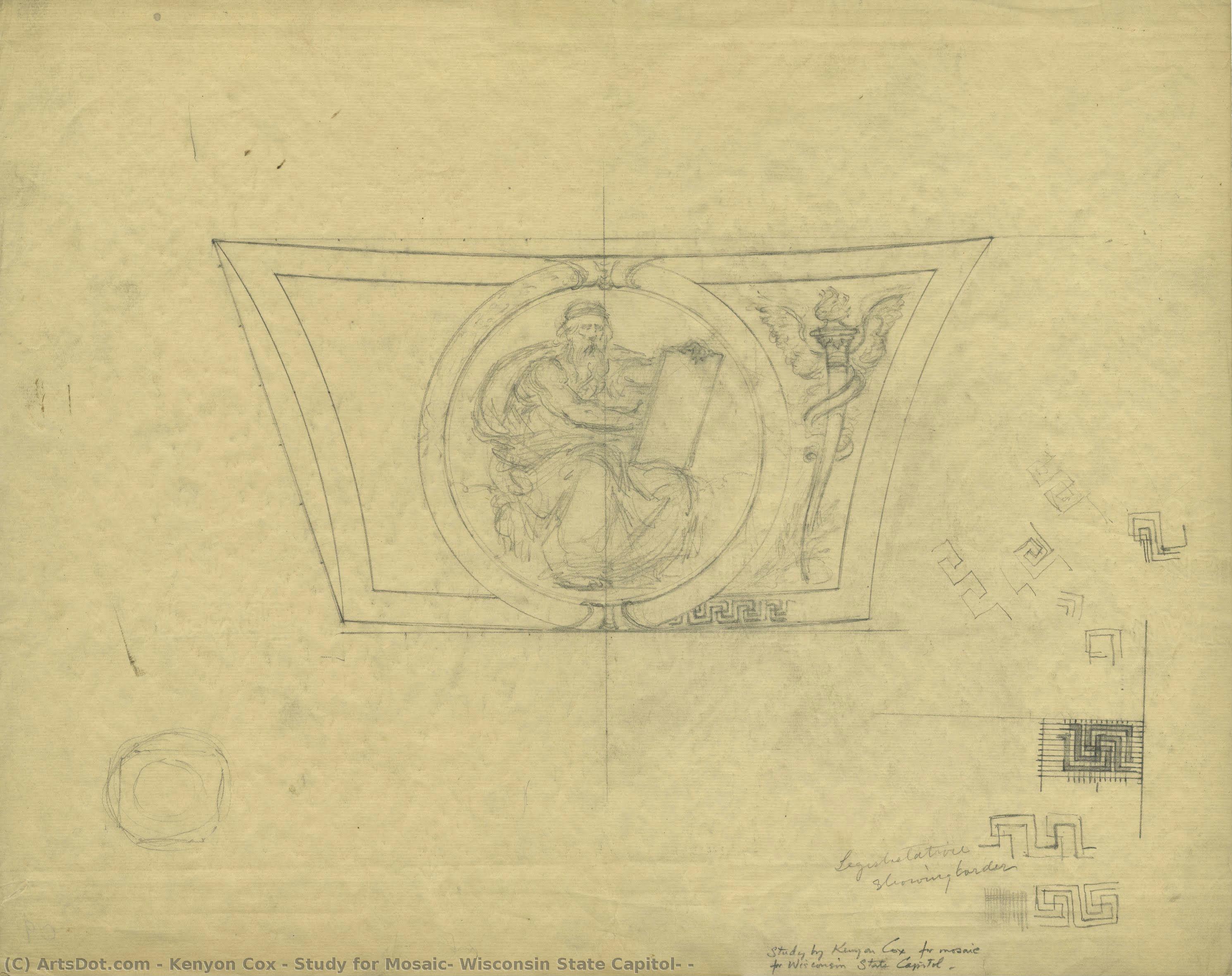
- Study for Mosaic, Wisconsin State Capitol,
 Pregledaj u prostoru
 Pošalji
 Podeli
 Detalji o delu

 Преузми
 Slični predmeti
 Rendgenski snimak
 Slajdovi
Study for Mosaic, Wisconsin State Capitol,
 Pencil
- Classical Realism
 1912
1912- 19th Century
 40.0 x 50.0 cm
 Oklahoma City Museum of Art
 Pročitaj više
Kupite digitalnu sliku visoke rezolucije i poboljšanog kvaliteta, koja je znatno superiornija od onoga što vidite u online prikazu.
Svaka datoteka je pedantno pripremljena od strane naših stručnjaka koristeći napredne alate i profesionalnu ručnu retušu. Osiguravamo da svaka slika ima izuzetnu oštrinu, preciznu reprodukciju boja i fine detalje.
Konačna datoteka se dostavlja putem e-pošte u roku od 72 sata, optimizovana za neposrednu upotrebu u profesionalnim, izdavačkim i štamparskim okruženjima. To je isti kvalitet kojem veruju vrhunski studiji dizajna, izdavači i galerije.
Digitalna slika
Preuzmite datoteku visoke rezolucije za ličnu upotrebu, štampanje i kreativne projekte. ( Pređi na štampu Pređite na ručno oslikano umetničko delo)
Uključeno uz svaku porudžbinu digitalne slike
Profesionalna digitalna isporuka, zagarantovana
Kada odaberete OriginalUniqueArt.com, ne dobijate samo sliku – vi primate profesionalno unapređeno digitalno umetničko delo, izrađeno sa najvećom preciznošću i uz garanciju zadovoljstva. Evo svega što automatski dolazi uz vašu porudžbinu:

Brza dostava putem e-pošte
Vaša digitalna slika visoke rezolucije biće vam poslata putem e-pošte u roku od 72 sata od poručivanja – spremna za trenutnu upotrebu.

Digitalna datoteka unapređena veštačkom inteligencijom
Vaše umetničko delo je profesionalno optimizovano korišćenjem naprednih AI alata i ručne obrade, čime se osiguravaju maksimalni detalji, oštrina i preciznost boja.

Besplatna ponovna isporuka doživotno
Slučajno ste obrisali ili izgubili svoju datoteku? Ne brinite – poslaćemo vam je ponovo u bilo kom trenutku, potpuno besplatno.

Bez troškova uvoza – zauvek
Uživajte u svojim umetničkim delima trenutno, bez carine, dažbina ili troškova dostave – digitalni download je uvek bez poreza.

Garancija vernosti boja
Uz pomoć profesionalnih alata i upravljanja bojama, osiguravamo da vaša digitalna slika što vernije odražava originalne boje.

Garancija zadovoljstva u roku od 60 dana
Ako niste zadovoljni svojom digitalnom slikom, revidirat ćemo je ili vratiti 100% novca u roku od 60 dana – bez ikakvih pitanja.

100% garancija povrata novca
Niste zadovoljni? Obezbedite pun povrat novca u roku od 60 dana od trenutka kada ste primili svoju digitalnu datoteku – bez suvišnih pitanja.

Popusti na velike porudžbine
Kupite 3 slike, uštedite 10% - Kupite 5 slika, uštedite 15% - Kupite 10+ slika, uštedite 20%. Odlično za kreativne projekte, galerije i agencije.
Opis kolekcionarskog dela
A Vision in Graphite: The Preparatory Soul of the Wisconsin State Capitol
In the quiet, focused strokes of Kenyon Cox’s 1912 study for the Wisconsin State Capitol mosaic, we find a profound glimpse into the architectural and spiritual ambitions of early twentieth-century America. This exquisite pencil drawing serves as more than just a technical blueprint; it is a window into a moment of divine contemplation. The composition centers on a man seated within a celestial circle, his hands cradling a book—perhaps a sacred text—that anchors him to the earth even as he exists in a realm of mythic significance. Flanked by ethereal angels, the figure becomes a bridge between the human and the divine, a theme that resonates deeply with anyone seeking art that speaks to the eternal.
The technique employed by Cox is a masterclass in classical realism. Through delicate gradations of graphite, he achieves a sense of volume and weight that breathes life into the figures. Every line is intentional, designed to guide the eye through a narrative of light and shadow. The presence of a subtle clock-like element near the upper periphery introduces a poignant layer of symbolism, reminding the viewer of the relentless march of time against the backdrop of immortal truths. For the discerning collector or interior designer, this piece offers a sophisticated interplay of grayscale tones that can anchor a room with its quiet, intellectual gravity.
The Legacy of Classical Mastery
To understand this work, one must look to the lineage of Kenyon Cox himself. Trained in the prestigious ateliers of Paris under masters like Jean-Léon Gérôme and Alexandre Cabanel, Cox brought the rigorous anatomical precision of the French Academic tradition to American soil. This study is a testament to that heritage, showcasing an unwavering commitment to anatomical accuracy and classical grace. The way the light catches the folds of drapery and the musculature of the figures reflects a Renaissance-inspired devotion to beauty as a reflection of truth.
This artwork is not merely a relic of 1912; it is a living piece of history that invites modern spaces to embrace a sense of timelessness. Whether displayed in a library, a study, or a grand hallway, a high-quality reproduction of this mosaic study brings with it the prestige of the Beaux-Arts movement. It offers an opportunity to surround oneself with art that does not shout, but rather whispers stories of devotion, history, and the enduring human spirit. For those looking to curate a collection defined by depth and academic excellence, Cox’s preparatory vision remains an incomparable inspiration.
Biografija umetnika
Kenyon Cox: Life and Legacy
Early Life and Education
- Born: October 27, 1856, in Warren, Ohio.
- Parents: Jacob Dolson Cox and Helen Finney Cox.
- Kenyon Cox initially studied at the Art Academy of Cincinnati (formerly the McMicken School of Art). However, he quickly recognized the limited artistic opportunities available in the city.
- Following a visit to the Centennial Exposition in Philadelphia, he decided to pursue further education at the Pennsylvania Academy of Fine Arts, hoping it would lead to studies in Europe.
Parisian Training and Influences
- In 1877, Cox moved to Paris, joining a wave of American artists seeking artistic inspiration. He believed Paris was experiencing a “second renaissance” in art.
- Influential Teachers: Carolus-Duran, Jean-Léon Gérôme, and Alexandre Cabanel at the École des Beaux-Arts.
- He initially studied under Carolus-Duran but became frustrated with what he perceived as a “vulgarity” in Duran’s style.
- Travels throughout France and Italy exposed him to the works of Renaissance masters, profoundly shaping his artistic vision.
Career in New York and Artistic Style
- In 1882, Cox returned to New York City, where he established himself as a painter and illustrator.
- Illustration Work: He became well-known for his magazine illustrations, which reached a wider audience than his paintings.
- Art Criticism: Cox also wrote unsigned art criticisms for the New York Evening Post, supplementing his income.
- His artistic style leaned towards realism, with a focus on landscapes, portraits, and genre studies. He was known for idealized nudes and traditional treatments of classical themes.
Teaching and Institutional Involvement
- Art Students League of New York: Cox became a highly influential instructor at the Art Students League, shaping generations of artists. He designed the League’s logo featuring the motto “Nulla Dies Sine Linea” (No Day Without a Line).
- Elected an Associate Academician of the National Academy of Design in 1900 and a full Academician in 1903.
- Founding Member: He was one of the founders and secretary of the National Free Arts League.
- Leadership Roles: Served as president of the National Society of Mural Painters from 1915 to 1919, and held memberships in various prestigious art organizations.
Major Achievements and Historical Significance
- Cox’s work represented a commitment to classical ideals at a time when modern art movements were emerging. He advocated for careful drawing, modulated color, and the use of allegory and symbolism.
- His writings, such as “Two Ways of Painting,” articulated his views on figurative art versus abstract or representational styles.
- Legacy: Though not a radical innovator, Kenyon Cox played a crucial role in maintaining traditional artistic standards and educating aspiring artists. His influence extended through his teaching and his contributions to the American art establishment.
- Death: March 17, 1919.

Kenyon Cox
1856 - 1919
Kratke činjenice
- Birth Date: 1856
- Birth Place: Warren, Ohio
- Death Date: 1919
- Influenced By:
- Carolus-Duran
- Jean-Léon Gérôme
- Alexandre Cabanel
- Movement: Realism
- Name: Kenyon Cox
- Nationality: American
- Notable Works:
- Louise Howland King (Mrs. Kenyon Cox)
- Fields
- Lengthening Shadows
- Augustus Saint-Gaudens
- An Eclogue

