Baroque
St. Peter (Хосе Де Рибера)
Хосе Де Рибера (1591–1652) je napravio St. Peter. Pripada pokretu Baroque. Izrađeno je u Oil On Canvas. Čuva se u muzeju Музеј Прадо u mestu Мадрид, Шпанија.
- Oil On Canvas
- Музеј Прадо, Мадрид

 Pregledaj u prostoru

 Ručno oslikano uljanim bojama
 Pošalji
 Podeli
 Vodič


 Preuzmi
 Slični predmeti
 Rendgenski snimak
 Automatska prezentacija
 Pitanja i odgovori

 Statistika
St. Peter: osnove
- Naslov
- St. Peter
- Umetnik
- Хосе Де Рибера (1591–1652)
- Rođen/a u
- Хатива, Шпанија
- Tehnika
- Oil On Canvas
- Gde se može videti
- Музеј Прадо, Мадрид, Шпанија
- Pokret
- Baroque
- Period
- Early Modern
- Tema
- man, beard, book, keys, cloak, brown
Šta prikazuje St. Peter?
The Portrait of St. Peter by Jusepe de Ribera
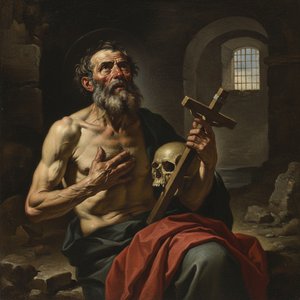
In this oil painting on canvas, Jusepe de Ribera presents us with a portrait of St. Peter. The subject, a central figure among the apostles of Jesus and recognized as the first Pope, is rendered with a profound sense of presence. Ribera focuses on the man himself, capturing the weight of his role and the character of his lived experience. There is a quiet intensity in the way the figure is presented, inviting a closer look at the weathered details of his countenance.
The work is a significant example of the Baroque style. Through this approach, the artist emphasizes the spiritual and human dimensions of the apostle. The depiction avoids idealization, opting instead for a directness that feels immediate. By focusing on the specific attributes of the saint, Ribera allows the subject to command the space, presenting a figure that is both a religious icon and a man of flesh and bone.
Composition and Visual Elements of the Portrait
The composition is built upon a stable pyramidal structure, with the head of St. Peter forming the apex of the form. He is presented from the waist up, his body turned slightly toward the viewer's left. In his right hand, he holds a book and a set of keys, objects that anchor the figure within the frame. This arrangement directs the eye upward toward his weathered features, creating a sense of quiet, grounded presence.
A strong light source enters from the left, illuminating his face and upper body while casting the rest of the figure into deep shadow. This light creates a sharp contrast against a background that is nearly black, pushing the subject forward into the viewer's space. The color palette is restrained, dominated by warm earth tones—ochre, brown, and gold—which emphasize the textures of his skin and the heavy folds of his clothing.
Technique and Artistic Style of the Work
The work is defined by a profound use of tenebrism, where the subject emerges from a nearly black background into a sharp, focused light. This dramatic chiaroscuro creates a sense of volume, pulling the figure forward and emphasizing the physical presence of the man. Such a heavy interplay of light and shadow reflects the influence of Caravaggio, grounding the religious subject in a palpable, earthly reality. The light source, positioned to the left, carves out the contours of the face and the weathered texture of the skin, casting deep shadows that heighten the emotional weight of the portrait.
Ribera’s approach to the medium is tactile and deliberate. He employs a technique of layering paint to build up depth, allowing the viewer to sense the physical weight of the drapery and the coarse nature of the beard. Visible brushstrokes are not hidden; instead, they contribute to the overall effect, lending a sense of immediacy to the rendering of the fabric and the aged features. Strong, defined lines delineate the eyes, nose, and mouth, providing a structural clarity that balances the more fluid, organic shapes of the figure. The result is a composition that feels both intensely personal and physically substantial.
Other Works by Jusepe de Ribera
The artist's exploration of this particular subject matter is reflected in several other significant pieces within our collection and major institutions. We hold St. Simeon 1 in our catalog, a work that speaks to the same profound human experience found in this portrait. Another notable piece in our collection is The Repentance of Saint Peter, which is currently housed in the Museum of Fine Arts, Lyon.
Beyond our own holdings, Ribera's preoccupation with the themes of remorse and spiritual weight is evident in other historical examples. The work known as Penitent St. Peter, dated about 1630, is held at the Kunsthistorisches Museum in Vienna. This piece shares a similar intensity in its depiction of the apostle's character. Additionally, The Tears of Saint Peter, which dates to 1612, is part of the collection at the Metropolitan Museum of Art in New York. These works collectively illustrate the artist's ability to capture the complexities of faith and the physical reality of the human condition through his characteristic use of light and shadow.
U kom muzeju se nalazi St. Peter?
Музеј Прадо
Мадрид, Шпанија
The History of Museo del Prado The origins of the Museo del Prado are tied to the Royal Collection of Spain, tracing back to the 18th century. What began as a vision for a Natural History Cabinet under Ferdinand VII eventually shifted toward a dedicated sanctuary for painting and sculpture. This transition transformed a scientific endeavor into a repository for the Spanish Crown's most significant treasures.
 Врт земних насладаХијероним Бош, 1504
 Diego Rodríguez de Silva y Velázquez
Caravaggio's Shadowing
Mature Period
Immerse yourself in the captivating world of Diego Velázquez’s masterpiece, "Las Meninas" (1656). This iconic painting is a cornerstone of Spanish Baroque art and a testament toДијего Веласкез, 1656
 Saturn Devouring His SonФрансиско Гоја, 1823
St. Peter u visokoj rezoluciji
Javno dobro: umetnik je preminuo 1652.
Хосе Де Рибера, St. Peter, Музеј Прадо. Javno dobro.
Digitalni stručnjak proverava boje u odnosu na originalno delo i retušira datoteku, vernu umetnikovim potezima četkice.
Kupite sliku visoke rezolucijePitanja o St. Peter
Mogu li da gledam "St. Peter" kao prezentaciju preko celog ekrana?
Dostupna je i prezentacija slika: stranica Galerija slika za delo „St. Peter”, autor Хосе Де Рибера.
Postoji li vodič za „St. Peter”, autor Хосе Де Рибера?
Stranica Vodič za učenike za delo „St. Peter”, autor Хосе Де Рибера nudi štampani informativni list u dve stranice: sam rad sa tabelom identifikacije, vremensku traku koja ga smešta u period života umetnika, druga dela istog umetnika, izmerenu paletu boja i citate spremne za kopiranje u četiri stila.
Gde se danas može videti delo „St. Peter”, autor Хосе Де Рибера?
Originalno delo "St. Peter" možete videti u muzeju Музеј Прадо, Мадрид, Шпанија.
Gde se "St. Peter" nalazi u okviru istorije umetnosti?
Istorijski gledano, "St. Peter" je Baroque delo šire ere Early Modern.
Kolika je luminansa dela „St. Peter”, autor Хосе Де Рибера?
Luminansa zabeležena za „St. Peter”, autor Хосе Де Рибера iznosi Dark.
Koliko je zasićena paleta dela "St. Peter"?
„St. Peter”, autor Хосе Де Рибера je zabeležen sa Clear Color Presence zasićenjem.
Koju temu i atmosferu spaja „St. Peter”, autor Хосе Де Рибера?
„St. Peter”, autor Хосе Де Рибера prikazuje man, beard, book, keys, cloak, brown, gold, skin, u Dramatic raspoloženju. Motiv i atmosfera zajedno dočaravaju delo.
Na koji način se stil dela "St. Peter" odnosi na epohu njegovog tvorca?
„St. Peter“ pripada pravcu Baroque, a njen autor je stvarao u periodu Rani modernizam.
Da li "St. Peter" prikazuje snažne kontraste svetla i tame?
Svetlo-tamni kontrast dela "St. Peter" je označen kao Bold. Kontrast opisuje stepen razlike između svetlih i tamnih površina.
O umetniku, Хосе Де Рибера

1591–1652, Шпанија
Хосе Де Рибера
Живот у сенци и светлу Хосе де Рибера, познат многима као Ло Спањолето – “Мали Шпанац” – био је великан барокне ере, уметник чије су платна пулсирале драматичним интензитетом и неустрашивим реализмом. Рођен у Ксативи, Шпанија, 1591. године, његов пут га је одвео далеко од валенсијанских корена, на крају га успоставивши као једног од најзначајнијих сликара 17. века у Напуљу, граду тада под шпанском влашћу.
Takođe i Хосе Де Рибера
 Magdalena Ventura sa suprugom i sinom1631
 Čvorga
 St. Onuphrius1637
 The Duel of Women (The Duel of Isabella de Carazzi and Diambra de Pettinella)1636
Eseji o delu St. Peter
 Masterpieces of Light: The Top 25 Artworks by Duccio di BuoninsegnaJourney through the divine elegance of Duccio di Buoninsegna. Explore 25 iconic Sienese masterpieces, from the Maestà to the Rucellai Madon…
 Jusepe de Ribera: Dramatic Realism & Spiritual Intensity in the Spanish Golden AgeExplore the powerful Baroque paintings of Jusepe de Ribera, master of tenebrism and dramatic realism. Discover his spiritual intensity, inf…
 Mastering the Shadows: The Dramatic Power of Chiaroscuro and Tenebrism in Baroque Fine ArtExplore the profound drama of chiaroscuro and tenebrism. Discover how masters like Caravaggio used light and shadow to sculpt emotion and v…