

 Pregledaj u prostoru
 Podeli
 Podeli
 Detalji
 Vodič
Vodič

 Preuzmi sliku
 Slični predmeti
 Rendgenski snimak
 Automatska prezentacija
 Statistika
Les Foins
 Oil On Canvas
- WallArt
- Naturalist Realism
 1877
1877 181.0 x 199.0 cm
 Muzej d'Orsej
 Pročitaj više
Ručno rađena uljana reprodukcija
Ručno oslikano uljanim bojama na platnu u dimenzijama i okviru po vašem izboru, izrađeno po porudžbini od strane naših umetnika. ( Pređi na prodaju štampanih primeraka Pređi na prodaju digitalnih slika)




P118B дин10

P118H дин10

P118W дин10

P438Z дин10

P508JH дин12

P508YH дин12

P805H дин10

P805Z дин10

P919BZ дин10

P919G дин10

P919XJ дин10

P959ZH дин10

P968JZ дин12

W106C дин8

W218G дин10

W218JH дин8

W218Y дин10

W307PJ дин10

W316G дин10

W316PJ дин8

W316Y дин10

W398PJ дин8

W4111J дин10

W500HY дин15

W500JH дин15

W692G дин12

W849H дин8

W940BG дин15

W953PJ дин8




Izaberite jednu od naših unapred definisanih veličina koje odgovaraju originalnim proporcijama umetničkog dela.

Unesite širinu i visinu koja vam je potrebna, kako bi se uklopili u vaš ram ili zid. Pošto je ovo ručno oslikano delo, umetnik može naslikati malo više prostora oko slike ili malo skratiti ivice za dimenzije drugačijeg oblika — izbor je na vama. Pre početka rada, poslaćemo vam digitalni prikaz radi potvrde. Slika prikazana na ovoj stranici ne predstavlja konačan rezultat — samo digitalni prikaz pokazuje stvarnu sliku.
Nakon narudžbine, tim OriginalUniqueArt.com će klijentu putem e-pošte poslati uputstva i dostaviti prikaz predloženog rešenja
Svetska isporuka () za 3/4 nedelje umesto uobičajenih 5 nedelja. (26 октобар). Bez kompromisa po pitanju kvaliteta.

Besplatna ekspresna dostava širom sveta

Visokokvalitetno laneno platno

Sveobuhvatno osiguranje transporta

Garancija povraćaja carine i uvoznih dažbina

Garancija vernosti boja i autentičnosti pri reprodukciji

Politika povraćaja u roku od 100 dana (samo u slučaju nedostataka)

Garancija povrata 100% novca

Popust pri većoj količini
 Opcija sa staklom dostupna je samo za dimenzije manje od 110 cm

Les Foins
Tehnika izrade reprodukcije
Veličina reprodukcije
-


Ukupna cena
дин 30935
Introduction to the Painting
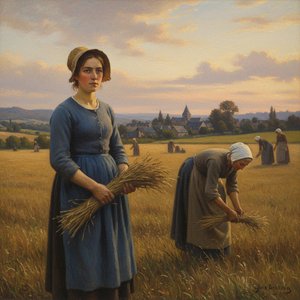
Jules Bastien Lepage's Les Foins, created in 1877, is a poignant and thought-provoking oil on canvas painting that captures the essence of rural life. Measuring 181 x 199 cm, this masterpiece is housed at the Musée d'Orsay in Paris, France.The Composition and Setting
The painting depicts a woman sitting on the ground next to two men who appear to be dead or sleeping. The woman seems engrossed in something she holds in her hand, while the men lie motionless beside her. The setting is an outdoor grassy field with a tree visible in the background on the right side of the canvas. Two bowls are placed near the bottom right corner, suggesting that they were used for eating or drinking.Artistic Significance
Jules Bastien Lepage's work is notable for its realistic and detailed portrayal of everyday life. Les Foins exemplifies his ability to capture the quiet moments of rural existence, often overlooked in the hustle and bustle of urban life. The painting's somber tone and the stillness of the figures evoke a sense of contemplation and introspection.Context within Art History
Jules Bastien Lepage's style is often associated with the Realist movement, which sought to depict life as it truly was, without idealization. His work, including Les Foins, reflects this commitment to realism and attention to detail.Relevance in Modern Times
Despite being created over a century ago, Les Foins remains relevant today for its universal themes of life, death, and the human condition. The painting invites viewers to reflect on their own existence and the fleeting nature of life.Conclusion
Jules Bastien Lepage's Les Foins is a masterpiece that continues to captivate audiences with its powerful and evocative portrayal of rural life. For those interested in exploring more works by this artist or similar pieces, OriginalUniqueArt offers high-quality, handmade oil painting reproductions.- Painting by 'Jules Bastien Lepage' | Jules Bastien Lepage:Les Foins
- Painting by 'Pierre-Auguste Renoir' | Pierre-Auguste Renoir:The Pont des Arts and the Institut de France
- Painting by 'Claude Monet' | Claude Monet:The Turkeys
- Painting by 'Georges Pierre Seurat' | Georges Pierre Seurat:Edge of Wood, Springtime
Musée de l'Armée is a French museum located at the south-eastern edge of Paris–Le Bourget Airport, north of Paris. It was inaugurated in 1919 and holds mainly French art dating from 1848 to 1914, including paintings, sculptures, furniture, and photography.
Pitanja i odgovori
Zašto je status autorskih prava za "Les Foins" takav kakav jeste?
Status autorskih prava za delo "Les Foins" - u javnom vlasništvu – autorska prava su istekla - proizilazi iz smrti umetnika 1884.
Na koji način se „Les Foins”, Жил Бастијен-Лепаж može iskoristiti u uređenju enterijera?
„Les Foins”, Жил Бастијен-Лепаж se preporučuje za Reflective, idealno u Living Room. Upotreba i prostor zajedno ukazuju na to gde reprodukcija najbolje pristaje.
Kakav osećaj prenosi „Les Foins”, Жил Бастијен-Лепаж?
„Les Foins”, Жил Бастијен-Лепаж prenosi Melancholic osećaj unutar opšte Calm atmosfere.
Biografija umetnika
Pioniр Натурализма: Живот и Уметност Жил Бастијен-Лепажа
Жил Бастијен-Лепаж се појавио као кључна фигура у француском сликарству касног 19. века, мост између утврђене реалистичке традиције и растајућег импресионистичког покрета. Рођен 1848. године у малом селу Дамвилијер, смештеном у региону Меза у Француској, његова уметничка трајекторија била је дубоко укорењена у пејзажима и животима руралне Француске. Ова веза са његовим пореклом није била само биографска; постала је суштина његове уметности, пропитујући његова платна аутентичношћу која је снажно резонирала са публиком која тражи искренији приказ света око њих. Његова кратка али интензивно продуктивна каријера, трагично прекинута смрћу 1884. године у доби од само тридесет и шест година, оставила је неизбрисив траг на развој натурализма и утицала на уметнике широм Европе.Од Руралних Корена до Уметничке Обуке
Почетно уметничко образовање Бастијен-Лепажа стицао је од оца, самог сликара који је препознао и неговао таленат свог сина. Млади Жил је испуњавао скице са студијама села, хватајући ритмове руралног живота посматрачким оком. Ово рано урањање у природу остало би дефинишућа карактеристика његовог рада. Формална обука уследила је на École des Beaux-Arts у Паризу, почевши 1867. године, где је студирао под Александром Кабанелом – истакнутим академским сликаром познатим по својој полираној техници и историјским темама. Док је савладавао вештине које су захтевале Салонски систем, Бастијен-Лепаж је истовремено неговао жељу да се ослободи његових ограничења. Избијање Француско-пруског рата 1870. године прекинуло је његове студије, што га је довело до тога да служи као добровољац војник. Ово искуство, заједно са накнадном болешћу, вратило га је у Дамвилијер, учврстивши његову посвећеност приказивању живота оних које је најбоље познавао: сељака и радника свог завичаја.Успон Натурализма и Стил Бастијен-Лепажа
По повратку у Париз након рата, Бастијен-Лепаж је почео да излаже радове који су сигнализирали одступање од традиционалног академског сликања. Његов стил карактерише прецизна примена боје – мале, намерне четканице које граде текстуру и облик – у комбинацији са палетом која доминира топлим, природним тоновима. Прихватио је *plein air* сликање, радећи директно из природе да би заробио пролазне ефекте светлости и атмосфере. Ова посвећеност посматрању и аутентичности ускладила га је са новим натуралистичким покретом, који је тражио да прикаже живот какав јесте, без идеализације или романтике. Жетва (1877), изложена на Салону 1879. године, показала се као преломни тренутак, успоставивши Бастијен-Лепажа као лидера овог новог уметничког правца. Реалистичан приказ руралних радника и његов луминозни опис села очарао је критичаре и публику. Он није само документовао сељачки живот; он га уздигао, пропитујући своје субјекте дигнитетом и поштовањем.Главна Дела и Трајан Утицај
Успех Бастијен-Лепажа се протезао ван жанровских сцена. Његов портрет добио је значајну признање, посебно Портрет мог деде (1874), који је стекао рану репутацију, и импресиван портрет прослављене глумице Саре Бернхардт 1879. године – наруџбина која му је донела већу славу. Такође се бавио историјским темама са натуралистичком осетљивошћу, што је приказано његовим сликањем Жана д’Арк, сада смештеним у музеју Орсе. Ово дело је представило Жанну не као митску хероину већ као младу жену укорењену у своје рурално порекло, што одражава посвећеност Бастијен-Лепажа приказивању фигура у њиховом друштвеном и историјском контексту. До 1883. године његов утицај је био толико широк да су критичари приметили да уметници широм Европе опонашају његов стил – сведочанство моћи његове визије. Његов рад је резонирао са британским сликарима попут Џорџа Клаузена и Тома Робертса, који су у своје приказе руралног живота укључили елементе његовог натурализма. Наслеђе Жила Бастијен-Лепажа лежи не само у лепоти и емоционалној дубини његових слика већ и у његовој улози као катализатора за уметничку промену. Он је отворио пут будућим генерацијама уметника да истражују нове начине представљања света око њих, изазивајући конвенционалне норме и прихватајући искренији и аутентичнији приступ уметности.
Жил Бастијен-Лепаж
1848 - 1884 , Француска
Brzi pregled
- Artistic Movement Or Style: Naturalizam
- Artists Or Movements Influenced By This Artist: ['Impresionizam']
- Artists Who Influenced This Artist: ['Realistički pokret']
- Date Of Birth: 1848
- Date Of Death: 1884
- Full Name: Jules Bastien-Lepage
- Nationality: Francuz
- Notable Artworks:
- Portret dede
- Jana Orleanska
- Žetva sena
- Oktobar - kopanje krompira
- Vrijeme žetve
- Place Of Birth (City And Country): Damvilliers, Francuska
Srodni članci

Echoes of Rural Life: Nostalgia, Labor & Identity in Art History
Explore the rich history of rural life in art! Discover how Realism captured labor & identity through masterpieces by Van Gogh, Millet & more. Expert analysis for collectors and enthusiasts.

Romantic Realism's Finest: 10 Masterpieces for Your Home | OriginalUniqueArt
Explore 10 defining masterpieces of Romantic Realism! Discover Courbet, Millet & Daumier's powerful paintings—capturing emotion and social realities. Find museum-quality reproductions for your home at OriginalUniqueArt.com.

Jean-François Millet: Realism, Rural Life & the Poetic Depiction of Labor
Explore the life & work of Jean-François Millet, a founder of Realism. Discover his poignant depictions of rural France, iconic paintings like 'The Angelus,' and lasting influence on art history. Learn more at OriginalUniqueArt.
Jules Breton: Capturing the Poetic Soul of French Rural Life
Explore the captivating world of Jules Breton, master of French Realism. Discover his iconic paintings of rural life, learn about his artistic journey, and find high-quality reproductions to elevate your art collection at OriginalUniqueArt.

Léon Augustin L'Hermitte: Capturing the Soul of French Rural Life
Discover the captivating realist paintings of Léon Augustin L'Hermitte, masterfully depicting French rural life. Explore his technique, influences & legacy – a cornerstone of 19th-century art.