

 Pregledaj u prostoru
 Pošalji
 Podeli
 Detalji o delu

 Преузми
 Slični predmeti
 Rendgenski snimak
 Slajdovi
Stapleton Cotton (1773–1865), Field Marshal Viscount Combermere, GCB, KST
 Acrylic On Canvas
- WallArt
- Neoclassical Portraiture
 1839
1839 141.0 x 110.0 cm
 English Heritage
 Pročitaj više
Ručno rađena uljana reprodukcija
Ručno oslikano uljanim bojama na platnu u dimenzijama i okviru po vašem izboru, izrađeno po porudžbini od strane naših umetnika. ( Kupi print Kupi digitalnu sliku)




P118B $10

P118H $10

P118W $10

P438Z $10

P508JH $12

P508YH $12

P805H $10

P805Z $10

P919BZ $10

P919G $10

P919XJ $10

P959ZH $10

P968JZ $12

W106C $8

W218G $10

W218JH $8

W218Y $10

W307PJ $10

W316G $10

W316PJ $8

W316Y $10

W398PJ $8

W4111J $10

W500HY $15

W500JH $15

W692G $12

W849H $8

W940BG $15

W953PJ $8




Izaberite jednu od naših unapred definisanih veličina koje odgovaraju originalnim proporcijama umetničkog dela.

Можете унети сопствене димензије како бисте прилагодили дело одређеном оквиру или простору. Ако одабрана величина не одговара пропорцијама оригинала, слика ће бити исечена или проширена додатним елементима који се ручно насликавају. Дигитални prikaz ће вам бити послат на одобрење пре почетка производње.
Имајте на уму да преглед на екрану не одражава стварно исецање или проширење. Само приказ (mockup) ће тачно приказати коначну композицију.
Иако су доступне прилагођене величине, препоручујемо да одаберете димензију из дефинисане листе како бисте сачували оригиналне пропорције.
Nakon narudžbine, tim OriginalUniqueArt.com će klijentu putem e-pošte poslati uputstva i dostaviti prikaz predloženog rešenja
Isporuka širom sveta () za 3/4 nedelje umesto uobičajenih 5 nedelja. (21 август). Bez kompromisa po pitanju kvaliteta.

Besplatna ekspresna dostava širom sveta

Visokokvalitetno laneno platno

Kompletno osiguranje transporta

Garancija povraćaja carine i uvoznih dažbina

Garancija vernosti boja

Politika povrata u roku od 60 dana (samo u slučaju nedostataka)

Garancija povrata novca od 100%

Popust pri grupnoj kupovini
 Opcija sa staklom dostupna je samo za dimenzije manje od 110 cm

Stapleton Cotton (1773–1865), Field Marshal Viscount Combermere, GCB, KST
Tehnika reprodukcije
Dimenzije reprodukcije
-


Konačna cena
$ 300
Opis umetničkog dela
A Portrait of Command: Stapleton Cotton by John Hayter
The canvas before you presents more than just a likeness; it’s a carefully constructed tableau of power, duty, and the weight of empire – a portrait of Field Marshal Stapleton Cotton, painted in 1839 by the esteemed John Hayter. This is not merely a depiction of a man; it's an embodiment of Victorian Britain’s military ethos, rendered with meticulous detail and imbued with a subtle yet profound sense of authority. Hayter, Painter-in-Ordinary to Queen Victoria, possessed a rare ability to capture not just physical appearance but also the very essence of his subjects – a skill evident in Cotton’s commanding presence and the dignified bearing he projects. The painting immediately draws the eye to Cotton's figure, standing tall and resolute against a subtly rendered background, suggesting both strength and an unwavering commitment to service.The Man and His Times
Stapleton Cotton was a pivotal figure in 19th-century British military history. Rising through the ranks during the Napoleonic Wars and continuing his distinguished career throughout the expansion of the Empire, he served with distinction in campaigns across Europe, India, and Africa. He commanded cavalry brigades with remarkable success, earning him numerous accolades and ultimately achieving the rank of Field Marshal – a position of immense responsibility and prestige. The portrait itself reflects this elevated status; Cotton is depicted in full military regalia, signifying his leadership role and highlighting his service to the Crown. The backdrop, hinting at a formal setting within an estate or government building, further reinforces his position as a man of considerable influence and authority. It’s important to note that 1839 was a period of significant social and political change in Britain – the aftermath of the Napoleonic Wars, the rise of industrialization, and the ongoing expansion of the Empire all shaped the artistic sensibilities of the time. Hayter's work exemplifies this by presenting a portrait that is both celebratory of military achievement and subtly indicative of the broader societal values of the era.Technique and Style: A Masterclass in Portraiture
Hayter’s technique is characterized by an extraordinary level of realism combined with a masterful understanding of light and shadow. He employed a meticulous approach, utilizing chalk drawings as preliminary sketches to establish proportions and tonal values before committing them to oil paint. This layering process allowed for incredible detail – observe the texture of Cotton's uniform, the subtle creases in his clothing, and the intricate patterns on his sword hilt. The artist’s use of chiaroscuro—the dramatic contrast between light and dark—creates a sense of depth and volume, emphasizing Cotton’s physical presence and projecting an aura of strength and gravitas. Furthermore, Hayter's skill lies in capturing not just the outward appearance but also the inner character of his subject. Cotton’s gaze is direct and unwavering, conveying a sense of self-assurance and quiet dignity. The slight furrow of his brow suggests contemplation and strategic thinking – qualities essential for a military leader.Symbolism and Emotional Resonance
Beyond its technical brilliance, the portrait is rich in symbolic meaning. The horses flanking Cotton represent power, loyalty, and the formidable force of the British army. Their posture mirrors his own, reinforcing the idea of shared command and mutual respect. The inclusion of the cup suggests a moment of reflection or perhaps a celebratory toast – hinting at the rewards associated with military service. More subtly, the composition itself—Cotton centered within the frame—underscores his importance and authority. The painting evokes a complex range of emotions: admiration for Cotton’s achievements, respect for his dedication to duty, and a sense of the grandeur and ambition that defined Victorian Britain. It's a portrait that invites contemplation, prompting viewers to consider not only the life of Stapleton Cotton but also the broader historical context in which he lived and served.A Timeless Masterpiece: Reproductions and Legacy
Today, John Hayter’s portrait of Stapleton Cotton stands as a testament to his artistic skill and a valuable window into Victorian society. High-quality reproductions offer an accessible way to appreciate this remarkable work of art, bringing its details and emotional resonance to a wider audience. Whether displayed in a private collection or incorporated into a stately home's interior design, this painting continues to captivate viewers with its compelling narrative and enduring beauty. It’s a piece that speaks volumes about leadership, honor, and the legacy of an extraordinary military figure.Biografija umetnika
A Life Dedicated to Likeness: The World of John Hayter
John Hayter RA (1800-1895) occupies a fascinating, if sometimes understated, position within the pantheon of 19th-century British portraiture. While perhaps not possessing the household name recognition of contemporaries like Lawrence or Gainsborough, Hayter’s career was remarkably prolific and deeply interwoven with the fabric of Victorian society. Born into an artistic family in St James's, United Kingdom, his path seemed predetermined – a destiny he embraced wholeheartedly, ultimately becoming Painter-in-Ordinary to Queen Victoria herself. This appointment wasn’t merely a title; it signified Hayter’s ability to capture not just physical resemblance, but also the essence of character and social standing within an era defined by rigid hierarchies and evolving sensibilities. His story is one of diligent craftsmanship, astute observation, and a keen understanding of the power inherent in portraying those who shaped their age.Early Influences and Artistic Formation
The artistic lineage surrounding Hayter was undeniably formative. As the second son of miniaturist Charles Hayter and brother to Sir George Hayter – both successful portraitists in their own right – he grew up immersed in a world of pigments, brushes, and discerning clientele. This familial influence instilled within him not only technical skill but also an appreciation for the nuances of capturing likeness. He formally began his training at the Royal Academy Schools in 1815, quickly demonstrating both aptitude and ambition by exhibiting work there in the same year. The early years were a period of absorbing established techniques and developing his own artistic voice within the prevailing neoclassical style. However, Hayter wasn’t simply a mimic; he possessed an innate sensitivity that allowed him to move beyond mere replication towards portraits imbued with personality and psychological depth. His brother George also played a role in shaping his career, as both artists navigated the competitive landscape of London's art world.Mastering the Art of Portraiture: Technique and Style
Hayter’s artistic style evolved within the conventions of Victorian portraiture, prioritizing realism and meticulous attention to detail. While proficient in oil painting, he became particularly celebrated for his portraits executed in chalk or crayon – a medium that allowed for remarkable subtlety and nuance. These drawings weren't merely preparatory sketches; they were highly sought-after works in their own right, often engraved and widely disseminated through publications like *The Court Album*. This album, featuring portraits of female aristocracy, became a significant platform for Hayter’s work, showcasing his ability to capture elegance, refinement, and social status. He skillfully balanced formal composition with an approachable quality, making his portraits appealing to a broad audience. His technique wasn't about flamboyant brushwork or dramatic lighting; it was about quiet observation, precise rendering, and a delicate touch that brought his subjects to life on paper or canvas.A Royal Appointment and Lasting Legacy
The pinnacle of Hayter’s career arrived with his appointment as Painter-in-Ordinary to Queen Victoria. This prestigious position provided him with unparalleled access to the royal family, allowing him to paint the Queen herself on numerous occasions – beginning when she was just twelve years old. These portraits are invaluable historical documents, offering glimpses into the young queen's evolving personality and reign. Beyond his royal commissions, Hayter continued to portray prominent figures of the era, including the Duke of Wellington and opera singer Giuditta Pasta, solidifying his reputation as a leading portraitist. While not always achieving the same level of critical acclaim as some of his contemporaries, John Hayter played a crucial role in documenting Victorian society through his art. His work provides valuable insights into the fashion, social customs, and personalities of the era, serving as an important visual record of a transformative period in British history. He left behind a legacy not of radical innovation, but of consistent quality, skillful execution, and a dedication to capturing the likenesses of those who defined his time. His skill in chalk portraiture remains particularly noteworthy, showcasing a delicate technique that captured both physical resemblance and inner character with remarkable finesse.
John Hayter
1800 - 1895 , United Kingdom
Osnovne informacije
- Artistic Movement Or Style: Victorian portraiture
- Artists Who Influenced This Artist:
- Charles Hayter
- Thomas Lawrence
- Date Of Birth: 1800
- Date Of Death: 1895
- Full Name: John Hayter
- Nationality: English
- Notable Artworks:
- Lady Augusta FitzClarence
- Sir Benjamin Carew
- Miss Moore Grant
- Viscountess Dungannon
- Place Of Birth: St James's, UK
Povezani članci
George Hayter: Portraiture, Power & Victorian Society's Canvas
Explore the life & work of George Hayter, Queen Victoria’s Principal Painter. Discover his iconic Victorian portraits, historical masterpieces, and lasting impact on British art history. Learn more at OriginalUniqueArt.
Beyond the Fabric: Decoding Identity, Authority, and Symbolism in the Art of Military Uniforms
Explore the profound symbolism of military uniforms in art history. From Victorian portraits to realistic lithographs, discover how artists capture power, identity, and historical legacy through the intricate details of martial regalia and command.
James Sant: Capturing Victorian Childhood & the Evolving Landscape of British Genre Painting
Explore the life & art of James Sant (1820-1916), renowned Victorian portraitist to Queen Victoria. Discover his captivating depictions of childhood, landscapes, and aristocratic society. Learn about his legacy & find fine art reproductions.
25 Remek-dela Britanskog muzeja: Umetnička baština za vaš dom | OriginalUniqueArt
Otkrijte 25 remek-dela Britanskog muzeja u Londonu! Istražite priče iza slika, skulptura i antikvitetnih blaga. Inspiracija za dekoraciju enterijera & reprodukcije vrhunskog kvaliteta na OriginalUniqueArt.com.
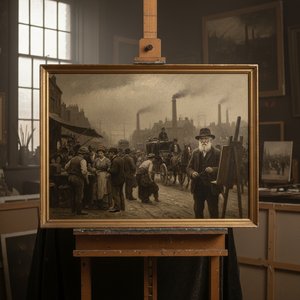
Walter Greaves: A Study in Victorian Realism & the Social Landscape of British Art
Explore the life & work of Walter Greaves, a key Victorian realist painter influenced by Whistler. Discover his London streetscapes, portraits, and enduring legacy. Learn about art appraisal & reproduction options at OriginalUniqueArt.

