

 Pregledaj u prostoru
 Podeli
 Podeli
 Detalji
 Vodič
Vodič

 Preuzmi sliku
 Slični predmeti
 Rendgenski snimak
 Automatska prezentacija
 Statistika
Kimet


 Pročitaj više
Umetničko delo prikazano na ovoj stranici zaštićeno je autorskim pravima, što znači da zakonski nismo u mogućnosti da kreiramo niti prodajemo identičnu reprodukciju. Ova zaštita se sprovodi u skladu sa međunarodnim sporazumima kao što su Bernska konvencija i nacionalnim zakonima, uključujući i one koji su definisani u Američki zakon o autorskom pravu – Naslov 17.
Ovaj metod je u potpunosti usklađen sa regulativama o autorskim pravima jer ne podrazumeva kopiranje ili dupliranje zaštićenih umetničkih dela. Umesto toga, reč je o kreativnoj reinterpretaciji – novom slikarskom delu koje je inspirisano originalom, ali nije identično njemu.
Giclee štampa / Umetnički otisak
Giclée štampa ili print na platnu muzejskog kvaliteta uz brzu izradu i raznovrsne opcije završne obrade. ( Naručite ručno oslikano reprodukciju Pređi na prodaju digitalnih slika)




P118B дин10

P118H дин10

P118W дин10

P438Z дин10

P508JH дин12

P508YH дин12

P805H дин10

P805Z дин10

P919BZ дин10

P919G дин10

P919XJ дин10

P959ZH дин10

P968JZ дин12

W106C дин8

W218G дин10

W218JH дин8

W218Y дин10

W307PJ дин10

W316G дин10

W316PJ дин8

W316Y дин10

W398PJ дин8

W4111J дин10

W500HY дин15

W500JH дин15

W692G дин12

W849H дин8

W940BG дин15

W953PJ дин8




Izaberite jednu od naših unapred definisanih veličina koje odgovaraju originalnim proporcijama umetničkog dela.

Unesite širinu i visinu koja vam je potrebna, kako bi se uklopili u vaš ram ili na vaš zid. Štampa se može samo iseći, nikada ne može biti veća od originalne slike, stoga format sa drugačijim proporcijama gubi deo slike. Poslaćemo vam digitalni prikaz radi potvrde pre nego što započnemo štampu. Slika prikazana na ovoj stranici ne pokazuje stvarni rez — to pokazuje samo digitalni prikaz.
Dostava širom sveta () za 2 nedelje umesto uobičajenih 4/5 nedelja. (22 октобар)

Besplatna ekspresna dostava širom sveta

Visokokvalitetno laneno platno

Sveobuhvatno osiguranje transporta

Garancija povraćaja carine i uvoznih dažbina

Garancija vernosti boja i autentičnosti pri reprodukciji

Politika povraćaja u roku od 100 dana (samo u slučaju nedostataka)

Garancija povrata 100% novca

Popust pri većoj količini
 Opcija sa staklom dostupna je samo za dimenzije manje od 110 cm

Kimet
Giclee štampa / Umetnički otisak
Veličina reprodukcije
-


Ukupna cena
дин 8227
A Window into Pennsylvania Impressionism
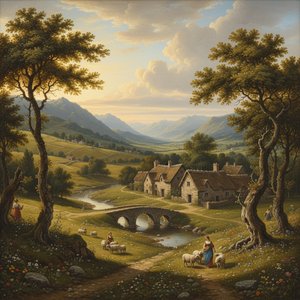
In the quiet, rolling landscapes of the Lehigh Valley, there exists a profound sense of stillness that John Emil Berninger captured with unparalleled mastery in his 1981 work, Kimet. As a prominent figure within the Pennsylvania Impressionist movement, Berninger possessed the rare ability to translate the rugged beauty of his native Allentown into a visual poem of light and earth. This particular piece serves as a breathtaking testament to a lifetime spent observing the subtle shifts of the American countryside. The painting invites the viewer into a serene rural settlement, where the architecture of human habitation meets the soft, undulating rhythm of the natural world. It is not merely a depiction of buildings and hills, but an evocative journey into a bygone era of pastoral tranquility.
The composition of Kimet is a masterclass in balance and visual flow. Berninger utilizes a sophisticated arrangement of leading lines—formed by winding roads and the receding edges of structures—to guide the eye through the heart of the scene toward the distant, hazy hills. The central building acts as an anchor, a focal point around which the smaller structures and organic landscape elements orbit in perfect harmony. Through this deliberate structural design, the artist creates a palpable sense of depth, making the canvas feel less like a flat surface and more like a window into a sprawling, breathing environment. For the collector or interior designer, this balanced composition offers a grounding presence, capable of anchoring a room with its steady, rhythmic grace.
Technically, the painting is a triumph of layered oil application and impressionistic texture. Berninger eschews clinical precision in favor of a more emotive, tactile approach, using visible brushstrokes to build a rich topography on the canvas. The color palette is a warm embrace of earth tones; deep reds, sun-drenched yellows, and rich browns dominate the foreground, providing a sense of warmth and stability. These are artfully contrasted by the cooler blues and soft whites of an overcast sky, which bathes the entire landscape in a diffused, gentle light. This interplay of temperature and texture creates a luminous quality, where the light seems to emanate from within the paint itself, capturing the fleeting atmosphere of a quiet afternoon.
Beyond its aesthetic brilliance, Kimet resonates with deep emotional and symbolic weight. It embodies the spirit of rural life—a celebration of permanence, peace, and the enduring connection between man and land. The soft, diffused lighting suggests a moment of pause, an invitation to reflect on the simplicity and beauty of the natural cycle. For those seeking to adorn a space with art that inspires contemplation, this reproduction offers more than just decoration; it provides a soulful connection to the heritage of American landscape painting. It is a piece that speaks of home, of history, and of the timeless allure of the quiet countryside.
Pitanja i odgovori
O čemu je delo "Kimet"?
Motivi dela "Kimet" su rural landscape, pennsylvania scene, cloudy weather, village setting, rolling hills, american art, impressionist style.
Da li je "Kimet" tipično za ono što je John Emil Berninger obično stvarao?
Među zabeleženim temama umetnika John Emil Berninger – pennsylvania impressionism, local allentown community, art museum curator role, regional landscape focus, early 20th century art, artist's regional identity, community arts patronage, documenting rural life – delo "Kimet" donosi sopstveni fokus na rural landscape, pennsylvania scene, cloudy weather, village setting, rolling hills, american art, impressionist style.
Kolika je zasićenost boja u delu „Kimet”, John Emil Berninger?
Paleta dela "Kimet" ima Balanced Soft zasićenost.
Biografija umetnika
John Emil Berninger: A Pennsylvania Impressionist
- Born: December 13, 1896, Allentown, Pennsylvania
- Died: July 16, 1981, Allentown, Pennsylvania
- Nationality: American
- Movement: Pennsylvania Impressionism
- Known for: Landscape painting, snow scenes, depictions of the Lehigh Valley
Early Life and Education
- Berninger was born into a family that valued art and culture in Allentown.
- He began painting in oil from his early teens.
- Significant influences included Orlando Gray Wales and Arlington Nelson Lindenmuth.
- A pivotal moment was attending Walter Emerson Baum's first class in Allentown during the summer of 1926, marking a key development in his artistic style. Baum’s influence is considered central to Berninger’s work.
Artistic Development and Career
- Kline-Baum Art School: In 1932, Berninger became an art instructor at the Kline-Baum Art School, sharing his knowledge and inspiring students.
- Circulating Picture Club: He was recognized in 1934 when he was among four Baum students accepted into the Circulating Picture Club of the Philadelphia Art Alliance – a significant achievement for any artist.
- Allentown Art Museum Curator: From 1936 to 1956, Berninger served as the first curator of the Allentown Art Museum, founded by Walter Emerson Baum. He lived on the museum's second floor with his wife, Mabel, during this time. Mabel assisted him in his curatorial duties and also supported the Kline-Baum School’s Circulating Picture Club.
- Wuchter and Berninger: In 1939, he became a partner in the jewelry store Wuchter and Berninger, using the shop window to showcase his paintings. This exposure led to connections with figures like Robert Rodale, who championed his work.
Style and Notable Works
- Pennsylvania Impressionism: Berninger’s style is firmly rooted in Pennsylvania Impressionism, blending realist techniques with impressionistic color and light. He was considered part of the "outer ring" of the New Hope School.
- Subject Matter: His paintings primarily focused on landscapes of the Lehigh Valley and surrounding areas, often depicting rolling hills, forests, waterways, and winter scenes (snowscapes).
- Technique: Berninger employed bold colors and loose brushstrokes to capture the essence of his subjects.
- Notable Works: Kimet is a well-known example showcasing a balanced composition with warm tones and textured brushwork. Other notable works include depictions of Meyers Bridge in Allentown and various winter scenes.
Legacy and Historical Significance
- Berninger’s work contributes to the rich tradition of Pennsylvania Impressionism, documenting the beauty of the region's landscapes.
- His role as curator of the Allentown Art Museum was instrumental in establishing a cultural institution for the city.
- He is remembered as an influential art instructor and a dedicated advocate for the arts in the Lehigh Valley.
- Berninger’s paintings continue to be appreciated for their vibrant colors, evocative depictions of nature, and representation of Pennsylvania's artistic heritage.

John Emil Berninger
1896 - 1981 , United States of America
Brzi pregled
- Artistic Movement Or Style: Pennsylvania Impressionism
- Artists Who Influenced This Artist:
- Orlando Gray Wales
- Arlington Nelson Lindenmuth
- Walter Emerson Baum
- Full Name: John Emil Berninger
- Nationality: American
- Notable Artworks:
- Kimet
- Winter on the Monocacy
- Looking at the Quarries
- Place Of Birth: Allentown, United States of America
- Date Of Birth: 1896
- Date Of Death: 1981
Srodni članci

25 Remek-dela Džona Singera Sargenta: Portreti Elegancije i Svetlosti | OriginalUniqueArt
Uronite u svet Džona Singera Sargenta! Otkrijte 25 remek-dela impresionizma i realizma, od portreta Madame X do fascinantnih akvarela. Inspiracija za dekoraciju enterijera & luksuzne reprodukcije slika na OriginalUniqueArt.com.

Cultivating Visions: A Historical Journey Through Rural Landscapes in Art
Explore the rich history of rural landscape painting with OriginalUniqueArt. Discover Impressionist masterpieces, key artists & movements. Find your perfect serene artwork and bring nature's beauty home.

Glavna dela koja su definisala Romantični pejzaž: 10 remek-dela za vaš dom
Otkrijte 10 remek-dela romantičnog pejzažnog slikarstva! Uronite u svet Claude Lorraina, Caspara David Friedricha i Turnera. Ispričane priče umetnosti, inspiracija za dekoraciju doma. Kvalitetne reprodukcije na OriginalUniqueArt.com – istražite celu kolekciju online!
Evoking Arcadia: A Historical & Aesthetic Exploration of Rural Landscape Art
Explore the rich history of pastoral landscape art, from classical Arcadia to Impressionism & beyond. Discover key artists, movements, and how to collect serene rural scenes for your home. Expert insights at OriginalUniqueArt.

25 Remek-dela Džona Konstebla: Lepota Engleske na Platnu | OriginalUniqueArt
Uronite u svet Džona Konstebla! Otkrijte 25 remek-dela engleskog pejzaža, romantizma i seoske idile. Kupite reprodukcije slika vrhunskog kvaliteta za dekoraciju enterijera na OriginalUniqueArt.com.