
 Pregledaj u prostoru
 Podeli
 Podeli
 Detalji
 Vodič
Vodič

 Preuzmi sliku
 Slični predmeti
 Rendgenski snimak
 Automatska prezentacija
 Statistika
Untitled
 1999
1999 201.0 x 176.0 cm
 Pročitaj više
Umetničko delo prikazano na ovoj stranici zaštićeno je autorskim pravima, što znači da zakonski nismo u mogućnosti da kreiramo niti prodajemo identičnu reprodukciju. Ova zaštita se sprovodi u skladu sa međunarodnim sporazumima kao što su Bernska konvencija i nacionalnim zakonima, uključujući i one koji su definisani u Američki zakon o autorskom pravu – Naslov 17.
Kao poštovana i legalna alternativa, nudimo prilagođene, ručno oslikane umetničke radove inspirisane originalom. Naši stručni i profesionalni umetnici pažljivo proučavaju stil, ambijent i umetničku suštinu originala kako bi kreirali novo, unikatno delo koje budi istu emociju – ostajući pritom potpuno autentično stvaranje.
Ovaj metod je u potpunosti usklađen sa regulativama o autorskim pravima jer ne podrazumeva kopiranje ili dupliranje zaštićenih umetničkih dela. Umesto toga, reč je o kreativnoj reinterpretaciji – novom slikarskom delu koje je inspirisano originalom, ali nije identično njemu.
Ručno rađena uljana reprodukcija
Ručno oslikano uljanim bojama na platnu u dimenzijama i okviru po vašem izboru, izrađeno po porudžbini od strane naših umetnika. ( Pređi na prodaju štampanih primeraka Pređi na prodaju digitalnih slika)




































Izaberite jednu od naših unapred definisanih veličina koje odgovaraju originalnim proporcijama umetničkog dela.

Unesite širinu i visinu koja vam je potrebna, kako bi se uklopili u vaš ram ili zid. Pošto je ovo ručno oslikano delo, umetnik može naslikati malo više prostora oko slike ili malo skratiti ivice za dimenzije drugačijeg oblika — izbor je na vama. Pre početka rada, poslaćemo vam digitalni prikaz radi potvrde. Slika prikazana na ovoj stranici ne predstavlja konačan rezultat — samo digitalni prikaz pokazuje stvarnu sliku.
Nakon narudžbine, tim OriginalUniqueArt.com će klijentu putem e-pošte poslati uputstva i dostaviti prikaz predloženog rešenja
Svetska isporuka () za 3/4 nedelje umesto uobičajenih 5 nedelja. (25 октобар). Bez kompromisa po pitanju kvaliteta.

Besplatna ekspresna dostava širom sveta

Visokokvalitetno laneno platno

Sveobuhvatno osiguranje transporta

Garancija povraćaja carine i uvoznih dažbina

Garancija vernosti boja i autentičnosti pri reprodukciji

Politika povraćaja u roku od 100 dana (samo u slučaju nedostataka)

Garancija povrata 100% novca

Popust pri većoj količini
 Opcija sa staklom dostupna je samo za dimenzije manje od 110 cm

Untitled
Tehnika izrade reprodukcije
Veličina reprodukcije
-


Ukupna cena
дин 30932
Composition and Symbolism
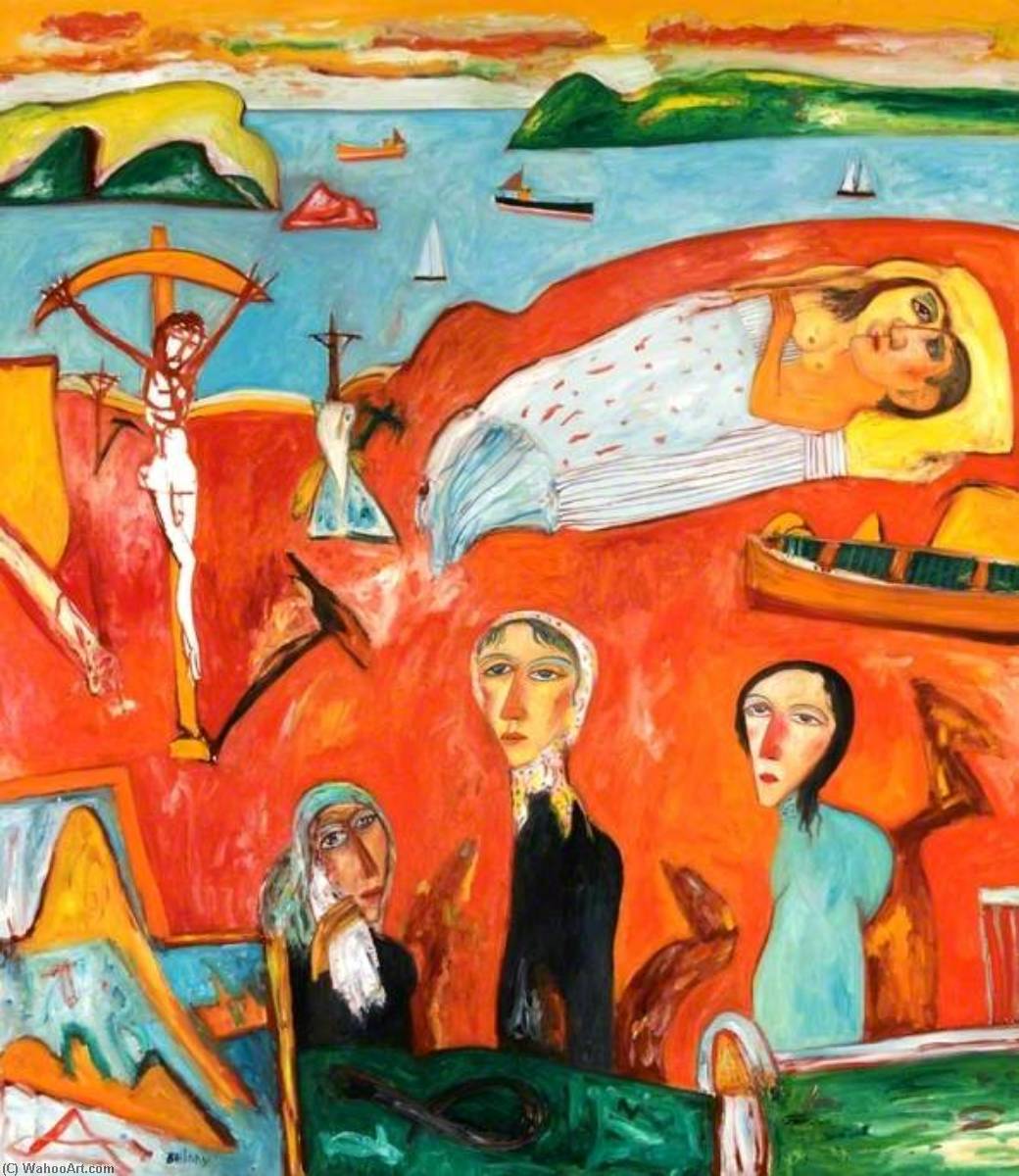
The painting is a vivid depiction of a scene with various people and objects. The main focus appears to be on the three women who are sitting together in the foreground, seemingly engaged in conversation or observing something happening around them. In addition to these women, there are several other figures scattered throughout the painting, some standing and others seated. A boat is located towards the right side of the image, with multiple boats visible in the background, suggesting a coastal or waterfront setting. Key elements of the painting include the use of bold colors and expressive brushstrokes, which create a sense of energy and movement. The composition is complex, with multiple layers and textures that add depth and complexity to the artwork. For more information on John Bellany's style and technique, visit /art/list/?Filter=AQSCAB-John-Bellany-Untitled.Artist's Background and Inspiration
John Bellany was a renowned Scottish artist known for his bold and expressive paintings. His work often explored themes of identity, community, and the human condition. The Untitled painting is a prime example of his unique style, which blends elements of realism and abstraction to create a captivating visual experience.- For more information on John Bellany's artwork, visit /en/art/show/art-aqscab-en/
- Discover other artworks by John Bellany, such as Summer Flowers, at /art/list/?Filter=AQSCAD-John-Bellany-Summer-Flowers
The Untitled painting by John Bellany is a thought-provoking artwork that showcases the artist's unique style and technique. With its bold colors, expressive brushstrokes, and complex composition, this painting is a must-see for art enthusiasts and collectors alike. Visit https://OriginalUniqueArt.com to explore more artworks by John Bellany and other renowned artists.
Pitanja i odgovori
Koje boje dominiraju u delu „Untitled”, John Bellany?
Koloristički identitet dela „Untitled”, John Bellany: paleta u nijansama Earthy, sa dominacijom boje Celadon (#a6c5be).
Gde mogu da kupim print dela „Untitled”, John Bellany?
Da biste naručili print dela „Untitled”, John Bellany, jednostavno ga poručite na njegovoj stranici Umetski print: umetnička štampa na pamučnom platnu ili arhivskom kanvas papiru.
Kakvu orijentaciju ima „Untitled”, John Bellany?
„Untitled”, John Bellany je u Portrait formatu. Format opisuje proporcije kompozicije.
Biografija umetnika
The Soul of the Firth: The Life and Vision of John Bellany
Born in 1942 amidst the salt-sprayed fishing traditions of Port Seton, near Edinburgh, John Bellany CBE, RA emerged as one of Scotland’s most profound and evocative visual storytellers. His identity was inextricably linked to the rhythms of the Firth of Forth; as the grandson and son of fishermen, the sea was not merely a landscape to him, but a living, breathing character that permeated his entire creative consciousness. This deep-rooted connection to the maritime world provided the foundational vocabulary for an oeuvre that would later masterfully blend the visceral realities of coastal life with a haunting, surrealist symbolism.
Bellany’s artistic journey was shaped by rigorous academic exploration and a transformative encounter with European modernism. During his formative years at the Edinburgh College of Art, he forged lasting bonds with contemporaries such as Alan Bold and Alexander Moffat, contributing to a movement dedicated to revitalizing Scottish art through a blend of local heritage and international influence. A pivotal moment in his development occurred during his travels to Europe, where the monumental war triptychs of Otto Dix in Dresden left an indelible mark on his psyche. This exposure to German Expressionism encouraged Bellany to confront the darker, more difficult truths of the human condition, teaching him how to utilize distorted forms and heavy textures to articulate themes of guilt, mortality, and original sin.
Symbolism, Sea, and the Human Condition
The brilliance of Bellany’s work lies in his ability to weave personal mythology into the fabric of his paintings. His compositions are often vast and complex, acting as dreamscapes where the boundaries between the natural world and the psychological realm dissolve. In his earlier works from the 1960s and 1970s, one finds a preoccupation with the darker aspects of existence—sex, death, and the inherent flaws of humanity. He utilized a rich, symbolic language derived from both his maritime upbringing and religious iconography, often populating his canvases with motifs such as:
- Coastal Elements: Shellfish, nets, and the turbulent North Sea which serve as metaphors for life's unpredictability.
- Religious Imagery: Themes of sin and redemption that ground his more surrealist impulses in a sense of ancient struggle.
- Personal Totems: Autobiographical symbols that reflect his own physical and spiritual journey.
As his life progressed, particularly following a significant health battle and a liver transplant in 1988, a palpable shift occurred within his palette and temperament. The heavy, brooding shadows of his youth began to give way to a more luminous, optimistic energy. While the visceral textures of impasto and the expressive realism of his technique remained, the narrative arc of his work moved toward a celebration of life and resilience, proving that even within the most turbulent seas, light can find its way through.
Legacy and Artistic Significance
John Bellany’s contribution to British art history is marked by his ability to elevate regional Scottish identity to a universal stage. His election to the Royal Academy in 1973 served as a formal recognition of his mastery and his role in shaping the trajectory of modern Scottish painting. Through his teaching career and his prolific output, he mentored generations and expanded the boundaries of what contemporary figurative art could achieve.
Today, his legacy is preserved in the permanent collections of prestigious institutions such as the Tate and the National Galleries of Scotland. He remains a titan of 20th-century art, remembered not just for his technical prowess or his mastery of watercolor and oil, but for his courage to look into the depths of the human soul and find the profound beauty hidden within the struggle. His work continues to resonate as a powerful testament to the enduring connection between the land, the sea, and the indomitable spirit of man.

John Bellany
1942 - 2013
Brzi pregled
- Full Name: John Bellany CBE RA
- Nationality: Scottish
- Date Of Birth: 1942
- Date Of Death: 2013
- Place Of Birth: Port Seton, Scotland
- Notable Artworks:
- The Loyal Friend
- Old Woman
- Artistic Movement Or Style: Expressionism; Surrealism
- Artists Who Influenced This Artist:
- Otto Dix
- Alan Davie
- Artists Or Movements Influenced By This Artist: ['Impressionism']