

 Pregledaj u prostoru
 Podeli
 Podeli
 Detalji
 Vodič
Vodič

 Preuzmi sliku
 Slični predmeti
 Rendgenski snimak
 Automatska prezentacija
 Statistika
That fermate
 Pročitaj više
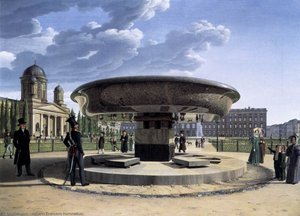
Ručno rađena uljana reprodukcija
Ručno oslikano uljanim bojama na platnu u dimenzijama i okviru po vašem izboru, izrađeno po porudžbini od strane naših umetnika. ( Pređi na prodaju štampanih primeraka Pređi na prodaju digitalnih slika)




































Izaberite jednu od naših unapred definisanih veličina koje odgovaraju originalnim proporcijama umetničkog dela.

Možete uneti sopstvene dimenzije kako biste prilagodili umetničko delo određenom okviru ili prostoru. Ako odabrana veličina ne odgovara proporcijama originala, slika će biti isečena ili proširena dodatnim elementima koji se ručno oslikavaju. Digitalni prikaz će vam biti poslat na odobrenje pre početka proizvodnje.
Imajte na umu da pregled na ekranu ne odražava stvarno prisecanje ili proširenje. Samo mockup će precizno prikazati konačnu kompoziciju.
Iako su dostupne prilagođene veličine, preporučujemo da izaberete dimenziju iz unapred definisane liste kako biste sačuvali originalne proporcije.
Nakon narudžbine, tim OriginalUniqueArt.com će klijentu putem e-pošte poslati uputstva i dostaviti prikaz predloženog rešenja
Svetska isporuka () za 3/4 nedelje umesto uobičajenih 5 nedelja. (27 септембар). Bez kompromisa po pitanju kvaliteta.

Besplatna ekspresna dostava širom sveta

Visokokvalitetno laneno platno

Sveobuhvatno osiguranje transporta

Garancija povraćaja carine i uvoznih dažbina

Garancija vernosti boja i autentičnosti pri reprodukciji

Politika povraćaja u roku od 100 dana (samo u slučaju nedostataka)

Garancija povrata 100% novca

Popust pri većoj količini
 Opcija sa staklom dostupna je samo za dimenzije manje od 110 cm

That fermate
Tehnika izrade reprodukcije
Veličina reprodukcije
-


Ukupna cena
$ 300
Biografija umetnika
Johann Erdmann Hummel: The Architect of Perception
Johann Erdmann Hummel (1769-1852) stands as a singular figure in 18th and early 19th-century German art, renowned not for grand narratives or dramatic scenes, but for his meticulous rendering of the world through an almost scientific lens. Born in Kassel, Germany, Hummel’s artistic journey was shaped by rigorous study at the Kunsthochschule Kassel, followed by a transformative period in Rome where he encountered and subtly diverged from the prevailing classical style championed by Anton Raphael Mengs. Unlike many of his contemporaries who embraced the idealized forms and theatrical compositions favored during that era, Hummel developed a distinct approach—one deeply rooted in observation, perspective, and an unwavering commitment to accuracy.
Hummel’s early works, primarily created during his Roman sojourn, reveal a fascination with mythology. However, it was not the mythological subject matter itself but the *way* he depicted these stories that set him apart. He eschewed the overly dramatic poses and idealized figures common in classical art, instead favoring a more restrained and realistic style. This shift can be attributed to his exposure to Dutch masters of the 17th century, particularly their meticulous attention to detail and atmospheric effects. He sought to capture not just the appearance of a scene but also its underlying structure—the way light interacted with surfaces, the precise alignment of objects, and the subtle nuances of perspective.
Upon his return to Germany in 1799, Hummel established himself in Berlin, where he would spend the remainder of his life. This period marked a significant evolution in his artistic practice. While mythological themes continued to appear, they were increasingly interwoven with landscapes and genre scenes—often depicting everyday activities like chess games or gatherings in parks. His work during this time is characterized by an almost obsessive concern with accuracy, particularly in his treatment of perspective. He became known as “Perspective-Hummel” due to his mastery of linear perspective and his ability to create incredibly convincing illusions of depth on a flat surface.
The Professor of Perspective
In 1809, Hummel’s expertise in optics and architectural drawing led to an appointment as professor at the Prussian Academy of Arts in Berlin. This role provided him with a unique opportunity to disseminate his knowledge and influence a new generation of artists. His lectures focused on fundamental principles such as perspective, optics, and architecture—subjects he approached with a rigorous scientific methodology. He didn’t merely teach theoretical concepts; he demonstrated them through meticulous drawings and diagrams, emphasizing the importance of observation and careful measurement.
Hummel's pedagogical approach was remarkably innovative for his time. He believed that artists should understand not just *how* to represent a scene but also *why* it appeared as it did—the underlying mathematical principles governing spatial relationships. This emphasis on scientific understanding profoundly shaped the work of his students, contributing to the development of a more realistic and technically proficient style within German art.
A Craftsman’s Eye: Technique and Style
Hummel's artistic style is immediately recognizable by its remarkable precision and attention to detail. He employed a meticulous technique, often working on a scale that demanded painstaking observation and execution. His landscapes are not romanticized visions but carefully constructed representations of reality—filled with accurately rendered objects, meticulously placed trees, and precisely calculated lighting effects. He utilized a subtle palette, favoring muted earth tones and delicate gradations of color to create a sense of atmospheric depth.
Crucially, Hummel’s work is defined by his mastery of perspective. He didn't simply apply the rules of linear perspective; he seemed to *feel* it—to intuitively understand how light and shadow would interact in three-dimensional space. His paintings possess a remarkable sense of spatial coherence, creating illusions of depth that are both convincing and subtly unsettling. This dedication to accuracy extended beyond mere visual representation; it reflected a deeper engagement with the underlying structure of the world.
Legacy and Significance
While Hummel’s work may not be as widely celebrated as some of his contemporaries, its influence on German art is undeniable. He played a pivotal role in shaping the development of Biedermeier painting—a style characterized by its realism, intimacy, and focus on everyday life. His emphasis on observation, perspective, and technical skill provided a foundation for subsequent generations of artists who sought to capture the beauty and complexity of the natural world.
Furthermore, Hummel’s scientific approach to art—his belief that artistic representation should be grounded in understanding—represented a significant departure from traditional notions of artistic creativity. He demonstrated that art could be both aesthetically pleasing and intellectually stimulating, paving the way for a more nuanced and sophisticated appreciation of visual culture. His legacy endures not only through his paintings but also through his contributions to the education and development of German art.
Johann Erdmann Hummel
1769 - 1852 , Germany
Brzi pregled
- Artistic Movement Or Style: Perspective Painting
- Artists Or Movements Influenced By This Artist: ['Biedermeier art']
- Artists Who Influenced This Artist: ['Anton Raphael Mengs']
- Date Of Birth: September 11, 1769
- Date Of Death: October 26, 1852
- Full Name: Johann Erdmann Hummel
- Nationality: German
- Notable Artworks:
- Granite Bowl in Berlin
- Chess Players
- Schloss Wilhelmshöhe
- Place Of Birth: Kassel, Germany