Veličina teksta

() ·

Slika napravljena za vas, ručno

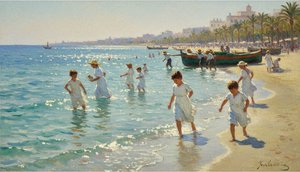
To the Water

Ručno rađena uljana reprodukcija

Ručno oslikano uljanim bojama na platnu u dimenzijama i okviru po vašem izboru, izrađeno po porudžbini od strane naših umetnika. ( Pređi na štampu Pređi na digitalnu sliku)

Opis predmeta

Discover 'To the Water' by Joaquin Sorolla! A stunning 1908 oil painting capturing coastal beauty & light. Explore Spanish Impressionism at its finest.

Biografija umetnika

Joakin Sorola, španski majstor svetlosti i boja! Otkrijte njegove živopisne portrete i prizore plaže koji hvataju suštinu mediteranskog života. Istražite njegovu umetničku baštinu danas!

od ·

Poglavlje 1

Koje bi dimenzije trebalo da ima?

Prevucite da promenite veličinu; slika levo prikazuje okvir u njegovoj stvarnoj širini. Proporcije originala su zadržane.

Standardne dimenzije
po meri
CM
INCH

Izaberite jednu od naših unapred definisanih veličina koje odgovaraju originalnim proporcijama umetničkog dela.

širina
visina

Unesite potrebnu širinu i visinu kako bi se slika uklopila u vaš ram ili zid. Pošto je ovo ručno oslikano delo, umetnik može za dimenzije drugačijeg oblika naslikati malo više prostora oko slike ili malo skratiti ivice — izbor je na vama. Pre početka rada, poslaćemo vam digitalni prikaz radi potvrde. Slika prikazana na ovoj stranici ne predstavlja konačan rezultat — samo digitalni prikaz pokazuje stvarnu sliku.

Poglavlje 2

Na koji način želite da vam stigne?

Izaberite ivice platna

Izaberite svoj okvir

Corner sample of the WhiteWrap canvas edge finish, stretched on masivno drvo bars
Beli rub дин1
Corner sample of the BlurSideWrap canvas edge finish, stretched on masivno drvo bars
zamrljene ivice дин1
Corner sample of the ExtendedWrap canvas edge finish, stretched on masivno drvo bars
Prošireno дин1
Corner sample of the P118B picture frame: oblikovani polistiren, 5 cm wide and 3 cm thick
P118B дин10
Corner sample of the P118H picture frame: oblikovani polistiren, 5 cm wide and 3 cm thick
P118H дин10
Corner sample of the P118W picture frame: oblikovani polistiren, 5 cm wide and 3 cm thick
P118W дин10
Corner sample of the P438Z picture frame: oblikovani polistiren, 5.5 cm wide and 3.5 cm thick
P438Z дин10
Corner sample of the P508JH picture frame: oblikovani polistiren, 7 cm wide and 3.5 cm thick
P508JH дин12
Corner sample of the P508YH picture frame: oblikovani polistiren, 7 cm wide and 3.5 cm thick
P508YH дин12
Corner sample of the P805H picture frame: oblikovani polistiren, 5 cm wide and 3.5 cm thick
P805H дин10
Corner sample of the P805Z picture frame: oblikovani polistiren, 5 cm wide and 3.5 cm thick
P805Z дин10
Corner sample of the P919BZ picture frame: oblikovani polistiren, 7 cm wide and 3.5 cm thick
P919BZ дин10
Corner sample of the P919G picture frame: oblikovani polistiren, 7 cm wide and 3.5 cm thick
P919G дин10
Corner sample of the P919XJ picture frame: oblikovani polistiren, 7 cm wide and 3.5 cm thick
P919XJ дин10
Corner sample of the P959ZH picture frame: oblikovani polistiren, 5 cm wide and 3 cm thick
P959ZH дин10
Corner sample of the P968JZ picture frame: oblikovani polistiren, 6 cm wide and 4 cm thick
P968JZ дин12
Corner sample of the W106C picture frame: masivno drvo, 5 cm wide and 3 cm thick
W106C дин8
Corner sample of the W218G picture frame: masivno drvo, 5 cm wide and 3 cm thick
W218G дин10
Corner sample of the W218JH picture frame: masivno drvo, 5 cm wide and 3 cm thick
W218JH дин8
Corner sample of the W218Y picture frame: masivno drvo, 5 cm wide and 3 cm thick
W218Y дин10
Corner sample of the W307PJ picture frame: masivno drvo, 6 cm wide and 3 cm thick
W307PJ дин10
Corner sample of the W316G picture frame: masivno drvo, 6 cm wide and 3 cm thick
W316G дин10
Corner sample of the W316PJ picture frame: masivno drvo, 6 cm wide and 3 cm thick
W316PJ дин8
Corner sample of the W316Y picture frame: masivno drvo, 6 cm wide and 3 cm thick
W316Y дин10
Corner sample of the W398PJ picture frame: masivno drvo, 5 cm wide and 3 cm thick
W398PJ дин8
Corner sample of the W4111J picture frame: masivno drvo, 6.5 cm wide and 3.5 cm thick
W4111J дин10
Corner sample of the W500HY picture frame: masivno drvo, 7 cm wide and 5 cm thick
W500HY дин15
Corner sample of the W500JH picture frame: masivno drvo, 7 cm wide and 5 cm thick
W500JH дин15
Corner sample of the W692G picture frame: masivno drvo, 8 cm wide and 4 cm thick
W692G дин12
Corner sample of the W849H picture frame: masivno drvo, 5 cm wide and 3 cm thick
W849H дин8
Corner sample of the W940BG picture frame: masivno drvo, 7.5 cm wide and 4.5 cm thick
W940BG дин15
Corner sample of the W953PJ picture frame: masivno drvo, 6 cm wide and 3.5 cm thick
W953PJ дин8
Corner sample of the H24-GOLD picture frame: rezbarano drvo sa gessoom, 10 cm wide and 6 cm thick
H24-GOLD дин30
Corner sample of the H24-SILVER picture frame: rezbarano drvo sa gessoom, 10 cm wide and 6 cm thick
H24-SILVER дин30
Corner sample of the H36-GOLD picture frame: rezbarano drvo sa gessoom, 15 cm wide and 6.5 cm thick
H36-GOLD дин45
Corner sample of the H36-SILVER picture frame: rezbarano drvo sa gessoom, 15 cm wide and 6.5 cm thick
H36-SILVER дин45

Profil: . Ukupna veličina sa okvirom: .

Poglavlje 3

Ko ga slika i da li bi trebalo nešto da se promeni?

Primeri onoga što se može promeniti: Zamena lica fotografijom kupca; Dodavanje ljubimca (npr. zamena mačke psom); Uključivanje skrivene poruke u pozadini; Promena pejzaža ili elemenata u pozadini.
Nakon porudžbine, tim OriginalUniqueArt.com će poslati imejl klijentu radi dobijanja uputstava i dostaviti prikaz makete

Svetska isporuka () za 3/4 nedelje umesto uobičajenih 5 nedelja. (7 новембар). Bez kompromisa po pitanju kvaliteta.

Poglavlje 4

Završni dodiri

Plakica, kao u muzeju?

Detalji gravirane bronze ploče

This elegant plaque features the artist's name and the title of the artwork, finely engraved for a timeless presentation.

It is made from bronze with a refined, elegant finish. The text is precisely laser-engraved for a sharp and permanent result. Measuring 9x2 cm, the plaque is compact yet easy to read. It's built to be durable and scratch-resistant, offering a professional, museum-quality look. Mounting is simple thanks to the included adhesive backing.

Detalji prozirne akrilne pločice

The plaque includes essential engraved details such as the artist's name, the title of the artwork, the date it was created, the type of media used-like oil on canvas or watercolor-a brief description of the piece, and a QR code that links to the complete artwork information.

It is crafted from clear acrylic, offering a sleek, modern appearance. The text is UV-engraved in black to ensure strong visual contrast. With a size of 10x15 cm, it ensures optimal readability. It comes equipped with two metal hooks for secure wall mounting. The plaque is designed to be weather-resistant, making it suitable for various environments, and it includes interactive features that work seamlessly with smartphone scanning.

Detalji crne akrilne pločice

This elegant plaque includes engraved information such as the artist's name, the title of the artwork, the date it was created, the type of media used (like oil on canvas or watercolor), a short description of the artwork, and a QR code for quick access to more information.

The plaque itself is made from refined black acrylic with a premium finish. The text is laser-engraved in white for high contrast and readability. Its size is 10x15 cm, designed to be easy to read. It comes with two metal hooks for professional mounting. The design is sleek and fits any interior style. It is also weather-resistant and durable, with built-in digital integration for mobile compatibility.

Zaštitni lak?

Kada vam je potrebno?

Poglavlje 5

Vaša slika, upravo onakva kakvu ste naručili

To the Water

Tehnika reprodukcije

Dimenzije reprodukcije

-

Vrhunski maestri umetnosti

Više detalja, prefinjenosti i dodatnog vremena za izradu

-

Okvir za reprodukciju

-

-

Za umetnička dela ili reprodukcije čija je bilo koja strana veća od 105 cm (približno 41 inč), okvir će biti isporučen u obliku rastavljenog seta za sklapanje. Ovaj metod osigurava bezbednu dostavu i sprečava oštećenja tokom transporta.

Potrebna je profesionalna montaža – ovo nije proizvod namenjen samostalnoj izradi.
Set mora sastaviti i platno zategnuti iskusni profesionalni ramitelj, koristeći drveni lepak (nije uključen u set), hvataljku za zatezanje platna i stege kako bi se održao prav ugao okvira dok se lepak suši. Nepravilno sklapanje ili neravnomerno zategnuto platno mogu trajno oštetiti umetničko delo, što nije pokriveno našom garancijom.

  • Sve šipke od masivnog drveta su uključene, precizno isečene po veličini.

  • Montira se pomoću priloženih šrafova, uz dodatno korišćenje lepka za drvo za spojeve u uglovima, koji nije uključen u set i koji vaš čuvar okvira mora obezbediti.

  • Potreban je profesionalni alat koji nije uključen u set: klešta za zatezanje platna (zatezač) i stege za održavanje pravih uglova letvica tokom sušenja lepka.

Važno:
Za spojeve u uglovima neophodan je lepak za drvo, šipke se moraju pričvrstiti stezgama dok lepak potpuno ne osuši, a za zatezanje platna na sklopljenom ramu potrebne su hvataljke za zatezanje platna. Nijedan od ovih alata nije uključen u komplet. Pre naručivanja ove veličine, molimo Vas da unapred obezbedite iskusnog profesionalca za ramačenje.

Kratki opis natpisa

-

-

Zaštitni lak

Sjajni lak (pojačava intenzitet boja, štiti od svetlosti i vlage)

-

Personalizujte svoje umetničko delo

Primeri mogućnosti izmene: Zamena lica fotografijom kupca; Dodavanje ljubimca (npr. zamena mačke psom); Uključivanje skrivene poruke u pozadini; Promena pejzaža ili elemenata pozadine.

-

Hitna dostava

Svetska isporuka () za 3/4 nedelje umesto uobičajenih 5 nedelja. (7 новембар). Bez kompromisa po pitanju kvaliteta.

-

Brza dostava

Dostava širom sveta () u roku od 5 nedelja. (14 новембар).

Uključeno u cenu

Ukupna cena

дин 31426

Ukupna cena дин 31426

Opcija sa staklom dostupna je samo za dimenzije manje od 110 cm

Uključeno uz svaku porudžbinu

  • Besplatna ekspresna dostava širom sveta
  • Visokokvalitetno laneno platno
  • Potpuno osiguranje transporta
  • Garancija povraćaja carine i uvoznih dažbina
  • Garancija vernosti boja
  • Politika povraćaja u roku od 100 dana (samo u slučaju nedostataka)
  • Garancija povrata 100% novca
  • Popust na više proizvoda

A Sun-Drenched Moment: Exploring Joaquín Sorolla’s *To the Water*

Joaquín Sorolla y Bastida's *To the Water*, painted in 1908, is more than just a depiction of figures on a beach; it’s an immersive experience of light, atmosphere, and intimate connection. This captivating oil on canvas (81 x 106 cm) exemplifies Sorolla’s mastery of capturing fleeting moments of everyday life along the Spanish coast, solidifying his place as a leading figure in Impressionism and *luminismo*.

The Artist & His Coastal Vision

Born in Valencia, Spain, in 1863, Joaquín Sorolla y Bastida dedicated his career to portraying the vibrant life of his homeland. He wasn’t merely painting *what* he saw, but *how* he saw it – through a lens of brilliant sunlight and dynamic brushwork. Unlike many of his contemporaries who sought grand historical or mythological subjects, Sorolla found beauty in the ordinary: fishermen hauling nets (The Net, 1899), women working along the shore (Fisherwomen, 1911), and families enjoying leisure time by the sea. His work is characterized by a remarkable ability to convey the psychological and emotional states of his subjects through light and color. You can explore more of Sorolla’s stunning portfolio at museums like the Museo de Bellas Artes de Santander (Spain).

Decoding the Scene: Subject & Style

*To the Water* presents a seemingly simple scene – a couple strolling along the water's edge. However, it is in this simplicity that Sorolla’s genius shines. The figures are not rigidly defined; instead, they blend harmoniously with their surroundings, almost dissolving into the shimmering light and gentle waves. The painting embodies the principles of Impressionism: an emphasis on capturing the momentary effects of light and color, loose brushstrokes, and a focus on sensory experience. Sorolla’s style, often referred to as *luminismo*, takes this further, prioritizing the radiant quality of Spanish sunlight.

Technique & Materiality

The choice of oil on canvas is crucial to the painting's impact. Oil paint allows for a richness and depth of color that perfectly conveys the luminosity of the scene. Sorolla’s brushwork is remarkably free and expressive, creating a sense of movement and vitality. He doesn’t blend colors smoothly; instead, he juxtaposes them, allowing the viewer’s eye to mix them optically. This technique creates a vibrant, almost shimmering effect, particularly noticeable in the depiction of water and sunlight. The size of the canvas (81 x 106 cm) allows for an immersive experience, drawing the viewer into the scene.

Symbolism & Emotional Resonance

While not overtly symbolic, *To the Water* evokes a sense of tranquility, intimacy, and connection with nature. The couple’s close proximity suggests a shared moment of peace and contentment. The water itself can be interpreted as a symbol of life, renewal, and the passage of time. Sorolla's paintings often celebrate the joys of everyday existence, offering a respite from the complexities of modern life. This painting invites viewers to pause, breathe, and appreciate the simple beauty of a sun-drenched afternoon by the sea.

A Timeless Appeal for Modern Spaces

*To the Water* is not just a historical artifact; it’s a work of art that continues to resonate with contemporary audiences. Its vibrant colors, dynamic composition, and evocative atmosphere make it an ideal addition to any interior space. Whether displayed in a modern living room, a serene bedroom, or a sophisticated office, this painting will bring a touch of Spanish sunshine and artistic elegance to your surroundings. Its enduring appeal lies in its ability to transport viewers to a place of beauty, tranquility, and emotional connection.
  • *To the Water* exemplifies Sorolla’s mastery of capturing light and atmosphere.
  • The painting's Impressionistic style and use of oil on canvas create a vibrant and immersive experience.
  • The scene evokes feelings of tranquility, intimacy, and connection with nature.

Pitanja i odgovori

Koje su dimenzije originalnog dela „To the Water”, autor Joaquin Sorolla?

Dimenzije originalnog dela „To the Water”, autor Joaquin Sorolla su 81 x 106 cm.

Da li je „To the Water”, autor Joaquin Sorolla portret, pejzaž ili kvadratna kompozicija?

„To the Water”, autor Joaquin Sorolla je kompozicija u Landscape formatu. Vredno je proveriti proporcije pre odabira veličine printa.

Iz koje zemlje potiče Impressionism rad "To the Water"?

"To the Water" povezuje pokret Impressionism sa Испанија kroz rodno mesto svog tvorca.

Saznajte više o ovoj slici

Pregledaj u prostoru AR pregled Pređi na štampu Pređi na digitalnu sliku Pošalji
Detalji o delu Vodič Dodaj u omiljene Preuzmi Slični predmeti Rendgenski snimak Automatska prezentacija Pitanja i odgovori Statistika

U brojevima

  • 1908godina kada je naslikano
  • 29okviri na izboru
  • standardne dimenzije, u sopstvenim proporcijama
  • 5nedelja za oslikavanje i isporuku
Joaquin Sorolla

Joaquin Sorolla

1863 - 1923, Испанија

Kratke činjenice o umetniku Joaquin Sorolla

  • Artistic Movement Or Style: Реализам, Луминизм, Импрессионизм
  • Artists Who Influenced This Artist:
    • Франсиско Прадила
    • Жуль Бастиен-Лепаж
    • АдОльф фон Мenzel
  • Date Of Birth: 27 фебруара 1863.
  • Date Of Death: 10 августа 1923.
  • Full Name: Joaquín Sorolla y Bastida
  • Nationality: Шпанија
  • Notable Artworks:
    • Италијанка са цвећењем
    • Време купања
    • Трагедија наслеђа
    • Типични Соролиански
    • Деца на обали
  • Place Of Birth: Валенсија, Шпанија

Biografija umetnika

Joaquín Sorolla y Bastida – A Life Bathed in Light

Joaquín Sorolla y Bastida, a name synonymous with the radiant light and vibrant energy of Spain, was more than just a painter; he was a chronicler of his nation’s soul. Born in Valencia in 1863, Sorolla's early life was marked by tragedy. Orphaned at the tender age of two following a cholera epidemic that claimed both parents, young Joaquín and his sister were raised by their maternal aunt and uncle. This early experience with loss perhaps instilled within him a profound appreciation for the fleeting beauty of life – a sentiment that would permeate his art. Though hardship shadowed his beginnings, it did not dim the spark of artistic talent that quickly became apparent. He received initial instruction in Valencia, demonstrating an aptitude that led to studies under established artists like Cayetano Capuz and José Benlliure, eventually culminating in a four-year grant to study in Rome. It was there, amidst the classical grandeur of Italy, that Sorolla began to forge his unique artistic path, absorbing influences while simultaneously developing a style distinctly his own.

Early Life and Influences

Joaquín Sorolla’s formative years instilled within him a deep sensitivity to loss – an experience profoundly shaping his artistic vision. Born on February 27, 1863, in Valencia, Spain, he was the eldest child of Joaquín Sorolla Bastida, a tradesman, and Concepción Bastida. Tragically, both parents succumbed to cholera just two years later, leaving him and his sister under the care of their maternal aunt and uncle. This early exposure to sorrow undoubtedly fueled his desire to capture moments of beauty before they vanished—a preoccupation that would become central to his oeuvre. Recognizing his exceptional talent at a young age, Sorolla pursued formal artistic training in Valencia, studying under prominent figures like Cayetano Capuz and José Benlliure. His dedication to mastering technique was further solidified by a scholarship enabling him to embark on a four-year journey of artistic exploration in Rome, Italy—a pivotal moment that exposed him to the stylistic innovations of Impressionism and Luminism. The influence of artists such as Francisco Pradilla Ortiz and Jules Bastien-Lepage proved particularly formative, shaping Sorolla’s approach to composition and color palettes.

Rome and Artistic Development

Sorolla's time in Rome marked a decisive turning point in his artistic evolution. He enrolled at the Spanish Academy, immersing himself in the study of classical sculpture and painting—a deliberate effort to absorb the stylistic heritage of antiquity while simultaneously experimenting with new techniques. The atmosphere of the Italian capital fostered an openness to experimentation that would characterize his subsequent work. Sorolla’s fascination with Impressionism was palpable; he meticulously observed the effects of sunlight on surfaces, striving to reproduce its shimmering brilliance and transient nuances. This pursuit of luminosity—a hallmark of Luminism—became a defining element of his artistic style. He diligently copied works by masters like Velázquez and Rembrandt, honing his observational skills and refining his understanding of tonal gradation. Furthermore, Sorolla’s engagement with Parisian art circles exposed him to the avant-garde currents circulating at the time, broadening his artistic horizons and enriching his stylistic repertoire.

The Valencian Coast: A Celebration of Light

Sorolla's artistic sensibilities found their most compelling expression in his depictions of the Valencian coast—a landscape he regarded as a source of endless inspiration. Unlike many artists of his era who favored studio settings, Sorolla championed *plein air* painting—working outdoors directly confronted with the challenges and rewards of capturing fleeting light conditions. This commitment to observation resulted in canvases brimming with vitality and immediacy—images infused with the warmth of Mediterranean sunshine and the dynamism of coastal life. His iconic beach scenes—such as Children on the Seashore and Sewing the Sail—are not merely picturesque representations; they are profound meditations on beauty, joy, and the ephemeral nature of existence. Sorolla’s technique—characterized by loose, energetic brushstrokes—was revolutionary for its time. He employed a bold palette dominated by yellows, oranges, and blues—colors he skillfully manipulated to convey the illusion of shimmering light and atmospheric haze. The resulting canvases possess an unparalleled sense of spontaneity and emotional depth—a testament to Sorolla’s mastery of Luminism and his unwavering devotion to capturing the essence of his beloved homeland.

Legacy and Recognition

Joaquín Sorolla y Bastida achieved international renown during his lifetime, becoming one of Spain's most celebrated artists. His prolific output encompassed portraits, landscapes, historical narratives, and monumental murals—each infused with a distinctive stylistic signature. He exhibited extensively throughout Europe and the United States, garnering critical acclaim and securing commissions from prominent patrons. Sorolla’s magnum opus, Vision of Spain—a series of fourteen canvases commissioned by Archer Milton Huntington—stands as an enduring monument to his artistic vision and technical prowess. Completed posthumously, these murals captured the spirit of Spain's diverse regional cultures—celebrating its traditions, costumes, and landscapes with breathtaking grandeur. Sorolla’s influence extended far beyond his own era, inspiring generations of artists who embraced Luminism and sought to emulate his masterful technique. Today, Sorolla’s paintings reside in major museums worldwide—including the Museo Sorolla in Madrid—where they continue to captivate audiences with their luminous beauty and emotional resonance—affirming his place as one of Spain's greatest artistic treasures.

Osnovne informacije

  • title: To the Water
  • year: 1908
  • subject: People walking along the beach
  • medium: Oil on canvas

Kviz o umetnosti

Svako pitanje ima samo jedan tačan odgovor.

Pitanje 1:
In what year was 'To the Water' painted by Joaquin Sorolla?
Pitanje 2:
What is the primary medium used in 'To the Water'?
Pitanje 3:
Joaquin Sorolla y Bastida was particularly renowned for his depictions of what subject matter?
Pitanje 4:
Approximately what are the dimensions of 'To the Water'?
Pitanje 5:
Which artistic movement is Joaquin Sorolla y Bastida most closely associated with?