

 Pregledaj u prostoru
 Podeli
 Podeli
 Detalji
 Vodič
Vodič

 Preuzmi sliku
 Slični predmeti
 Rendgenski snimak
 Automatska prezentacija
 Statistika
The Four Elements: Fire
 Oil On Canvas
- WallArt
- Northern Renaissance
 1570
1570 158.0 x 215.0 cm
 Nacionalna galerija
 Pročitaj više
Giclee štampa / Umetnički otisak
Giclée štampa ili print na platnu muzejskog kvaliteta uz brzu izradu i raznovrsne opcije završne obrade. ( Naručite ručno oslikano reprodukciju Pređi na prodaju digitalnih slika)




P118B дин10

P118H дин10

P118W дин10

P438Z дин10

P508JH дин12

P508YH дин12

P805H дин10

P805Z дин10

P919BZ дин10

P919G дин10

P919XJ дин10

P959ZH дин10

P968JZ дин12

W106C дин8

W218G дин10

W218JH дин8

W218Y дин10

W307PJ дин10

W316G дин10

W316PJ дин8

W316Y дин10

W398PJ дин8

W4111J дин10

W500HY дин15

W500JH дин15

W692G дин12

W849H дин8

W940BG дин15

W953PJ дин8




Izaberite jednu od naših unapred definisanih veličina koje odgovaraju originalnim proporcijama umetničkog dela.

Unesite širinu i visinu koja vam je potrebna, kako bi se uklopili u vaš ram ili na vaš zid. Štampa se može samo iseći, nikada ne može biti veća od originalne slike, stoga format sa drugačijim proporcijama gubi deo slike. Poslaćemo vam digitalni prikaz radi potvrde pre nego što započnemo štampu. Slika prikazana na ovoj stranici ne pokazuje stvarni rez — to pokazuje samo digitalni prikaz.
Dostava širom sveta () za 2 nedelje umesto uobičajenih 4/5 nedelja. (23 октобар)

Besplatna ekspresna dostava širom sveta

Visokokvalitetno laneno platno

Sveobuhvatno osiguranje transporta

Garancija povraćaja carine i uvoznih dažbina

Garancija vernosti boja i autentičnosti pri reprodukciji

Politika povraćaja u roku od 100 dana (samo u slučaju nedostataka)

Garancija povrata 100% novca

Popust pri većoj količini
 Opcija sa staklom dostupna je samo za dimenzije manje od 110 cm

The Four Elements: Fire
Giclee štampa / Umetnički otisak
Veličina reprodukcije
-


Ukupna cena
дин 8263
A Kitchen’s Revelation: Joachim Beuckelaer and the Dawn of Still Life
Joachim Beuckelaer's "The Four Elements: Fire" isn’t merely a depiction of a bustling 16th-century kitchen; it’s a carefully constructed tableau, a microcosm of daily life imbued with subtle symbolism and a burgeoning artistic ambition. Born in Antwerp around 1533, Beuckelaer emerged from the vibrant artistic milieu of his family – his father, Mattheus Beuckeleer, and uncle, Pieter Aertsen – to become a master of scenes that elevated the commonplace to an extraordinary level. Unlike earlier depictions of domesticity, which often prioritized religious narrative, Beuckelaer’s kitchen scenes, and indeed this particular “Fire,” began to shift the focus towards observing and celebrating the tangible realities of existence itself. This wasn't simply painting what he saw; it was a deliberate act of elevation, laying crucial groundwork for the eventual development of still life as an independent genre within art history.
The painting immediately draws the eye with its astonishing detail – twelve figures are present, engaged in a symphony of activity: cooking, eating, preparing ingredients. Bowls overflow with produce, knives gleam on tables, and the presence of an oven and sink anchors the scene to the practicalities of daily life. However, it’s not just the abundance that captivates; it's the arrangement, the carefully considered placement of objects, and the subtle interplay of light and shadow that create a sense of palpable realism. Beuckelaer’s skill lies in his ability to render textures – the rough grain of wood, the sheen of polished metal, the plumpness of fruit – with an almost photographic precision.
The Language of Elements: Symbolism Within the Scene
“Fire” is one of a set of four paintings exploring the classical elements—Earth, Water, Air, and Fire—and Beuckelaer masterfully integrates these themes into his everyday subject matter. The title itself immediately establishes this elemental framework. Beyond the immediate depiction of a kitchen scene, the painting operates as a complex allegory. The central focus – the preparation of food over an open fire – is inherently linked to the element of Fire, but Beuckelaer doesn’t stop there. Look closely, and you'll notice subtle references to the other elements woven throughout the composition. The abundance of fruits and vegetables speaks to Earth, while the presence of water (in the sink and implied in the cooking process) represents Water. Even the figures themselves contribute to the overall narrative – their actions and gestures subtly reinforce the elemental themes.
Crucially, Beuckelaer doesn’t simply depict these elements; he juxtaposes them with a dramatic backdrop: a meticulously constructed architectural scene featuring Christ, Martha, and Mary in the House of Bethany. This pairing is not arbitrary. It represents a deliberate contrast between the earthly pleasures of the senses – represented by the kitchen scene—and the spiritual realm. The inclusion of biblical figures serves as a moral compass, reminding viewers to temper their desires with faith and virtue. The arrangement of objects within the kitchen itself can be interpreted as a symbolic representation of temptation and restraint.
A Pioneering Technique: Perspective and Illusion
What truly distinguishes “The Four Elements: Fire” is Beuckelaer’s innovative use of perspective and illusionistic techniques. The scene feels remarkably three-dimensional, despite being painted on a relatively flat wooden panel. He employs multiple vanishing points to create the impression of depth and space, drawing the viewer into the heart of the kitchen. This masterful manipulation of perspective was groundbreaking for its time, pushing the boundaries of realism in Northern European painting. The sheer number of objects depicted – bowls, utensils, foodstuffs—further enhances this illusionistic effect, creating a sense of overwhelming abundance that is both captivating and slightly disorienting.
Furthermore, Beuckelaer’s attention to detail extends beyond mere representation; he imbues his figures with a remarkable degree of personality. Each individual seems engaged in their own activity, contributing to the overall dynamism of the scene. This level of realism was unprecedented for its time and demonstrates Beuckelaer's exceptional skill as an artist.
A Window into a World Transformed
“The Four Elements: Fire” is more than just a painting; it’s a snapshot of a rapidly changing world. As the Renaissance progressed, artists began to move away from solely religious subjects and towards depicting scenes of everyday life with increasing realism and attention to detail. Beuckelaer's work stands as a pivotal moment in this transition, marking a shift towards a more secular and humanistic approach to art. Reproductions of this captivating piece offer a unique glimpse into the domestic life of 16th-century Antwerp, while simultaneously revealing the burgeoning artistic ambition that would ultimately shape the course of Western art history. It’s a testament to Beuckelaer's ability to transform the mundane into the magnificent.
Pitanja i odgovori
Da li je Joachim Beuckelaer, autor dela "The Four Elements: Fire", poznat/a i pod drugim imenima?
Joachim Beuckelaer je poznat/a i pod imenom Joachim Bueckelaer, Ioachimus Bueckelaer, Joachim.
Da li „The Four Elements: Fire”, Joachim Beuckelaer koristi jake kontraste ili nežne harmonije?
Koloristička kompozicija dela „The Four Elements: Fire”, Joachim Beuckelaer spaja Gentle kontrast sa Strong Color Unity harmonijom.
Koliko je izražen kontrast u delu „The Four Elements: Fire”, Joachim Beuckelaer?
Nivo kontrasta dela „The Four Elements: Fire”, Joachim Beuckelaer je Gentle.
Biografija umetnika
Život uronjen u svakodnevicu: Joachim Beuckelaer i svitanje mrtve prirode
Joachim Beuckelaer, ime možda manje trenutno prepoznatljivo od imena njegovih savremenika, zauzima ključnu poziciju u istoriji flamanske slikarstva. Rođen oko 1533. godine u Antverpenu, gradu koji je tada pulsirao umetničkim inovacijama, on se istakao kao majstor scena koje prikazuju užurbani svet pijaca i kuhinja. Ovo nisu bili samo prikazi svakodnevnog života; to su bile pažljivo konstruisane naracije, često suptilno isprepletane sa religijskim simbolizmom, koje su signalizirale promenu umetničkog fokusa — kretanje ka posmatranju i slavljenju opipljive stvarnosti postojanja uporedo sa tradicionalnim duhovnim temama. Beuckelaer nije samo slikao ono što je video; on je uzdizao obične stvari na nivo vredan umetničke pažnje, postavljajući presudne temelje za razvoj mrtve prirode kao nezavisnog žanra. Njegovo porodično poreklo duboko ukorenjeno u umetnosti — njegov otac, Mattheus Beuckeleer, i stric, Pieter Aertsen, bili su priznati slikari — pružilo mu je rano izlaganje i obuku. Upravo u stricovoj radionici verovatno je usavršio svoje veštine, upijajući Aertsenov pionirski pristup pijacnim scenama pre nego što ga je na kraju nadmašio u tehničkoj izvedbenosti i nijansiranom pripovedanju.Antverpenska radionica i umetnički razvoj
Antverpen tokom 16. veka bio je živopisno čvorište trgovine i kulture, a Beuckelaerova umetnost odražava tu energiju. Postao je nezavisni majstor u esnafu Svetog Luke 1560. godine, učvrstivši svoje mesto u umetničkoj zajednici. Međutim, on nije jednostavno replicirao Aertsenov stil; on ga je rafinirao, dodajući slojeve složenosti i detalja. Dok je Aertsen često prikazivao pomalo haotičnu obilnost, Beuckelaer je svojim kompozicijama doneo veći osećaj reda i jasnoće. Njegove scene su pedantno aranžirane, gde je svaki predmet prikazan sa izvanrednom preciznošću — blistave krljušti ribe, sočnost voća, sjaj kalajnog posuđa. Ova posvećenost realizmu nije se odnosila samo na tehničku veštinu; radilo se o prožimanju ovih svakodnevnih predmeta osećajem prisutnosti i značaja. Serija Četiri elementa stoji kao svedočanstvo ovog pristupa — skup slika koje prikazuju ribarske pijace, a koje istovremeno slave bogatstvo prirode i suptilno aludiraju na biblijske narative, gde dvanaest vrsta riba predstavlja apostole, dok se u pozadini odvija Hristovo čudo množenja hleba i ribe. Ova sposobnost neprimetnog spajanja svetovnog i svetog postala je zaštitni znak njegovog rada.Kuhinje kao platna: Simbolizam i naracija
Pored pijacnih scena, Beuckelaer se takođe isticao u prikazivanju kuhinja — prostora prepunih aktivnosti i simboličkog potencijala. Njegova Scena u kuhinji sa Hristom na Emau, na primer, posebno je upečatljiv primer njegovog inovativnog pristupa. On ne prikazuje biblijsku priču samo kao zasebnu scenu; on je integrira direktno u užurbano okruženje kuhinje, gde su pripreme za obrok u toku. Ovo suprotstavljanje stvara snažan osećaj neposrednosti i poziva posmatrače da razmotre duhovni značaj svakodnevnih radnji. Obilje hrane u ovim scenama nije bilo samo dekorativno; ono je često nosilo simboličku težinu — predstavljajući prosperitet, plodnost ili čak iskušenje. Beuckraelerova veština ležala je u njegovoj sposobnosti da ove naizgled obične postavke prožme slojevima značenja, pretvarajući ih u upečatljive vizuelne naracije. Takođe se upustio i u čiste kompozicije mrtve prirode, kao što je Mrtva priroda sa carcassom (1563), koja se smatra jednim od najranijih datiranih primera ove teme, dodatno demonstrirajući njegovo majstorstvo u detalju i realizmu i pomerajući granice umetničke konvencije.Nasleđe i uticaj: Most ka novim umetničkim horizontima
Uticaj Joachima Beuckelaera protezao se daleko izvan njegovog vlastitog životnog veka. Njegovi detaljni prikazi svakodnevnog života otvorili su put novoj generaciji umetnika koji će dalje istraživati mogućnosti slikanja mrtve prirode. Umetnici poput Fransa Snydersa, poznati po svojim raskošnim i raskošnim prikazima hrane, direktno su gradili na temeljima koje je postavio Beuckelaer. Njegov uticaj nije bio ograničen samo na severnu Evropu; njegov rad je odjekivao i kod italijanskih slikara poput Vincenza Campija, pokazujući široku privlačnost njegovog inovativnog pristupa. Pomeranjem fokusa sa primarno religioznih tema na svetovnije predmete — uz zadržavanje suptilne duhovne podtonacije — Beuckelaer je odigrao ključnu ulogu u transformaciji flamanske umetnosti i predskazivanju umetničkih trendova koji će definisati naredne vekove. Umro je oko 1573. godine, ostavivši za sobom korpus dela koji nastavlja da očarava i inspiriše, podsećajući nas na lepotu i značaj skrivene u običnim trenucima života.
Joachim Beuckelaer
1533 - 1573 , Belgija
Brzi pregled
- Artistic Movement Or Style: Renesansna umetnost
- Artists Or Movements Influenced By This Artist:
- Frans Snyders
- Vincenzo Campi
- Artists Who Influenced This Artist: ['Pieter Aertsen']
- Date Of Birth: oko 1533.
- Date Of Death: oko 1573.
- Full Name: Joachim Beuckelaer
- Nationality: Flamanski
- Notable Artworks:
- Serija 'Četiri elementa'
- Scena u kuhinji sa Hristom
- Stil u mrtvoj prirodi: Leš
- Place Of Birth: Antverp, Belgija
Srodni članci

Silent Narratives: Exploring the Enduring Appeal of Still Life Painting Across Centuries
Explore the rich history of still life painting with OriginalUniqueArt. Discover Dutch Masters, decode vanitas symbolism & learn about collecting timeless art. Expert insights and museum-quality reproductions.
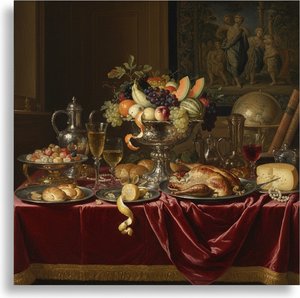
Abraham Hendricksz van Beyeren: Pioneering Dutch Still Life & the Banquet Tradition
Explore the captivating world of Dutch Golden Age still life with Abraham van Beyeren. Discover his innovative techniques, symbolic banquet scenes & lasting influence on art history. Learn about collecting these masterpieces.
The Enduring Appeal of Still Life: A Historical & Contemporary Exploration
Explore the rich history & symbolism of still life painting with OriginalUniqueArt. Discover masterpieces from the Dutch Golden Age, learn about vanitas art, and find expert guidance for collecting timeless artworks.
Clyfford Still's Abstract Expressionism: A Study of Color, Form & the Existential Landscape
Explore the profound world of Clyfford Still's Abstract Expressionism with OriginalUniqueArt. Discover his unique style, existential themes & investment potential. Expert analysis for discerning collectors.
Gastronomic Canvas: Culinary Aesthetics & Artistic Representation for Hotel Design
Explore the captivating intersection of culinary arts & artistic representation for hotel design. Discover techniques to elevate dining experiences through visual harmony, composition, and inspiration from classic still life painting.