Pop Art · 2009
Monkey (Yellow) (Џеф Кунс, 2009)
Џеф Кунс (1955) je napravio Monkey (Yellow). Datirano je iz 2009. Pripada pokretu Pop Art.
- 2009

 Pregledaj u prostoru

 Ručno oslikano uljanim bojama
 Pošalji
 Podeli
 Informativni list


 Preuzmi
 Slični predmeti
 Rendgenski snimak
 Automatska prezentacija
 Pitanja i odgovori

 Statistika
Monkey (Yellow), ukratko
Šta prikazuje Monkey (Yellow)?
A Playful Icon: Jeff Koons' "Monkey (Yellow)"
Jeff Koons’ “Monkey (Yellow)” is a captivating sculpture that embodies the artist’s signature Pop Art aesthetic. This work, photographed here in stunning detail, presents a stylized depiction of a monkey’s head, rendered with striking simplicity and vibrant color. The image captures the essence of the original three-dimensional object – likely crafted from polished stainless steel – showcasing Koons' fascination with everyday objects and their transformation into monumental works of art. The photograph itself serves as a document of this process, highlighting the sculpture’s smooth surfaces and clean lines. It is dated 2009, placing it within a period of significant recognition for Koons and his exploration of consumer culture.Pop Art & The Elevation of the Mundane
Koons' work sits firmly within the Pop Art movement, which emerged in the mid-20th century as a reaction against Abstract Expressionism. Like Andy Warhol before him, Koons appropriates imagery from popular culture – toys, kitsch objects, and mass-produced goods – elevating them to the realm of fine art. “Monkey (Yellow)” exemplifies this approach; it takes a familiar image—a cartoonish monkey—and transforms it into a large-scale sculpture with meticulous craftsmanship. This process challenges traditional notions of artistic value and questions what constitutes "high" versus "low" culture. The use of highly polished materials, like stainless steel, further emphasizes the object's manufactured nature while simultaneously imbuing it with a sense of luxury and permanence.Style & Technique: Precision and Reflection
The photograph beautifully illustrates Koons’ meticulous technique. The sculpture itself is characterized by its clean lines, geometric shapes (circles for eyes, rounded forms for the ears), and lack of visible brushstrokes. This deliberate flatness contributes to a modern, graphic aesthetic reminiscent of children's toys or cartoons. Koons employs a team of assistants in his expansive studio – a process akin to factory production – ensuring precision and consistency across all iterations of his work. The mirror-like finish of the stainless steel (as seen through the photograph) creates an intriguing interplay with its surroundings, reflecting light and distorting the viewer’s perception. The photographic documentation itself is crucial; it allows for widespread appreciation of the sculpture's details and surface qualities.Symbolism & Emotional Impact
“Monkey (Yellow)” evokes a sense of playful joy and innocence. The bright yellow color, combined with the simplified form, symbolizes happiness and lightheartedness. The cartoonish style removes any trace of realism, creating a whimsical and approachable aesthetic. While Koons himself has stated that his works are devoid of hidden meanings, the sculpture’s inherent appeal lies in its ability to trigger positive emotions and spark conversation about consumerism, art, and our relationship with popular culture. The work's accessibility makes it an engaging piece for both seasoned art collectors and those new to contemporary art.Slike visoke rezolucije za Monkey (Yellow)
Protected by copyright: these files are for personal reference, not a licence to republish.
Џеф Кунс, Monkey (Yellow) (2009).
Odgovori na pitanja o Monkey (Yellow)
Kada je nastalo delo „Monkey (Yellow)”, autor Џеф Кунс?
Delo „Monkey (Yellow)”, autor Џеф Кунс nastalo je 2009.
Šta predstavlja delo "Monkey (Yellow)"?
Teme prisutne u delu „Monkey (Yellow)”, autor Џеф Кунс obuhvataju monkey, yellow, sculpture, pop art, playful, kitsch, cartoonish, modern, što zajedno sažima suštinu ovog umetničkog dela.
Da li se prikaz „Monkey (Yellow)”, autor Џеф Кунс može slobodno reprodukovati?
Što se tiče autorskih prava, delo "Monkey (Yellow)" je i dalje je zaštićeno autorskim pravima.
Ko je autor dela "Monkey (Yellow)"?
Autor dela "Monkey (Yellow)" je Џеф Кунс. Delo je katalogizovano pod imenom Џеф Кунс.
Koji umetnički pravac obuhvata „Monkey (Yellow)”, autor Џеф Кунс?
„Monkey (Yellow)“ je delo Pop Art pokreta. Ovaj pokret označava umetničku tradiciju kojoj je delo pripada.
U kojoj periodi karijere umetnika Џеф Кунс pripada delo "Monkey (Yellow)"?
U okviru karijere umetnika Џеф Кунс, delo "Monkey (Yellow)" pripada periodu Mature Period, što omogućava poređenje sa drugim radovima ovog autora.
Koliko je godina imao/la Џеф Кунс u vreme nastanka dela "Monkey (Yellow)"?
Џеф Кунс je kreirao/la "Monkey (Yellow)" u uzrastu od 54 godina. Umetnik je rođen/a 1955, a delo je datirano na 2009. godinu.
Na koji način se "Monkey (Yellow)" uklapa u teme i stil umetnika Џеф Кунс?
U okviru celokupnog stvaralaštva umetnika Џеф Кунс, delo "Monkey (Yellow)" pripada stilu Pop Art, uz prisustvo tema kao što su pop art movement, everyday objects & consumerism, andy warhol’s factory concept, representative of koons' signature style, continues themes of consumerism, part of a series exploring animals, celebration of popular culture, kitsch and commercialization.
Na koji način se tema dela "Monkey (Yellow)" odnosi na uobičajene teme umetnika Џеф Кунс?
Učestale teme umetnika Џеф Кунс obuhvataju pop art movement, everyday objects & consumerism, andy warhol’s factory concept, representative of koons' signature style, continues themes of consumerism, part of a series exploring animals, celebration of popular culture, kitsch and commercialization; delo "Monkey (Yellow)" fokusira se na monkey, yellow, sculpture, pop art, playful, kitsch, cartoonish, modern.
O umetniku, Џеф Кунс

1955, Сједињене Америчке Државе
Џеф Кунс
Ogledalo našeg vremena: Svet Džefa Kunsa Rođen u Jorku, Pensilvanija, 1955. godine, Džef Kuns se pojavio kao ključna figura na umetničkoj sceni kasnog dvadesetog i ranog dvadeset prvog veka. Umetnik čiji rad istovremeno slavi i kritikuje kulturu potrošnje, kič i samu ideju umetničke vrednosti. Njegovo detinjstvo, prožeto katoličkim odgojem, usađeno je u njega fascinacija slikama koje će kasnije postati centralne za njegovu estetiku – mešavina nevinosti, duhovnosti i često šarenog apela popularnih ikona.
Takođe i Џеф Кунс
 Tulips2004
 Wild Boy and Puppy1988
 Hanging Heart (Red/Gold)2006
 Serpents1988
Eseji o delu Monkey (Yellow)
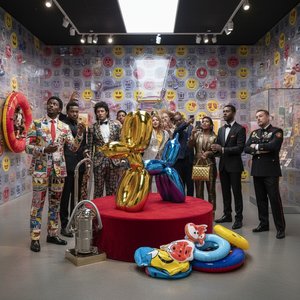 Jeff Koons: Irony, Kitsch & the Commodification of Contemporary ArtExplore the complex world of Jeff Koons with OriginalUniqueArt. Discover the irony, kitsch, and market forces behind his iconic sculptures.…
 Abstract Expressionism vs. Pop Art: A Comparison of Two American MovementsCompare the visceral brushstrokes of Abstract Expressionism with the bold irony of Pop Art. Master the history of these two iconic movement…
 Stone and Sinew: The Sculptural Foundations of Modigliani’s PortraitsExplore the sculptural roots and structural mastery of Modigliani's portraits. Discover the secrets behind his iconic, carved style now.