

 Pregledaj u prostoru
 Pošalji
 Podeli
 Detalji o delu
 Vodič
Vodič

 Preuzmi
 Slični predmeti
 Rendgenski snimak
 Automatska prezentacija
 Q&A
Q&A Statistika
Cuirassier


 Pročitaj više
Giclee štampa / Umetnički otisak
Giclée štampa ili print na platnu muzejskog kvaliteta uz brzu izradu i raznovrsne opcije završne obrade. ( Kupite ručno oslikano delo Pređi na digitalnu sliku)




P118B дин10

P118H дин10

P118W дин10

P438Z дин10

P508JH дин12

P508YH дин12

P805H дин10

P805Z дин10

P919BZ дин10

P919G дин10

P919XJ дин10

P959ZH дин10

P968JZ дин12

W106C дин8

W218G дин10

W218JH дин8

W218Y дин10

W307PJ дин10

W316G дин10

W316PJ дин8

W316Y дин10

W398PJ дин8

W4111J дин10

W500HY дин15

W500JH дин15

W692G дин12

W849H дин8

W940BG дин15

W953PJ дин8




Izaberite jednu od naših unapred definisanih veličina koje odgovaraju originalnim proporcijama umetničkog dela.

Unesite željenu širinu i visinu kako bi se štampa uklopila u vaš ram ili zid. Štampu je moguće samo iseći, ali nikada povećati iznad dimenzija originalne slike, stoga format sa drugačijim proporcijama uzrokuje gubitak dela slike. Pre početka štampe, poslaćemo vam digitalni prikaz radi potvrde. Slika prikazana na ovoj stranici ne predstavlja stvarni isrez — to pokazuje samo digitalni prikaz.
Dostava širom sveta () za 2 nedelje umesto uobičajenih 4/5 nedelja. (29 октобар)

Besplatna ekspresna dostava širom sveta

Visokokvalitetno laneno platno

Potpuno osiguranje transporta

Garancija povraćaja carine i uvoznih dažbina

Garancija vernosti boja

Politika povraćaja u roku od 100 dana (samo u slučaju nedostataka)

Garancija povrata 100% novca

Popust na više proizvoda
 Opcija sa staklom dostupna je samo za dimenzije manje od 110 cm

Cuirassier
Giclee štampa / Umetnički otisak
Dimenzije reprodukcije
-


Ukupna cena
дин 8282
A Moment of Steel and Resolve: Jean-Louis Ernest Meissonier’s Cuirassier
Jean-Louis Ernest Meissonier's “Cuirassier” isn’t merely a depiction of a soldier; it’s a distillation of 19th-century French academic art, imbued with the immediacy and dynamism of a fleeting battlefield moment. This preparatory sketch, likely intended as a study for a larger historical painting, offers a captivating glimpse into the world of Napoleonic warfare through Meissonier's meticulous eye and expressive brushwork. The composition centers on a cuirassier – a formidable cavalryman clad in heavy armor – poised mid-stride, his sword raised high above his head, a gesture brimming with both aggression and unwavering courage. The looseness of the lines, the subtle shifts in tone, and the earthy color palette immediately establish a sense of urgency and movement, transporting the viewer directly into the heart of the action.
- Subject Matter: The painting vividly portrays a French cuirassier engaged in combat, capturing the essence of military life during the era.
- Style: Rooted in the traditions of academic art, yet infused with Meissonier’s personal style, it leans towards realism while prioritizing spontaneity and capturing a decisive moment.
- Historical Context: The cuirassier was a key component of French cavalry during the Napoleonic Wars, representing a formidable force on the battlefield. Meissonier's work reflects this importance, offering a rare insight into their equipment, tactics, and the psychological intensity of war.
The Language of Line and Tone: Technical Details
Meissonier’s technique is characterized by a remarkable control over line and tone – a hallmark of his meticulous approach. The loose brushstrokes, evident throughout the composition, create an impressionistic effect, suggesting movement and texture without sacrificing detail. Notice how the artist utilizes *ubmer* and *sienna* to build depth and shadow, creating a sense of volume around the cuirassier’s form. The lack of sharply defined outlines contributes to the sketch-like quality, emphasizing the immediacy of the scene. The visible impasto technique – where paint is applied thickly – adds a tactile dimension to the work, inviting the viewer to almost feel the roughness of the soldier's armor and clothing.
- Color Palette: Dominated by earthy tones—browns, ochres, and muted greens—the palette evokes the dusty landscapes and weathered uniforms of 19th-century warfare.
- Brushwork: The rapid, gestural brushstrokes convey a sense of energy and movement, capturing the dynamism of the cuirassier’s action.
- Texture: The visible texture created by the impasto technique adds visual interest and reinforces the feeling of physicality.
Symbolism and Emotional Resonance
More than just a portrait, “Cuirassier” is laden with symbolic meaning. The raised sword – a potent emblem of courage, aggression, and victory – immediately commands attention. The soldier’s posture, poised in mid-stride, suggests not only readiness for battle but also an unwavering determination to defend his cause. The diffused lighting, lacking strong directional sources, contributes to the painting's overall mood of intensity and drama. It’s a scene that speaks to themes of honor, duty, and the inherent risks associated with military service – emotions powerfully conveyed through Meissonier’s masterful handling of light, color, and composition.
Bringing History Home: Reproductions for Your Space
OriginalUniqueArt offers meticulously hand-painted reproductions of “Cuirassier,” allowing you to bring this captivating historical scene into your home or office. Each reproduction is created using the same techniques and materials as the original, ensuring an authentic representation of Meissonier’s artistry. Whether you are a collector of 19th-century art, an admirer of military history, or simply seeking a striking piece to add character to your space, our “Cuirassier” reproduction is a compelling choice. Explore the available sizes and options on our website today – and experience the power of historical realism.
Pitanja i odgovori
Kome se pripisuje delo "Cuirassier"?
Autor dela "Cuirassier" je Жан Луј Ернест Мејсоније. Delo je katalogizovano pod imenom Жан Луј Ернест Мејсоније.
Koliko je izražen kontrast u delu „Cuirassier”, autor Жан Луј Ернест Мејсоније?
Nivo kontrasta dela „Cuirassier”, autor Жан Луј Ернест Мејсоније je Serene.
Kakvu bi atmosferu reprodukcija dela „Cuirassier”, autor Жан Луј Ернест Мејсоније unela u prostoriju?
Sa svojim Classic raspoloženjem, delo "Cuirassier" je idealno za Living Room.
Biografija umetnika
Мајстор минијатурног реализма: Живот и уметност Жана-Луја Ернеста Мејсонијеа
Жан-Луј Ернест Мејсоније, име синоним за прецизност и историјску нарацију у француском сликарству 19. века, изарастао је као кључна фигура која је повезивала академску традицију са растућим реализмом. Рођен у Лиону 1815. године, његов пут ка уметничкој слави првобитно је био обележен породичним отпором. Његов отац је за младог Ернеста предвидео каријеру у бизнису, али је привлачност уметности била прејака да би се игнорисала. У седамнаестој години добио је дозволу да прати своју страст, крећући се на путовање које ће га успоставити као једног од најславнијих и финансијски успешних уметника Француске. Рана обука под Леоном Коњеом пружила му је чврсту основу, али је кроз марљиво изучавање холандских мајстора у Лувру – сликара као што су Габријел Метсу и Герард Доу – Мејсоније заправо открио свој уметнички глас. Ови мајстори, познати по својим интимним сценама буржоаског живота рендерваним са запањујућом прецизноштом, дубоко су утицали на његов развијајући се стил, инспиришући посвећеност детаљима која ће постати његова главна карактеристика.Од жанровских сцена до великих историјских наратива
Пробој Мејсонијеа дошао је 1831. године са *Les Bourgeois Flamands* (Холандски буржоа), изложеним на Салону. Ово дело одмах је сигнализирало његов јединствени таленат – способност да рекреира сцене свакодневног живота или историјских вињета са готово микроскопском прецизношћу. Он није само сликао предмете; он је педантски реконструисао светове, хватајући текстуре, светлост и атмосферу са задивљујућом верношћу. Овај рани успех омогућио му је да усаврши своју технику, производећи серију очаравајућих жанровских слика као што су *The Game of Chess* (Игра шаха) (1841.) и *The Young Man Playing the 'Cello* (Младић свира чело) (1842.). Ова дела нису била само вежбе у техничкој вештини; били су проницљиве опсервације људског карактера и друштвене интеракције. Међутим, амбиције Мејсонијеа протезале су се даље од интимних жанровских сцена. Политички потреси из 1848. године, током којих је служио у Националној гарди, дубоко су га погодили, подстичући жељу да се позабави већим историјским темама. Ова промена кулминирала је монументалним делима као што је *The Emperor at Solferino*, одступање од његовог ранијег стила које је показало његову способност да се носи са сложеним композицијама и великим наративима, задржавајући своју препознатљиву прецизност.Техника дефинисана стрпљењем и прецизношћу
Шта је заправо издвојило Мејсонијеа није само шта је сликао, већ *како* је сликао. Његова техника била је легендарна по својој педантској детаљности. Он се није задовољавао широким потезима кистом или импресионистичким ефектима; сваки елемент у његовим композицијама рендерван је са пажљивом негом, изграђен слој по слоју да би се постигао изучан осећај реализма. Подвргао се исцрпном истраживању, педантски проучавајући костиме, оружје и архитектонске детаље како би осигурао историјску тачност. Ова посвећеност протезала се и на природни свет – познато је да је интензивно изучавао коње, анализирајући њихову анатомију и кретање како би их убедљиво приказао у својим борбеним сценама. Неки критичари су чак предложили да је његов рад граничио са опсесијом, али је управо та неутврдива посвећеност детаљима задивила публику и успоставила његову репутацију. Џон Раскин, угледни енглески критичар, познато је испитивао Мејсонијеве слике под лупом, дивећи се уметниковој “ручној вештини и оку за фасцинантне детаље”.Наслеђе и трајан утицај
Пре краја 19. века, Жан-Луј Ернест Мејсоније постао је један од најславнијих уметника Француске. Његова дела су командовала екстравагантним ценама, омогућавајући му да стекне велики посед у Поасију, са посвећеним студијима дизајнираним да олакшају његов педантски процес. Био је хваљен због своје техничке мајсторности и способности да оживи историју са неупоредивим реализмом. Иако су неки критичари доводили у питање ограничен опсег његове тематике – често се фокусирајући на војне сцене или историјске реконструкције – нема сумње у његов дубоки утицај на касније генерације уметника. Његова посвећеност детаљима, посвећеност историјској тачности и мајсторска техника и даље инспиришу сликаре данас. Музеји широм света, укључујући Musée d'Orsay у Паризу и Националну галерију уметности у Вашингтону, поносно излажу његова дела, обезбеђујући да његово наслеђе траје као сведочанство моћи стрпљења, прецизности и уметничке визије. Да бисте више сазнали о Мејсонијевој уметности, посетите OriginalUniqueArt.com или веб страницу Musée d'Orsay.
Жан Луј Ернест Мејсоније
1815 - 1891 , Србија
Osnovne informacije
- Artistic Movement Or Style: Академизам
- Artists Who Influenced This Artist: ['Холандски мајстори']
- Date Of Birth: 21. фебруар 1815.
- Date Of Death: 31. јануар 1891.
- Full Name: Жан-Луј Ернест Мејсоније
- Nationality: Француски
- Notable Artworks:
- Les bourgeois flamands
- The Game of Chess
- Emperor at Solferino
- Place Of Birth: Лион, Француска
Povezani članci
19th Century Masterpieces: 10 Paintings That Defined an Era | OriginalUniqueArt
Journey through 19th century art with OriginalUniqueArt! Explore 10 iconic paintings – from Monet & Renoir to Courbet – and discover the stories behind Romanticism, Realism & Impressionism. Find museum-quality reproductions for your home decor. Explore the full collection online!
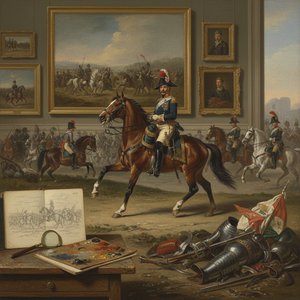
Jean-Louis Ernest Meissonier: Realism, Historical Narrative & Artistic Perfection
Explore the world of Jean-Louis Ernest Meissonier, a master of French Realism renowned for his meticulously detailed historical & military scenes. Discover his iconic artworks and lasting legacy.

Émile Jean Horace Vernet: Romantic Realism & Depicting 19th-Century Life
Explore the life & art of Émile Jean Horace Vernet, a master of Romantic Realism. Discover his captivating battle scenes, portraits, and Orientalist works – a window into 19th-century France. Learn about his techniques & enduring legacy.
Beyond the Fabric: Decoding Identity, Authority, and Symbolism in the Art of Military Uniforms
Explore the profound symbolism of military uniforms in art history. From Victorian portraits to realistic lithographs, discover how artists capture power, identity, and historical legacy through the intricate details of martial regalia and command.
Émile Munier: Capturing 19th-Century French Life with Tender Realism
Discover Émile Munier's tender depictions of 19th-century French life. Explore his Realist style, charming paintings of children & pets, and lasting artistic legacy. Expert insights at OriginalUniqueArt.