
 Pregledaj u prostoru
 Pošalji
 Podeli
 Detalji o delu
 Vodič
Vodič

 Preuzmi
 Slični predmeti
 Rendgenski snimak
 Automatska prezentacija
 Pitanja i odgovori
 Statistika
L' Autodafe ou Philippe II aux Enfers


 Pročitaj više
Giclee štampa / Umetnički otisak
Giclée štampa ili print na platnu muzejskog kvaliteta uz brzu izradu i raznovrsne opcije završne obrade. ( Kupite ručno oslikano delo Pređi na digitalnu sliku)




P118B дин10

P118H дин10

P118W дин10

P438Z дин10

P508JH дин12

P508YH дин12

P805H дин10

P805Z дин10

P919BZ дин10

P919G дин10

P919XJ дин10

P959ZH дин10

P968JZ дин12

W106C дин8

W218G дин10

W218JH дин8

W218Y дин10

W307PJ дин10

W316G дин10

W316PJ дин8

W316Y дин10

W398PJ дин8

W4111J дин10

W500HY дин15

W500JH дин15

W692G дин12

W849H дин8

W940BG дин15

W953PJ дин8




Izaberite jednu od naših unapred definisanih veličina koje odgovaraju originalnim proporcijama umetničkog dela.

Unesite željenu širinu i visinu kako bi se štampa uklopila u vaš ram ili zid. Štampu je moguće samo iseći, ali nikada povećati iznad dimenzija originalne slike, stoga format sa drugačijim proporcijama uzrokuje gubitak dela slike. Pre početka štampe, poslaćemo vam digitalni prikaz radi potvrde. Slika prikazana na ovoj stranici ne predstavlja stvarni isrez — to pokazuje samo digitalni prikaz.
Dostava širom sveta () za 2 nedelje umesto uobičajenih 4/5 nedelja. (7 новембар)

Besplatna ekspresna dostava širom sveta

Visokokvalitetno laneno platno

Potpuno osiguranje transporta

Garancija povraćaja carine i uvoznih dažbina

Garancija vernosti boja

Politika povraćaja u roku od 100 dana (samo u slučaju nedostataka)

Garancija povrata 100% novca

Popust na više proizvoda
 Opcija sa staklom dostupna je samo za dimenzije manje od 110 cm

L' Autodafe ou Philippe II aux Enfers
Giclee štampa / Umetnički otisak
Dimenzije reprodukcije
-


Ukupna cena
дин 8485
A Descent into Darkness: Unpacking James Ensor’s ‘L’Autodafé’
James Ensor’s “L’Autodafé ou Philippe II aux Enfers” (The Auto-da-fé or Philip II in Hell), painted in 1891, is not merely a depiction of a historical event; it's a profoundly unsettling psychological landscape. This large oil on canvas plunges the viewer into a realm of feverish anxiety and moral judgment, reflecting Ensor’s deeply ingrained fascination with masks, death, and the grotesque – themes that would become hallmarks of his distinctive artistic vision. The painting immediately assaults the senses with its vibrant, almost hallucinatory palette: fiery reds and oranges dominate the infernal backdrop, contrasting sharply with the somber greys and blacks of the condemned heretics. It’s a scene steeped in the anxieties of 19th-century Europe grappling with religious fervor, political instability, and burgeoning social unrest – anxieties that Ensor masterfully translates into a visual experience far beyond simple historical representation.
At the center of this chaotic tableau stands Philip II of Spain, recognizable by his crown but rendered as an almost spectral figure, seemingly detached from the proceedings. His gaze is directed towards something unseen, lost in the swirling vortex of hellish imagery. The positioning of the King – a symbol of authority and divine right – within this scene of torment speaks volumes about Ensor’s critique of power and its potential for corruption. The surrounding figures, clad in drab linen tunics adorned with demonic symbols and cardboard pointed hats (a deliberate reference to the heretics of the Spanish Inquisition), are not simply victims; they embody a collective despair, their faces contorted in expressions of anguish and resignation. The two horses, positioned strategically on either side, further amplify the sense of disorientation and impending doom – a visual echo of the biblical imagery often associated with judgment and punishment.
The Language of Masks and Symbolism
Ensor’s masterful use of masks is central to understanding the painting's complex symbolism. These aren’t merely decorative elements; they represent the concealment of identity, the performance of roles, and the inherent duality within human nature. The heretics’ pointed hats, reminiscent of carnival masks, suggest a deliberate attempt to disguise their true selves – perhaps reflecting the hypocrisy and moral failings that Ensor perceived in society at large. The overall atmosphere is heavily influenced by Symbolism, with every element carefully chosen to evoke emotional resonance rather than literal representation. The skeletal figures, the flames, the swirling smoke—all contribute to a sense of unease and impending annihilation.
Furthermore, the painting draws upon elements of Expressionism, anticipating movements that would emerge decades later. Ensor deliberately distorts perspective and employs jarring color combinations to heighten the emotional impact. The scene is not presented as a calm, reasoned judgment; instead, it’s a visceral experience designed to provoke discomfort and challenge the viewer's assumptions about morality and justice. The inclusion of the two horses, often associated with chaos and destruction, reinforces this sense of instability and impending doom.
Technique and Historical Context
Ensor executed “L’Autodafé” in oil on canvas, utilizing a technique characterized by bold brushstrokes and a vibrant, almost frenetic application of paint. He employed a layering effect, building up the image with multiple layers of color to create depth and texture. The etching version, created in 1893 (as documented in the MSK Gent archive), reveals Ensor’s meticulous attention to detail and his ability to translate complex ideas into a graphic medium. The etching, particularly, highlights the artist's deliberate use of stark contrasts and unsettling imagery – a testament to his commitment to pushing artistic boundaries.
Painted during a period of intense political and religious upheaval in Europe, “L’Autodafé” reflects Ensor’s skepticism towards authority and his critique of societal hypocrisy. The Spanish Inquisition, with its brutal methods of persecution and suppression of dissent, served as a potent symbol of injustice and oppression. Ensor's painting can be interpreted as an allegory for the dangers of unchecked power and the consequences of moral compromise. It remains a powerful and unsettling work, offering a glimpse into the mind of one of Belgium’s most innovative and challenging artists.
Pitanja i odgovori
Gde i kako se preporučuje postaviti „L' Autodafe ou Philippe II aux Enfers”, autor Јемас Енсор?
„L' Autodafe ou Philippe II aux Enfers“ je predloženo za Statement, a preporučeni prostor je Living Room.
Preporučena veličina štampe za delo "L' Autodafe ou Philippe II aux Enfers" je?
Preporučena veličina štampe za „L' Autodafe ou Philippe II aux Enfers”, autor Јемас Енсор je Large.
Koji je format dela "L' Autodafe ou Philippe II aux Enfers"?
Format dela "L' Autodafe ou Philippe II aux Enfers" je Landscape, što vam može biti od pomoći prilikom planiranja prostora u kojem ćete postaviti reprodukciju.
Biografija umetnika
James Ensor: A Pioneer of Expressionism and Surrealism
James Sidney Edouard, Baron Ensor (Ostend, 13 April 1860 – 19 November 1949) was a Belgian painter and printmaker who stands as one of the most influential figures in the development of Expressionism and Surrealism. Born into an English father and Belgian mother amidst the vibrant atmosphere of Ostend’s seaside resort town, Ensor’s upbringing instilled within him a profound fascination with observation and detail—a foundation upon which he would construct his distinctive artistic vision.
Early Influences and Artistic Training
From a young age, Ensor demonstrated an exceptional talent for drawing and painting. Encouraged by his parents' operation of a souvenir shop brimming with curiosities and carnival masks – a veritable cabinet of wonders that ignited his imagination – he pursued formal artistic training at the Académie Royale des Beaux-Arts in Brussels. Despite encountering resistance from the rigid academic conventions of the time, Ensor quickly recognized the necessity of forging his own path, prioritizing experimentation and personal expression above all else.
The Emergence of Grotesque Vision
Around 1886–87, Ensor embarked on a transformative artistic journey, rejecting Impressionistic ideals in favor of a bold embrace of grotesque imagery. Influenced by Rembrandt’s masterful use of chiaroscuro, the unsettling visions of Francisco Goya, and the evocative symbolism of Japanese woodcuts, he developed a highly personal iconography characterized by jarring juxtapositions of color and form.
Major Works and Recurring Themes
Ensor's oeuvre is marked by an unparalleled exploration of psychological complexity and social critique. Paintings like *The Oyster-eater* (1882) exemplify his meticulous attention to detail and his ability to convey profound emotional resonance, while *Christ’s Entry into Brussels* (1888–89), arguably his magnum opus, remains a monumental satire of religious hypocrisy—a painting initially met with vehement disapproval but now universally recognized as a cornerstone of Expressionist art.
Legacy and Influence
James Ensor's uncompromising artistic vision profoundly impacted subsequent generations of artists. His rejection of academic formalism, coupled with his fearless confrontation of taboo subjects and his masterful manipulation of visual language—particularly the use of bold brushstrokes and vibrant hues—established him as a pivotal figure in the genesis of Expressionism and Surrealism. Today, Ensor’s work continues to inspire awe and provoke contemplation, serving as a timeless reminder that art possesses the capacity to unsettle conventions and illuminate the darkest recesses of human consciousness.

Јемас Енсор
1860 - 1949 , Бележија
Osnovne informacije
- Artistic Movement Or Style: Expressionism, Surrealism
- Artists Who Influenced This Artist:
- Bruegel the Elder
- Francisco Goya
- Whistler
- Date Of Birth: April 13, 1860
- Date Of Death: November 19, 1949
- Full Name: James Sidney Edouard Ensor
- Nationality: Belgian
- Notable Artworks:
- The Scandalized Masks
- Skeletons Fighting...
- Christ's Entry into Brussels
- Place Of Birth: Ostend, Belgium
Povezani članci

Leonardo da Vinci: 25 Remek-dela Genija za Vaš Dom | OriginalUniqueArt
Istražite 25 remek-dela Leonarda da Vince, od Mona Lize do Poslednje večere. Otkrijte priče iza slika renesanse i inspiraciju za dekoraciju enterijera. Kvalitetne reprodukcije na OriginalUniqueArt.com!

Masterpieces of the English Countryside: Top 25 Sir Alfred James Munnings Artworks
Explore 25 iconic Sir Alfred James Munnings masterpieces. Discover timeless equine art on OriginalUniqueArt.com.
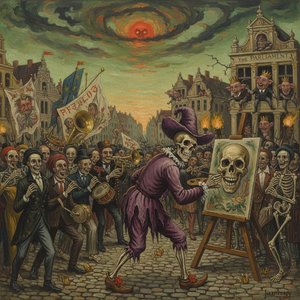
James Ensor's Grotesque Visions: Social Commentary & Artistic Innovation
Explore the unsettling yet captivating world of James Ensor, a pioneer of Expressionism. Discover his satirical masterpieces, symbolic imagery & lasting influence on modern art. High-quality reproductions available at OriginalUniqueArt.

Džems Abbot MekNil Whistler: 25 Remek-dela Majstora Tonalizma | OriginalUniqueArt
Istražite 25 remek-dela Džemsa Abota MekNila Whistler-a! Uronite u svet Tonalizma, portreta i prelepog pejzaža. Kupite vrhunske reprodukcije slika na OriginalUniqueArt.com i obogatite svoj enterijer luksuznom umetnošću.
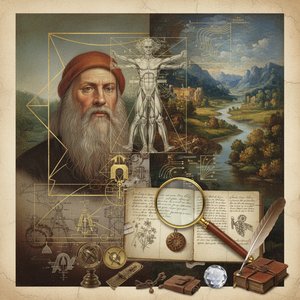
Leonardo da Vinci: A Renaissance Master’s Synthesis of Art, Science & Human Observation – Reinterpreted for the Collector
Explore Leonardo da Vinci’s timeless masterpieces with OriginalUniqueArt. Discover insights into his art, science, and legacy – trusted expertise for discerning collectors seeking authentic reproductions & investment opportunities.


