Expressionist Orientalism
Chinoiseries (Џејмс Енсор)
Џејмс Енсор (1860–1949) je napravio Chinoiseries. Pripada pokretu Expressionist Orientalism. Izrađeno je u Acrylic On Canvas.
- Acrylic On Canvas

 Pregledaj u prostoru

 Ručno oslikano uljanim bojama
 Pošalji
 Podeli
 Informativni list


 Preuzmi
 Slični predmeti
 Rendgenski snimak
 Automatska prezentacija
 Pitanja i odgovori

 Statistika
Chinoiseries, ukratko
- Naslov
- Chinoiseries
- Umetnik
- Џејмс Енсор (1860–1949)
- Rođen/a u
- Остенде, Белгија
- Tehnika
- Acrylic On Canvas
- Tema
- chinoiseries, james ensor, masks, figures, exoticism, belgium
Šta prikazuje Chinoiseries?
A World Within Walls: Unpacking James Ensor’s “Chinoiseries”
James Ensor's "Chinoiseries," painted in 1880, isn’t merely a depiction of an interior scene; it’s a carefully constructed psychological landscape. This captivating work, residing within the Royal Museums of Fine Arts of Belgium in Brussels, offers a glimpse into the artist’s uniquely unsettling and intensely personal vision. Ensor, born in Ostend to an English father and Belgian mother, possessed a sensibility deeply shaped by his upbringing amidst the vibrant chaos of a seaside resort town – a place saturated with masks, curiosities, and a potent sense of theatricality. This early exposure profoundly influenced his artistic trajectory, leading him away from conventional academic training and toward a fiercely independent style that would forever challenge the established norms of art.
The Dance of Form and Feeling: Style and Technique
“Chinoiseries” is a masterclass in Expressionist technique, subtly blended with elements of Orientalism. Ensor’s brushstrokes are not delicate or refined; they are bold, assertive, and often deliberately rough, conveying an underlying sense of unease and emotional intensity. The color palette—dominated by deep blues and greens—creates a claustrophobic atmosphere, intensifying the feeling of being trapped within the confines of the room. Notice how he utilizes contrasting colors – the vibrant reds and yellows of the decorative objects against the somber background – to draw the eye and heighten the drama. The composition itself is deliberately unbalanced, with the figures positioned in ways that disrupt any sense of harmony or stability. This deliberate distortion reflects Ensor’s interest in exploring the darker aspects of human experience.
- Oil on Canvas: The medium lends itself perfectly to Ensor's expressive style, allowing for rich textures and a dynamic application of paint.
- Bold Brushwork: Visible brushstrokes contribute significantly to the painting’s emotional impact.
- Color Palette: Deep blues and greens create an atmosphere of mystery and introspection.
Decoding the Symbols: Orientalism, Masks, and Human Connection
The title itself, “Chinoiseries,” immediately signals Ensor’s fascination with the exotic – specifically, Chinese-inspired motifs. The table laden with porcelain vases, bowls, and cups isn't simply decorative; it represents a deliberate attempt to introduce an element of the ‘other’ into a European setting. This reflects a broader trend in 19th-century art, where artists sought to explore and interpret foreign cultures through visual representation. However, Ensor doesn’t offer a romanticized view of the Orient. Instead, he presents these objects within a context that is unsettling and ambiguous. The two figures present – one standing, the other seated – are deliberately undefined, their faces obscured or averted, suggesting a lack of genuine connection. The cat, perched on the floor, adds another layer of intrigue, embodying mystery and perhaps even a touch of foreboding.
A Portrait of an Artist’s Mind: Context and Legacy
“Chinoiseries” is often compared to the work of Clyfford Still, a pioneer of Abstract Expressionism, due to their shared emphasis on emotional intensity and non-representational forms. However, Ensor's approach is far more rooted in psychological observation than pure abstraction. His paintings are not simply about depicting objects; they’re about conveying feelings – anxiety, isolation, and the unsettling nature of human relationships. The painting’s creation coincided with a period of significant social and artistic change, mirroring the growing anxieties of modern life. It's a testament to Ensor’s ability to capture the complexities of the human condition through a uniquely personal and often disturbing lens. Reproductions of “Chinoiseries” offer a remarkable opportunity to experience this powerful work firsthand, bringing its enigmatic atmosphere into any space.
Explore more captivating works by James Ensor and discover high-quality reproductions at OriginalUniqueArt.com. For deeper insights into the artist’s life and oeuvre, visit his Wikipedia profile: https://en.wikipedia.org/wiki/James_Ensor.
Slike visoke rezolucije za Chinoiseries

Џејмс Енсор, Chinoiseries. Javno dobro.
Boje su usklađene sa originalom od strane digitalnog stručnjaka, a datoteka je pažljivo retuširana, verno prateći poteze umetnika.
Preuzmite datoteku visoke rezolucijeOdgovori na pitanja o Chinoiseries
Kojom tehnikom je urađeno „Chinoiseries”, autor Џејмс Енсор?
Џејмс Енсор je koristio/la tehniku Acrylic On Canvas za delo "Chinoiseries". Ova tehnika definiše materijalnu prirodu originalnog dela.
Šta prikazuje „Chinoiseries”, autor Џејмс Енсор?
Teme prisutne u delu „Chinoiseries”, autor Џејмс Енсор obuhvataju chinoiseries, james ensor, masks, figures, exoticism, belgium, carnival, symbolism, što zajedno sažima suštinu ovog umetničkog dela.
Da li je delo „Chinoiseries”, autor Џејмс Енсор u javnom vlasništvu?
„Chinoiseries”, autor Џејмс Енсор pripada u javnom vlasništvu – autorska prava su istekla. Ovaj status određuje način na koji se slika dela može reprodukovati.
Ko je autor dela "Chinoiseries"?
Autor dela "Chinoiseries" je Џејмс Енсор. Delo je katalogizovano pod imenom Џејмс Енсор.
Koji umetnički pravac obuhvata „Chinoiseries”, autor Џејмс Енсор?
Umetnički pravac koji se povezuje sa delom „Chinoiseries”, autor Џејмс Енсор je Expressionist Orientalism. Ova klasifikacija smešta rad među srodne umetnike i umetnička dela.
U kojoj fazi stvaralaštva umetnika Џејмс Енсор se nalazi delo "Chinoiseries"?
"Chinoiseries" predstavlja Mature Period umetnika Џејмс Енсор.
Zašto je status autorskih prava za "Chinoiseries" takav kakav jeste?
Status autorskih prava za delo "Chinoiseries" - u javnom vlasništvu – autorska prava su istekla - proizilazi iz godine smrti umetnika, 1949.
Šta "Chinoiseries" deli sa ostatkom stvaralaštva umetnika Џејмс Енсор?
„Chinoiseries“ pripada Expressionist Orientalism periodu stvaralaštka umetnika Џејмс Енсор, čije su upečatljive teme obuhvatale expressionist distortion, oriental motifs, belgian identity, cultural fusion, masks, hidden emotions, satire, ensor’s unique visual language.
Da li je "Chinoiseries" tipično za ono što je Џејмс Енсор obično stvarao?
Među upečatljivim temama umetnika Џејмс Енсор – expressionist distortion, oriental motifs, belgian identity, cultural fusion, masks, hidden emotions, satire, ensor’s unique visual language – delo "Chinoiseries" donosi sopstveni fokus na chinoiseries, james ensor, masks, figures, exoticism, belgium, carnival, symbolism.
O umetniku, Џејмс Енсор

1860–1949, Белгија
Џејмс Енсор
James Ensor: A Pioneer of Expressionism and SurrealismJames Sidney Edouard, Baron Ensor (Ostend, 13 April 1860 – 19 November 1949) was a Belgian painter and printmaker who stands as one of the most influential figures in the development of Expressionism and Surrealism. Born into an English father and Belgian mother amidst the vibrant atmosphere of Ostend’s seaside resort town, Ensor’s upbringing instilled within him a profound fascination with observation and detail—a foundation upon which he would construct his distinctive artistic vision.Early Influences and Artistic TrainingFrom a young age, Ensor demonstrated an exceptional talent for drawing and painting. Encouraged by his parents' operation of a souvenir shop brimming with curiosities and carnival masks – a veritable cabinet of wonders that ignited his imagination – he pursued formal artistic training at the Académie Royale des Beaux-Arts in Brussels. Despite encountering resistance from the rigid academic conventions of the time, Ensor quickly recognized the necessity of forging his own path, prioritizing experimentation and personal expression above all else.The Emergence of Grotesque VisionAround 1886–87, Ensor embarked on a transformative artistic journey, rejecting Impressionistic ideals in favor of a bold embrace of grotesque imagery.
Takođe i Џејмс Енсор
 Уљећење Христа у Брсел1888
 Portret sa Maskama1899
 Kupališta u Ostendu
 Skeleti koji se greju1889

Eseji o delu Chinoiseries
 Raw Emotion & Bold Strokes: Top 10 Neo-Expressionism MasterpiecesExplore iconic Neo-Expressionist works by Basquiat and Baselitz. Discover museum-quality art at OriginalUniqueArt.com.
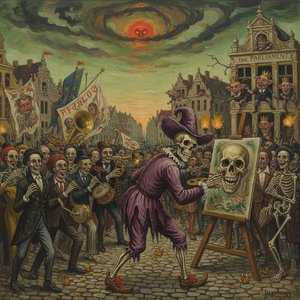 James Ensor's Grotesque Visions: Social Commentary & Artistic InnovationExplore the unsettling yet captivating world of James Ensor, a pioneer of Expressionism. Discover his satirical masterpieces, symbolic imag…
 Capturing the Exotic: A Journey Through the Allure and Complex Legacy of Orientalist ArtExplore the mesmerizing world of Orientalist art. From Napoleon's influence to Renoir's exotic textures, discover the history, beauty, and …