Pređi na štampu
 Pročitaj više







































 Za umetnička dela ili reprodukcije čija je bilo koja strana veća od 105 cm (približno 41 inč), okvir će biti isporučen u obliku rastavljenog seta za sklapanje. Ovaj metod osigurava bezbednu dostavu i sprečava oštećenja tokom transporta.


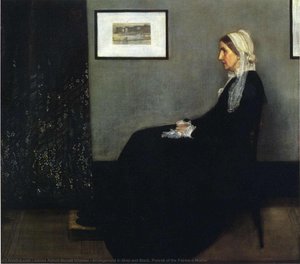
A Quiet Observation: James Abbott McNeill Whistler’s Bibi Valentin
James Abbott McNeill Whistler's “Bibi Valentin,” created in 1859, stands as a cornerstone of Tonalism—a movement that championed subtlety and nuance over bold color palettes. More than just a portrait, it embodies Whistler’s radical aesthetic philosophy: ‘art for art’s sake,’ prioritizing formal beauty and tonal harmony above narrative content or moral instruction.
- Subject Matter & Composition: The artwork depicts a young girl seated on a bed, capturing a moment of serene repose. Whistler employs a triangular composition, positioning the girl's head at its apex to create visual balance. Minimal background space emphasizes the subject’s presence and fosters intimacy.
- Style & Technique – Line Drawing Dominance: Whistler’s masterful technique relies heavily on line drawing—specifically hatching and cross-hatching—to achieve tonal variations and convey texture. Loose, sketchy lines define contours with remarkable precision, mirroring Whistler's belief in capturing essence rather than meticulous detail.
- Color Palette & Atmosphere: The palette is deliberately restrained, utilizing shades of brown and beige on tan paper to evoke a sense of quietude and understated elegance. Whistler’s deliberate avoidance of vibrant hues underscores the artwork’s contemplative mood.
- Symbolic Resonance – Gestural Expression & Emotion: The girl's direct gaze speaks volumes about observation and perhaps melancholy—elements that resonate deeply with Whistler’s artistic vision. The artist’s expressive style communicates a profound connection between himself and his subject, reflecting the humanist spirit of the era.
- Historical Context – Aestheticism & Whistler’s Legacy: “Bibi Valentin” emerged during the height of Aestheticism—a cultural movement that championed beauty for its own sake. Whistler's influence extends far beyond his immediate contemporaries, establishing him as a pivotal figure in modern art and inspiring generations of artists to prioritize form and tonal exploration.
The Detroit Institute of Arts holds one of the two impressions produced from Whistler’s plate, demonstrating the enduring appeal of this seminal work. Its reproduction offers an opportunity to appreciate Whistler's groundbreaking approach to painting—a testament to his unwavering commitment to artistic integrity and a captivating glimpse into the contemplative spirit of Victorian England.
Pitanja i odgovori
Ko je autor dela "Bibi Valentin" i u kom umetničkom pravcu?
Autor dela "Bibi Valentin" je Džejms Abbot Meknil Visler, koji pripada pokretu Tonalism & Aestheticism.
Odakle dolaze posetioci dela „Bibi Valentin”, autor Džejms Abbot Meknil Visler?
Postoji Statistika stranica za „Bibi Valentin“. Ona prikazuje mesečne posete ovom umetničkom delu i drugim delima ovog umetnika, uz detaljnu analizu po državama i jezicima.
Da li je "Bibi Valentin" slobodan od autorskih prava?
„Bibi Valentin”, autor Džejms Abbot Meknil Visler pripada u javnom vlasništvu – autorska prava su istekla. Ovaj status određuje način na koji se slika dela može reprodukovati.
 Pregledaj u prostoru
 Pošalji
 Podeli
 Detalji o delu
 Vodič
Vodič

 Preuzmi
 Slični predmeti
 Rendgenski snimak
 Automatska prezentacija
 Q&A
Q&A Statistika