
 Pregledaj u prostoru
 Pošalji
 Podeli
 Detalji o delu
 Vodič
Vodič

 Preuzmi
 Slični predmeti
 Rendgenski snimak
 Automatska prezentacija
 Q&A
Q&A Statistika
Глава девојчице


 Pročitaj više
Giclee štampa / Umetnički otisak
Giclée štampa ili print na platnu muzejskog kvaliteta uz brzu izradu i raznovrsne opcije završne obrade. ( Kupite ručno oslikano delo Pređi na digitalnu sliku)




P118B дин10

P118H дин10

P118W дин10

P438Z дин10

P508JH дин12

P508YH дин12

P805H дин10

P805Z дин10

P919BZ дин10

P919G дин10

P919XJ дин10

P959ZH дин10

P968JZ дин12

W106C дин8

W218G дин10

W218JH дин8

W218Y дин10

W307PJ дин10

W316G дин10

W316PJ дин8

W316Y дин10

W398PJ дин8

W4111J дин10

W500HY дин15

W500JH дин15

W692G дин12

W849H дин8

W940BG дин15

W953PJ дин8




Izaberite jednu od naših unapred definisanih veličina koje odgovaraju originalnim proporcijama umetničkog dela.

Unesite željenu širinu i visinu kako bi se štampa uklopila u vaš ram ili zid. Štampu je moguće samo iseći, ali nikada povećati iznad dimenzija originalne slike, stoga format sa drugačijim proporcijama uzrokuje gubitak dela slike. Pre početka štampe, poslaćemo vam digitalni prikaz radi potvrde. Slika prikazana na ovoj stranici ne predstavlja stvarni isrez — to pokazuje samo digitalni prikaz.
Dostava širom sveta () za 2 nedelje umesto uobičajenih 4/5 nedelja. (2 новембар)

Besplatna ekspresna dostava širom sveta

Visokokvalitetno laneno platno

Potpuno osiguranje transporta

Garancija povraćaja carine i uvoznih dažbina

Garancija vernosti boja

Politika povraćaja u roku od 100 dana (samo u slučaju nedostataka)

Garancija povrata 100% novca

Popust na više proizvoda
 Opcija sa staklom dostupna je samo za dimenzije manje od 110 cm

Глава девојчице
Giclee štampa / Umetnički otisak
Dimenzije reprodukcije
-


Ukupna cena
дин 8366
Jacques François Joseph Saly’s “Head of a Girl”: A Testament to Neoclassical Elegance
The photograph captures a marble bust by Jacques François Joseph Saly, a sculptor whose career intertwined seamlessly with the intellectual fervor of Enlightenment Denmark. More than just an artistic representation, this piece embodies the ideals of beauty and grace championed during its creation – circa 1770-90 – reflecting a profound appreciation for classical antiquity and meticulous craftsmanship. Examining its composition, material, and stylistic influences unveils layers of meaning that continue to resonate with viewers today.A Portrait Steeped in Classical Tradition
Saly’s work firmly establishes itself within the Neoclassical movement, which sought to revive the artistic conventions of ancient Greece and Rome after the Baroque period's dramatic excesses. This stylistic choice is evident in the bust’s deliberate symmetry and idealized form—a hallmark of the era’s aesthetic sensibilities. The sculptor meticulously honed his skills under Nicolas Fouquet, Louis XIV’s flamboyant superintendent of finances, absorbing lessons in grandeur and stylistic innovation that would permeate his subsequent endeavors. Notably, Saly's influence extended beyond France; he served as director of the Royal Danish Academy, fostering a collaborative environment where artistic excellence was prioritized alongside scholarly pursuits—a cornerstone of Enlightenment thought.Detailed Examination: Composition & Technique
The photograph’s central focus is undeniably the girl’s face, dominating the frame and conveying an immediate impression of serenity and youthful innocence. The sculptor skillfully employed marble – a material prized for its durability and ability to capture subtle nuances of form – utilizing precise carving tools to achieve remarkable detail. Soft curves characterize the bust's contours, mirroring the classical ideal of beauty—a deliberate stylistic decision intended to evoke admiration for timeless elegance. Furthermore, the pedestal provides a stable base, grounding the sculpture within its historical context and reinforcing its connection to monumental art forms of antiquity. The diffused lighting enhances the marble’s texture, revealing delicate imperfections that underscore Saly's dedication to capturing the essence of his subject matter.Symbolism Beyond Aesthetics
Beyond its visual appeal, “Head of a Girl” speaks to broader themes associated with Neoclassical art—namely, contemplation and moral virtue. The idealized depiction of youth symbolizes purity and innocence, aligning with Enlightenment values that emphasized reason and ethical conduct. Saly’s artistic vision reflects the intellectual currents of his time, demonstrating an understanding of how art could communicate profound ideas about human nature and spiritual aspiration. As François Boucher famously reproduced Saly's bust in a monumental panel for Madame de Pompadour—a testament to the sculptor’s enduring influence—the artwork continues to inspire awe and admiration across generations.A Legacy Enduring Through Reproduction
Today, OriginalUniqueArt.com offers high-quality reproductions of Jacques François Joseph Saly’s masterpiece, allowing art enthusiasts worldwide to experience its beauty firsthand. Crafted with meticulous attention to detail, these prints capture the essence of Saly's technique and artistic vision—a celebration of Neoclassical elegance that transcends time. Explore the artwork database for similar pieces and discover how you can bring a touch of classical refinement into your home.Pitanja i odgovori
Da li je „Глава девојчице”, autor Jacques François Joseph Saly poznato umetničko delo?
Nivo popularnosti zabeležen za „Глава девојчице”, autor Jacques François Joseph Saly iznosi Priznato.
U kom periodu karijere Jacques François Joseph Saly pripada delo "Глава девојчице"?
U okviru karijere umetnika Jacques François Joseph Saly, delo "Глава девојчице" pripada periodu Mature Period, što omogućava poređenje sa drugim radovima ovog autora.
Koja veličina i orijentacija se preporučuju za štampu dela „Глава девојчице”, autor Jacques François Joseph Saly?
Preporučuje se štampa dela „Глава девојчице”, autor Jacques François Joseph Saly u veličini Veliki i Portret orijentaciji.
Biografija umetnika
A Sculptor of Enlightenment: The Life and Legacy of Jacques Saly
The history of eighteenth-century sculpture is often told through the lens of grand royal commissions and the pursuit of classical perfection, a narrative in which Jacques François Joseph Saly stands as a luminous figure. Born in 1717 in Valenciennes, France, Saly’s journey from a provincial apprentice to a central pillar of European neoclassicism is a testament to the era's burgeoning artistic mobility. His early training began at the tender age of nine under the local master Antoine Gilles, but his profound talent soon beckoned him toward the heart of the French art world. By 1732, he had arrived in Paris, immersing himself in the prestigious studio of Guillaume Coustou and attending the Académie royale de peinture et de sculpture. It was within these hallowed halls that Saly began to refine a style characterized by anatomical precision and a graceful command over form, earning him several medals that signaled the arrival of a master in the making.
Saly’s artistic identity was forged in the crucible of French grandeur, yet his most enduring impact would be felt far beyond the borders of his homeland. While his early years were steeped in the opulent traditions of the French court, his career took a transformative turn when he moved into the international sphere, working across France, Italy, and Malta. However, it was in Denmark that Saly truly found his monumental stage. His appointment as the Director of the Royal Danish Academy of Art from 1754 to 1771 was more than a professional milestone; it was a cultural mission. Under the patronage of the Danish crown, specifically during the era of Christian VII, Saly became an architect of national identity, blending the sophisticated aesthetics of French Neoclassianism with the ambitious architectural projects of the Danish Enlightenment.
Mastery in Marble and Bronze
The breadth of Saly’s oeuvre reflects a remarkable ability to navigate between the delicate intimacy of portraiture and the overwhelming scale of public monuments. His works often capture a sense of timelessness, where the cold rigidity of stone is breathed into life through meticulous detail. In pieces such as Hebe, one can observe his profound connection to classical mythology, utilizing the elegance of the Greek goddess to showcase a mastery of drapery and soft, flowing lines that suggest movement even in stillness. Similarly, his Head of a Girl demonstrates an exquisite sensitivity to the human form, capturing a fleeting moment of youthful grace with a tenderness that resonates across centuries.
Beyond the delicate, Saly possessed a rare talent for the monumental and the anatomical. His most celebrated achievement remains the Equestrian Statue of Frederick V of Denmark, located at Amalienborg. This colossal work serves as a pinnacle of his career, representing a triumph of technical skill and symbolic power. The statue, which depicts the monarch on horseback, required an extraordinary understanding of equine anatomy—a subject Saly studied with obsessive devotion. Through this work, he achieved a seamless integration of royal propaganda and artistic excellence, creating a landmark that continues to define the architectural landscape of Copenhagen.
The hallmarks of his technical development include:
- Anatomical Accuracy: A rigorous dedication to the study of musculature, particularly evident in his equine models and mythological figures.
- Neoclassical Harmony: The ability to balance the grandeur of classical themes with a clarity of composition that avoids unnecessary ornamentation.
- Material Versatility: An expert command over both the softness required for marble portraiture and the strength necessary for large-scale bronze casting.
A Lasting Impression on European Art
The historical significance of Jacques Saly lies in his role as a cultural bridge. He did not merely transplant French style to Northern Europe; rather, he helped cultivate a unique artistic synthesis that elevated the Danish Academy to international prominence. By collaborating with figures such as Nicolas Henri Jardin, Saly contributed to an era of architectural and sculptural innovation that sought to rival the great capitals of Europe. His life’s work represents the very essence of the Enlightenment—a period defined by the pursuit of order, the celebration of reason, and the elevation of human achievement through the beauty of the arts.
Though he passed away in 1776 in his native Valenciennes, Saly’s influence endured through the institutions he led and the monuments he left behind. He remains a vital figure for any student of the Neoclassical movement, embodying the transition from the ornate flourishes of the Rococo to the disciplined, noble simplicity that would define the modern era of sculpture. His legacy is etched not just in the marble of Copenhagen, but in the very spirit of European artistic excellence.

Jacques François Joseph Saly
1717 - 1776 , France
Osnovne informacije
- Full Name: Jacques François Joseph Saly
- Nationality: French
- Date Of Birth: 1717
- Date Of Death: 1776
- Place Of Birth: Valenciennes, France
- Notable Artworks:
- Equestrian Statue of Frederick V
- Head of a Girl
- Hebe
- Artistic Movement Or Style: Neoclassical
- Artists Who Influenced This Artist:
- Jean-Baptiste Girardon
- Nicolas Beauvais
- Artists Or Movements Influenced By This Artist: ['French Academy']
Povezani članci

The Rococo Aesthetic: Opulence, Rebellion & the Pursuit of Pleasure in 18th-Century Art
Explore the opulent world of Rococo art! Discover its origins, key artists like Watteau & Boucher, and lasting influence on design. Expert insights for collectors & enthusiasts.
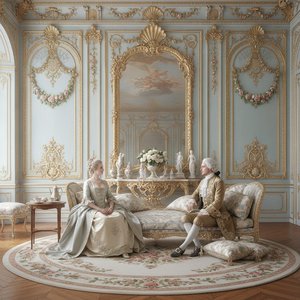
Rococo Art Guide: Elegance, Ornamentation, and the Era of Luxury
Explore the elegance of Rococo art. From Watteau to Fragonard, discover the history, aesthetics, and masters of 18th-century luxury in this expert guide for art lovers and collectors.

Rokoko: 10 Remek Dela Koja Su Definisala Eleganciju i Ukus
Otkrijte 10 remek dela koja su definisala rokoko umetnost! Uronite u svet Boucher-a, Watteau-a i Fragonarda. Istorija, stil i inspiracija za vaš dom. Kvalitetne reprodukcije i kuratorski odabiri na OriginalUniqueArt.com!

The Elegance of Rococo: A Journey Through Pastel Dreams and Ornate Splendor
Embark on an elegant journey through the Rococo era. Discover the delicate beauty of pastel masterpieces, the intricate artistry of 18th-century French masters, and how this era of ornate splendor continues to inspire timeless luxury in fine art collecting.
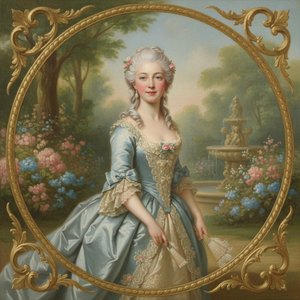
The Elegance of Rococo Portraiture: A Journey Through Grace, Soft Light, and Pastel Dreams
Discover the exquisite world of Rococo portraiture. Explore the delicate beauty of 18th-century French art, from pastel light to graceful asymmetry, and learn how to bring this era of elegance into your home through masterfully hand-painted oil reproductions.
