
 Pregledaj u prostoru
 Pošalji
 Podeli
 Detalji o delu
 Vodič
Vodič

 Preuzmi
 Slični predmeti
 Rendgenski snimak
 Automatska prezentacija
 Q&A
Q&A Statistika
Bird

- 74.0 x 151.0 cm


 Pročitaj više
Giclee štampa / Umetnički otisak
Giclée štampa ili print na platnu muzejskog kvaliteta uz brzu izradu i raznovrsne opcije završne obrade. ( Kupite ručno oslikano delo Pređi na digitalnu sliku)




P118B дин10

P118H дин10

P118W дин10

P438Z дин10

P508JH дин12

P508YH дин12

P805H дин10

P805Z дин10

P919BZ дин10

P919G дин10

P919XJ дин10

P959ZH дин10

P968JZ дин12

W106C дин8

W218G дин10

W218JH дин8

W218Y дин10

W307PJ дин10

W316G дин10

W316PJ дин8

W316Y дин10

W398PJ дин8

W4111J дин10

W500HY дин15

W500JH дин15

W692G дин12

W849H дин8

W940BG дин15

W953PJ дин8




Izaberite jednu od naših unapred definisanih veličina koje odgovaraju originalnim proporcijama umetničkog dela.

Unesite željenu širinu i visinu kako bi se štampa uklopila u vaš ram ili zid. Štampu je moguće samo iseći, ali nikada povećati iznad dimenzija originalne slike, stoga format sa drugačijim proporcijama uzrokuje gubitak dela slike. Pre početka štampe, poslaćemo vam digitalni prikaz radi potvrde. Slika prikazana na ovoj stranici ne predstavlja stvarni isrez — to pokazuje samo digitalni prikaz.
Dostava širom sveta () za 2 nedelje umesto uobičajenih 4/5 nedelja. (31 октобар)

Besplatna ekspresna dostava širom sveta

Visokokvalitetno laneno platno

Potpuno osiguranje transporta

Garancija povraćaja carine i uvoznih dažbina

Garancija vernosti boja

Politika povraćaja u roku od 100 dana (samo u slučaju nedostataka)

Garancija povrata 100% novca

Popust na više proizvoda
 Opcija sa staklom dostupna je samo za dimenzije manje od 110 cm

Bird
Giclee štampa / Umetnički otisak
Dimenzije reprodukcije
-


Ukupna cena
дин 8337
A Window into the Renaissance Naturalist's Vision
In the delicate interplay of light and meticulous detail, Jacob Hoefnagel’s Bird serves as a profound testament to the era of scientific awakening and artistic refinement. While the title suggests a singular focus on avian life, the work invites the viewer into a much larger, more complex narrative of observation and artistry. As a master miniaturist and naturalist, Hoeflamel possessed the rare ability to bridge the gap between the biological reality of the natural world and the poetic elegance of the late Renaissance style. This piece does not merely depict a subject; it captures the very essence of life, rendered with a precision that demands a slow, contemplative gaze from every admirer.
The technique employed in this work reflects the extraordinary discipline of the Hoefnagel lineage. Every feather, every subtle shift in hue, and every minute texture is executed with a level of craftsmanship that speaks to the artist's background in courtly illumination. The brushwork is nearly invisible, creating a surface where the subject seems to emerge naturally from the medium itself. For the discerning collector or interior designer, this painting offers more than just visual beauty; it provides a sense of depth and texture that can anchor a room, acting as a focal point of quiet sophistication and intellectual curiosity.
The Harmony of Nature and Human History
Beyond its immediate aesthetic appeal, the artwork carries a weight of historical significance. Created during a period when the boundaries between art and science were beautifully blurred, the painting embodies the spirit of the Age of Discovery. Hoefnagel’s work often functioned as a visual encyclopedia, documenting the wonders of the natural world with an accuracy that served both the aesthetic tastes of European royalty and the burgeoning scientific inquiries of the time. To possess such a piece is to hold a fragment of history—a moment when the act of painting was an essential tool for understanding the mysteries of the earth.
The emotional resonance of the work lies in its ability to evoke a sense of wonder. There is a profound stillness within the composition, a quietude that allows the viewer to escape the frantic pace of modern life and reconnect with the intricate details of the living world. Whether placed in a sunlit study, a grand library, or a contemporary living space, this reproduction brings an atmosphere of timelessness and grace. It serves as a reminder that true beauty is found in the smallest details, and that the legacy of the masters continues to inspire awe across the centuries.
Pitanja i odgovori
Kako se opisuje paleta dela „Bird”, autor Jacob Hoefnagel?
Paleta dela „Bird”, autor Jacob Hoefnagel opisana je kao Neutrals, što predstavlja sažet prikaz boja ovog umetničkog dela.
Da li se "Bird" nalazi u zemlji svog autora?
Ne – umetničko delo se nalazi u inostranstvu. Jacob Hoefnagel je rođen/a u Belgium, dok se originalno delo "Bird" čuva u muzeju u Austrija.
Gde se "Bird" nalazi u okviru istorije umetnosti?
Istorijski gledano, "Bird" je Baroque delo šire ere Early Modern.
Biografija umetnika
Jacob Hoefnagel: A Renaissance Naturalist and Court Artist
Born in Antwerp around 1573, Jacob Hoefnagel’s life was a vibrant tapestry woven from artistic pursuits, diplomatic endeavors, and the shifting currents of European politics. More than simply a painter, he was a multifaceted figure – a miniaturist, draftsman, art dealer, diplomat, merchant, and even a political player during a tumultuous era. His legacy rests primarily on his remarkably detailed illustrations of natural history subjects, a field where his meticulous observation and artistic skill converged to create works that continue to fascinate and inform us today. Hoefnagel’s career unfolded against the backdrop of the late Renaissance and early Baroque periods, a time of burgeoning scientific inquiry and artistic experimentation.
His early life was deeply intertwined with the artistic lineage of his father, Joris Hoefnagel, a renowned miniaturist and court painter to the Dukes of Bavaria and Emperor Rudolf II. Unlike his father, who began as a merchant dealing in luxury goods, Jacob received formal training under Abraham Liesaert in Antwerp’s Guild of Saint Luke, marking a deliberate shift towards a dedicated artistic career. This structured education provided him with the foundational skills necessary for his later success, though it was arguably his experiences outside the confines of the guild – his travels and interactions within various European courts – that truly shaped his distinctive style.
The Court Artist and Scientific Observation
Hoefnagel’s rise to prominence began with his publication in 1592 of *Archetypa studiaque patris Georgii Hoefnagelii*, a groundbreaking collection of engravings depicting plants, insects, and small animals. This work, meticulously copied from his father's drawings, established him as a skilled illustrator and demonstrated an early fascination with the natural world. His subsequent years were spent at the court of Rudolf II in Prague, a position he held until 1613. During this time, he produced a remarkable body of work that blended Mannerist elegance with a burgeoning scientific approach to observation – a hallmark of his artistic identity.
The works created during his time at the Prague court are particularly noteworthy. *Orpheus charming the animals* (circa 1613) exemplifies this fusion, showcasing a dramatic scene rendered in a late Mannerist style, yet imbued with an astonishing level of detail and realism. Similarly, *Winter* (1618) captures a frozen landscape with a precise attention to texture and light, reflecting the growing interest in scientific understanding of natural phenomena. These paintings weren’t merely decorative; they were carefully constructed studies, demonstrating Hoefnagel's commitment to accurate representation.
A Turbulent Life: Politics and Exile
Hoefnagel’s life was not without its challenges. Financial difficulties plagued him throughout his career, often attributed to the court’s failure to consistently pay his salary. He became deeply involved in the political turmoil of the Thirty Years' War, siding with Frederick V, the Protestant Winter King of the Palatinate, against the Catholic Habsburg dynasty. This allegiance ultimately led to his downfall; he was convicted *in absentia* of embezzlement and all his possessions were confiscated. This period marked a significant turning point in his life, forcing him into exile.
Driven by political conviction, Hoefnagel sought refuge in the Dutch Republic, where he served as an agent for the Bohemian estates. He spent several years in Amsterdam, engaging in trade and diplomatic activities. His experiences during this time undoubtedly influenced his artistic output, adding a layer of complexity to his depictions of human interaction and social dynamics. His final years were marked by continued travel and shifting allegiances, culminating in his death around 1632 in Hamburg.
Notable Works and Lasting Legacy
Jacob Hoefnagel’s artistic output is remarkably diverse, encompassing portraits, topographical views, emblems, and of course, his celebrated natural history illustrations. His *A Young Man Caressing an Old Woman* (circa 1605) offers a poignant example of his ability to convey complex emotions through subtle gestures and nuanced expressions – a testament to his skill as a portraitist. His meticulous depictions of insects, flowers, and animals were not simply aesthetically pleasing; they represented a significant contribution to the burgeoning field of natural history illustration.
While he may not be as widely recognized as some of his contemporaries, Jacob Hoefnagel’s work holds a unique place in art history. He stands as a bridge between the artistic conventions of the Renaissance and the scientific observation that would characterize the early Baroque period. His legacy lies not only in the beauty of his paintings but also in his pioneering approach to naturalistic illustration – an approach that continues to inspire artists and researchers alike. His detailed studies remain valuable resources for understanding the flora and fauna of his era, offering a glimpse into a world where art and science were inextricably linked.

Jacob Hoefnagel
1575 - 1632 , Belgium
Osnovne informacije
- Full Name: Jacob Hoefnagel
- Nationality: Flemish
- Date Of Birth: 1575
- Date Of Death: 1632
- Place Of Birth: Antwerp, Belgium
- Notable Artworks:
- Orpheus charming animals
- Winter
- A Young Man Caresses an Old Woman
- Artistic Movement Or Style: Mannerism, Natural history
- Artists Who Influenced This Artist: ['Joris Hoefnagel']
- Artists Or Movements Influenced By This Artist: ['Abraham Liesaert']
Povezani članci
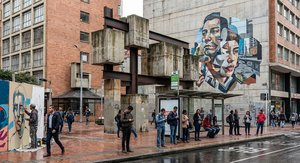
Concrete Narratives: Exploring Urban Life in Modern & Contemporary Art
Explore the evolution of cityscape painting with OriginalUniqueArt. Discover key artists from Realism to contemporary movements & invest in timeless urban visions. Expert guidance, museum-quality reproductions.
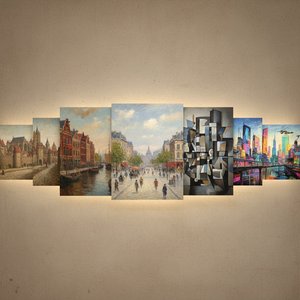
Urban Visions: A Historical & Artistic Exploration of the Cityscape in Painting
Explore the evolution of cityscape painting from historical maps to Impressionist masterpieces. Discover artists like Caillebotte, Utrillo & Matsumoto Shunsuke. Find museum-quality reproductions at OriginalUniqueArt.
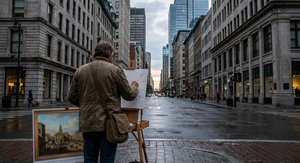
Urban Visions: A Historical & Artistic Exploration of the Cityscape in Painting
Explore the evolution of cityscape painting from historical maps to Impressionist masterpieces. Discover artists like Caillebotte & Utrillo. Find museum-quality reproductions at OriginalUniqueArt.

Concrete Visions: Exploring the Urban Landscape in Painting – From Realism to Contemporary Art
Explore the evolution of cityscape painting from Realism to contemporary art with OriginalUniqueArt. Discover key artists & invest in timeless urban visions. Expert guidance, museum-quality reproductions.
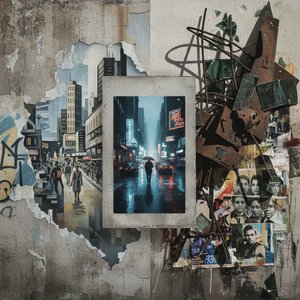
Concrete Visions: Exploring Representations of Urban Life in Modern & Contemporary Art
Explore the evolution of cityscape painting from Realism to contemporary art. Discover key artists & invest in timeless urban visions with OriginalUniqueArt's expert guidance and museum-quality reproductions.