

 Pregledaj u prostoru
 Podeli
 Podeli
 Detalji
 Vodič
Vodič

 Preuzmi sliku
 Slični predmeti
 Rendgenski snimak
 Automatska prezentacija
 Statistika
Golden autumn
 Oil On Canvas
- WallArt
- Impressionistic Landscape
 1895
1895- 19th Century
 82.0 x 126.0 cm
 Третьяковская галерея
 Pročitaj više
Giclee štampa / Umetnički otisak
Giclée štampa ili print na platnu muzejskog kvaliteta uz brzu izradu i raznovrsne opcije završne obrade. ( Naručite ručno oslikano reprodukciju Pređi na prodaju digitalnih slika)




P118B $10

P118H $10

P118W $10

P438Z $10

P508JH $12

P508YH $12

P805H $10

P805Z $10

P919BZ $10

P919G $10

P919XJ $10

P959ZH $10

P968JZ $12

W106C $8

W218G $10

W218JH $8

W218Y $10

W307PJ $10

W316G $10

W316PJ $8

W316Y $10

W398PJ $8

W4111J $10

W500HY $15

W500JH $15

W692G $12

W849H $8

W940BG $15

W953PJ $8




Izaberite jednu od naših unapred definisanih veličina koje odgovaraju originalnim proporcijama umetničkog dela.

Možete uneti sopstvene dimenzije kako biste umetničko delo prilagodili specifičnom okviru ili prostoru. Ako odabrani format ne odgovara proporcijama originalne slike, mi ćemo ili iscrtati deo dela ili proširiti sliku pomoću ogledane ivice ili jednobojnog popunjavanja. Digitalni prikaz će vam biti poslat na odobrenje pre početka proizvodnje.
Imajte na umu da pregled na ekranu ne odražava stvarno iscrtavanje ili proširivanje. Samo će prikaz (mockup) precizno pokazati finalnu kompoziciju.
Iako su prilagođene dimenzije dostupne, preporučujemo da odaberete dimenziju sa unapred definisane liste kako biste očuvali originalne proporcije.
Dostava širom sveta () za 2 nedelje umesto uobičajenih 4/5 nedelja. (25 септембар)

Besplatna ekspresna dostava širom sveta

Visokokvalitetno laneno platno

Sveobuhvatno osiguranje transporta

Garancija povraćaja carine i uvoznih dažbina

Garancija vernosti boja i autentičnosti pri reprodukciji

Politika povraćaja u roku od 100 dana (samo u slučaju nedostataka)

Garancija povrata 100% novca

Popust pri većoj količini
 Opcija sa staklom dostupna je samo za dimenzije manje od 110 cm

Golden autumn
Giclee štampa / Umetnički otisak
Veličina reprodukcije
-


Ukupna cena
$ 80
A Symphony of Autumnal Melancholy
In the hallowed halls of the Tretyakov Gallery in Moscow, there exists a canvas that does more than merely depict a season; it captures the very soul of the Russian landscape. Isaak Ilyich Levitan’s Golden Autumn, painted in 1895, is a monumental achievement that transcends simple representation to become a profound meditation on beauty and transition. As the eye wanders across the 82 x 126 cm expanse, one is immediately drawn into a tranquil riverside scene where birch trees stand ablaze with autumnal hues. This vibrant tapestry of golds and yellows creates a striking contrast against the muted blues and greens of the background, inviting the viewer to step into a moment frozen in time—a moment where the warmth of summer begins its slow, graceful surrender to the approaching frost.
The painting presents an idyllic tableau of rural life, featuring a meandering river that weaves through a sun-drenched meadow. Scattered throughout this pastoral landscape are cows, grazing peacefully near the water's edge, adding a sense of quiet vitality to the scene. A nearby bridge serves as a subtle anchor to the human element within this vast natural expanse, yet the true protagonist remains the atmosphere itself. For collectors and interior designers alike, this piece offers a unique ability to infuse a space with serenity and a sense of timelessness, making it an exquisite centerpiece for any curated collection.
Mastery of Light and Impressionistic Technique
Levitan’s artistic approach marks him as a master of the mood landscape, a genre he helped pioneer. While his roots lie in the Russian Realism of the Peredvizhniki movement, his technique breathes with the ethereal quality of Impressionism. Rather than relying on sharp, photographic delineations, Levitan employs loose, rhythmic brushstrokes and expertly blended pigments to capture the fleeting nuances of light and atmosphere. This soft-focus approach allows the colors to vibrate against one another, creating a shimmering effect that mimics the way sunlight filters through thinning autumn leaves.
The color palette is a masterclass in symbolic harmony. The deliberate juxtaposition between radiant gold and cool, contemplative blue serves as a visual metaphor for the duality of the season. The shimmering golds represent the peak of vitality and the warmth of life, while the deep, tranquil blues evoke the inevitable decline and the quietude of winter. This sophisticated use of color theory ensures that the painting remains emotionally resonant, offering a complex sensory experience that shifts depending on the light in which it is viewed.
A Legacy of Emotional Resonance
To understand Golden Autumn, one must understand the heart of Isaak Levitan. His life, marked by personal hardship and the profound loss of his parents, imbued his work with a characteristic sense of longing and poetic melancholy. He did not seek to paint topographical accuracy; instead, he sought to translate the emotional resonance of the land into visual form. This painting is the pinnacle of that quest—a work that finds peace within change and beauty within decay.
For those seeking to bring a piece of art history into their homes, a high-quality reproduction of this masterpiece offers more than just decoration. It provides an opportunity to live with a poem in paint, a window into the Russian soul that continues to inspire generations. Whether placed in a sunlit study or a grand living area, Golden Autumn serves as a constant reminder of the sublime beauty found in life's most transient moments.
Biografija umetnika
A Symphony of the Russian Soul: The Life and Art of Isaak Ilyich Levitan
Isaak Ilyich Levitan, a name synonymous with the evocative power of Russian landscape painting, was more than just a chronicler of nature; he was a poet of the land, a translator of its moods into visual form. Born in 1860 in Kibarty (present-day Lithuania) to a Jewish family who later settled in Moscow, Levitan’s life was marked by both profound hardship and an unwavering dedication to his art. The early loss of his mother and father instilled within him a sensitivity that would permeate his canvases with a melancholic beauty. This sense of longing, coupled with the restrictions imposed upon Jewish communities in Tsarist Russia, fueled a desire to find solace and expression in the natural world. He entered the Moscow School of Painting, Sculpture and Architecture in 1873, where he came under the tutelage of Alexei Savrasov, whose influence would prove pivotal in shaping Levitan’s artistic vision. It was Savrasov who nurtured his student's innate ability to capture not merely the appearance of nature, but its very essence—its atmosphere, its emotional resonance.The Birth of a ‘Mood Landscape’
Levitan quickly distinguished himself as an artist capable of conveying profound emotion through landscape. He wasn’t interested in topographical accuracy for its own sake; rather, he sought to imbue his paintings with a sense of *mood*, a feeling that resonated deep within the viewer's soul. This approach earned him the title of pioneer of the “mood landscape,” a genre that moved beyond simple representation to explore the spiritual connection between humanity and nature. His palette was often subdued, favoring naturalistic colors and poetic elements over vibrant displays. He masterfully employed light and shadow, creating atmospheric effects that evoked feelings of tranquility, solitude, or even quiet despair. Works like *Autumn Day. Sokolniki* (1879), painted when he was just nineteen years old, already demonstrated this remarkable ability to capture the subtle nuances of the Russian countryside. The painting’s muted tones and delicate rendering of light create a sense of wistful nostalgia, hinting at the transience of beauty and the inevitability of change. Later masterpieces such as *The Vladimirka Road* (1892) and *Eternal Rest* (1894), prominently displayed in the Tretyakov Gallery, further solidified his reputation as a master of emotional landscape painting.Influences and Artistic Kinships
While deeply indebted to Savrasov’s influence, Levitan was also receptive to other artistic currents. He collaborated with fellow artists like Konstantin Korovin, Mikhail Nesterov, and Nikolai Chekhov—the brother of the renowned playwright Anton Chekhov, who became a lifelong friend. This circle fostered an environment of creative exchange and mutual support. Though he briefly experimented with Impressionistic techniques, Levitan never fully embraced the movement, maintaining a uniquely Russian sensibility in his work. He found inspiration not only in the visual world but also in music and literature, seeking to translate their emotional power into his paintings. His designs for scenery for Savva Mamontov’s private Russian Opera demonstrate his versatility and willingness to explore different artistic mediums. The influence of these collaborations and experiences can be seen in works like *Spring Flood*, *Stormy Day*, *Vesper Chimes* and *Silent Cloister*, each a testament to his evolving style and deepening understanding of the emotional landscape.Major Achievements and Legacy
Levitan’s ascension to prominence within the Russian art world was marked by several significant milestones. Elected to the Imperial Academy of Arts in 1897, he recognized as one of Russia's foremost landscape painters. This honor underscored his artistic merit and cemented his position as a leading figure in the Peredvizhniki movement—a group of artists committed to depicting Russian life and nature with uncompromising realism and emotional honesty. He continued to teach at Moscow School of Painting, Sculpture and Architecture, nurturing the talent of aspiring artists and shaping the future direction of landscape painting. His enduring legacy resides not merely in his artistic output but also in his profound contribution to Russian cultural heritage—a testament to the transformative power of art to capture the spirit of an era and inspire generations to come. He passed away peacefully in 1900, leaving behind a body of work that continues to captivate audiences worldwide. His paintings remain a poignant reminder of Russia’s melancholic beauty and the enduring resonance of human emotion within the natural world.Final Resting Place
Levitan's remains were interred in Novodevichy Cemetery in Moscow alongside Anton Chekhov—a symbolic union reflecting their shared artistic kinship and devotion to portraying the soul of Russia. His canvases stand as timeless expressions of melancholy, solitude, and profound contemplation—a legacy that secures his place among the greatest landscape painters of all time.
Исаак Ильич Левитан
1860 - 1900 , Русија
Brzi pregled
- Artistic Movement Or Style: Mood Landscape, Realizam
- Artists Who Influenced This Artist:
- Aleksei Savrasov
- Vasily Polenov
- Konstantin Korovin
- Date Of Birth: August 30, 1860
- Date Of Death: July 22, 1900
- Full Name: Isaak Ilyich Levitan
- Nationality: Ruski
- Notable Artworks:
- Autunm Day. Sokolniki
- Vladimirska cesta
- Večiti mir
- Prolećna poplava
- Buranij dan
- Vecer čas
- Place Of Birth: Kibarty, Lithuania
Srodni članci

Golden Hues & Crimson Leaves: Capturing the Magic of Autumn Colors in Fine Art
Embark on a visual journey through the golden hues of autumn fine art. Discover how masters like Van Gogh capture seasonal magic through vibrant oil landscapes and explore expert tips for collecting timeless autumnal masterpieces.

Konstantin Korovin: A Master of Russian Impressionism & Evocative Light
Explore the captivating world of Konstantin Korovin, a leading Russian Impressionist painter renowned for his vibrant landscapes & innovative theater designs. Discover his life, legacy, and enduring artistic impact.

Victor Vasnetsov: Myth, Nationalism & the Revival of Russian Fairy Tale Painting
Explore the captivating world of Victor Vasnetsov, a co-founder of Russian folklorist painting. Discover his iconic works, influence on national identity, and lasting legacy in this expert guide.
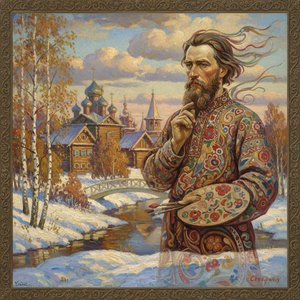
Igor Grabar: Bridging Impressionism & National Identity in Russian Modern Art
Explore the life & art of Igor Grabar, a pivotal figure in Russian Modernism. Discover his Impressionist landscapes, crucial role in art history, and legacy at the Tretyakov Gallery. A deep dive into a master painter & scholar.

Ivan Bilibin: A Synthesis of Folklore, Modernism & National Identity in Russian Illustration
Explore the enchanting world of Ivan Bilibin, a master Russian illustrator who synthesized folklore, Art Nouveau & national identity. Discover his iconic fairy tale illustrations and legacy with OriginalUniqueArt.
