
 Pregledaj u prostoru
 Pošalji
 Podeli
 Detalji o delu
 Vodič
Vodič

 Preuzmi
 Slični predmeti
 Rendgenski snimak
 Automatska prezentacija
 Q&A
Q&A Statistika
Venus between Ceres and Bacchus

- 402.0 x 287.0 cm


 Pročitaj više
Giclee štampa / Umetnički otisak
Giclée štampa ili print na platnu muzejskog kvaliteta uz brzu izradu i raznovrsne opcije završne obrade. ( Kupite ručno oslikano delo Pređi na digitalnu sliku)




P118B дин10

P118H дин10

P118W дин10

P438Z дин10

P508JH дин12

P508YH дин12

P805H дин10

P805Z дин10

P919BZ дин10

P919G дин10

P919XJ дин10

P959ZH дин10

P968JZ дин12

W106C дин8

W218G дин10

W218JH дин8

W218Y дин10

W307PJ дин10

W316G дин10

W316PJ дин8

W316Y дин10

W398PJ дин8

W4111J дин10

W500HY дин15

W500JH дин15

W692G дин12

W849H дин8

W940BG дин15

W953PJ дин8




Izaberite jednu od naših unapred definisanih veličina koje odgovaraju originalnim proporcijama umetničkog dela.

Unesite željenu širinu i visinu kako bi se štampa uklopila u vaš ram ili zid. Štampu je moguće samo iseći, ali nikada povećati iznad dimenzija originalne slike, stoga format sa drugačijim proporcijama uzrokuje gubitak dela slike. Pre početka štampe, poslaćemo vam digitalni prikaz radi potvrde. Slika prikazana na ovoj stranici ne predstavlja stvarni isrez — to pokazuje samo digitalni prikaz.
Dostava širom sveta () za 2 nedelje umesto uobičajenih 4/5 nedelja. (3 новембар)

Besplatna ekspresna dostava širom sveta

Visokokvalitetno laneno platno

Potpuno osiguranje transporta

Garancija povraćaja carine i uvoznih dažbina

Garancija vernosti boja

Politika povraćaja u roku od 100 dana (samo u slučaju nedostataka)

Garancija povrata 100% novca

Popust na više proizvoda
 Opcija sa staklom dostupna je samo za dimenzije manje od 110 cm

Venus between Ceres and Bacchus
Giclee štampa / Umetnički otisak
Dimenzije reprodukcije
-


Ukupna cena
дин 8366
A Divine Interlude: Exploring Venus between Ceres and Bacchus
To gaze upon this magnificent canvas is to step directly into a moment suspended in mythological splendor. Venus between Ceres and Bacchus, painted around 1590 by Hendrik Goltzius, is far more than a mere depiction of classical figures; it is an elaborate tapestry woven from themes of fertility, divine love, and the cyclical nature of life itself. The composition immediately draws the eye into a richly populated scene where three central figures—the goddess Venus, the nurturing Ceres, and the jovial Bacchus—are arranged in a tableau vivant that speaks volumes through its very stillness.
Mythological Resonance and Symbolism
The grouping of these deities is inherently symbolic. Venus, embodying beauty and desire, occupies the heart of the narrative, flanked by two powerful forces of nature and sustenance. Ceres, goddess of agriculture and motherhood, represents the bounty of the earth, while Bacchus, the god of wine and ecstasy, speaks to pleasure and vital energy. The inclusion of these figures suggests a harmonious balance—a divine acknowledgment that beauty (Venus) thrives when supported by both earthly nourishment (Ceres) and spirited joy (Bacchus). Scattered throughout the scene are carefully placed objects: a delicate cup, an ornate bowl, and a central vase. These items are not incidental; they function as visual anchors, hinting at rituals, offerings, and the pleasures that accompany life's most profound experiences.
Mastery of the Northern Mannerist Style
Hendrik Goltzius, a titan of the late Renaissance and early Baroque period, imbues this work with his signature "exuberance." While rooted in classical mythology, the execution showcases the sophisticated flair characteristic of Northern Mannerism. Goltzius was renowned for his technical virtuosity, translating the drama and complexity often associated with Italian High Renaissance masters into a distinctly German-Dutch sensibility. Observe the figures: their poses are dynamic yet elegantly composed, suggesting an underlying narrative tension beneath the surface calm. The presence of three angels in the background further elevates the scene from a simple gathering to an apotheosis—a moment blessed by celestial intervention.
Technique and Visual Impact for the Modern Collector
The sheer scale of this piece, measuring 402 x 287 cm, commands attention, making it a breathtaking focal point for any grand hall or gallery. The richness of Goltzius's technique allows for intricate detailing in the drapery, the musculature, and the symbolic accoutrements. For those seeking to bring this level of historical grandeur into their own space, acquiring a high-quality hand-painted reproduction offers an unparalleled opportunity. It allows one to connect intimately with the master’s brushwork—the subtle gradations of tone, the dramatic interplay of light across bare skin, and the deep saturation of the background elements—without the monumental commitment of the original masterpiece.
An Emotional Echo Across Centuries
Ultimately, Venus between Ceres and Bacchus resonates because it speaks to universal human concerns: the pursuit of beauty, the necessity of sustenance, and the celebration of life's fleeting joys. It is a visual meditation on abundance. Owning or displaying a reproduction of this work is not merely decorating; it is curating an atmosphere steeped in classical mythology, artistic genius, and enduring, divine harmony.
Pitanja i odgovori
Koliko su harmonične boje dela „Venus between Ceres and Bacchus”, autor Hendrik Goltzius?
Harmonija boja dela "Venus between Ceres and Bacchus" opisana je kao Unified Palette.
Šta prikazuje „Venus between Ceres and Bacchus”, autor Hendrik Goltzius?
Motivi dela "Venus between Ceres and Bacchus" su venus, bacchus, ceres, nude figures, mythology, angels, classical art.
Mogu li da gledam "Venus between Ceres and Bacchus" kao prezentaciju preko celog ekrana?
Dostupna je i prezentacija slika: stranica Galerija slika za delo „Venus between Ceres and Bacchus”, autor Hendrik Goltzius.
Biografija umetnika
Rano život i obrazovanje
Hendrik Goltzius, holandski grafičar, crtač i slikar nemačkog porekla, rođen je u januaru ili februaru 1558. godine. Bio je vodeći holandski gravir u ranoj baroknoj periodi, odnosno severnom manierizmu, slavljen zbog svoje sofisticirane tehnike i "obilja" svojih kompozicija. Prema rečima A. Hjata Mejora, Goltzius je "bio poslednji profesionalni gravir koji je crtao sa autoritetom dobrog slikara i poslednji koji je izmišljao mnoge slike koje su drugi kopirali". Porodica Goltziusa preselila se u Duisburg kada mu je bilo tri godine, a nakon što je pod očevim nadzorom proučavao slikanje na staklu, umeće graviranja naučio je od holandskog polimata Dirka Volckertszoona Coornherta.Umetnička karijera
Godine 1577, Goltzius se sa Coornhertom preselio u Harlem u Holandskoj Republici, gde će ostati baziran do kraja svog života. Takođe je bio angažovan od strane Filipa Gallea na graviranju seta printova iz istorije Lukrecije. Goltzius je imao deformisanu desnu ruku usled požara koji je izbio dok je bio beba, što se ispostavilo da je bilo posebno pogodno za držanje burina. Ova jedinstvena fizička karakteristika omogućila mu je da ovlada impresivnim pokretom linije, čineći njegove gravure izuzetno prepoznatljivim. Hendrik Goltzius je do nezapamćenog nivoa podigao upotrebu "proširujuće linije" (swelling line), gde se burinom manipuliše kako bi linije postale deblje ili tanje, stvarajući tonalni efekat vidljiv sa distance.Tehnika i stil
Goltacija je bio pionir tehnike "tačke i romba", gde se tačke postavljaju u sredinu prostora u obliku romba stvorenih ukrštanjem linija kako bi se dodatno usavršilo tonalno senčenje. Kaže se da njegovo vladanje burinom parira Düreru, a izrađivao je i gravure po slikama Bartholomeusa Sprangera, čime je povećao slavu ovog drugog – kao i sopstvenu. Goltzius je počeo da slika tek u četrdeset drugoj godini života; neki od njegovih radova mogu se naći u Beču. Takođe je izvršio nekoliko drvoreza u tehnici kjaroskura.Javne kolekcije i nasleđe
Većina značajnih grafičkih dvorana poseduje grupu Goltziusovih brojnih gravura, uključujući Muzej Boijmans van Beuningen, Rijksmuseum Amsterdam i The Metropolitan Museum of Art. Njegovo nasleđe je vidljivo u delima drugih umetnika, kao što je Jacques Bellange, koji je takođe bio majstor severno-manirističke grafike. Goltziusove gravure i slike nastavljaju da inspirišu ljubitelje umetnosti i naučnike, a njegova dela mogu se pronaći na OriginalUniqueArt.com i u Wikipedia članku posvećenom njegovom životu i radu.- Neka od Goltziusovih značajnih dela uključuju: Jupiter, Minerva i prorok Baruh
- Muzeji sa njegovim radovima: Los Angeles County Museum of Art, Philadelphia Museum of Art i British Museum
- Tehnike koje je Goltzius koristio: tehnika "proširujuće linije" i tehnika "tačke i romba"

Hendrik Goltzius
1558 - 1617 , Italija
Osnovne informacije
- Artistic Movement Or Style: Severni manierizam i barokna gravura
- Artists Or Movements Influenced By This Artist: ['Žak Belanj']
- Artists Who Influenced This Artist:
- Dirk Volkertson Kornert
- Bartolome Spranger
- Date Of Birth: Januar ili februar 1558.
- Full Name: Hendrik Goltzius
- Nationality: Holandski
- Notable Artworks:
- Obožavanje pastira
- Arkadski pejzaž
- Glava sirene
- Herkul ubija Kakusa
- Demogorgon i božanstva
- Apolon Belvedere
- Poslednja večera
- Friderik de Fries (umro 1613)
- Place Of Birth: Braunschweig, Italija
Povezani članci

Hendrick Goltzius: Master Engraver & the Flourishing of Dutch Mannerism
Explore the life & art of Hendrick Goltzius, a master engraver of Dutch Mannerism. Discover his innovative techniques, iconic engravings like 'Jahel', and lasting influence on Baroque art. Learn about collecting Goltzius today.

The Intricate World of Engraving: A Historical Survey of Technique, Artistic Expression & Enduring Legacy
Explore the rich history of engraving with OriginalUniqueArt. Discover techniques, iconic artists like Dürer & Callot, collecting tips, and expert guidance for preserving your art investment. Learn about intaglio printing & more!

The Precision of the Burin: An Expert Guide to the High-Impact World of Masterful Engraving Art
Discover the sharp, high-impact world of engraving art. Our expert guide explores intaglio techniques, the mastery of the burin, and how collectors can appreciate the precision and enduring legacy of this profound graphic art form.
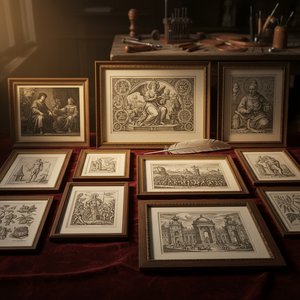
Engraving's Golden Age: 10 Masterpieces That Redefined Art | OriginalUniqueArt
Journey through art history with our Top 10 Legendary Engravings! Explore masterpieces by Dürer, Rembrandt & Goya. Discover the stories behind these iconic prints and find museum-quality reproductions for your home at OriginalUniqueArt.com.

Engraving: A Historical Survey of Technique, Artistic Expression & Enduring Legacy
Explore the rich history of engraving with OriginalUniqueArt. Discover techniques, iconic artists like Dürer & Callot, collecting tips, and expert guidance for preserving your art investment. Learn about intaglio printing & more!