 Pređi na štampu
 Pročitaj više







































 Za umetnička dela ili reprodukcije čija je bilo koja strana veća od 105 cm (približno 41 inč), okvir će biti isporučen u obliku rastavljenog seta za sklapanje. Ovaj metod osigurava bezbednu dostavu i sprečava oštećenja tokom transporta.


The Melodic Shadows of the Utrecht Caravaggisti
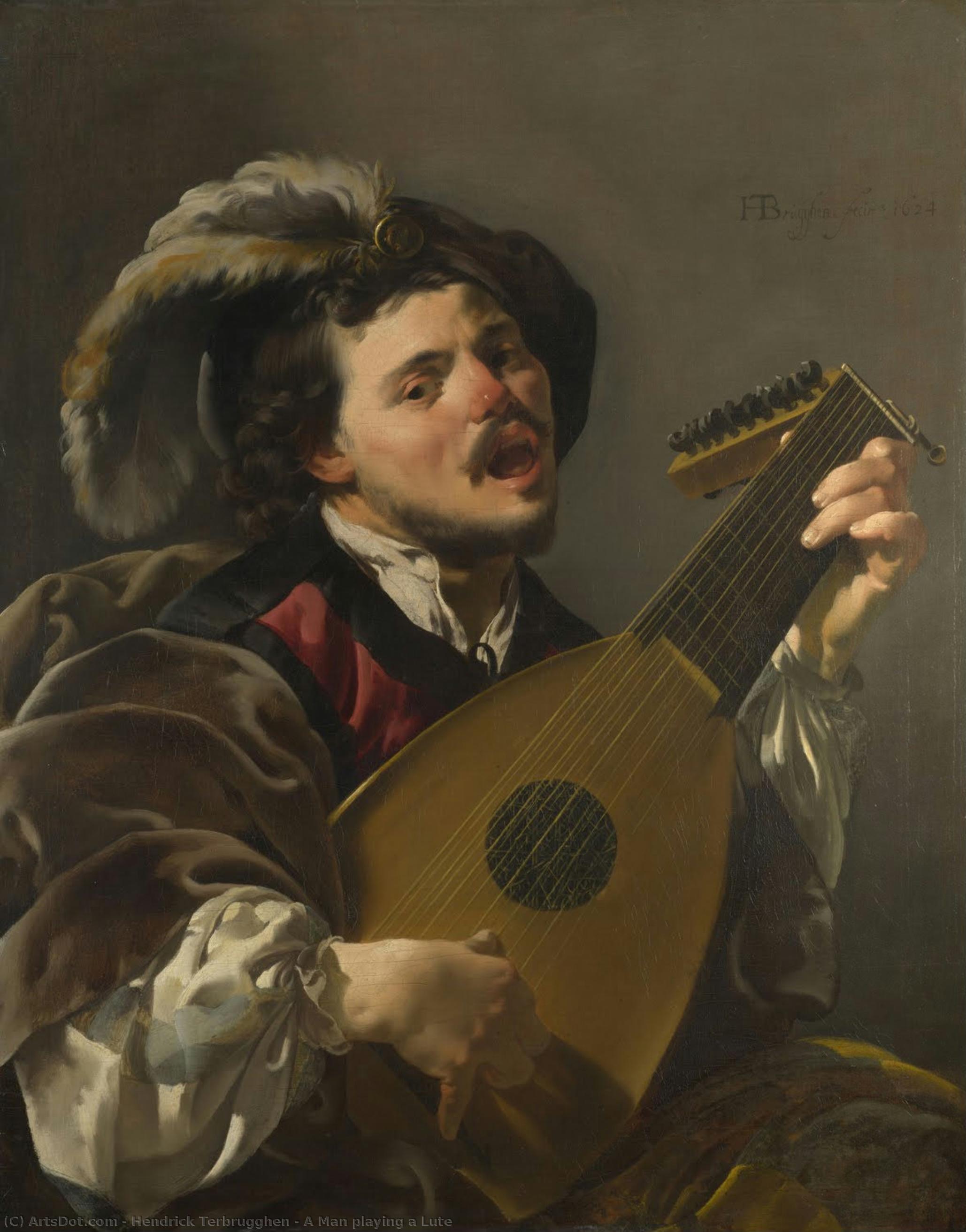
In the quiet intimacy of 1624, Hendrick Terbrugghen captured a moment of profound musical devotion that transcends the centuries. A Man playing a Lute is not merely a portrait of a musician; it is a masterclass in the dramatic interplay of light and shadow, a hallmark of the Utrecht Caravaggisti movement. As the man cradles his instrument, the viewer is drawn into a private world where the only sound is the imagined resonance of plucked strings. The composition breathes with an elegance that speaks to the sophisticated tastes of the Dutch Golden Age, offering a window into a period where art sought to bridge the gap between the earthly and the divine through the visceral beauty of everyday life.
The technique employed by Terbrugghen is nothing short of breathtaking. Utilizing the chiaroscuro method—a technique perfected by Caravaggio and brought to the Netherlands by artists like Terbrugghen—the painter uses deep, velvety shadows to sculpt the figure from the darkness. This high-contrast approach directs our gaze toward the vibrant textures of the subject's attire: the rich, crimson fabric of his clothing and the soft, tactile presence of his fur-trimmed hat. Every brushstroke serves to highlight the intricate craftsmanship of the lute itself, making the instrument feel heavy, tangible, and central to the soul of the painting.
A Symphony of Color and Texture
For the discerning collector or interior designer, this piece offers a magnificent palette of warm tones that can anchor a room with a sense of historical prestige. The deep reds and earthy ochres create an atmosphere of warmth and luxury, making it an ideal centerpiece for a study, a library, or a formal dining area. The visual weight of the lute, which occupies a significant portion of the canvas, provides a structural focal point that commands attention without overwhelming the surrounding decor. It is a work that invites contemplation, encouraging guests to linger on the fine details of the man's concentrated expression and the delicate anatomy of his hands.
Beyond its aesthetic appeal, the painting carries a symbolic weight common in seventeenth-century Dutch art. The lute often served as a metaphor for harmony—both musical and social. To possess such a work is to invite a sense of balance and refined culture into one's space. Whether viewed as a historical artifact or a stunning decorative element, A Man playing a Lute remains a timeless testament to the power of light to reveal the hidden beauty in a single, fleeting moment of artistic expression.
Pitanja i odgovori
U koji umetnički pravac i u koje doba pripada delo „A Man playing a Lute”, autor Hendrik Terbruggen?
„A Man playing a Lute“ pripada pravcu Baroque, a njen autor je stvarao u periodu Rani modernizam.
U kom delu doma bi se reprodukcija dela "A Man playing a Lute" lepo uklopila?
Preporučeni prostor za „A Man playing a Lute”, autor Hendrik Terbruggen je Living Room. Ovaj predlog se, naravno, može prilagoditi vašem enterijeru.
Postoji li informativni list o delu „A Man playing a Lute”, autor Hendrik Terbruggen namenjen studentima?
Dostupna je Vodič za učenike stranica za „A Man playing a Lute”, autor Hendrik Terbruggen: štampani informativni list o umetničkom delu, dizajniran za učenike i upotrebu u učionici.
 Pregledaj u prostoru
 Pošalji
 Podeli
 Detalji o delu
 Vodič
Vodič

 Preuzmi
 Slični predmeti
 Rendgenski snimak
 Automatska prezentacija
 Pitanja i odgovori
 Statistika






