
 Pregledaj u prostoru
 Podeli
 Podeli
 Detalji
 Vodič
Vodič

 Preuzmi sliku
 Slični predmeti
 Rendgenski snimak
 Automatska prezentacija
 Statistika
Venice


 Pročitaj više
Ručno rađena uljana reprodukcija
Ručno oslikano uljanim bojama na platnu u dimenzijama i okviru po vašem izboru, izrađeno po porudžbini od strane naših umetnika. ( Pređi na prodaju štampanih primeraka Pređi na prodaju digitalnih slika)




P118B дин10

P118H дин10

P118W дин10

P438Z дин10

P508JH дин12

P508YH дин12

P805H дин10

P805Z дин10

P919BZ дин10

P919G дин10

P919XJ дин10

P959ZH дин10

P968JZ дин12

W106C дин8

W218G дин10

W218JH дин8

W218Y дин10

W307PJ дин10

W316G дин10

W316PJ дин8

W316Y дин10

W398PJ дин8

W4111J дин10

W500HY дин15

W500JH дин15

W692G дин12

W849H дин8

W940BG дин15

W953PJ дин8




Izaberite jednu od naših unapred definisanih veličina koje odgovaraju originalnim proporcijama umetničkog dela.

Možete uneti sopstvene dimenzije kako biste prilagodili umetničko delo određenom okviru ili prostoru. Ako odabrana veličina ne odgovara proporcijama originala, slika će biti isečena ili proširena dodatnim elementima koji se ručno oslikavaju. Digitalni prikaz će vam biti poslat na odobrenje pre početka proizvodnje.
Imajte na umu da pregled na ekranu ne odražava stvarno prisecanje ili proširenje. Samo mockup će precizno prikazati konačnu kompoziciju.
Iako su dostupne prilagođene veličine, preporučujemo da izaberete dimenziju iz unapred definisane liste kako biste sačuvali originalne proporcije.
Nakon narudžbine, tim OriginalUniqueArt.com će klijentu putem e-pošte poslati uputstva i dostaviti prikaz predloženog rešenja
Svetska isporuka () za 3/4 nedelje umesto uobičajenih 5 nedelja. (13 октобар). Bez kompromisa po pitanju kvaliteta.

Besplatna ekspresna dostava širom sveta

Visokokvalitetno laneno platno

Sveobuhvatno osiguranje transporta

Garancija povraćaja carine i uvoznih dažbina

Garancija vernosti boja i autentičnosti pri reprodukciji

Politika povraćaja u roku od 100 dana (samo u slučaju nedostataka)

Garancija povrata 100% novca

Popust pri većoj količini
 Opcija sa staklom dostupna je samo za dimenzije manje od 110 cm

Venice
Tehnika izrade reprodukcije
Veličina reprodukcije
-


Ukupna cena
дин 30471
A Dreamscape of Venice: Gustave Moreau’s Enigmatic Vision
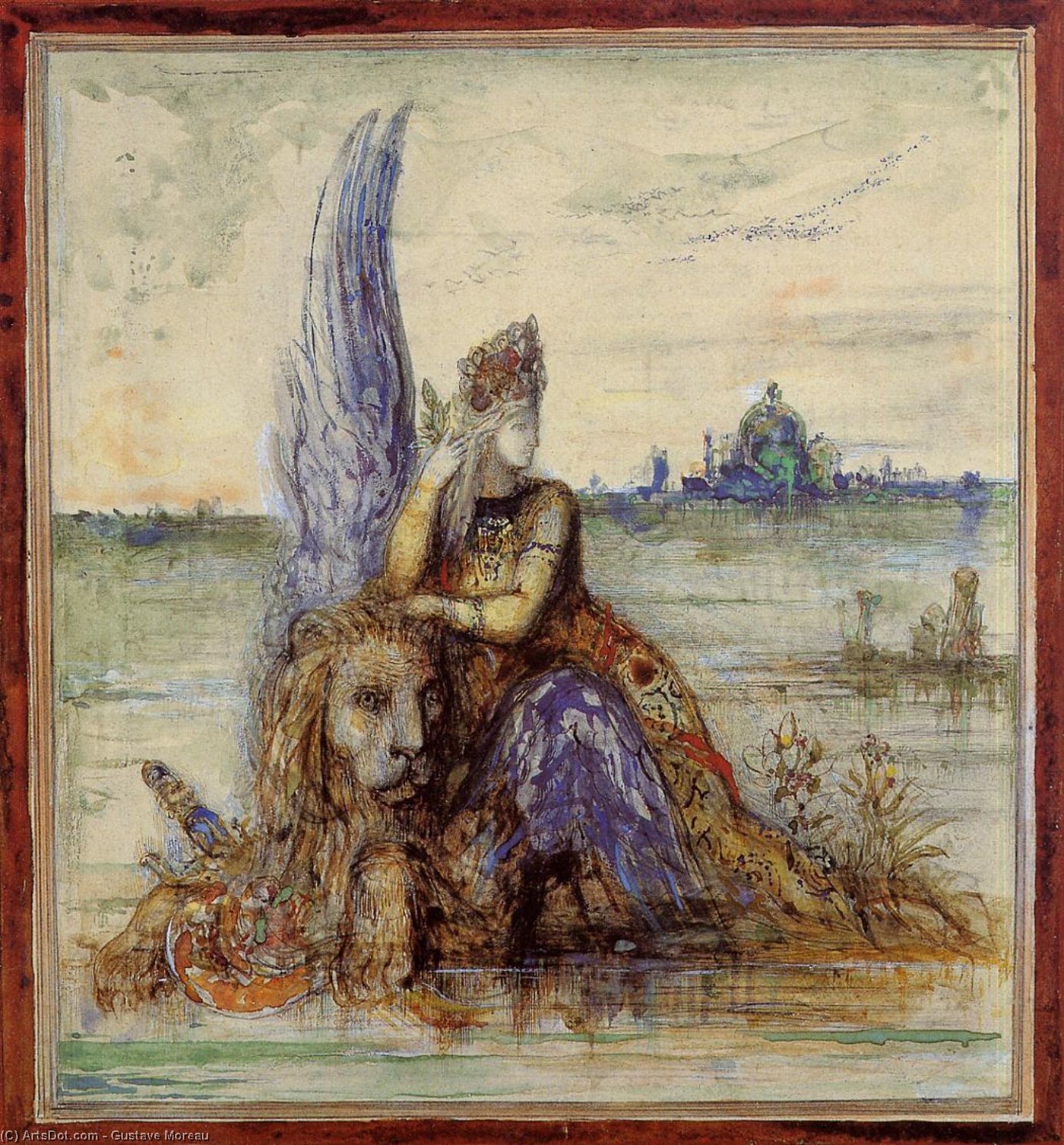
Gustave Moreau's "Venice," painted in 1885, isn’t merely a depiction of a city; it’s an immersion into a realm of myth and emotion. This watercolor, now residing within the hallowed halls of the Musée Gustave Moreau in Paris, embodies the core tenets of Symbolism – a movement that sought to express inner psychological states rather than simply mirroring external reality. Moreau, a master of layering symbolism upon traditional subjects, transforms Venice into an evocative stage for his personal mythology, inviting viewers on a journey through dream and memory.
The painting immediately captivates with its hazy, almost otherworldly atmosphere. The muted palette—dominated by blues, greens, and ochres—creates a sense of distance and timelessness. Moreau’s technique is deliberately loose and fluid, characteristic of watercolor, allowing the colors to bleed into one another and suggesting movement within the water. He employs a broken brushstroke, building up layers of translucent washes that imbue the scene with an ethereal quality. The cityscape itself isn't sharply defined; instead, it appears as a shimmering reflection in the water, further contributing to the dreamlike atmosphere.
The Regal Figure and Symbolic Weight
At the heart of the composition sits a woman seated regally upon the back of a lion – an arresting image that immediately draws the eye. This isn’t a literal representation; it's a carefully constructed symbol. The lion, a potent emblem of strength, power, and royalty throughout history, anchors the figure and elevates her status. Her crown, subtly rendered but undeniably present, reinforces this sense of nobility and perhaps even divinity. Moreau frequently employed female figures from mythology and religious narratives as archetypes in his work, imbuing them with symbolic weight and psychological depth. This woman, positioned within a watery realm, suggests a connection to both the earthly and the spiritual – a figure caught between worlds.
The presence of other individuals adds layers of intrigue to the scene. A solitary figure stands on the left, seemingly observing the tableau, while two others are clustered on the right, their faces obscured by shadow. These figures aren’t merely background elements; they represent potential observers, perhaps even participants in this unfolding dreamscape. The bird perched at the top-left corner adds a touch of lightness and freedom, hinting at transcendence or spiritual aspiration.
A Window into Moreau's World
Understanding Gustave Moreau requires delving into his personal life and artistic philosophy. Born in Paris in 1826, he was deeply influenced by his father’s architectural background, fostering a keen eye for detail and composition. Moreau’s early training at the École des Beaux-Arts provided him with technical skills, but it was his friendship with Théodore Chassériau that truly ignited his Symbolist sensibilities. He rejected the prevailing Realism of the time, instead seeking to express inner emotions and spiritual truths through evocative imagery. His work often explored themes of mythology, religion, and the human psyche, frequently featuring female figures as powerful symbols.
Moreau’s legacy extends beyond this single painting. He was a dedicated teacher, nurturing the talents of artists like Henri Matisse and Georges Rouault, shaping an entire generation of Symbolist painters. His dedication to his craft culminated in the establishment of the Musée Gustave Moreau in 1903, ensuring that his artistic vision would be preserved for posterity. “Venice,” therefore, isn’t just a beautiful artwork; it's a testament to Moreau’s enduring influence and his profound exploration of the human spirit.
Capturing the Essence: A Reproduction for Your Space
OriginalUniqueArt offers meticulously crafted hand-painted reproductions of Gustave Moreau’s “Venice,” allowing you to bring this captivating dreamscape into your home or office. Our skilled artisans replicate Moreau's delicate watercolor technique and evocative color palette with exceptional precision, ensuring that every detail is faithfully reproduced. Whether you are an art enthusiast, a collector seeking to expand your collection, or simply someone looking for a unique piece of decorative art, our reproduction captures the essence of this iconic work – its mystery, beauty, and profound symbolic depth.
Consider how “Venice” can transform your space. Its ethereal quality will create a sense of tranquility and contemplation, while the rich symbolism invites viewers to engage with the painting on a deeper level. A OriginalUniqueArt reproduction is more than just an image; it’s a portal into Moreau's world – a world where myth, nature, and urban life converge in a timeless tableau.
Pitanja i odgovori
Gde mogu kupiti ručno oslikano reprodukciju dela „Venice”, Густав Море Ау?
„Venice“ je dostupan kao ručno oslikana uljana reprodukcija na lanenom platnu. Porudžbinu možete izvršiti na ova stranica, uz izbor različitih dimenzija.
Kakve boje koristi "Venice"?
Boje dela "Venice" čine Neutrals paletu. Ova klasifikacija opisuje dominantne grupe boja.
U kojoj je tehnici izvedeno delo „Venice”, Густав Море Ау?
Густав Море Ау je koristio/la tehniku Watercolor za delo "Venice". Ova tehnika definiše materijalnu prirodu originalnog dela.
Zašto je status autorskih prava za "Venice" takav kakav jeste?
"Venice" autora Густав Море Ау je u javnom vlasništvu – autorska prava su istekla. Autorska prava se računaju od godine smrti umetnika, a Густав Море Ау je preminuo/la 1898.
Da li je "Venice" tipično za ono što je Густав Море Ау obično stvarao?
"Venice" prikazuje mythology, symbolism, venice, lion, woman, water, cityscape, royalty, dok su dokumentovane teme umetnika Густав Море Ау su mythological symbolism, dreamlike visions, religious allegory, classical motifs, urban decay, romantic longing, personal mythology, inner world. Poređenje ova dva elementa pokazuje kako se ovo delo povezuje sa uobičajenim motivima ovog umetnika.
Ka kojoj nijansi teži "Venice"?
Dominantna nijansa dela „Venice”, Густав Море Ау je Ochre to Sepia. Ova nijansa predstavlja osnovni ton palete.
Šta prikazuje „Venice”, Густав Море Ау?
Teme prisutne u delu „Venice”, Густав Море Ау obuhvataju mythology, symbolism, venice, lion, woman, water, cityscape, royalty. Zajedno one sažimaju suštinu ovog umetničkog dela.
Gde mogu da kupim print dela „Venice”, Густав Море Ау?
"Venice" je dostupan kao umetnička štampa na pamučnom platnu ili arhivskom kanvas papiru. Porudžbine se vrše na ova stranica, u dimenziji po vašem izboru.
Biografija umetnika
A Dream Weaver of Symbolism: The Life and Art of Gustave Moreau
Gustave Moreau, a name synonymous with the ethereal beauty and enigmatic depths of Symbolist painting, emerged from 19th-century Paris as a singular artistic voice. Born in April 6, 1826, into a bourgeois family—his father an architect and archivist—Moreau’s early life was steeped in intellectual curiosity and aesthetic sensibility. From a young age, he displayed a remarkable gift for drawing, nurtured through traditional academic training at the École des Beaux-Arts under figures like François-Édouard Picot. However, Moreau's artistic path would diverge sharply from the prevailing Realist and Impressionist currents of his time. He wasn’t interested in capturing fleeting moments or objective reality; instead, he sought to unlock the hidden realms of myth, religion, and the human psyche through a deeply personal and symbolic visual language. His journey was one of inward exploration, translating subjective emotions and spiritual yearnings onto canvas with an obsessive attention to detail and a vibrant, often opulent palette.The Forge of Imagination: Influences and Artistic Development
Moreau’s artistic development wasn't born in a vacuum. While rejecting the dominant trends of his era, he drew inspiration from diverse sources. The dramatic use of color and exotic subject matter found in the works of Eugène Delacroix ignited a passion for narrative painting imbued with emotional intensity—a fascination that would shape many of his early compositions. He held Renaissance masters like Michelangelo and Leonardo da Vinci in high esteem, admiring their mastery of composition, anatomy, and psychological insight; figures whose monumental sculptures and paintings profoundly impacted his artistic sensibilities. Yet, Moreau wasn’t merely imitating these artists; he was synthesizing their influences into something entirely new. His formative years were spent absorbing the art of antiquity and the Renaissance, meticulously copying Old Master paintings—not as an exercise in mere replication, but as a means of immersing himself in their techniques and unlocking their secrets. This dedication to craft, combined with his burgeoning interest in mythology and literature, laid the foundation for his unique artistic vision. He diligently studied the works of Dante Alighieri and Friedrich Nietzsche, whose philosophical ideas resonated deeply with his own spiritual quest.A World of Symbols: Themes and Techniques
Moreau’s paintings are not simply illustrations of myths or biblical stories; they are complex allegories that invite contemplation and interpretation. He delved into narratives like those of Salome, Orpheus, Jupiter and Semele, exploring their underlying psychological and spiritual truths—truths far beyond the surface appearance of the tales themselves. His canvases teem with symbolic imagery—serpents representing temptation, jewels signifying earthly desires, and figures embodying abstract concepts like grief, loss, or redemption. He masterfully created a dreamlike atmosphere through intricate detail, rich textures, and an unsettling juxtaposition of light and shadow; techniques honed during his extensive travels to Italy where he encountered the grandeur of Roman ruins and the artistic fervor of Florentine Renaissance studios. Moreau’s technique was characterized by meticulous layering of paint—a painstaking process that resulted in surfaces shimmering with iridescent colors and evoking a sense of otherworldly beauty. He prioritized expressive power over realistic representation, focusing on color and form to convey mood and meaning—a deliberate departure from the prevailing Impressionist preoccupation with capturing fleeting visual sensations.Notable Works
- Salome Dancing before Herod: Perhaps his most iconic work, this painting exemplifies Moreau’s opulent style and fascination with biblical narratives; its unsettling gaze and dramatic lighting continue to captivate viewers today.
- Jupiter and Semele: A monumental depiction of Greek mythology showcasing Moreau's mastery of composition and color—a testament to his ambition and artistic prowess.
- Orpheus: Several paintings by Moreau explore the myth of Orpheus, reflecting themes of loss, grief, and artistic inspiration; these works demonstrate his profound understanding of human emotion.
- The Apparition: Demonstrrates Moreau’s skill in creating ethereal and otherworldly scenes—a hallmark of his Symbolist style.
- Desdemona: A poignant portrayal of Shakespeare's tragic heroine, imbued with psychological depth and emotional resonance.
Legacy and Influence: The Enduring Power of Symbolism
Though initially met with mixed reactions from the Parisian art establishment, Moreau gradually gained recognition as a pivotal figure in the burgeoning Symbolist movement during the 1890s—a movement that championed imagination, subjectivity, and artistic freedom. Unlike many of his contemporaries who actively sought public acclaim, he remained somewhat reclusive, preferring to work independently and avoid artistic controversies; prioritizing artistic integrity above social prestige. Nevertheless, Moreau’s influence extended far beyond his immediate circle. He accepted a professorship at the École des Beaux-Arts in 1893, where he profoundly impacted generations of artists—including Henri Matisse and Georges Rouault—inspiring them to embrace Symbolist principles and forge their own distinctive artistic paths. His unwavering belief in the transformative power of art—coupled with his meticulous craftsmanship and profound understanding of mythology—established him as a towering presence in the history of modern art. Gustave Moreau died April 18, 1898, leaving behind an unparalleled body of work that continues to inspire artists and scholars alike—a legacy enshrined in the Musée Gustave Moreau, established in his former studio and home in Paris—where visitors can immerse themselves in the captivating world of this extraordinary artist.
Густав Море Ау
1826 - 1898 , Француска
Brzi pregled
- Artistic Movement Or Style: Симболизам
- Artists Or Movements Influenced By This Artist:
- Хенри Матисс
- Жорж Роуолт
- Artists Who Influenced This Artist:
- Евгење Делакроа
- Микеланђело
- Леонардо да Винчи
- Date Of Birth: Април 6, 1826
- Date Of Death: Април 18, 1898
- Full Name: Gustave Moreau
- Nationality: Француски
- Notable Artworks:
- Саломе Джижући Предо Herod
- Юпитер И Семеле
- Орфейс
- Априцитион
- Десдемона
- Place Of Birth: Париз, Француска
Srodni članci

Ephemeral Visions: Exploring the Artistic Legacy & Nuances of Watercolor Painting
Explore the captivating world of watercolor painting! Discover its rich history, essential techniques, influential artists & collecting tips from art experts. A comprehensive guide for enthusiasts.
Gustav Klimt: 25 Remek-Dela Koje Očaravaju Svet – Reprodukcije za Vaš Dom
Uronite u svet Gustava Klimta! Otkrijte 25 remek-dela bečkog secesiona, od 'Poljupca' do portreta Adele Bloch-Bauer. Reprodukcije slika vrhunskog kvaliteta za luksuzni enterijer – inspiracija i dekoracija na OriginalUniqueArt.com.

Watercolor Wonders: 10 Masterpieces That Redefined Art History | OriginalUniqueArt
Journey through 10 legendary watercolor masterpieces by Sargent, Turner & Homer! Explore iconic landscapes, portraits & floral art that redefined history. Find museum-quality reproductions and curated decor ideas at OriginalUniqueArt.com.

Ephemeral Visions: Exploring the History & Emotional Resonance of Watercolor Painting
Explore the captivating history of watercolor painting, from ancient techniques to modern masters like Kandinsky & Blake. Discover essential artists, collecting tips & the emotional power of this luminous medium. Expert insights for art enthusiasts.

Ephemeral Visions: Exploring the Artistic Legacy & Contemporary Practice of Watercolor Painting
Explore the captivating world of watercolor painting! Discover its rich history, essential techniques, influential artists & collecting tips. A comprehensive guide for art enthusiasts from OriginalUniqueArt.


