Pregledaj u prostoru
 Podeli
 Podeli
 Detalji
 Vodič
Vodič

 Preuzmi sliku
 Slični predmeti
 Rendgenski snimak
 Automatska prezentacija
 Statistika
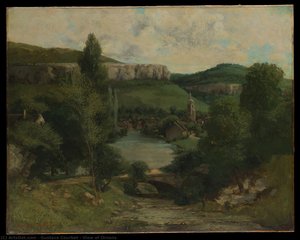
Poachers in the Snow
 Oil On Canvas
- WallArt
- Realism
 1867
1867- 19th Century
 65.0 x 81.0 cm
 Musée des Beaux-Arts
 Pročitaj više
Giclee štampa / Umetnički otisak
Giclée štampa ili print na platnu muzejskog kvaliteta uz brzu izradu i raznovrsne opcije završne obrade. ( Naručite ručno oslikano reprodukciju Pređi na prodaju digitalnih slika)




P118B $10

P118H $10

P118W $10

P438Z $10

P508JH $12

P508YH $12

P805H $10

P805Z $10

P919BZ $10

P919G $10

P919XJ $10

P959ZH $10

P968JZ $12

W106C $8

W218G $10

W218JH $8

W218Y $10

W307PJ $10

W316G $10

W316PJ $8

W316Y $10

W398PJ $8

W4111J $10

W500HY $15

W500JH $15

W692G $12

W849H $8

W940BG $15

W953PJ $8




Izaberite jednu od naših unapred definisanih veličina koje odgovaraju originalnim proporcijama umetničkog dela.

Možete uneti sopstvene dimenzije kako biste umetničko delo prilagodili specifičnom okviru ili prostoru. Ako odabrani format ne odgovara proporcijama originalne slike, mi ćemo ili iscrtati deo dela ili proširiti sliku pomoću ogledane ivice ili jednobojnog popunjavanja. Digitalni prikaz će vam biti poslat na odobrenje pre početka proizvodnje.
Imajte na umu da pregled na ekranu ne odražava stvarno iscrtavanje ili proširivanje. Samo će prikaz (mockup) precizno pokazati finalnu kompoziciju.
Iako su prilagođene dimenzije dostupne, preporučujemo da odaberete dimenziju sa unapred definisane liste kako biste očuvali originalne proporcije.
Dostava širom sveta () za 2 nedelje umesto uobičajenih 4/5 nedelja. (27 септембар)

Besplatna ekspresna dostava širom sveta

Visokokvalitetno laneno platno

Sveobuhvatno osiguranje transporta

Garancija povraćaja carine i uvoznih dažbina

Garancija vernosti boja i autentičnosti pri reprodukciji

Politika povraćaja u roku od 100 dana (samo u slučaju nedostataka)

Garancija povrata 100% novca

Popust pri većoj količini
 Opcija sa staklom dostupna je samo za dimenzije manje od 110 cm

Poachers in the Snow
Giclee štampa / Umetnički otisak
Veličina reprodukcije
-


Ukupna cena
$ 80
A Stark Winter Tableau: Gustave Courbet’s “Poachers in the Snow”
Gustave Courbet's "Poachers in the Snow," painted in 1867, isn’t merely a depiction of a winter scene; it’s a profound statement about humanity’s relationship with nature and the realities of rural life. This oil-on-canvas masterpiece, now housed within the Musée des Beaux-Arts et d’archéologie de Besançon, France, stands as a cornerstone of the Realist movement, demanding viewers confront the often uncomfortable truths of everyday existence without romantic glossing. Measuring 65 x 81 cm, the painting immediately draws the eye with its muted palette – predominantly whites and browns – mirroring the harshness and unforgiving beauty of a snow-laden landscape. Yet, within this seemingly simple composition lies a complex narrative woven through careful observation and deliberate artistic choices. The scene unfolds with two figures, clad in heavy coats and hats, trudging purposefully through the deep snow. Their postures suggest both weariness and determination, hinting at the difficult labor involved in their pursuit. The man on the left, leading a dog, embodies a cautious approach, while his companion, wielding a stick, exudes a more assertive energy – a clear indication of the illicit activity taking place. Courbet masterfully utilizes light and shadow to create a sense of depth and atmosphere, emphasizing the cold, biting wind that whips across the snow-covered ground. The dogs themselves are integral to the composition, not merely accessories but active participants in this stark drama, their presence adding a layer of companionship amidst the isolation of the scene. The background landscape—a blurred expanse of trees and distant hills—further reinforces the sense of vastness and solitude, underscoring the vulnerability of these figures against the raw power of nature. Courbet’s commitment to Realism is evident in every brushstroke. He eschewed idealized forms and vibrant colors, opting instead for a direct, unvarnished portrayal of reality. The loose application of paint, characteristic of his style, lends a sense of immediacy and spontaneity to the scene, as if captured in a fleeting moment. This deliberate rejection of academic conventions was revolutionary at the time, challenging the prevailing artistic norms that prioritized beauty and grandeur over truth and authenticity. The painting’s subject matter—poaching—was itself controversial, reflecting the social tensions and economic hardships prevalent in rural France during the 19th century. Courbet's choice to depict this illicit activity head-on was a bold statement about his commitment to portraying the lives of ordinary people, regardless of their moral standing. Beyond its immediate subject matter, “Poachers in the Snow” carries significant symbolic weight. The winter landscape can be interpreted as a metaphor for the harsh realities of life—the struggle for survival, the isolation of rural existence, and the conflict between humanity and nature. The figures themselves represent the complexities of human behavior – ambition, desperation, and perhaps even a degree of moral ambiguity. Courbet doesn’t offer judgment; he simply presents the scene as it is, inviting viewers to contemplate its implications. The painting's enduring power lies in its ability to evoke a sense of both melancholy and resilience, reminding us of our shared humanity and our connection to the natural world. It’s a testament to Courbet’s genius that this seemingly straightforward depiction continues to resonate with audiences today, prompting reflection on timeless themes of survival, morality, and the human condition.The Artist's Context: Gustave Courbet and the Rise of Realism
To fully appreciate “Poachers in the Snow,” it’s essential to understand the broader context within which Gustave Courbet was working – the rise of Realism in 19th-century France. Born in Ornans, France, in 1819, Courbet initially trained at the École des Beaux-Arts in Paris, but quickly grew disillusioned with the rigid conventions and idealized subjects favored by the Academy. He rejected the romanticism and historical narratives that dominated the Salon system, instead seeking to depict the world as he saw it – truthfully and without embellishment. Courbet’s artistic development was profoundly influenced by artists like Eugène Delacroix and Théodore Géricault, but he ultimately distanced himself from their Romantic ideals, prioritizing direct observation and a commitment to portraying everyday life. His early works explored landscapes and portraits, gradually shifting towards scenes of rural labor and the lives of working-class individuals. This shift was driven by a desire to break free from the constraints of academic art and to create paintings that reflected the realities of contemporary society. Courbet’s decision to paint subjects considered “unworthy” of artistic attention—such as peasants, laborers, and even criminals—was a deliberate act of rebellion against the established order. The painting "Poachers in the Snow" exemplifies this commitment to Realism. It's not a heroic depiction of hunters; it’s a stark portrayal of individuals engaged in an illegal activity, stripped of any romantic or idealized qualities. Courbet’s focus on detail—the texture of the snow, the weariness of the figures’ faces, the ruggedness of the landscape—creates a powerful sense of immediacy and authenticity. His rejection of traditional artistic techniques—such as smooth brushstrokes and carefully composed backgrounds—further emphasizes his commitment to portraying reality in its rawest form. Courbet's work was often met with criticism and controversy during his lifetime. Many critics dismissed his paintings as crude, vulgar, or lacking in aesthetic merit. However, he remained steadfast in his artistic vision, continuing to produce works that challenged the conventions of the art world and paved the way for future generations of artists. His influence on modern art is undeniable, establishing Realism as a dominant movement and inspiring countless artists to embrace direct observation and social commentary in their work.Technical Details & Artistic Techniques
The execution of “Poachers in the Snow” reveals Courbet’s mastery of oil painting techniques and his meticulous attention to detail. The canvas measures 65 x 81 cm, providing ample space for the artist to capture the vastness of the winter landscape and the physicality of the figures. Courbet employed a technique known as *alla prima*, meaning “at first sight,” which involved completing the painting in a single session without extensive underpainting or sketching. This approach resulted in a sense of spontaneity and immediacy, capturing the fleeting effects of light and shadow with remarkable precision. The color palette is deliberately muted—dominated by shades of white, brown, and gray—to evoke the cold, bleak atmosphere of the winter scene. Courbet skillfully used *chiaroscuro*, the contrast between light and dark, to create a sense of depth and volume, emphasizing the figures’ forms and the texture of the snow-covered ground. The brushstrokes are loose and expressive, contributing to the painting's overall sense of realism and immediacy. Courbet’s technique is characterized by a directness and honesty that reflects his commitment to portraying reality without idealization or embellishment. The composition itself is carefully constructed, with the two figures positioned diagonally across the canvas to create a dynamic and engaging visual arrangement. The use of perspective—particularly in the depiction of the distant hills—adds depth and realism to the scene. Courbet’s attention to detail extends beyond the main subjects to include subtle elements such as the texture of the snow, the folds of the figures’ clothing, and the reflections of light on the ground. These small details contribute significantly to the painting's overall sense of authenticity and immediacy. The artist’s ability to capture these nuances demonstrates his exceptional skill and his unwavering commitment to portraying reality with remarkable accuracy.A Legacy of Realism: Courbet and Beyond
“Poachers in the Snow” stands as a pivotal work in Gustave Courbet’s oeuvre and a defining example of the Realist movement. Its impact extended far beyond its immediate context, influencing generations of artists who followed. Courbet's rejection of academic conventions and his commitment to portraying everyday life without romanticization paved the way for future movements such as Impressionism and Social Realism. Artists like Jean-François Millet, Édouard Manet, and Honoré Daumier were deeply influenced by Courbet’s work, adopting his techniques and exploring similar themes of rural labor and social injustice. Manet's "Le Déjeuner sur l'herbe" (1863), for example, challenged traditional notions of beauty and morality, mirroring Courbet’s own rebellious spirit. Furthermore, Courbet’s legacy extends beyond the realm of painting. His commitment to depicting reality in its rawest form influenced other art forms, including photography and sculpture. The rise of Realism as a dominant movement in 19th-century France marked a significant shift in the history of art, challenging established conventions and opening up new possibilities for artistic expression. For those interested in exploring more of Courbet’s works or delving deeper into the world of Realist art, we recommend visiting the Musée des Beaux-Arts et d’archéologie de Besançon, France, where “Poachers in the Snow” is proudly displayed. Additionally, examining the work of Eugène-Louis Decisy, another prominent figure in the Realist movement, offers a valuable perspective on the diverse range of artistic approaches within this influential movement.Biografija umetnika
Život i Revolucija Gustava Kurbea: Pionir Realizma
Gustav Kurbe, rođen 1819. godine u mirnom selu Ornans u Francuskoj, bio je više od slikara; bio je buntovnik koji je svojim umetničkim delima potresao osnove tadašnje umetnosti. Njegova priča nije samo o bojama i platnu, već o dubokom društvenom komentarisanju, političkoj svesti i neumornoj posvećenosti prikazivanju sveta onakvog kakav jeste – bez idealizacije, surovo iskren i produbljeno realan. Odgajan u relativno prosperitetnoj građanskoj porodici, Kurbe je dobio podršku majke da se bavi umetnošću, što je podstaknulo njegovu revolucionarnu viziju. Iako je pohađao École des Beaux-Arts u Parizu 1839. godine, ubrzo je odbacio akademske konvencije i romantički idealizam koji su vladali tadašnjom umetničkom scenom. Umesto toga, izabrao je put posmatranja, prioritizujući istinu nad tradicijom, što ga je proglasilo začetnikom pokreta realizma.Rođenje Realizma: Izazov Umetničkim Konvencijama
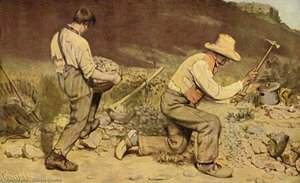
Kurbeova umetnička evolucija bila je obeležena namernim odbacivanjem tadašnjih estetskih standarda. Njegovo interesovanje nije ležalo u mitološkim pričama ili herojskim alegorijama, već u svakodnevnom životu običnih ljudi, posebno onih koji su se bavili rukom radom i ruralnim životom. Ova posvećenost prikazivanju sveta bez ukrasa – što će kasnije biti poznato kao realizam – izazvala je početno preziranje i osudu kritičara naviknutih na poliranija i idealizovana predstavljanja. Njegova rana dela istraživala su pejzaže i portrete, ali ubrzo su se preusmerila ka scenama života radničke klase, prikazanim u monumentalnim formatima rezervisanim za istorijske ili verske slike. Ovaj nameran potez nije bio samo stilski izbor; to je bila izjava o urođenom dostojanstvu i važnosti ovih često zanemarenih subjekata. Kamenolome (1849-50), iako tragično uništen tokom Drugog svetskog rata, oličio je ovaj pristup – surovo prikaz dvoje radnika koji se umaraju od teškog rada, sa licima sakrivenim iscrpljenošću i teškoćama. Ova slika, zajedno sa drugim delima kao što je Grobnica u Ornansu (1850), izazvala je nove definicije onoga što čini “dostojnu” temu za visoku umetnost.Glavna dela i Umetnička Filozofija
Grobnica u Ornansu, kolosalno platno koje prikazuje seosko sahranjivanje, izazvala je talas šoka kada je izložena 1850-51. Njena ogromna veličina – obično rezervisana za velike istorijske slike – u kombinaciji sa njenim neumornim realizmom i nedostatkom emocionalne idealizacije, šokirala je publiku. Kurbe nije prikazao žalitelje kao plemenite ili preplakane figure; predstavio ih je kao obične ljude, čija su lica ispisana mešavinom tuge, dosade i rezignacije. Ova iskrenost bila je revolucionarna. Njegova umetnička filozofija protezala se izvan teme i na tehniku. On je preferirao direktan stil impasta – nanošenje boje u debelom sloju na platno – koji je naglasio materijalnost samog medijuma. Atelje slikara (1855), alegoričko delo koje odražava njegova umetnička ubeđenja i angažman sa savremenim društvenim pitanjima, dodatno je učvrstila njegovu reputaciju provokativnog i nezavisnog umetnika. Njegovo učešće na Salon des Refusés 1863. – izložbi dela odbijenih od zvaničnog Salona – cementiralo je njegov status pobunjenika i zagovornika umetničke slobode. Čak su i pejzaži kao što je Prizor u šumi Fontainebleau (1855) bili obojeni smislom realizma, hvatajući prirodnu lepotu šume bez romantične idealizacije.Nasleđe i Istorijski značaj
Uticaj Gustava Kurbea na kasnija umetnička pokretanja je neosporan. Iako se inspirisao ranijim majstorima kao što je Caravaggio zbog njihovog dramatičnog realizma i upotrebe svetla i senke, njegov uticaj se protezao daleko izvan pukog oponašanja. On je duboko uticao na impresioniste i postimpresioniste oslobodivši ih od ograničenja tradicionalnog predstavljanja, podstičući ih da istražuju nove načine viđenja i prikazivanja sveta. Njegov naglasak na društvenoj kritici otvorio je put kasnijim umetnicima koji su koristili svoju umetnost kao platformu za politički aktivizam. Kurbe nije bio samo slikar; bio je vokalni zagovornik umetničke slobode i političkih promena, aktivno učestvujući u burnim događajima svog vremena, uključujući Pariskom komunu 1871. – što je dovelo do perioda egzila u Švajcarskoj. Umro je 1877. godine, ostavivši iza sebe delo koje i danas inspiriše i izaziva publiku.- Pionir realizma
- Izazvao akademske konvencije
- Uticao na impresionizam i postimpresionizam
- Zagovornik umetničke slobode

Gustav Кјорбе
1819 - 1877 , Француска
Brzi pregled
- Datum Rođenja: 10. jun 1819.
- Datum Smrti: 31. decembar 1877.
- Mesto Rođenja: Ornan, Francuska
- Nacionalnost: Francuski
- Pokreti Pod Uticajem:
- Impresionizam
- Postimpresionizam
- Puno Ime: Žan Désire Gustave Kurbe
- Umetnički Pokret: Realizam
- Uticajni Umetnici:
- Delakroaz
- Žeriko
- Kravagio
- Značajna Dela:
- Sahrana u Ornanzu
- Slomljenih kamena
- Atelje slikara
Srodni članci

Evocations of Place: A Historical Journey Through Landscape Art
Explore the rich history of landscape art with OriginalUniqueArt. Discover renowned artists, movements like Impressionism & Romanticism, and expert guidance for collecting timeless pieces. Find your perfect serene escape today!

Glavna dela koja su definisala Romantični pejzaž: 10 remek-dela za vaš dom
Otkrijte 10 remek-dela romantičnog pejzažnog slikarstva! Uronite u svet Claude Lorraina, Caspara David Friedricha i Turnera. Ispričane priče umetnosti, inspiracija za dekoraciju doma. Kvalitetne reprodukcije na OriginalUniqueArt.com – istražite celu kolekciju online!

Romantic Realism's Finest: 10 Masterpieces for Your Home | OriginalUniqueArt
Explore 10 defining masterpieces of Romantic Realism! Discover Courbet, Millet & Daumier's powerful paintings—capturing emotion and social realities. Find museum-quality reproductions for your home at OriginalUniqueArt.com.
Realizam u slikama: Top 10 remek dela za vaš dom i dušu
Otkrijte 10 remek dela koja su definisala realizam! Gustave Courbet, Millet i Daumier – istaknuti umetnici i njihove slike. Inspiracija za vaš dom i dušu. Kupite reprodukcije vrhunskog kvaliteta na OriginalUniqueArt.com!
Snowy Masterpieces: 10 Famous Paintings & Art for a Winter Aesthetic
Explore 10 famous snow paintings by Monet, Degas & more! Discover the stories behind these serene winter landscapes and iconic artworks. Find museum-quality art reproductions for your home at OriginalUniqueArt.com.