Pređi na štampu
 Pročitaj više







































 Za umetnička dela ili reprodukcije čija je bilo koja strana veća od 105 cm (približno 41 inč), okvir će biti isporučen u obliku rastavljenog seta za sklapanje. Ovaj metod osigurava bezbednu dostavu i sprečava oštećenja tokom transporta.


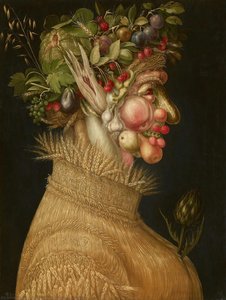
A Portrait of the Seasons: Unveiling Arcimboldo's 'Autumn'
Giuseppe Arcimboldo’s “Autumn,” painted in 1573, isn’t merely a still life; it’s an audacious declaration of human ingenuity and a profound meditation on the cyclical nature of time. This remarkable work, now residing within the hallowed halls of the Louvre Museum in Paris, transcends the boundaries of traditional portraiture, transforming a single man into a vibrant tapestry of autumnal bounty. Arcimboldo, a master of the Mannerist style, didn’t simply arrange fruits and vegetables; he meticulously constructed a face – a visage brimming with life, wisdom, and an almost unsettling beauty – entirely from these natural elements.

The Construction of a Face: Technique and Detail
The painting’s power lies not just in its subject matter, but in the extraordinary skill with which it was executed. Arcimboldo employed oil on canvas, a medium that allowed for rich textures and subtle gradations of color – crucial to achieving the illusion of depth and volume within the constructed face. Notice how he's used varying shades of green to mimic skin tones, layering apples and pears to create the contours of a nose and mouth, and utilizing grapes and leaves to form a crown-like arrangement around the head. The meticulous attention to detail is breathtaking; each fruit and vegetable is rendered with remarkable precision, contributing to the overall sense of realism despite its fantastical nature. The use of contrasting colors – the vibrant reds of apples against the deep greens of foliage – further enhances the visual impact.
Symbolism in a Seasonal Portrait
“Autumn” isn’t simply a decorative exercise; it's deeply rooted in Renaissance symbolism and allegorical thought. The choice of autumnal fruits and vegetables is laden with meaning. Apples, often associated with knowledge and wisdom, frame the face, suggesting an intellectual depth. Grapes represent abundance and prosperity, while onions – traditionally linked to tears and sorrow – subtly hint at mortality. The inclusion of birds scattered throughout the composition adds another layer of symbolism, representing freedom, joy, and perhaps even a fleeting connection to the natural world. Furthermore, the painting’s creation coincided with the rise of interest in the New World and its exotic goods, making the incorporation of items like gourds – originating from North America – a deliberate statement about the Habsburg Empire's global reach and influence.
A Legacy of Illusion: Arcimboldo and the Mannerist Style
Giuseppe Arcimboldo’s “Autumn” stands as a pivotal work in the history of art, solidifying his reputation as one of the most innovative and imaginative artists of the Renaissance. His unique approach to portraiture—transforming human faces into elaborate constructions of objects—anticipated later developments in Surrealism and Pop Art. He was commissioned by Holy Roman Emperors Rudolf II and Maximilian II, who appreciated his ability to create visually arresting and intellectually stimulating works that reflected their own fascination with science, nature, and the exotic. Reproductions of “Autumn” offer a captivating glimpse into Arcimboldo’s world—a world where art transcends the boundaries of representation and becomes a powerful vehicle for communication and contemplation. OriginalUniqueArt offers exquisite hand-painted reproductions that faithfully capture the artistry and symbolism of this extraordinary masterpiece, allowing you to bring its timeless beauty into your home or office.
Pitanja i odgovori
Mogu li da vidim „Jesen”, autor Ђузепе Арчимболдо na svom zidu pre kupovine?
„Jesen“ ima pregled proširene stvarnosti: na stranici AR prikaz možete videti umetničko delo u sopstvenom prostoru pomoću kompatibilnog uređaja.
Koji prostor se najbolje uklapa sa bojama dela „Jesen”, autor Ђузепе Арчимболдо?
Sa svojom paletom u nijansama Zemljasti tonovi, delo „Jesen”, autor Ђузепе Арчимболдо se preporučuje za Dnevna soba. Boje su jedan od razloga za ovakvu sugestiju.
Kolika je bojno ujednačena kompozicija dela „Jesen”, autor Ђузепе Арчимболдо?
Boje dela „Jesen”, autor Ђузепе Арчимболдо odražavaju Nekompatibilna paleta boja harmoniju. Harmonija opisuje međusobni odnos boja.
 Pregledaj u prostoru
 Pošalji
 Podeli
 Detalji o delu
 Vodič
Vodič

 Preuzmi
 Slični predmeti
 Rendgenski snimak
 Automatska prezentacija
 Pitanja i odgovori
 Statistika