Cubism
Heracles (Жорж Брак)
Жорж Брак (1882–1963) je napravio Heracles. Pripada pokretu Cubism. Izrađeno je u Lithograph.
- Lithograph

 Pregledaj u prostoru

 Ručno oslikano uljanim bojama
 Pošalji
 Podeli
 Informativni list


 Preuzmi
 Slični predmeti
 Rendgenski snimak
 Automatska prezentacija
 Pitanja i odgovori

 Statistika
Heracles, ukratko
Šta prikazuje Heracles?
The Deconstruction of Heroism
In the dawn of the twentieth century, Georges Braque embarked on a visual revolution that would forever alter the trajectory of modern art. His work, Heracles, stands as a profound testament to this era of radical reimagining. Executed around 1910, this monochrome lithograph does not merely recount the legendary exploits of the Greek hero; instead, it embodies the very essence of Cubism’s departure from traditional representation. Rather than presenting a clear, muscular protagonist, Braque offers a fragmented myth, where the boundaries between the man and his struggle are blurred through geometric abstraction. This piece captures the collaborative spirit of the era, echoing the groundbreaking explorations shared with Pablo Picasso, as they sought to dismantle the illusions of perspective in favor of a more complex, multi-dimensional truth.
The Architecture of Abstraction
The power of Heracles lies in its unsettling stillness and its intricate, deconstructed form. The central figure is presented as a fractured composite of angular shapes—dark rectangles and sharp triangles that dominate the composition. These geometric elements are not merely decorative; they represent the formidable beast, perhaps the Nemean Lion, that Heracles must confront. By abandoning linear perspective, Braque layers multiple viewpoints simultaneously, creating a sense of dynamic tension that contradicts the static nature of the print. The artist’s meticulous technique is evident in the use of hatching and fine line work, which sculpt shadows and imbue the grayscale surface with a palpable energy. The palette, ranging from deep, somber charcoal to delicate, pale ivory, avoids the distraction of color to focus the viewer's attention entirely on the interplay of light, shadow, and structural form.
A Timeless Presence for Modern Spaces
For the discerning collector or the visionary interior designer, Heracles offers an unparalleled opportunity to introduce intellectual depth and sophisticated minimalism into a curated space. The artwork’s stark, monochromatic aesthetic makes it a versatile masterpiece, capable of anchoring a contemporary room with its quiet authority. Its abstract nature allows it to harmonize with modern, minimalist, or industrial decor, providing a focal point that invites contemplation rather than mere observation. To possess a high-quality reproduction of this work is to bring a piece of art history’s most transformative movement into the home—a fragment of a legend that continues to challenge, inspire, and captivate the modern eye.
Slike visoke rezolucije za Heracles
Zaštićeno autorskim pravima: slika je prikazana samo u informativne svrhe.
Ostale veličine, isečci i citiranje →Жорж Брак, Heracles.
Odgovori na pitanja o Heracles
Kojom tehnikom je izrađeno "Heracles"?
"Heracles" je urađeno u tehnici Lithograph.
Šta predstavlja delo "Heracles"?
Da li je delo „Heracles”, autor Жорж Брак u javnom vlasništvu?
Kome se pripisuje delo "Heracles"?
Koji umetnički pravac obuhvata „Heracles”, autor Жорж Брак?
U kojoj fazi stvaralaštva umetnika Жорж Брак se nalazi delo "Heracles"?
Zašto je status autorskih prava za "Heracles" takav kakav jeste?
Status autorskih prava za delo "Heracles" - i dalje je zaštićeno autorskim pravima - proizilazi iz godine smrti umetnika, 1963.
Šta "Heracles" deli sa ostatkom stvaralaštva umetnika Жорж Брак?
Da li je "Heracles" tipično za ono što je Жорж Брак obično stvarao?
"Heracles" prikazuje mythology, lion, combat, geometric, abstraction, grayscale, fragmentedform, dok su dokumentovane teme umetnika Жорж Брак zapravo cubistabstraction, mythologicalnarrative, symbolicconflict, braquelegacy, geometricexperimentation. Poređenje ova dva elementa pokazuje kako se ovo delo povezuje sa uobičajenim motivima ovog umetnika.
O umetniku, Жорж Брак
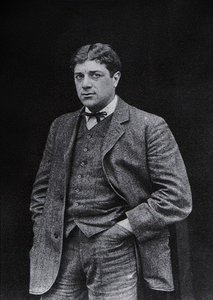
1882–1963, Француска
Жорж Брак
Early Life and Artistic Foundations Georges Braque, geboren in Argenteuil, Frankreich, im Jahr 1882, begann eine Lebensbahn tief verwurzelt in der sich entwickelnden Landschaft der modernen Kunst. Seine Kindheit innerhalb einer Familie von Hausmalern und Dekorateuren vermittelte ihm nicht nur technische Meisterschaft über Materialien, sondern auch eine frühe Wertschätzung für Form und Struktur. Obwohl er zunächst seinem Vater folgte und dessen Beruf ausübte, führten seine natürlichen künstlerischen Neigungen ihn bald zu einer Ausbildung am École des Beaux-Arts in Le Havre hinweg, wodurch sein Weg zum Erreichen eines der einflussreichsten Maler des 20. Jahrhunderts begann.
Takođe i Жорж Брак
 Мандола1910
 Čovek sa Gitarom1914
 Куће у Л'Естаку
 Залив Нормандија1909
Eseji o delu Heracles
 Georges Braque: The Architect of Form and the Soul of Cubist RevolutionExplore the profound legacy of Georges Braque, a master of Cubism. Discover how his technical craftsmanship and collaboration with Picasso …
 The Designer's Guide to Bespoke Art Curation: Elevating Luxury Hospitality with Masterpiece ReproductionsElevate luxury hospitality with our Art Concierge. We provide hotel designers with bespoke, hand-painted masterpiece reproductions, custom …
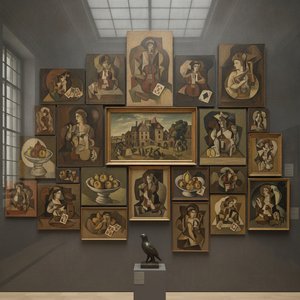 Mastering Cubism: The Top 25 Georges Braque ArtworksJourney through the revolutionary world of Georges Braque. Explore 25 iconic Cubist masterpieces, from geometric abstractions to timeless s…