

 Pregledaj u prostoru
 Pošalji
 Podeli
 Detalji o delu
 Vodič
Vodič

 Preuzmi
 Slični predmeti
 Rendgenski snimak
 Automatska prezentacija
 Statistika
A Symphony, Nineteenth Century


 Pročitaj više
Giclee štampa / Umetnički otisak
Giclée štampa ili print na platnu muzejskog kvaliteta uz brzu izradu i raznovrsne opcije završne obrade. ( Kupite ručno oslikano delo Pređi na digitalnu sliku)




P118B дин10

P118H дин10

P118W дин10

P438Z дин10

P508JH дин12

P508YH дин12

P805H дин10

P805Z дин10

P919BZ дин10

P919G дин10

P919XJ дин10

P959ZH дин10

P968JZ дин12

W106C дин8

W218G дин10

W218JH дин8

W218Y дин10

W307PJ дин10

W316G дин10

W316PJ дин8

W316Y дин10

W398PJ дин8

W4111J дин10

W500HY дин15

W500JH дин15

W692G дин12

W849H дин8

W940BG дин15

W953PJ дин8




Izaberite jednu od naših unapred definisanih veličina koje odgovaraju originalnim proporcijama umetničkog dela.

Unesite željenu širinu i visinu kako bi se štampa uklopila u vaš ram ili zid. Štampu je moguće samo iseći, ali nikada povećati iznad dimenzija originalne slike, stoga format sa drugačijim proporcijama uzrokuje gubitak dela slike. Pre početka štampe, poslaćemo vam digitalni prikaz radi potvrde. Slika prikazana na ovoj stranici ne predstavlja stvarni isrez — to pokazuje samo digitalni prikaz.
Dostava širom sveta () za 2 nedelje umesto uobičajenih 4/5 nedelja. (28 октобар)

Besplatna ekspresna dostava širom sveta

Visokokvalitetno laneno platno

Potpuno osiguranje transporta

Garancija povraćaja carine i uvoznih dažbina

Garancija vernosti boja

Politika povraćaja u roku od 100 dana (samo u slučaju nedostataka)

Garancija povrata 100% novca

Popust na više proizvoda
 Opcija sa staklom dostupna je samo za dimenzije manje od 110 cm

A Symphony, Nineteenth Century
Giclee štampa / Umetnički otisak
Dimenzije reprodukcije
-


Ukupna cena
дин 8287
A Deep Dive Into Frederick Stuart Church’s “A Symphony”
Frederick Stuart Church's "A Symphony," created in 1884, isn't merely a depiction of a man playing guitar; it’s a meticulously crafted etching on parchment that embodies the spirit of Romanticism while subtly hinting at Symbolist influences. Produced during a period marked by burgeoning interest in natural history and moral allegory—a trend championed by luminaries like Darwin—the artwork reflects a broader cultural preoccupation with interpreting nature's grandeur through philosophical frameworks. Church, having begun his artistic journey as a draftsman for the American Express Company before serving valiantly during the Civil War, honed his skills under Walter Shirlaw at Chicago’s Academy of Design, establishing himself as one of America’s foremost illustrators.The Technique and Material Choices
Church's masterful execution speaks volumes about his dedication to capturing nuanced detail. The etching process itself—utilizing acid to carve lines into a metal plate—allowed for exceptional precision, resulting in an image characterized by delicate tonal gradations and subtle textures. The parchment substrate—chosen for its archival qualities—further underscores Church’s commitment to preserving the artwork's integrity for generations to come. Examining the plate itself reveals intricate linework that meticulously renders the guitar player’s posture and facial expression, demonstrating a profound understanding of anatomy and gesture.Historical Context: Darwinian Influence and Moral Allegory
“A Symphony” sits squarely within the intellectual landscape shaped by Charles Darwin's groundbreaking publication of *On the Origin of Species*. The theory challenged prevailing religious dogma regarding creation, prompting artists to grapple with questions about humanity’s place in the natural world. Church skillfully incorporates this influence through the artwork’s symbolic representation—the guitar player embodies a contemplative figure striving for harmony amidst perceived discordance. The seated companion represents wisdom and understanding, while the standing individual symbolizes active engagement with life's challenges.Symbolism: Guitar Player as Harmony Seekers
The central figure—holding the guitar—is arguably the artwork’s most potent symbol. Music itself has long been associated with spiritual contemplation and emotional catharsis; Church elevates this association by portraying the guitarist as actively pursuing a state of equilibrium. The guitar, representing musical expression, serves as a conduit for conveying inner thoughts and feelings—a theme resonating deeply within the Symbolist movement's exploration of subconscious imagery and psychological states.Emotional Impact: Tranquility Amidst Complexity
Despite the subtle tension conveyed by the positioning of the figures, “A Symphony” ultimately exudes an aura of tranquility. Church’s skillful shading creates a luminous effect that softens the contours of the scene, fostering a sense of serenity and contemplation. The artwork invites viewers to consider the profound beauty inherent in confronting life's complexities with grace and resilience—a timeless message conveyed through masterful artistic technique and imbued with enduring symbolic significance.Recommended Reproduction
A high-quality reproduction of “A Symphony” would beautifully complement any interior space, bringing forth the artwork’s delicate tonal palette and capturing its evocative atmosphere. Consider framing it in a neutral tone to maximize visual impact and preserve the piece's original aesthetic integrity.Pitanja i odgovori
Da li je "A Symphony, Nineteenth Century" tipično za ono što je Frederick Stuart Church obično stvarao?
Učestale teme umetnika Frederick Stuart Church obuhvataju romanticism’s symbolic vision, moral lessons embodied art, civil war era themes, church’s animal allegory role, illustrative style legacy; delo "A Symphony, Nineteenth Century" fokusira se na guitar music, outdoor bench, human connection, moral allegory, animal symbolism, nineteenth century art, frederick church illustration.
Koja su tehnika i dimenzije dela „A Symphony, Nineteenth Century”, autor Frederick Stuart Church?
Originalno delo „A Symphony, Nineteenth Century”, autor Frederick Stuart Church je rad u tehnici Acrylic On Canvas dimenzija 22 x 31 cm. Tehnika i dimenzije se odnose na originalni predmet.
U koji umetnički pravac i u koje doba pripada delo „A Symphony, Nineteenth Century”, autor Frederick Stuart Church?
U delu „A Symphony, Nineteenth Century”, autor Frederick Stuart Church, umetnički pravac Romantic Symbolism susreće eru 19th Century.
Biografija umetnika
The Visionary Soul of an American Master
In the vibrant tapestry of late nineteenth-century American art, few threads are as intricately woven or as whimsically colored as those spun by Frederick Stuart Church. Born in Grand Rapids, Michigan, on December 1, 1842, Church was a man whose life trajectory defied the conventional paths laid out by his prominent lineage. The son of a distinguished lawyer and politician, his early years were marked by a departure from the structured world of commerce. At just thirteen, he abandoned formal schooling to join the American Express Company in Chicago—a move intended by his parents to steer him toward a stable business career. Yet, the call of destiny was far more profound than the lure of ledger books. The onset of the Civil War provided a transformative crucible; serving in the Union Army, Church experienced a depth of human experience that would later infuse his work with a unique sense of empathy and moral weight.
A Symphony of Allegory and Animal Grace
Church’s artistic legacy is most profoundly felt in his mastery of the allegorical depiction. He possessed a rare, almost supernatural ability to imbue the animal kingdom with human emotion and moral complexity. His illustrations, which graced the pages of prestigious publications such as Harper's and Century Magazine, were never merely decorative; they were narratives of the soul. Through his delicate use of line and color, a tiger was rarely just a predator, and a bird was never just a creature of flight. Instead, they became vessels for exploring themes of innocence, power, and the delicate balance of nature. In works like Maiden with Flamingos or his evocative etchings such as A Symphony, one finds a serene yet tension-filled world where every tilt of a head or outstretched paw tells a story of profound significance.
His technique often danced between the realms of Impressionism and fine line illustration, creating a dreamlike atmosphere that captivated the Gilded Age audience. His fascination with certain motifs—such as the majestic tiger or the delicate songbird—allowed him to explore the duality of existence: the predator and the prey, the powerful and the vulnerable. This era of his work reflected the broader cultural shifts of the time, capturing a sense of lightness and whimsy while simultaneously touching upon deeper, often more somber, social allegories. To look upon a Church original is to enter a realm where the boundaries between the natural world and the human psyche dissolve into a beautiful, symbolic haze.
Legacy of an American Illustrator
The historical significance of Frederick Stuart Church lies in his ability to bridge the gap between commercial illustration and fine art. He elevated the medium of the periodical illustration to a level of high symbolism, proving that even within the constraints of mass media, an artist could achieve profound depth. His life, spanning from the mid-nineteenth century through the dawn of the twentieth, mirrored the evolution of the American identity itself—moving from the ruggedness of the Civil War era to the sophisticated, ornamental elegance of the Gilded Age.
Today, his work remains a testament to the power of empathy in art. His ability to find the "human" within the animal and the "divine" within the mundane continues to resonate with collectors and historians alike. As we revisit his catalog, we see more than just beautiful images; we encounter the enduring spirit of an artist who believed that through the lens of nature, we might most clearly see ourselves.
- Key Artistic Milestones:
- Enrolled at the National Academy of Design under Lemuel Wilmarth.
- Became a prominent contributor to Harper's Weekly and Century Magazine.
- Developed a signature style blending Romanticism with animal allegory.
- Championed an independent, American-centric approach to artistic training.

Frederick Stuart Church
1842 - 1924
Osnovne informacije
- Full Name: Frederick Stuart Church
- Nationality: American
- Date Of Birth: 1842
- Date Of Death: 1924
- Place Of Birth: Grand Rapids, Michigan
- Notable Artworks:
- Supremacy
- Dreamers
- Two Birds
- Artistic Movement Or Style: Illustrator; Victorian Animal Art
- Artists Who Influenced This Artist: Walter Shirlaw
- Artists Or Movements Influenced By This Artist: Aesops Fables
Povezani članci

The Intricate World of Etching: A Historical Survey of Technique, Aesthetic Evolution, and Enduring Artistic Impact
Explore the rich history of etching, from its origins to modern practice. Discover techniques, key artists like Rembrandt, and insights for collectors. A comprehensive guide by OriginalUniqueArt.

Životinjski svet u umetnosti: Simbolika, istorijski uticaj i savremene interpretacije
Istražite bogatu simboliku životinja u umetnosti kroz istoriju! Otkrijte primere dela slavnih umetnika i savremene interpretacije. Kvalitetne reprodukcije i konsultacije za vaš dom.

Etching: A Historical Survey of Technique, Aesthetic Qualities & Enduring Artistic Significance
Explore the rich history of etching, from its origins to Rembrandt's masterful innovations. Discover the technique, aesthetic qualities & enduring legacy of this captivating art form. Expert insights for collectors and enthusiasts.

Etching Masters: 10 Legendary Prints That Revolutionized Art | OriginalUniqueArt
Journey through 10 legendary etching masterpieces by Rembrandt, Dürer & Goya. Explore the history of printmaking and discover timeless art for your home. Find museum-quality reproductions at OriginalUniqueArt.com.
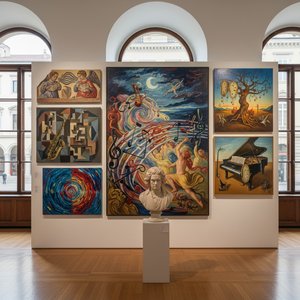
Harmonies on Canvas: Exploring the Visual Representation of Music in Art History
Explore the fascinating history of music's visual representation in art! From ancient symbolism to modern abstraction, discover how artists have captured sound and emotion on canvas. Expert insights & stunning examples.