

 Pregledaj u prostoru
 Podeli
 Podeli
 Detalji
 Vodič
Vodič

 Preuzmi sliku
 Slični predmeti
 Rendgenski snimak
 Automatska prezentacija
 Statistika
Jonquili

 Pročitaj više
Giclee štampa / Umetnički otisak
Giclée štampa ili print na platnu muzejskog kvaliteta uz brzu izradu i raznovrsne opcije završne obrade. ( Naručite ručno oslikano reprodukciju Pređi na prodaju digitalnih slika)




P118B дин10

P118H дин10

P118W дин10

P438Z дин10

P508JH дин12

P508YH дин12

P805H дин10

P805Z дин10

P919BZ дин10

P919G дин10

P919XJ дин10

P959ZH дин10

P968JZ дин12

W106C дин8

W218G дин10

W218JH дин8

W218Y дин10

W307PJ дин10

W316G дин10

W316PJ дин8

W316Y дин10

W398PJ дин8

W4111J дин10

W500HY дин15

W500JH дин15

W692G дин12

W849H дин8

W940BG дин15

W953PJ дин8




Izaberite jednu od naših unapred definisanih veličina koje odgovaraju originalnim proporcijama umetničkog dela.

Unesite širinu i visinu koja vam je potrebna, kako bi se uklopili u vaš ram ili na vaš zid. Štampa se može samo iseći, nikada ne može biti veća od originalne slike, stoga format sa drugačijim proporcijama gubi deo slike. Poslaćemo vam digitalni prikaz radi potvrde pre nego što započnemo štampu. Slika prikazana na ovoj stranici ne pokazuje stvarni rez — to pokazuje samo digitalni prikaz.
Dostava širom sveta () za 2 nedelje umesto uobičajenih 4/5 nedelja. (24 октобар)

Besplatna ekspresna dostava širom sveta

Visokokvalitetno laneno platno

Sveobuhvatno osiguranje transporta

Garancija povraćaja carine i uvoznih dažbina

Garancija vernosti boja i autentičnosti pri reprodukciji

Politika povraćaja u roku od 100 dana (samo u slučaju nedostataka)

Garancija povrata 100% novca

Popust pri većoj količini
 Opcija sa staklom dostupna je samo za dimenzije manje od 110 cm

Jonquili
Giclee štampa / Umetnički otisak
Veličina reprodukcije
-


Ukupna cena
дин 8248
A Portrait of Tranquility: Exploring Frederick Childe Hassam’s Jonquils
Frederick Childe Hassam stands as an undeniable cornerstone of American Impressionism—a movement that sought to capture the fleeting beauty of everyday life through vibrant color and loose brushstrokes. Born in Boston on October 17, 1859, Hassam eschewed formal European training, prioritizing observation and practical experience gained primarily as an illustrator for publications like *Harper’s Weekly* and *Scribner’s Monthly*. This formative period instilled within him a profound appreciation for narrative and storytelling, qualities that would permeate his artistic output throughout his prolific career. His fascination with the American landscape quickly eclipsed other interests, propelling him to spend considerable time documenting scenes of rural America—particularly New England—during the late 1880s and early 1900s. However, Hassam’s artistic vision extended beyond mere topographical representation; he aimed to convey a deeper emotional resonance with his subjects. This ambition is powerfully realized in “Jonquils,” a captivating watercolor painting that exemplifies his signature style.The Essence of Impressionism: Technique and Style
Hassam's approach to watercolor—characterized by rapid layering, broken color palettes, and visible brushstrokes—was revolutionary for its time. Unlike the meticulous realism favored by academic painters, Hassam prioritized capturing the ephemeral qualities of light and atmosphere. He achieved this effect through a technique known as *plein air painting*, working directly outdoors to observe and record the nuances of natural illumination. The resulting canvases possess an immediacy and vibrancy that transcends mere visual depiction—they evoke a palpable sense of place and emotion. Notice how Hassam skillfully blends hues, allowing colors to mingle and shimmer on the surface, creating a luminous quality that mimics the dappled sunlight filtering through blossoms. This deliberate disregard for traditional artistic conventions cemented Hassam’s position as a pioneer of a new aesthetic – one rooted in sensory experience rather than idealized representation.A Window into Victorian Sentimentality
“Jonquils” was created during the Victorian era, a period marked by an intense preoccupation with domesticity and idealized beauty—themes frequently explored in art of the time. The painting depicts a woman seated at a table adorned with vases overflowing with jonquils—a symbol of springtime renewal and optimism. This deliberate choice reflects the Victorian fascination with floral imagery as emblems of purity, femininity, and spiritual contemplation. The woman’s posture exudes serenity, suggesting an inner peace that harmonizes with the tranquil surroundings. The subtle pastel tones contribute to a mood of refined elegance – mirroring the values cherished by upper-class society during this era.Symbolism Beyond Decoration: Layers of Meaning
Beyond its decorative appeal, “Jonquils” carries significant symbolic weight. The abundance of flowers speaks to themes of fertility and rebirth—a poignant reminder of resilience amidst seasonal change. Furthermore, the muted palette—dominated by soft yellows and whites—contributes to the painting’s overall mood of quiet contemplation. Hassam's masterful use of color isn't merely aesthetic; it serves as a conduit for conveying emotional depth and enriching the viewer’s experience. The careful placement of the vases and the woman herself reinforces the painting’s central message: an appreciation for beauty found in simplicity and harmony.Emotional Resonance: Capturing the Soul of Place
Ultimately, “Jonquils” succeeds in capturing not just a visual representation but also the very spirit of its setting—a sunlit interior bathed in the gentle glow of springtime blossoms. Hassam’s ability to translate sensory experience into artistic expression is what distinguishes him as one of America's foremost Impressionist painters. The painting invites contemplation, prompting viewers to consider themes of beauty, tranquility, and the enduring power of nature to inspire solace and rejuvenation. It remains a testament to Hassam’s unwavering commitment to portraying the human condition within the context of its environment—a legacy that continues to resonate with audiences today. This artwork embodies the Impressionist ideal – capturing not just what is seen but also how it feels, transporting the observer to a moment of serene contemplation amidst the blossoming beauty of spring.Pitanja i odgovori
Koje motive se pojavljuju u delu „Jonquili”, Фредерик Хассам?
Teme prisutne u delu „Jonquili”, Фредерик Хассам obuhvataju floral arrangement, woman portrait, table setting, landscape impression, bouquet composition, american art, pastel colors. Zajedno one sažimaju suštinu ovog umetničkog dela.
Da li „Jonquili”, Фредерик Хассам koristi jake kontraste ili nežne harmonije?
Analiza boja dela „Jonquili”, Фредерик Хассам beleži Izjava kontrast i Snažan koloristički jedinstvenost harmoniju.
Zašto je status autorskih prava za "Jonquili" takav kakav jeste?
„Jonquili”, Фредерик Хассам je u u javnom vlasništvu – autorska prava su istekla. Autorska prava traju od smrti umetnika, koja se dogodila 1935.
Biografija umetnika
A Pioneer of American Impressionism: The Life and Art of Frederick Childe Hassam
Frederick Childe Hassam was an American Impressionist painter, noted for his urban and coastal scenes. Along with Mary Cassatt and John Henry Twachtman, he championed artistic independence and helped to establish Impressionism as a legitimate movement within the United States. His unwavering commitment to capturing light and color—traits that would define his entire oeuvre—secured his place among the most influential figures in American art history. Born in Boston on October 17, 1859, Hassam’s early life was marked by an innate fascination with drawing and painting. Unlike many aspiring artists of his time who pursued formal training abroad, Hassam honed his skills primarily through self-study and practical experience, initially honing his craft as an illustrator for publications like *Harper's Weekly* and *Scribner’s Monthly*. This formative period instilled in him a keen observational eye—a characteristic that would become central to his distinctive artistic style. He possessed a remarkable ability to distill complex visual information into simplified forms, prioritizing clarity of composition and tonal harmony above elaborate ornamentation.Early Career and Influences: From Illustration to Landscape Painting
Hassam’s initial professional endeavors focused on illustration work for periodicals, providing him with invaluable experience in capturing fleeting moments and conveying narrative through visual imagery. This early exposure to printmaking techniques—particularly etching—influenced his later artistic explorations and contributed to the development of his signature tonalist style. He drew inspiration from European Impressionists like Claude Monet and Edgar Degas, absorbing their innovative approaches to color and brushwork while simultaneously forging a path toward artistic expression that was uniquely American. Monet’s exploration of atmospheric effects—particularly the interplay of light and shadow—served as a guiding principle for Hassam's landscapes, encouraging him to prioritize tonal gradations over precise delineation. Similarly, Degas’s depictions of dancers—characterized by dynamic poses and subtle gestures—inspired Hassam’s interest in capturing movement and conveying emotion through visual form.The Urban Landscape: Capturing the Spirit of Modern New York
Hassam's artistic vision centered on portraying the vibrant energy of urban life, particularly New York City. He recognized that Impressionism could transcend mere topographical representation, transforming ordinary scenes into evocative expressions of mood and atmosphere. His paintings—such as *The Soaring Staircase* (1895) and *Fifth Avenue at Dusk* (1897)—capture the bustling activity of city streets with remarkable precision and sensitivity. Hassam skillfully employed color palettes that mirrored the changing light conditions, creating luminous compositions that conveyed a palpable sense of immediacy. He wasn’t merely documenting architectural structures; he was conveying the psychological impact of urban environments—the exhilaration of movement, the quiet contemplation of domestic interiors, and the social interactions that shaped daily life.Notable Achievements: Artistic Independence and Recognition
Hassam's unwavering dedication to artistic independence culminated in his involvement with “The Ten American Painters,” a collective founded in 1897 as a defiant assertion against the conservative biases of the Society of American Artists. This group—which included luminaries like John Henry Twachtman, Willard Leroy Metcalf, and Edmund Tarbell—challenged prevailing academic conventions and championed a more progressive aesthetic sensibility. Hassam served as the inaugural president of The Ten, solidifying his leadership role within the burgeoning American art scene. His commitment to portraying American subjects—particularly landscapes and urban vistas—earned him widespread acclaim and cemented his reputation as one of the foremost Impressionist painters of his era.Legacy: An Enduring Influence on Subsequent Artists
Frederick Childe Hassam passed away in East Hampton, New York, on August 27, 1935, leaving behind a prodigious artistic legacy that continues to inspire artists today. His pioneering exploration of tonalism—characterized by subtle gradations of color and meticulous attention to detail—established a distinctive stylistic tradition within American Impressionism. Hassam’s unwavering belief in capturing the essence of his time—the dynamism of urban life and the beauty of the natural world—remains profoundly relevant, reminding us that art can serve as both a reflection of history and a catalyst for creative innovation. His paintings—particularly those depicting American flags—stand as enduring symbols of patriotism and civic pride, securing his place among the most revered figures in American artistic heritage.
Фредерик Хассам
1859 - 1935 , САД
Brzi pregled
- Artistic Movement Or Style: Импресионизам
- Artists Or Movements Influenced By This Artist: ['Импресионизам']
- Artists Who Influenced This Artist: ['Клод Моне']
- Date Of Birth: Октобар 17, 1859
- Date Of Death: Август 27, 1935
- Full Name: Frederick Childe Hassam
- Nationality: Американац
- Notable Artworks:
- Мајда у Мисти
- МТ. Бекон при Неубургу
- Јежукс Бокс
- Глостер
- Соната
- Place Of Birth: Бостон, САД
Srodni članci

Frederick Childe Hassam: American Impressionism's Chronicler of Light & Modern Life
Explore the captivating world of Frederick Childe Hassam, a pioneer of American Impressionism. Discover his iconic paintings capturing light, urban life & coastal beauty. Learn about his legacy and influence on American art history.

Herman Armour Webster: Capturing Atmospheric Light in American Impressionism
Explore the captivating world of Herman Armour Webster, an American Impressionist master. Discover his Parisian influences, unique style, and lasting legacy with OriginalUniqueArt.
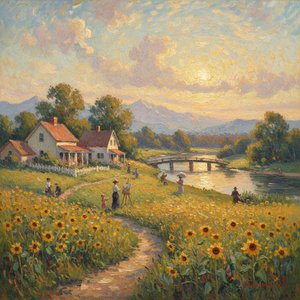
Capturing a Nation's Light: Exploring the American Impressionist Movement
Explore the captivating world of American Impressionism! Discover key artists, techniques & its lasting impact on art history. Find museum-quality reproductions and expert guidance at OriginalUniqueArt.
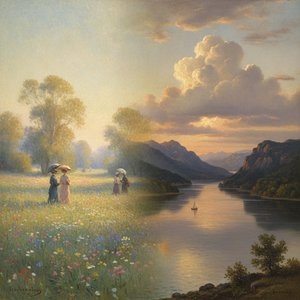
Capturing the Light: A Journey Through the Soul of American Impressionism and the Hudson River School
Explore the luminous beauty of American Impressionism and the Hudson River School. Discover a curated journey through light, landscape, and history, celebrating the enduring legacy of masters through exquisite, hand-painted oil reproductions for the discerning art lover.

Grant Wood & American Regionalism: Identity, Myth & the Rural Landscape
Explore the world of Grant Wood & American Regionalism with OriginalUniqueArt. Discover the symbolism behind 'American Gothic', recurring themes, and the movement's lasting impact on art history. High-quality reproductions available.


