Cubist Style
Mechanical Elements (Fernan Leže)
Fernan Leže (1881–1955) je napravio Mechanical Elements. Pripada pokretu Cubist Style. Izrađeno je u Oil On Canvas. Čuva se u muzeju Metropoliten музеј у Њујорку u mestu Њујорк, Сједињено Америчке Државе.
- Oil On Canvas
- Metropoliten музеј у Њујорку

 Pregledaj u prostoru

 Ručno oslikano uljanim bojama
 Pošalji
 Podeli
 Informativni list


 Preuzmi
 Slični predmeti
 Rendgenski snimak
 Automatska prezentacija
 Pitanja i odgovori

 Statistika
Mechanical Elements, ukratko
- Naslov
- Mechanical Elements
- Umetnik
- Fernan Leže (1881–1955)
- Rođen/a u
- Аржантан, Француска
- Tehnika
- Oil On Canvas
- Gde se može videti
- Metropoliten музеј у Њујорку, Њујорк, Сједињено Америчке Државе
- Pokret
- Cubist Style
- Period
- Modern
- Tema
- mechanical elements, cubism, geometry, industrial design, abstraction, assemblage
Šta prikazuje Mechanical Elements?
A Vision of Industrial Harmony
Fernand Léger’s “Mechanical Elements,” painted in 1924, stands as a striking testament to the burgeoning fascination with technology during the interwar period. More than just a depiction of gears and pipes—though undeniably prominent—the artwork embodies Léger's ambitious goal: to synthesize Cubist fragmentation with the dynamism of the machine age, creating an aesthetic that simultaneously challenged artistic conventions and reflected the transformative realities of modern life.
Born Joseph Fernand Henri Léger in Argentan, Normandy, 1881, Léger embarked on a journey from rural landscapes to the epicenter of Parisian avant-garde. Initially drawn to architecture, his artistic path swiftly pivoted toward painting after arriving in Paris around 1900, fueled by an unwavering conviction that art could engage with the complexities of its time.
Cubism Revisited: Geometric Precision
Léger’s stylistic evolution is inextricably linked to Cubism. Influenced profoundly by Picasso and Braque, he adopted the fractured perspective and simultaneous viewpoints characteristic of this revolutionary movement—a deliberate rejection of traditional representation in favor of exploring spatial relationships through geometric forms. However, Léger didn't simply replicate Cubist principles; he pushed them further, distilling them into a simplified vocabulary of circles, squares, and lines.
“Mechanical Elements” exemplifies this approach brilliantly. The canvas is dominated by interlocking geometric shapes—primarily circles and squares—arranged in a rhythmic pattern that evokes the precision and repetition found in industrial machinery. These forms aren’t merely decorative; they actively contribute to conveying a sense of movement and energy, mirroring the ceaseless pace of urban life.
Symbolism Beyond Mechanism
While the artwork's visual language speaks directly to the influence of technology, Léger imbued “Mechanical Elements” with deeper symbolic resonance. The repetition of geometric shapes isn’t merely a stylistic device; it represents an attempt to capture the impersonal logic and order inherent in industrial processes—a deliberate contrast to the organic forms favored by Impressionism and Post-Impressionism.
Furthermore, Léger's use of color – predominantly shades of gray punctuated by vibrant accents – underscores this thematic preoccupation. Gray symbolizes the materiality of metal and concrete, while bursts of color represent human vitality and creativity—a harmonious blend reflecting Léger’s belief that art could coexist with technological advancement without sacrificing beauty or emotional depth.
A Legacy of Innovation
"Mechanical Elements" cemented Léger's position as a pioneer of Tubism – a variant of Cubism developed by Léger himself—characterized by the use of tubular forms to represent objects and figures. This innovative technique anticipated developments in Pop Art decades later, demonstrating Léger’s enduring influence on subsequent generations of artists.
Today, reproductions of “Mechanical Elements” continue to captivate audiences with their bold aesthetic and intellectual ambition. They serve as a powerful reminder that art can not only reflect the spirit of its time but also actively shape our understanding of it—a timeless masterpiece celebrating both geometric precision and human resilience.
U kom muzeju se nalazi Mechanical Elements?
Metropoliten музеј у Њујорку
Њујорк, Сједињено Америчке Државе
Poreklo i istorija Metropoliten музеја у Њујорку Metropoliten музеј у Њујорку započeo je svoje postojanje vizijom koju je delila grupa poslovnika, finansijera, kao i vodećih umetnika i mislilaca. Nakon što je institucija zvanično osnovana 1870. godine, počela je potraga za trajnim domom koji bi mogao da smesti njene stalno rastuće kolekcije.


Slike visoke rezolucije za Mechanical Elements

Fernan Leže, Mechanical Elements, Metropoliten музеј у Њујорку. Javno dobro.
Boje su usklađene sa originalom od strane digitalnog stručnjaka, a datoteka je pažljivo retuširana, verno prateći poteze umetnika.
Preuzmite datoteku visoke rezolucijeOdgovori na pitanja o Mechanical Elements
U kom muzeju se čuva originalni "Mechanical Elements"?
Originalno delo „Mechanical Elements”, autor Fernan Leže čuva se u muzeju Metropoliten музеј у Њујорку, Њујорк, Сједињено Америчке Државе. Reprodukcija omogućava da se ovo umetničko delo izloži u vašem domu.
U kojoj je tehnici izvedeno delo „Mechanical Elements”, autor Fernan Leže?
Tehnika dela „Mechanical Elements”, autor Fernan Leže je Oil On Canvas. Reprodukcije imaju za cilj da dočaraju izgled ove tehnike.
Koje su teme prikazane u delu „Mechanical Elements”, autor Fernan Leže?
„Mechanical Elements”, autor Fernan Leže prikazuje: mechanical elements, cubism, geometry, industrial design, abstraction, assemblage, modern art.
Da li se prikaz „Mechanical Elements”, autor Fernan Leže može slobodno reprodukovati?
Status autorskih prava za „Mechanical Elements”, autor Fernan Leže: delo je u javnom vlasništvu – autorska prava su istekla. Ovo određuje da li se reprodukcije slike mogu slobodno izrađivati.
Ko je umetnik koji stoji iza dela "Mechanical Elements"?
Delo "Mechanical Elements" je kreirao/la Fernan Leže. Informacije na ovoj stranici opisuju originalno delo umetnika Fernan Leže.
Koji umetnički pravac obuhvata „Mechanical Elements”, autor Fernan Leže?
„Mechanical Elements”, autor Fernan Leže pripada pravcu Cubist Style. Ovaj pravac pruža stilski kontekst dela.
U kojoj fazi stvaralaštva umetnika Fernan Leže se nalazi delo "Mechanical Elements"?
"Mechanical Elements" predstavlja Mechanical Period umetnika Fernan Leže.
Šta objašnjava status autorskih prava za „Mechanical Elements”, autor Fernan Leže?
Status autorskih prava za delo "Mechanical Elements" - u javnom vlasništvu – autorska prava su istekla - proizilazi iz godine smrti umetnika, 1955.
Da li je "Mechanical Elements" ostalo u domovini svog umetnika?
Ne – umetničko delo se nalazi u inostranstvu. Fernan Leže je rođen/a u Француска, dok se originalno delo "Mechanical Elements" čuva u muzeju u Сједињено Америчке Државе.
O umetniku, Fernan Leže

1881–1955, Француска
Fernan Leže
Život Fermana Ležea Priča o umetniku pod imenom Фернан Леже počinje u selu Argentan, smeštenom u regiji Orn u Donjoj Normandiji. Na svet je došao 4. februara 1881. godine, kao jedini sin.
Takođe i Fernan Leže
 Град1919
 Механичар1920
 Три жене1921
 Нудес у Лесу1910

Eseji o delu Mechanical Elements
 Cubism Unveiled: How Picasso and Braque Redefined Modern Art through Geometric RevolutionExplore the revolutionary world of Cubism. Discover how Pablo Picasso and Georges Braque dismantled perspective to redefine modern art thro…
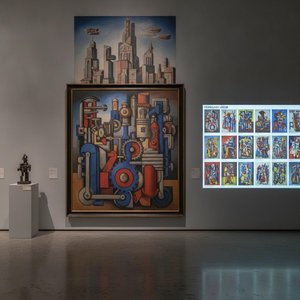 Mastering the Machine Age: The 25 Best Artworks by Fernand LégerImmerse yourself in the vibrant world of Fernand Léger. Explore 25 iconic masterpieces of Cubism and Tubism, from bold geometric forms to m…
 Industrial Revolution on Canvas: 10 Artworks That Define a Modern AestheticExplore 10 iconic artworks capturing the Industrial Revolution’s grit & beauty. From Monet to Manet, discover realism, impressionism & powe…