
 Pregledaj u prostoru
 Pošalji
 Podeli
 Detalji o delu

 Преузми
 Slični predmeti
 Rendgenski snimak
 Slajdovi
Magdalena


 Pročitaj više
Ručno rađena uljana reprodukcija
Ručno oslikano uljanim bojama na platnu u dimenzijama i okviru po vašem izboru, izrađeno po porudžbini od strane naših umetnika. ( Kupi print Kupi digitalnu sliku)




































Izaberite jednu od naših unapred definisanih veličina koje odgovaraju originalnim proporcijama umetničkog dela.

Можете унети сопствене димензије како бисте прилагодили дело одређеном оквиру или простору. Ако одабрана величина не одговара пропорцијама оригинала, слика ће бити исечена или проширена додатним елементима који се ручно насликавају. Дигитални prikaz ће вам бити послат на одобрење пре почетка производње.
Имајте на уму да преглед на екрану не одражава стварно исецање или проширење. Само приказ (mockup) ће тачно приказати коначну композицију.
Иако су доступне прилагођене величине, препоручујемо да одаберете димензију из дефинисане листе како бисте сачували оригиналне пропорције.
Nakon narudžbine, tim OriginalUniqueArt.com će klijentu putem e-pošte poslati uputstva i dostaviti prikaz predloženog rešenja
Isporuka širom sveta () za 3/4 nedelje umesto uobičajenih 5 nedelja. (16 август). Bez kompromisa po pitanju kvaliteta.

Besplatna ekspresna dostava širom sveta

Visokokvalitetno laneno platno

Kompletno osiguranje transporta

Garancija povraćaja carine i uvoznih dažbina

Garancija vernosti boja

Politika povrata u roku od 60 dana (samo u slučaju nedostataka)

Garancija povrata novca od 100%

Popust pri grupnoj kupovini
 Opcija sa staklom dostupna je samo za dimenzije manje od 110 cm

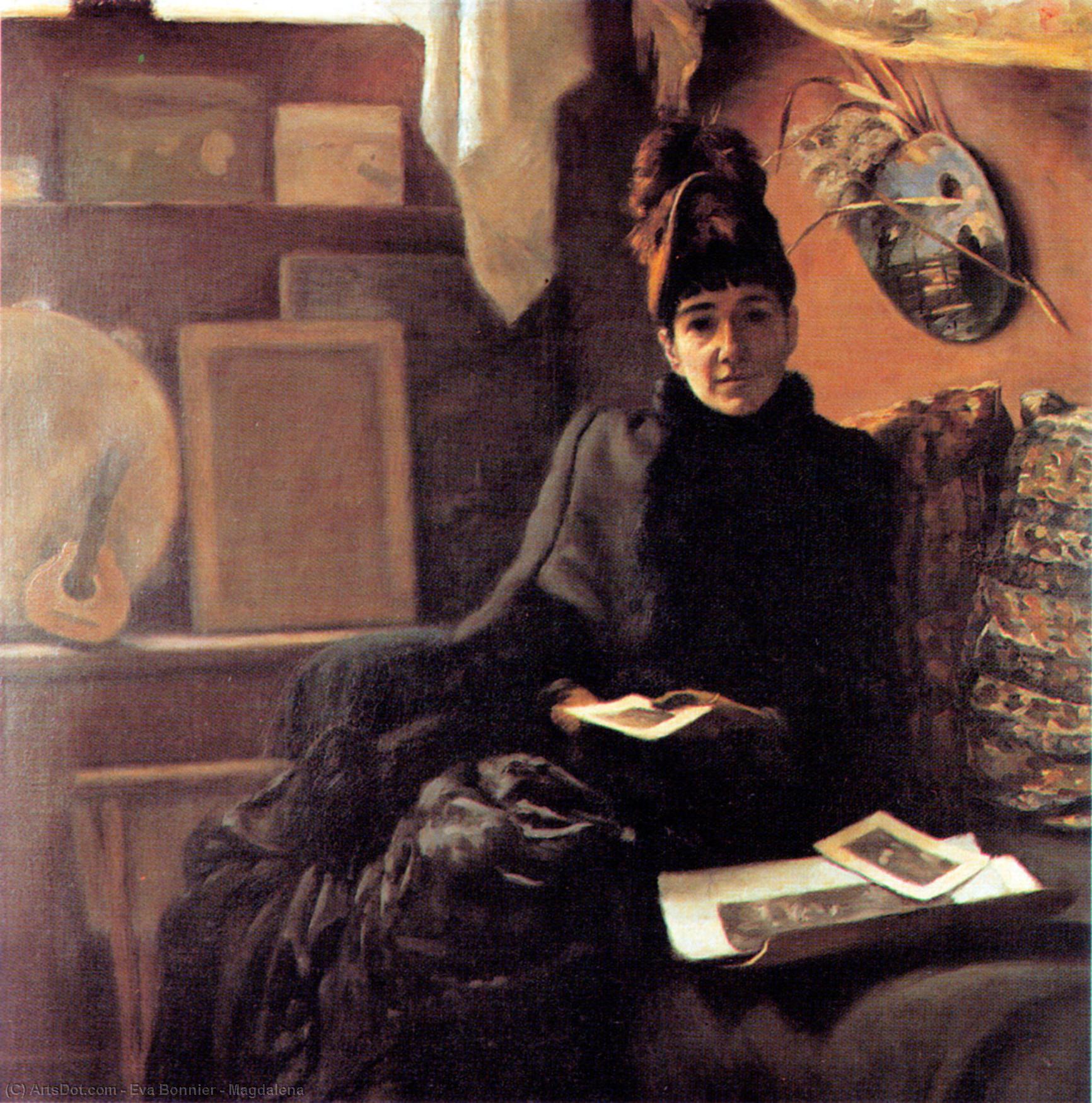
Magdalena
Tehnika reprodukcije
Dimenzije reprodukcije
-


Konačna cena
$ 300
Opis umetničkog dela
The Artistic Style and Composition
The composition of the painting is characterized by its use of bold colors and intricate details. The woman's black coat and hat are set against a backdrop of scattered books and a guitar, creating a sense of depth and dimensionality. The clock hanging on the wall above the woman's chair adds a sense of timelessness to the scene. This style is reminiscent of other famous artists, such as Vincent Van Gogh, who also explored the use of bold colors and textures in their work, like in his painting Portrait du docteur Paul Gachet, available on OriginalUniqueArt.com. Key Features of the Painting Some of the key features of the painting include:- The use of bold colors and intricate details to create a sense of depth and dimensionality
- The woman's lost expression, which adds a sense of mystery to the scene
- The inclusion of everyday objects, such as books and a guitar, which creates a sense of familiarity and intimacy
The painting Magdalena by Eva Bonnier is a captivating work of art that showcases the artist's unique style and technique. With its bold colors, intricate details, and sense of mystery, this painting is sure to leave a lasting impression on all who view it. For more information about this painting and other famous artworks, visit OriginalUniqueArt.com.
Biografija umetnika
A Life Dedicated to Art and Civic Beauty: Eva Bonnier
Eva Fredrika Bonnier, born in Stockholm on November 17th, 1857, was a figure deeply embedded within the cultural fabric of late 19th-century Sweden. Her life unfolded as a compelling narrative—a journey from aspiring painter to dedicated philanthropist, all while navigating the societal expectations and personal struggles of her time. Born into the prominent Bonnier publishing family, she possessed both the privilege that allowed for artistic pursuit and an inherent sensitivity that fueled her creative spirit. Her father, Albert Bonnier, was a leading entrepreneur in the Swedish book trade, providing a stable foundation upon which Eva could explore her passion. This background wasn’t merely financial; it instilled within her a sense of responsibility towards society, a value that would later define her legacy beyond the canvas.Early Training and Parisian Influences
Bonnier's formal artistic education began in 1878 at the women’s section of the Royal Swedish Academy of Arts in Stockholm, under the tutelage of August Malmström. However, it was her extended sojourn to Paris between 1883 and 1889 that truly shaped her aesthetic sensibilities. Paris, during this period, was a crucible of artistic innovation—Impressionism had taken hold, and artists were boldly experimenting with light, color, and subject matter. Bonnier immersed herself in this vibrant atmosphere alongside her close friend and fellow artist, Hanna Hirsch. The Parisian experience wasn’t simply about acquiring technique; it was about embracing a new way of seeing the world. Her painting *Music* (1889), which received an honorable mention at the prestigious Paris Salon, stands as a testament to this period—a work that reflects both her technical development and her growing confidence as an artist. The recognition in Paris marked a significant milestone, validating her artistic endeavors on an international stage.Portraits of Society: Capturing Character and Intimacy
Upon returning to Sweden in 1889, Bonnier established herself primarily as a portraitist. Her subjects were drawn from the upper echelons of Swedish society—family members like her sister-in-law Lisen Bonnier, industrialist Hjalmar Lundbohm, politician Moritz Rubenson, educator Carl Meijerberg, and poet Oscar Levertin. However, these weren’t merely formal depictions; Bonnier possessed a remarkable ability to capture the inner lives of her sitters. Her portraits are characterized by a subtle psychological depth, revealing not just physical likeness but also character and emotion. The brushwork is often loose and expressive, hinting at an Impressionistic influence, yet grounded in a realism that conveys a sense of intimacy and authenticity. *Convalescent* (1890), a portrait of Lisen Bonnier recovering from illness, exemplifies this approach—a tender depiction imbued with warmth and compassion. She exhibited her work at the 1893 World's Columbian Exposition in Chicago, further broadening her reach and recognition.A Shift Towards Philanthropy: Beautifying Stockholm
Around the turn of the century, Bonnier’s artistic output began to diminish. This wasn’t a sudden abandonment of art but rather a gradual shift towards philanthropic endeavors. Inheriting substantial wealth allowed her to pursue a new passion—the beautification of Stockholm. In 1900, she established a foundation dedicated to enriching the city's public spaces with art and culture. This initiative financed paintings and sculptures for institutions like the Royal Library, Stockholm University, and numerous schools. Her vision wasn’t simply about adding aesthetic embellishments; it was about making art accessible to all citizens, fostering a more vibrant and culturally enriched environment. The foundation she created continues to operate today, a lasting testament to her commitment to civic beauty.Legacy and Historical Significance
Eva Bonnier's life ended tragically in 1909 when she took her own life in Copenhagen at the age of 51, succumbing to long-standing struggles with depression. Despite this sorrowful end, her legacy remains profound. She was a talented artist who captured the essence of Swedish society during a period of significant change. More importantly, she was a visionary philanthropist who understood the transformative power of art and its ability to uplift communities. Her paintings, now held in prestigious collections like the Nationalmuseum in Stockholm, offer a glimpse into her artistic skill and sensitivity. However, it is perhaps her foundation—a living embodiment of her commitment to civic beauty—that stands as her most enduring achievement, continuing to shape the cultural landscape of Stockholm for generations to come. She was also an active member of Nya Idun, a women’s association advocating for social reform, further demonstrating her dedication to progressive ideals and societal betterment.
eva bonnier
1857 - 1909
Osnovne informacije
- Artistic Movement Or Style: Portraiture Art
- Artists Or Movements Influenced By This Artist: ['Romanticism']
- Artists Who Influenced This Artist: ['August Malmström']
- Date Of Birth: 1857
- Date Of Death: 1909
- Full Name: Eva Fredrika Bonnier
- Nationality: Swedish
- Notable Artworks:
- Music
- Magdalena
- Reflection in blue
- Place Of Birth: Stockholm, Sweden
Povezani članci
Romantic Realism's Finest: 10 Masterpieces for Your Home | OriginalUniqueArt
Explore 10 defining masterpieces of Romantic Realism! Discover Courbet, Millet & Daumier's powerful paintings—capturing emotion and social realities. Find museum-quality reproductions for your home at OriginalUniqueArt.com.

Oil on Canvas: A Historical & Technical Exploration of a Timeless Artistic Medium
Explore the rich history & enduring techniques of oil painting on canvas. Discover the science behind its longevity, conservation practices, and contemporary relevance. Expert insights for art enthusiasts.

The Enduring Legacy of Oil on Canvas: Technique, History & Aesthetic Impact
Explore the rich history & techniques of oil painting – from Renaissance masters to Impressionism. Discover pigments, layering methods, and why this timeless medium endures. Expert insights for artists & art enthusiasts.
Realism in Art: A Professional Guide to Authentic Detail and Lifelike Masterpieces for Large-Scale Interior Projects
Master the use of Realism in professional interiors. This expert guide explores 19th-century masterpieces, offering procurement managers and designers technical insights into selecting authentic, hand-painted oil reproductions for high-end hotel and corporate projects.

The Enduring Power of Painting: A Historical & Contemporary Exploration of Form and Emotion
Explore the rich history & enduring techniques of oil painting with OriginalUniqueArt. Discover masterpieces, learn about art collecting, and find authentic handmade reproductions crafted by skilled artists.

