
 Pregledaj u prostoru
 Pošalji
 Podeli
 Detalji o delu

 Преузми
 Slični predmeti
 Rendgenski snimak
 Slajdovi
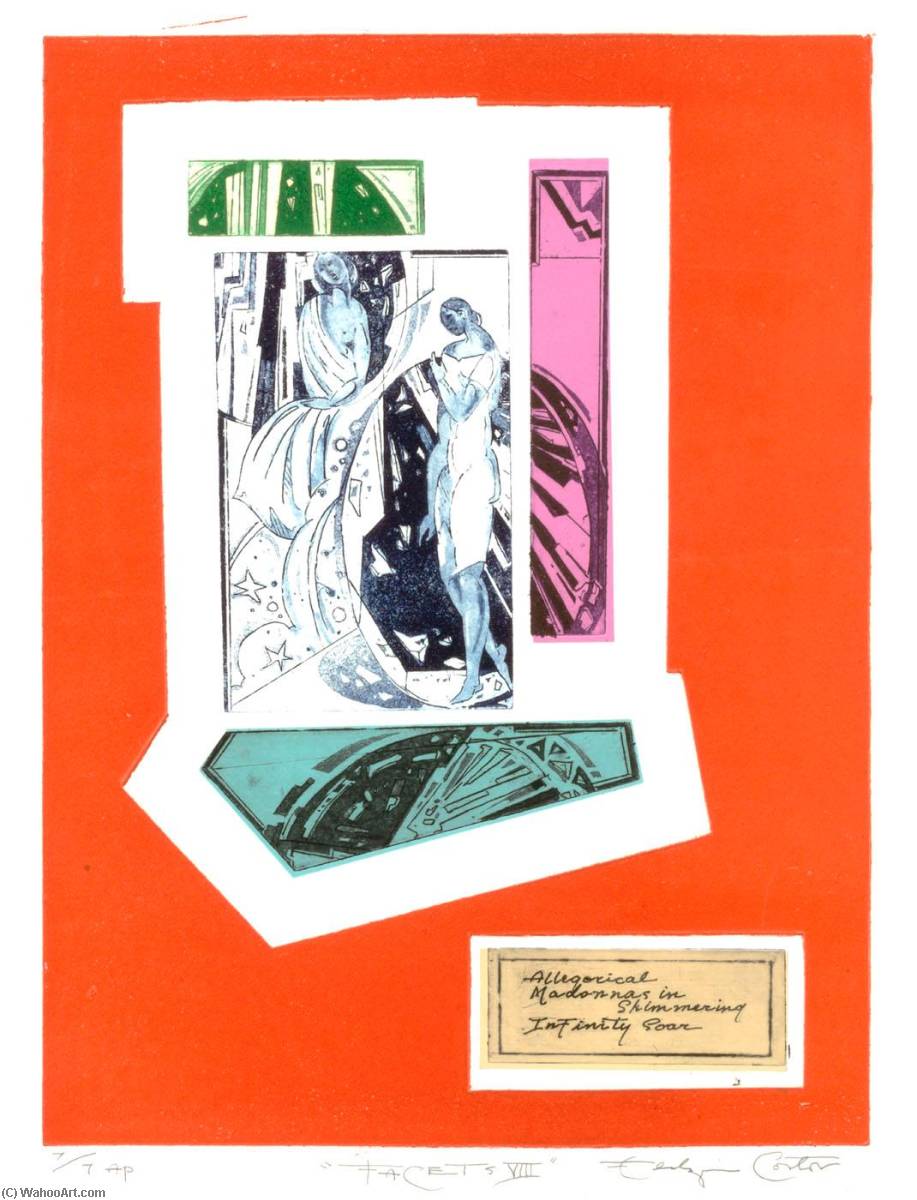
Facets VIII
 Surrealism
 57.0 x 38.0 cm
 Pročitaj više
Ručno rađena uljana reprodukcija
Ručno oslikano uljanim bojama na platnu u dimenzijama i okviru po vašem izboru, izrađeno po porudžbini od strane naših umetnika. ( Kupi print Kupi digitalnu sliku)




































Izaberite jednu od naših unapred definisanih veličina koje odgovaraju originalnim proporcijama umetničkog dela.

Можете унети сопствене димензије како бисте прилагодили дело одређеном оквиру или простору. Ако одабрана величина не одговара пропорцијама оригинала, слика ће бити исечена или проширена додатним елементима који се ручно насликавају. Дигитални prikaz ће вам бити послат на одобрење пре почетка производње.
Имајте на уму да преглед на екрану не одражава стварно исецање или проширење. Само приказ (mockup) ће тачно приказати коначну композицију.
Иако су доступне прилагођене величине, препоручујемо да одаберете димензију из дефинисане листе како бисте сачували оригиналне пропорције.
Nakon narudžbine, tim OriginalUniqueArt.com će klijentu putem e-pošte poslati uputstva i dostaviti prikaz predloženog rešenja
Isporuka širom sveta () za 3/4 nedelje umesto uobičajenih 5 nedelja. (21 август). Bez kompromisa po pitanju kvaliteta.

Besplatna ekspresna dostava širom sveta

Visokokvalitetno laneno platno

Kompletno osiguranje transporta

Garancija povraćaja carine i uvoznih dažbina

Garancija vernosti boja

Politika povrata u roku od 60 dana (samo u slučaju nedostataka)

Garancija povrata novca od 100%

Popust pri grupnoj kupovini
 Opcija sa staklom dostupna je samo za dimenzije manje od 110 cm

Facets VIII
Tehnika reprodukcije
Dimenzije reprodukcije
-


Konačna cena
$ 300
Biografija umetnika
A Life Immersed in Form and Identity
Eldzier Cortor, born in Richmond, Virginia, in 1916, emerged as a pivotal figure in American art, dedicated to portraying the richness and complexity of Black life with both profound sensitivity and innovative artistic vision. His journey began with the Great Migration, his family relocating to Chicago seeking opportunity—a move that indelibly shaped his perspective and fueled his commitment to representing urban African American experiences. Cortor’s early education at Englewood High School in Chicago brought him into contact with fellow artists like Charles Wilbert White and Margaret Burroughs, fostering a creative community that would nurture his developing talent. He continued his studies at the Art Institute of Chicago, graduating in 1936, where he absorbed European artistic traditions but found himself profoundly moved by an encounter with African sculptures at the Field Museum. This discovery proved transformative, instilling within him a fascination with the cylindrical forms and lyrical qualities that would become hallmarks of his style.The WPA Years and the Gullah Influence
The 1940s marked a crucial period in Cortor’s artistic development. His involvement with the Works Progress Administration (WPA) provided him with invaluable experience documenting scenes of Bronzeville, a vibrant Black neighborhood in Chicago during the Depression era. This work wasn't merely documentation; it was an act of affirmation, capturing the dignity and resilience of a community often overlooked or misrepresented. Simultaneously, Cortor’s dedication to positive portrayals of African Americans was nurtured by his avid readership of *The Chicago Defender*, a newspaper dedicated to celebrating Black achievements. However, it was through two Rosenwald Foundation Fellowships in 1944 and 1945 that Cortor embarked on an experience that would profoundly alter the course of his art. These fellowships allowed him to live among the Gullah people on the Sea Islands of Georgia and South Carolina—a relatively isolated African diasporic culture retaining strong ties to its ancestral roots. Immersing himself in their traditions, Cortor found a powerful source of inspiration, incorporating elements of traditional African aesthetics into his work and deepening his exploration of Black identity.Blending Surrealism with Ancestral Echoes
Cortor’s artistic style was characterized by a compelling fusion of realism and surrealist influences. He often distorted perspective not as an end in itself, but to emphasize the subject's role within society and to imbue his work with a sense of fantasy and symbolic depth. Central to his oeuvre was the representation of the Black female figure—a motif he considered embodying the essence of the Black race, conveying a feeling of eternity and continuity. He challenged prevailing beauty standards by portraying Black women with dignity, strength, and an unapologetic celebration of their unique features and cultural significance. This wasn’t simply portraiture; it was an act of reclaiming representation and asserting the inherent beauty within the Black community. His exploration extended beyond painting to encompass printmaking—lithography and etching becoming favored mediums—and assemblage, demonstrating a remarkable versatility in his artistic practice. The 1949 Guggenheim Fellowship further broadened his horizons, enabling him to travel to Jamaica, Cuba, and Haiti, where he studied Caribbean art and culture and taught at the Centre d’Art in Port-au-Prince.Legacy of Representation and Resilience
Throughout his long and distinguished career, Eldzier Cortor received significant recognition for his contributions to American art. His work has been exhibited extensively, including solo shows at the Boston Psychoanalytic Society and Institute and the Indiana University Art Museum. Today, his paintings and prints are held in prestigious collections such as the Howard University Gallery of Art, the Smithsonian American Art Museum, and The Art Institute of Chicago—testaments to his enduring artistic legacy. Cortor’s historical significance lies not only in his technical skill but also in his pioneering role in challenging stereotypes and celebrating Black identity. He was among the first African American artists to consistently depict nude Black women as central subjects, a bold act that defied societal norms and paved the way for subsequent generations of artists exploring themes of race, gender, and cultural heritage. His ability to synthesize European surrealism with African artistic traditions created a unique aesthetic—a powerful visual language that continues to resonate today, reminding us of the enduring strength, beauty, and resilience of the Black spirit.
Eldzier Cortor
1916 - 2015 , United States of America
Osnovne informacije
- Artistic Movement Or Style: Surrealism, Realism
- Artists Or Movements Influenced By This Artist: ['African American artists']
- Artists Who Influenced This Artist: ['African sculptors']
- Date Of Birth: January 10, 1916
- Date Of Death: November 26, 2015
- Full Name: Eldzier Cortor
- Nationality: American
- Notable Artworks:
- In These Troubled Times
- Compositional Study No. III
- Facets VIII
- Place Of Birth: Richmond, USA
Povezani članci

Abstraktni Ekspresionizam: 10 Remek Dela Koja Su Definisala Pokret
Otkrijte 10 remek dela koja su definisala apstraktni ekspresionizam! Istražite dela Pola Krausa, Džejson Poloka i drugih. Saznajte priče iza umetnosti i inspirisanje za dekoraciju doma. Eksplorirajte kolekciju na OriginalUniqueArt.com!
Giclée Prints: Archival Quality & Aesthetic Nuances for the Discerning Collector
Explore the world of giclée prints with OriginalUniqueArt. Learn about archival quality, aesthetic nuances & investment potential. Expert guidance for discerning art collectors seeking museum-quality reproductions and lasting value.

Top 10 dela geometrijske apstrakcije koje morate videti | OriginalUniqueArt.com
Istražite 10 remek-dela geometrijske apstrakcije – Mondrian, Malevič i Kandinski. Otkrijte priče iza ovih ikoničnih slika i pronađite inspiraciju za dekoraciju enterijera sa OriginalUniqueArt.com! Reprodukcije vrhunskog kvaliteta.

Kandinsky's Masterpieces: 25 Paintings That Define Abstract Art | OriginalUniqueArt
Journey through Wassily Kandinsky's 25 most iconic abstract paintings. Explore his revolutionary use of color, form & spiritual expressionism. Find museum-quality Kandinsky reproductions and elevate your home decor with OriginalUniqueArt.com. Discover all masterpieces on OriginalUniqueArt.com!

Neo-Abstract Art: The High-Impact Evolution of Modern Visual Energy and Geometric Sophistication
Discover the power of Neo-Abstract art. Explore how bold geometric forms and high-impact visual energy are redefining modern design. Learn to curate sophisticated, high-energy spaces with the latest trends in contemporary abstraction and structural color.

