

 Pregledaj u prostoru
 Podeli
 Podeli
 Detalji
 Vodič
Vodič

 Preuzmi sliku
 Slični predmeti
 Rendgenski snimak
 Automatska prezentacija
 Statistika
Proun Interpenetrating Planes


 Pročitaj više
Giclee štampa / Umetnički otisak
Giclée štampa ili print na platnu muzejskog kvaliteta uz brzu izradu i raznovrsne opcije završne obrade. ( Naručite ručno oslikano reprodukciju Pređi na prodaju digitalnih slika)




P118B $10

P118H $10

P118W $10

P438Z $10

P508JH $12

P508YH $12

P805H $10

P805Z $10

P919BZ $10

P919G $10

P919XJ $10

P959ZH $10

P968JZ $12

W106C $8

W218G $10

W218JH $8

W218Y $10

W307PJ $10

W316G $10

W316PJ $8

W316Y $10

W398PJ $8

W4111J $10

W500HY $15

W500JH $15

W692G $12

W849H $8

W940BG $15

W953PJ $8




Izaberite jednu od naših unapred definisanih veličina koje odgovaraju originalnim proporcijama umetničkog dela.

Možete uneti sopstvene dimenzije kako biste umetničko delo prilagodili specifičnom okviru ili prostoru. Ako odabrani format ne odgovara proporcijama originalne slike, mi ćemo ili iscrtati deo dela ili proširiti sliku pomoću ogledane ivice ili jednobojnog popunjavanja. Digitalni prikaz će vam biti poslat na odobrenje pre početka proizvodnje.
Imajte na umu da pregled na ekranu ne odražava stvarno iscrtavanje ili proširivanje. Samo će prikaz (mockup) precizno pokazati finalnu kompoziciju.
Iako su prilagođene dimenzije dostupne, preporučujemo da odaberete dimenziju sa unapred definisane liste kako biste očuvali originalne proporcije.
Dostava širom sveta () za 2 nedelje umesto uobičajenih 4/5 nedelja. (25 септембар)

Besplatna ekspresna dostava širom sveta

Visokokvalitetno laneno platno

Sveobuhvatno osiguranje transporta

Garancija povraćaja carine i uvoznih dažbina

Garancija vernosti boja i autentičnosti pri reprodukciji

Politika povraćaja u roku od 100 dana (samo u slučaju nedostataka)

Garancija povrata 100% novca

Popust pri većoj količini
 Opcija sa staklom dostupna je samo za dimenzije manje od 110 cm

Proun Interpenetrating Planes
Giclee štampa / Umetnički otisak
Veličina reprodukcije
-


Ukupna cena
$ 80
A Revolutionary Geometry: Exploring El Lissitzky’s *Proun Interpenetrating Planes*
El Lissitzky's *Proun Interpenetrating Planes*, a seminal work from 1927, isn’t merely a painting; it’s an architectural manifesto rendered in color and form. Born Lazar Markovich Lissitzky in the Russian village of Pochinki in 1890, his artistic journey was one of relentless experimentation, fueled by a profound belief that art could actively shape the world around us. Initially trained as an architect and engineer – experiences tragically curtailed due to anti-Semitic restrictions – Lissitzky’s creative spirit quickly outgrew these constraints, leading him towards illustration and ultimately, a radical reimagining of visual space. This particular piece embodies his core concept of “Proun,” a term he coined to describe abstract planes that existed independently of any physical object, existing instead as pure geometric forms imbued with spiritual significance. It’s a testament to the artist's desire to dismantle traditional notions of representation and embrace a new language of form.
Deconstructing Space: Style and Technique
The painting immediately commands attention through its bold, reductive style. Lissitzky employs a strikingly simple palette – primarily shades of red, black, and white – to emphasize the interplay between positive and negative space. The dominant element is a large, circular form, seemingly suspended within a complex arrangement of overlapping planes and angles. This isn’t a realistic depiction of a building; rather, it's an abstracted representation, suggesting a structure viewed from multiple perspectives simultaneously. Lissitzky’s technique relies heavily on the principles of Constructivism, a Russian avant-garde movement that sought to integrate art with industry and social progress. He utilized a layering technique, applying paint in thin washes to create a sense of depth and transparency, allowing the underlying forms to subtly influence the appearance of those above. The precision of his lines and the deliberate flatness of the composition contribute to an almost mechanical quality, reflecting Lissitzky’s interest in rational design and functional aesthetics.
Symbolism and the Interpenetration of Planes
The title, *Proun Interpenetrating Planes*, is key to understanding the work's conceptual core. Lissitzky believed that these “Prouns” were not static entities but rather dynamic forces constantly interacting with each other. The overlapping circles and planes represent this interpenetration – a merging of forms, ideas, and perspectives. The central circle can be interpreted as a sun or a source of energy, radiating outwards and influencing the surrounding shapes. The smaller circles in the upper left corner might symbolize satellites orbiting this primary form, suggesting a hierarchical structure yet emphasizing interconnectedness. Lissitzky’s work was deeply influenced by Russian spiritualism and his own personal philosophy, seeking to create visual representations of universal principles and forces. He envisioned Prouns as tools for “spiritualization,” offering a pathway to transcend the limitations of everyday experience.
Historical Context: Suprematism and Soviet Propaganda
*Proun Interpenetrating Planes* emerged during a period of immense social and political upheaval in Russia. Lissitzky’s work was closely aligned with Suprematism, a movement pioneered by Kazimir Malevich that prioritized pure geometric abstraction. However, Lissitzky moved beyond the purely formal concerns of Suprematism, incorporating elements of architecture and design into his art. Following the Bolshevik Revolution, Lissitzky became involved in designing propaganda posters and exhibition displays for the Soviet government, utilizing his innovative visual language to promote socialist ideals. This piece reflects that period – a synthesis of artistic experimentation with practical application, demonstrating how abstract forms could be harnessed to communicate powerful messages. The stark geometry and bold colors resonate with the spirit of the era, capturing both its revolutionary fervor and its commitment to rational design.
A Timeless Vision: Reproduction and Interior Design
Today, *Proun Interpenetrating Planes* remains a powerfully evocative work. OriginalUniqueArt offers meticulously crafted hand-painted reproductions that faithfully capture the original’s vibrancy and depth. Whether adorning a modern gallery wall or integrated into a contemporary interior design scheme, this artwork brings a sense of dynamism and intellectual stimulation to any space. Its geometric forms provide a striking contrast to softer textures and organic shapes, injecting a dose of architectural precision and spiritual contemplation. Consider how the interplay of red, black, and white can be used to create focal points or establish a sophisticated color palette within your home – a testament to Lissitzky’s enduring legacy as a visionary artist.
Biografija umetnika
El Lissitzky (1890–1941): Russian Avant-garde Artist & Designer
El Lissitzky, born Lazar Markovich Lissitzky in 1890 in the small Russian town of Pochinok, near Smolensk, Russia, emerged as a pivotal figure in the tumultuous landscape of early 20th-century art. His journey was one of constant reinvention, driven by a fervent belief in the power of art to shape society and reflect the dynamism of the modern world. From his initial training as an architect and engineer – pursuits hampered by restrictions placed upon Jewish students – Lissitzky’s path diverged towards artistic expression, initially through illustrations steeped in Jewish folklore. These early works, like his cover for ‘Chad Gadya’, reveal a nascent talent already grappling with narrative and visual storytelling, hinting at the profound cultural roots that would continue to inform his aesthetic. A move to Berlin and Darmstadt broadened his horizons, but it was upon returning to Russia that Lissitzky truly found his artistic voice, becoming inextricably linked with the revolutionary fervor sweeping through the nation.Early Years & Artistic Formation
Lazar Markovich Lissitzky’s formative years were marked by a profound engagement with Jewish culture and tradition. Born into a family of intellectuals—his father Mordukh Zalmanov was a well-educated travel agent who possessed fluency in English and German—Lissitzky benefited from an upbringing that fostered intellectual curiosity and artistic appreciation. He began his formal education at the age of 15, maintaining a teaching career for most of his life, demonstrating a lifelong dedication to disseminating knowledge and fostering creativity. His initial training encompassed architecture and engineering, disciplines that would later inform his groundbreaking approach to design—a perspective shaped by limitations imposed upon Jewish students during Tsarist Russia. Recognizing the importance of visual storytelling, Lissitzky turned to illustration, producing evocative images rooted in Yiddish folklore, notably his celebrated cover for ‘Chad Gadya’ (1917), a poignant retelling of the Passover seder song “One Kid.” This early work foreshadowed Lissitzky's distinctive style—a fusion of Cubo-Futurism and Jewish symbolism—establishing him as an artist deeply attuned to cultural heritage. His travels to Germany, France, Italy, and Belgium broadened his artistic horizons and exposed him to influential European movements.The Suprematist Revolution & Kazimir Malevich’s Influence
A transformative encounter occurred in Vitebsk (now Vitsyebsk), Belarus, where Lissitzky encountered Kazimir Malevich—the architect of Suprematism, a radical movement dedicated to pure geometric abstraction. This meeting ignited Lissitzky's passion for abstraction and cemented his allegiance to Malevich’s uncompromising vision. Together with Malevich and fellow artists, Lissitzky established UNovis (UNOVIS), Vitebsk Group of Constructive Artists—a collective committed to disseminating Suprematist principles through teaching and artistic production. Lissitzky didn’t merely replicate Malevich's style; he forged his own distinctive path, developing *Proun*, a series that blended Suprematism with Constructivism—a daring experiment in spatial representation and architectural design. Proun challenged conventional notions of painting and sculpture, striving to capture the essence of space itself through dynamic compositions featuring intersecting planes and geometric forms. Lissitzky’s unwavering belief in art as a catalyst for social transformation fueled his artistic endeavors—a conviction that would resonate throughout his career. Malevich's influence extended beyond stylistic considerations; it instilled in Lissitzky a fundamental ethos centered on intellectual rigor, uncompromising honesty, and the pursuit of universal visual language.Proun: Spatial Exploration & Architectural Vision
The Proun series represents Lissitzky’s most ambitious exploration of spatial relationships—a bold assertion that art could transcend representational limitations and engage with the very structure of space itself. Departing from traditional painting techniques, Lissitzky employed a unique method combining drawing, painting, sculpture, and architectural design—a holistic approach reflecting his conviction that artistic expression should encompass multiple dimensions. Proun’s geometric forms—primarily squares, rectangles, circles, and triangles—were arranged in complex configurations that resembled architectural blueprints or exploded diagrams—visual representations of spatial transformations. Lissitzky reasoned that the future of art lay in its ability to harmonize with architecture—a vision articulated eloquently in his manifesto “The Space Must Be a Kind of Showcase…” He sought to create environments that fostered contemplation and inspired innovation—challenging established conventions regarding gallery spaces and promoting a new aesthetic sensibility rooted in geometric abstraction. Lissitzky’s Proun series stands as a testament to his intellectual curiosity, artistic daring, and unwavering commitment to pushing the boundaries of visual expression—a legacy that continues to inspire artists and designers worldwide.Typography, Exhibition Design & Propaganda: Artistic Engagement
Beyond his pioneering explorations of spatial representation, Lissitzky revolutionized typography—creating innovative fonts and graphic designs that conveyed complex ideas with clarity and elegance. He recognized that effective communication demanded meticulous attention to visual form—a conviction that guided his work on posters, books, and exhibition displays—often serving as a visual communicator for Soviet propaganda efforts. Lissitzky’s masterful use of color, shape, and text—combined with an uncompromising commitment to social responsibility—established him as one of the foremost designers of his era. His iconic poster “The Constructor” (1924)—a striking depiction of a stylized hammer and sickle—became emblematic of Soviet ideology—a powerful visual statement reflecting the nation’s aspirations for industrial progress and collective action. Lissitzky's exhibition designs—particularly those conceived for the Bauhaus in Weimar—challenged conventional gallery spaces—creating immersive environments that actively engaged viewers—promoting a new aesthetic sensibility rooted in geometric abstraction and functionalism. His work profoundly influenced subsequent generations of artists and designers—solidifying his place as a visionary who reshaped the visual landscape of the 20th century. Lissitzky’s legacy extends far beyond his artistic creations—serving as an inspiration for those striving to harness art's transformative potential—a testament to his enduring influence on cultural discourse and aesthetic innovation.
Ел Лисицкий
1890 - 1941 , Руси́я
Brzi pregled
- Artistic Movement Or Style:
- Suprematism
- Konstruktivizam
- Artists Or Movements Influenced By This Artist: ['Bauhaus']
- Artists Who Influenced This Artist: ['Kazimir Malevich']
- Date Of Birth: Nov 23, 1890
- Date Of Death: Dec 30, 1941
- Full Name: El Lissitzky
- Nationality: Rusija
- Notable Artworks:
- Izgraditel'
- Pokrov
- Place Of Birth: Pochinok, Russia
Srodni članci

Top 10 dela geometrijske apstrakcije koje morate videti | OriginalUniqueArt.com
Istražite 10 remek-dela geometrijske apstrakcije – Mondrian, Malevič i Kandinski. Otkrijte priče iza ovih ikoničnih slika i pronađite inspiraciju za dekoraciju enterijera sa OriginalUniqueArt.com! Reprodukcije vrhunskog kvaliteta.

Neo-Abstract Art: The High-Impact Evolution of Modern Visual Energy and Geometric Sophistication
Discover the power of Neo-Abstract art. Explore how bold geometric forms and high-impact visual energy are redefining modern design. Learn to curate sophisticated, high-energy spaces with the latest trends in contemporary abstraction and structural color.

El Greco: 25 Remek-dela koji definišu Viziju i Duh (Reprodukcije za vaš Dom)
Istražite 25 remek-dela El Greka! Otkrijte priče iza njegovih ikoničnih slika, baroknog stila i duboke spiritualnosti. Reprodukcije vrhunskog kvaliteta za vaš dom na OriginalUniqueArt.com.
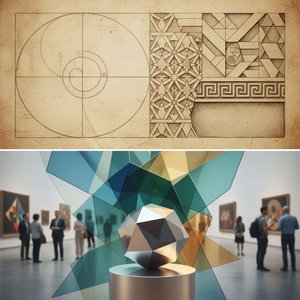
Geometric Design in Art: A Historical Survey & Contemporary Appeal for Collectors
Explore the enduring legacy of geometric abstraction! Discover key artists, historical movements & investment insights for discerning art collectors. Expert guidance from OriginalUniqueArt.

Beyond Form & Color: Geometric Abstraction's Evolution in 20th/21st Century Art
Explore the evolution of geometric abstraction from Cubism to contemporary art. Discover key artists like Malevich & Mondrian, investment insights, and expert collecting advice at OriginalUniqueArt.

