
 Pregledaj u prostoru
 Podeli
 Podeli
 Detalji
 Vodič
Vodič

 Preuzmi sliku
 Slični predmeti
 Rendgenski snimak
 Automatska prezentacija
 Statistika
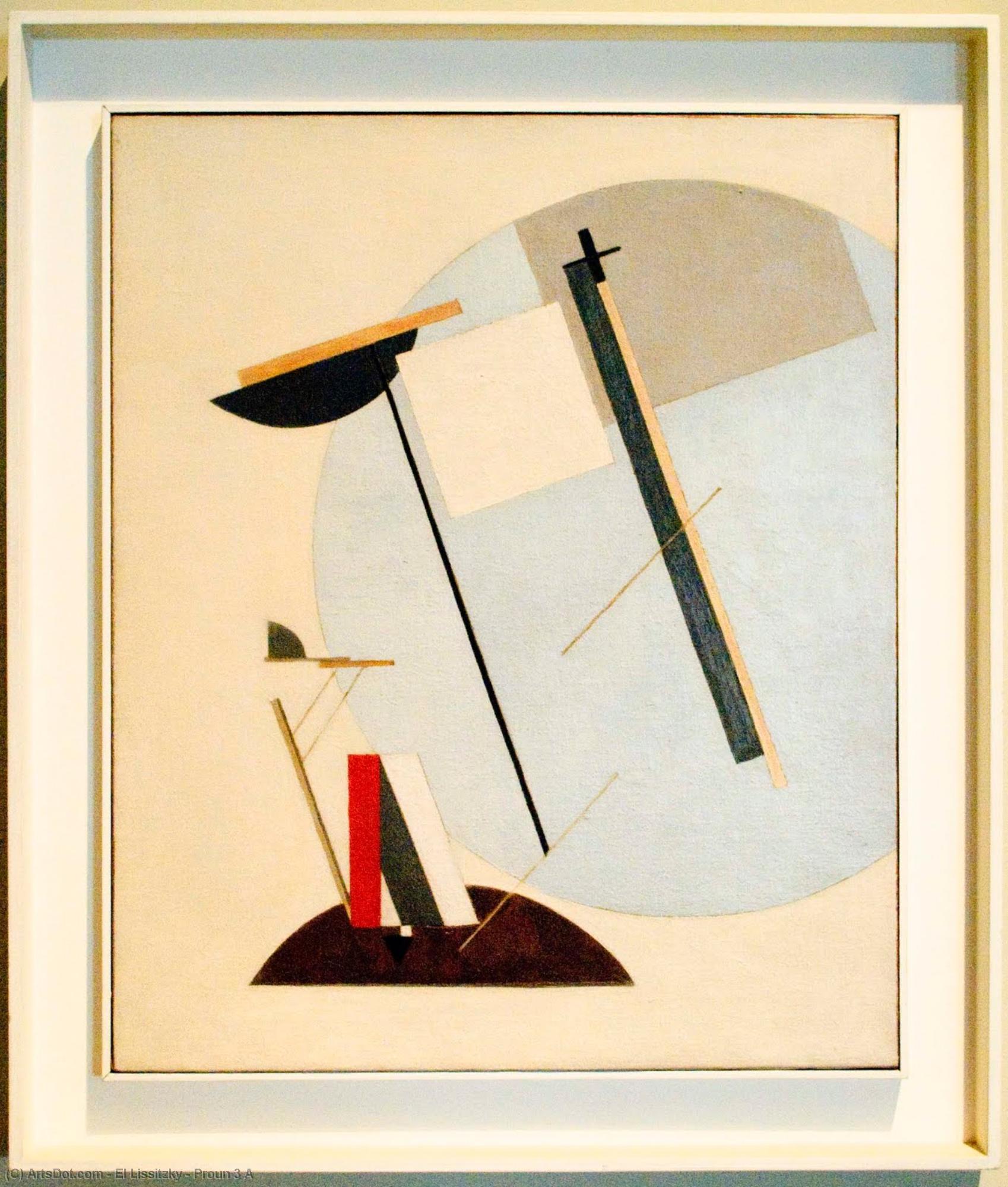
Proun 3 A

 Pročitaj više
Kupite digitalnu sliku visoke rezolucije i poboljšanog kvaliteta, koja je znatno superiornija od onoga što vidite u online prikazu.
Svaka datoteka je pedantno pripremljena od strane naših stručnjaka koristeći napredne alate i profesionalnu ručnu retušu. Osiguravamo da svaka slika ima izuzetnu oštrinu, preciznu reprodukciju boja i fine detalje.
Konačna datoteka se dostavlja putem e-pošte u roku od 72 sata, optimizovana za neposrednu upotrebu u profesionalnim, izdavačkim i štamparskim okruženjima. To je isti kvalitet kojem veruju vrhunski studiji dizajna, izdavači i galerije.
Digitalna slika
Preuzmite datoteku visoke rezolucije za ličnu upotrebu, štampanje i kreativne projekte. ( Pređi na prodaju štampanih primeraka Naručite ručno oslikano reprodukciju)
Uključeno uz svaku porudžbinu digitalne slike
Ekspertska digitalna isporuka, zagarantovana
Kada odaberete OriginalUniqueArt.com, ne dobijate samo sliku – vi primate profesionalno unapređeno digitalno umetničko delo, izrađeno sa najvećom preciznošću i uz garanciju zadovoljstva. Evo svega što automatski dolazi uz vašu porudžbinu:

Brza dostava putem e-pošte
Vaša digitalna slika visoke rezolucije biće vam poslata putem e-pošte u roku od 72 sata od poručivanja – spremna za trenutnu upotrebu.

Digitalna datoteka unapređena veštačkom inteligencijom
Vaše umetničko delo je profesionalno optimizovano primenom naprednih AI alata i ručne obrade, čime se osiguravaju maksimalni detalji, oštrina i preciznost boja.

Besplatna doživotna ponovna isporuka
Slučajno ste obrisali ili izgubili svoju datoteku? Ne brinite – poslaćemo vam je ponovo u bilo kom trenutku, potpuno besplatno.

Bez troškova uvoza – zauvek
Uživajte u svojim umetničkim delima trenutno, bez carine, akciza ili troškova dostave – digitalni download je uvek bez poreza.

Garancija preciznosti boja
Uz pomoć profesionalnih alata i upravljanja bojama, osiguravamo da vaša digitalna slika što vernije odražava originalne boje.

Garancija zadovoljstva u roku od 100 dana
Ako niste zadovoljni svojom digitalnom slikom, izvršićemo reviziju ili ćemo vam vratiti 100% novca u roku od 100 dana – bez ikakvih pitanja.

100% garancija povrata novca
Niste zadovoljni? Dobijte puni povraćaj novca u roku od 100 dana od prijema digitalne datoteke – bez suvišnih pitanja.

Popusti na velike porudžbine
Kupite 3 slike, uštedite 10% - Kupite 5 slika, uštedite 15% - Kupite 10+ slika, uštedite 20%. Odlično za kreativne projekte, galerije i agencije.
A Geometric Symphony of Revolution
El Lissitzky’s Proun 3 A stands as a testament to the fervent idealism of Constructivism—a movement that sought to liberate art from representational illusion and forge it into a tool for social transformation. Created in 1920, this lithograph is part of a larger portfolio exploring Lissitzky's groundbreaking concept of Proun, which aimed to visualize the underlying structure of reality itself. Unlike traditional painting, Proun abandons depiction; instead, it presents a complex geometric arrangement designed to convey an emotional and intellectual resonance far beyond mere visual appearance.- Subject Matter: The composition centers around a prominent circle intersected by a cross—a motif that recurs throughout Lissitzky’s Proun series. This seemingly simple form embodies profound symbolic significance, representing the unity of cosmos and human consciousness according to Lissitzky's philosophical framework.
- Style & Technique: Lissitzky’s meticulous execution demonstrates Constructivist precision. Lithography—a printing process known for its ability to reproduce intricate detail—was chosen to capture the essence of Proun’s geometric abstraction. The artist employed a bold palette, utilizing shades of ochre and crimson to heighten the visual impact.
Symbolism Beyond Geometry
Beyond its formal structure, Proun 3 A resonates with deeper symbolic meanings rooted in Lissitzky’s spiritual explorations. The circle represents wholeness and unity—a concept central to Eastern philosophy and embraced by Lissitzky as a means of overcoming Western dualisms. Simultaneously, the cross symbolizes faith and transcendence—a visual counterpoint that underscores the artist's desire to reconcile reason and spirituality.Emotional Impact & Artistic Legacy
Ultimately, Proun 3 A transcends mere aesthetic contemplation; it invites viewers into a dialogue about the nature of reality and the role of art in shaping perception. Lissitzky’s masterful manipulation of geometric form conveys an aura of intellectual conviction—a palpable sense of optimism tempered by awareness of social responsibility. This lithograph remains a cornerstone of Constructivist art, inspiring generations of artists to explore the expressive potential of abstraction while grappling with pressing societal concerns. Its enduring appeal lies in its ability to communicate profound ideas through deceptively simple visual elements—a testament to Lissitzky’s genius as both artist and visionary.Pitanja i odgovori
Kakvu bi atmosferu reprodukcija dela „Proun 3 A”, Ел Лисицкий unela u prostoriju?
Modern atmosfera dela „Proun 3 A”, Ел Лисицкий savršeno odgovara preporučenom prostoru: Living Room.
Da li je „Proun 3 A”, Ел Лисицкий među traženim delima Constructivism pokreta?
„Proun 3 A“ je zabeležen/a kao Recognized među delima Constructivism pokreta u katalogu.
Kolika je zasićenost i intenzitet koji prikazuje „Proun 3 A”, Ел Лисицкий?
Boje dela „Proun 3 A”, Ел Лисицкий pokazuju Subtle Color zasićenost uz Vivid intenzitet.
Biografija umetnika
El Lissitzky (1890–1941): Russian Avant-garde Artist & Designer
El Lissitzky, born Lazar Markovich Lissitzky in 1890 in the small Russian town of Pochinok, near Smolensk, Russia, emerged as a pivotal figure in the tumultuous landscape of early 20th-century art. His journey was one of constant reinvention, driven by a fervent belief in the power of art to shape society and reflect the dynamism of the modern world. From his initial training as an architect and engineer – pursuits hampered by restrictions placed upon Jewish students – Lissitzky’s path diverged towards artistic expression, initially through illustrations steeped in Jewish folklore. These early works, like his cover for ‘Chad Gadya’, reveal a nascent talent already grappling with narrative and visual storytelling, hinting at the profound cultural roots that would continue to inform his aesthetic. A move to Berlin and Darmstadt broadened his horizons, but it was upon returning to Russia that Lissitzky truly found his artistic voice, becoming inextricably linked with the revolutionary fervor sweeping through the nation.Early Years & Artistic Formation
Lazar Markovich Lissitzky’s formative years were marked by a profound engagement with Jewish culture and tradition. Born into a family of intellectuals—his father Mordukh Zalmanov was a well-educated travel agent who possessed fluency in English and German—Lissitzky benefited from an upbringing that fostered intellectual curiosity and artistic appreciation. He began his formal education at the age of 15, maintaining a teaching career for most of his life, demonstrating a lifelong dedication to disseminating knowledge and fostering creativity. His initial training encompassed architecture and engineering, disciplines that would later inform his groundbreaking approach to design—a perspective shaped by limitations imposed upon Jewish students during Tsarist Russia. Recognizing the importance of visual storytelling, Lissitzky turned to illustration, producing evocative images rooted in Yiddish folklore, notably his celebrated cover for ‘Chad Gadya’ (1917), a poignant retelling of the Passover seder song “One Kid.” This early work foreshadowed Lissitzky's distinctive style—a fusion of Cubo-Futurism and Jewish symbolism—establishing him as an artist deeply attuned to cultural heritage. His travels to Germany, France, Italy, and Belgium broadened his artistic horizons and exposed him to influential European movements.The Suprematist Revolution & Kazimir Malevich’s Influence
A transformative encounter occurred in Vitebsk (now Vitsyebsk), Belarus, where Lissitzky encountered Kazimir Malevich—the architect of Suprematism, a radical movement dedicated to pure geometric abstraction. This meeting ignited Lissitzky's passion for abstraction and cemented his allegiance to Malevich’s uncompromising vision. Together with Malevich and fellow artists, Lissitzky established UNovis (UNOVIS), Vitebsk Group of Constructive Artists—a collective committed to disseminating Suprematist principles through teaching and artistic production. Lissitzky didn’t merely replicate Malevich's style; he forged his own distinctive path, developing *Proun*, a series that blended Suprematism with Constructivism—a daring experiment in spatial representation and architectural design. Proun challenged conventional notions of painting and sculpture, striving to capture the essence of space itself through dynamic compositions featuring intersecting planes and geometric forms. Lissitzky’s unwavering belief in art as a catalyst for social transformation fueled his artistic endeavors—a conviction that would resonate throughout his career. Malevich's influence extended beyond stylistic considerations; it instilled in Lissitzky a fundamental ethos centered on intellectual rigor, uncompromising honesty, and the pursuit of universal visual language.Proun: Spatial Exploration & Architectural Vision
The Proun series represents Lissitzky’s most ambitious exploration of spatial relationships—a bold assertion that art could transcend representational limitations and engage with the very structure of space itself. Departing from traditional painting techniques, Lissitzky employed a unique method combining drawing, painting, sculpture, and architectural design—a holistic approach reflecting his conviction that artistic expression should encompass multiple dimensions. Proun’s geometric forms—primarily squares, rectangles, circles, and triangles—were arranged in complex configurations that resembled architectural blueprints or exploded diagrams—visual representations of spatial transformations. Lissitzky reasoned that the future of art lay in its ability to harmonize with architecture—a vision articulated eloquently in his manifesto “The Space Must Be a Kind of Showcase…” He sought to create environments that fostered contemplation and inspired innovation—challenging established conventions regarding gallery spaces and promoting a new aesthetic sensibility rooted in geometric abstraction. Lissitzky’s Proun series stands as a testament to his intellectual curiosity, artistic daring, and unwavering commitment to pushing the boundaries of visual expression—a legacy that continues to inspire artists and designers worldwide.Typography, Exhibition Design & Propaganda: Artistic Engagement
Beyond his pioneering explorations of spatial representation, Lissitzky revolutionized typography—creating innovative fonts and graphic designs that conveyed complex ideas with clarity and elegance. He recognized that effective communication demanded meticulous attention to visual form—a conviction that guided his work on posters, books, and exhibition displays—often serving as a visual communicator for Soviet propaganda efforts. Lissitzky’s masterful use of color, shape, and text—combined with an uncompromising commitment to social responsibility—established him as one of the foremost designers of his era. His iconic poster “The Constructor” (1924)—a striking depiction of a stylized hammer and sickle—became emblematic of Soviet ideology—a powerful visual statement reflecting the nation’s aspirations for industrial progress and collective action. Lissitzky's exhibition designs—particularly those conceived for the Bauhaus in Weimar—challenged conventional gallery spaces—creating immersive environments that actively engaged viewers—promoting a new aesthetic sensibility rooted in geometric abstraction and functionalism. His work profoundly influenced subsequent generations of artists and designers—solidifying his place as a visionary who reshaped the visual landscape of the 20th century. Lissitzky’s legacy extends far beyond his artistic creations—serving as an inspiration for those striving to harness art's transformative potential—a testament to his enduring influence on cultural discourse and aesthetic innovation.
Ел Лисицкий
1890 - 1941 , Руси́я
Osnovne informacije
- Artistic Movement Or Style:
- Suprematism
- Konstruktivizam
- Artists Or Movements Influenced By This Artist: ['Bauhaus']
- Artists Who Influenced This Artist: ['Kazimir Malevich']
- Date Of Birth: Nov 23, 1890
- Date Of Death: Dec 30, 1941
- Full Name: El Lissitzky
- Nationality: Rusija
- Notable Artworks:
- Izgraditel'
- Pokrov
- Place Of Birth: Pochinok, Russia