Pregledaj u prostoru
 Pošalji
 Podeli
 Detalji o delu
 Vodič
Vodič

 Preuzmi
 Slični predmeti
 Rendgenski snimak
 Automatska prezentacija
 Q&A
Q&A Statistika
Female Torso, Squatting

- 32.0 x 47.0 cm


 Pročitaj više
Giclee štampa / Umetnički otisak
Giclée štampa ili print na platnu muzejskog kvaliteta uz brzu izradu i raznovrsne opcije završne obrade. ( Kupite ručno oslikano delo Pređi na digitalnu sliku)




P118B дин10

P118H дин10

P118W дин10

P438Z дин10

P508JH дин12

P508YH дин12

P805H дин10

P805Z дин10

P919BZ дин10

P919G дин10

P919XJ дин10

P959ZH дин10

P968JZ дин12

W106C дин8

W218G дин10

W218JH дин8

W218Y дин10

W307PJ дин10

W316G дин10

W316PJ дин8

W316Y дин10

W398PJ дин8

W4111J дин10

W500HY дин15

W500JH дин15

W692G дин12

W849H дин8

W940BG дин15

W953PJ дин8




Izaberite jednu od naših unapred definisanih veličina koje odgovaraju originalnim proporcijama umetničkog dela.

Unesite željenu širinu i visinu kako bi se štampa uklopila u vaš ram ili zid. Štampu je moguće samo iseći, ali nikada povećati iznad dimenzija originalne slike, stoga format sa drugačijim proporcijama uzrokuje gubitak dela slike. Pre početka štampe, poslaćemo vam digitalni prikaz radi potvrde. Slika prikazana na ovoj stranici ne predstavlja stvarni isrez — to pokazuje samo digitalni prikaz.
Dostava širom sveta () za 2 nedelje umesto uobičajenih 4/5 nedelja. (1 новембар)

Besplatna ekspresna dostava širom sveta

Visokokvalitetno laneno platno

Potpuno osiguranje transporta

Garancija povraćaja carine i uvoznih dažbina

Garancija vernosti boja

Politika povraćaja u roku od 100 dana (samo u slučaju nedostataka)

Garancija povrata 100% novca

Popust na više proizvoda
 Opcija sa staklom dostupna je samo za dimenzije manje od 110 cm

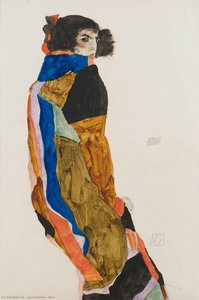
Female Torso, Squatting
Giclee štampa / Umetnički otisak
Dimenzije reprodukcije
-


Ukupna cena
дин 8334
A Portrait of Quiet Intensity – Decoding ‘Female Torso, Squatting’
Egon Schiele’s “Female Torso, Squatting,” painted in 1912, stands as a cornerstone of Expressionist art—a testament to the artist's ability to distill profound psychological states into strikingly simple visual forms. Measuring just 32 x 47 cm, this deceptively modest canvas belies the turbulent emotions simmering beneath its surface. It’s more than merely a depiction of the human body; it’s an unflinching confrontation with themes of fragility, isolation, and unspoken desire.
- Artist Background: Egon Schiele (1890-1918) emerged from Vienna's artistic milieu as a rebellious figure determined to break free from academic conventions. Influenced by Nietzsche’s philosophy of will and suffering, Schiele relentlessly pursued an uncompromising vision—one characterized by distorted perspectives, exaggerated musculature, and a palpable sense of unease.
- Style & Technique: Schiele's Expressionist style is instantly recognizable through its bold black lines against stark white backgrounds. He eschewed meticulous detail, prioritizing instead the conveyance of emotion over realistic representation. The painting utilizes a technique that emphasizes texture—a deliberate roughness achieved through thick impasto—further amplifying the artwork’s visceral impact.
Historical Context – Vienna at the Dawn of Modernity
Vienna in 1912 was undergoing seismic shifts, grappling with anxieties surrounding societal change and intellectual upheaval. The burgeoning avant-garde movement challenged established artistic norms, pushing artists to explore uncharted territories of psychological introspection. Schiele’s work reflects this zeitgeist—a reaction against the idealized beauty championed by Impressionism and Neoclassicism.
- Symbolism: The woman's squatting posture is laden with symbolic significance. Traditionally, the nude figure has represented purity and vulnerability; however, Schiele subverts these expectations. Her knees pressed together convey a palpable sense of defensiveness—a yearning for solace amidst an overwhelming awareness of mortality.
- Emotional Resonance: The painting’s unsettling stillness speaks volumes about inner turmoil. It captures a moment of profound contemplation, hinting at unspoken anxieties and confronting the viewer with uncomfortable truths about human existence. Schiele's masterful use of color – primarily muted browns and whites – contributes to this atmosphere of melancholy.
Beyond Representation – Exploring Inner Landscape
Schiele wasn’t interested in portraying beauty; he sought to expose the raw nerve of human emotion. “Female Torso, Squatting” isn't simply a visual record of a nude figure; it’s an invitation to delve into the subconscious—to confront anxieties about vulnerability and decay. Consider its connection to Schiele’s broader oeuvre, particularly ‘Agony,’ which similarly explores themes of suffering and psychological distress.
- Comparative Analysis: Like ‘Agony,’ this piece exemplifies Schiele's preoccupation with the human condition—a relentless investigation into the darker recesses of consciousness.
- Interior Designer’s Perspective: Its muted palette and textural surface lend themselves beautifully to contemporary interior design schemes, creating a space that evokes contemplation and understated elegance.
A reproduction of “Female Torso, Squatting” offers an unparalleled opportunity to experience the enduring power of Expressionist art—a captivating glimpse into Schiele’s visionary mind and his unflinching portrayal of human emotion. Explore more stunning artworks by Egon Schiele at WikiArt.
Pitanja i odgovori
Koliko su intenzivne boje dela "Female Torso, Squatting"?
„Female Torso, Squatting”, autor Егон Шиле je zabeležen sa Balanced Soft zasićenosti i Vivid intenzitetom.
Ko je autor dela "Female Torso, Squatting" i u kom umetničkom pravcu?
Autor dela "Female Torso, Squatting" je Егон Шиле, koji pripada pokretu Expressionism.
Šta objašnjava status autorskih prava za „Female Torso, Squatting”, autor Егон Шиле?
„Female Torso, Squatting”, autor Егон Шиле je u u javnom vlasništvu – autorska prava su istekla. Autorska prava traju od smrti umetnika, koja se dogodila 1918.
Biografija umetnika
A Life Forged in Expression
Born in 1890 in the Austrian town of Tulln an der Donau, Egon Schiele’s life was a tempestuous journey marked by both extraordinary artistic vision and profound personal hardship. His early years were shadowed by illness and loss; his father succumbed to syphilis when Egon was just fourteen, a tragedy that would deeply resonate within his work, fueling an obsession with mortality and the fragility of existence. Raised initially by his mother and then under the somewhat controlling guardianship of his uncle Leopold Czihaczek, Schiele’s childhood lacked conventional stability but fostered a fiercely independent spirit. Even as a boy, he displayed an intense fascination with trains—a motif that subtly reappeared in later paintings—and a burgeoning talent for drawing, though this was initially met with disapproval from his father who saw it as a distraction from more practical pursuits. The early death of his sister Elvira also cast a long shadow over the young artist’s psyche. These formative experiences instilled within him a sensitivity and an emotional rawness that would become hallmarks of his artistic expression, a constant grappling with themes of life, death, and the human condition.
The Crucible of Vienna: Artistic Development
Schiele's formal artistic training began at the Kunstgewerbeschule (School of Arts and Crafts) in Vienna, but he quickly found himself stifled by its conservative approach. He transferred to the Akademie der bildenden Künste (Academy of Fine Arts), only to become further disillusioned with its rigid academic traditions. This dissatisfaction led him to abandon formal training altogether, choosing instead to forge his own path, a testament to his unwavering artistic conviction. The influence of Gustav Klimt was pivotal during these early years; Schiele admired Klimt’s decorative style and exploration of symbolism, even receiving mentorship from the established artist. However, Schiele soon diverged from Klimt's aesthetic, developing a distinctly individual voice characterized by its stark honesty and psychological intensity. He co-founded the Neues Wiener Kunstgruppe (New Viennese Art Group) in 1909, aligning himself with other progressive artists who challenged the prevailing artistic norms. His early works, often unsettling portraits and self-portraits, began to emerge as powerful statements of emotional turmoil, featuring distorted figures and a palpable sense of vulnerability. These paintings were not merely representations of physical form but explorations of the inner landscape—the anxieties, desires, and fears that haunted the human psyche.
Raw Emotion and Unflinching Truth
Egon Schiele’s art is immediately recognizable for its raw honesty and psychological depth. He fearlessly confronted themes often considered taboo – sexuality, death, anxiety, isolation – with an unflinching gaze. His distinctive style features elongated figures, contorted poses, and expressive lines that convey a sense of unease and emotional intensity. The human form, particularly the nude, became his primary subject, not as an object of idealized beauty but as a vessel for exploring the complexities of human experience. Self-portraits constitute a significant portion of his oeuvre, offering intimate glimpses into his inner world—a world often marked by loneliness and self-doubt. He didn’t shy away from depicting himself in unflattering or vulnerable poses, revealing a profound level of self-awareness and introspection. Beyond self-portraiture, Schiele created numerous portraits of others, capturing their likenesses with an unsettling realism that seemed to penetrate beneath the surface. His landscapes, while less central to his work than his figurative paintings, demonstrate his mastery of form and color, often reflecting the same emotional intensity as his portraits. The use of line is particularly striking in Schiele’s work; it's not merely a tool for defining shape but an expressive force that conveys emotion and psychological tension. Recurring motifs like the *Physalis plant* – symbolizing death and transience with its delicate, papery husk – further underscore this preoccupation with mortality.
A Legacy Cut Short: Achievements & Significance
Despite facing censorship and legal challenges – including a brief imprisonment for allegedly corrupting minors with his art – Schiele gained recognition within Vienna’s avant-garde circles. His work challenged the conventions of the time, provoking both admiration and outrage. By the time of his untimely death during the Spanish flu pandemic in 1918 at the age of twenty-eight, he had established himself as a leading figure in Austrian Expressionism. Significant works such as Self-Portrait with Physalis, Couple Embracing, and Field Landscape (Kreuzberg near Krumau) stand as testaments to his artistic genius. His influence on subsequent generations of artists is undeniable, particularly those interested in exploring psychological themes and challenging conventional artistic norms. Schiele’s bold approach to form and subject matter continues to resonate with audiences today, making him one of the most important and influential figures in early 20th-century art. His paintings are now held in major museum collections worldwide, including the Leopold Museum in Vienna and the Egon Schiele Art Centrum in Český Krumlov, ensuring his artistic legacy endures. He left behind a body of work that is not merely aesthetically compelling but profoundly human—a testament to the power of art to confront the complexities of existence with honesty, courage, and unwavering vision.
- Key Themes: Mortality, sexuality, isolation, psychological turmoil.
- Influences: Gustav Klimt, Viennese Secession, personal trauma.
- Style Characteristics: Elongated figures, contorted poses, expressive lines, raw emotion.

Егон Шиле
1890 - 1918 , Австрија
Osnovne informacije
- Artistic Movement Or Style: Ekspresionizam
- Artists Who Influenced This Artist: ['Gustav Klimt']
- Date Of Birth: 1890
- Date Of Death: 1918
- Full Name: Egon Schiele
- Nationality: Austrijski
- Notable Artworks:
- Samoportret sa fizišalijom
- Par ljubavi
- Polje pejzaž
- Place Of Birth: Tulln, Austria
Povezani članci
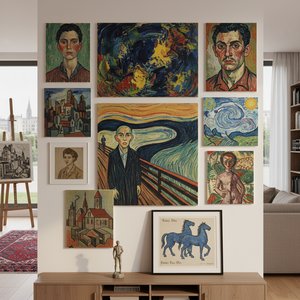
Glavna dela ekspresionizma: 10 remek-dela koja su definisala umetnički pokret
Otkrijte 10 remek-dela ekspresionizma! Uronite u svet Edvarda Muncha, Ernsta Ludwiga Kirchnera i drugih. Istaknute umetničke slike, intenzivne boje i emocionalni izraz. Pronađite inspiraciju za svoj enterijer na OriginalUniqueArt.com – vrhunski izbor reprodukcija slika!
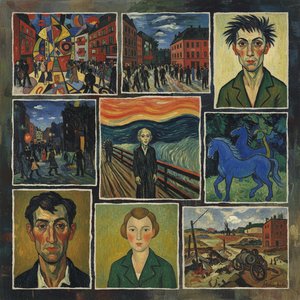
Expressionist Painting: 10 Masterpieces That Defined a Movement | OriginalUniqueArt
Explore 10 Expressionist paintings that revolutionized art! Discover Munch, Kirchner & Kandinsky's iconic works. Find museum-quality reproductions and vibrant canvas prints to elevate your home decor on OriginalUniqueArt.com.
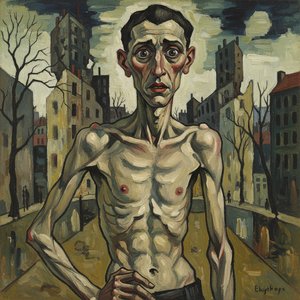
Egon Schiele: Expressionism, Anxiety & the Modern Condition – A Comprehensive Exploration
Explore the emotionally charged world of Egon Schiele (1890-1918). Discover his Expressionist masterpieces, psychological themes, and lasting impact on modern art. A comprehensive guide for collectors & enthusiasts.

The Enduring Allure of the Nude: A Historical & Artistic Exploration of the Human Form
Explore the captivating history of nude art! Discover iconic paintings & artists from classical to modern eras. Uncover symbolism, techniques & find museum-quality reproductions at OriginalUniqueArt.
Egon Schiele: 25 Remek-dela Ekspresionizma za Vaš Dom | OriginalUniqueArt
Istražite 25 remek-dela Egona Schielea – ekspresionističkih portreta i slika koje odražavaju duboke emocije. Kupite reprodukcije vrhunskog kvaliteta za dekoraciju enterijera na OriginalUniqueArt.com! Otkrijte celu kolekciju online.