
 Pregledaj u prostoru
 Pošalji
 Podeli
 Detalji o delu
 Vodič
Vodič

 Preuzmi
 Slični predmeti
 Rendgenski snimak
 Automatska prezentacija
 Pitanja i odgovori
 Statistika
Herbert Esche in the Library

- 120.0 x 70.0 cm


 Pročitaj više
Giclee štampa / Umetnički otisak
Giclée štampa ili print na platnu muzejskog kvaliteta uz brzu izradu i raznovrsne opcije završne obrade. ( Kupite ručno oslikano delo Pređi na digitalnu sliku)




P118B дин10

P118H дин10

P118W дин10

P438Z дин10

P508JH дин12

P508YH дин12

P805H дин10

P805Z дин10

P919BZ дин10

P919G дин10

P919XJ дин10

P959ZH дин10

P968JZ дин12

W106C дин8

W218G дин10

W218JH дин8

W218Y дин10

W307PJ дин10

W316G дин10

W316PJ дин8

W316Y дин10

W398PJ дин8

W4111J дин10

W500HY дин15

W500JH дин15

W692G дин12

W849H дин8

W940BG дин15

W953PJ дин8




Izaberite jednu od naših unapred definisanih veličina koje odgovaraju originalnim proporcijama umetničkog dela.

Unesite željenu širinu i visinu kako bi se štampa uklopila u vaš ram ili zid. Štampu je moguće samo iseći, ali nikada povećati iznad dimenzija originalne slike, stoga format sa drugačijim proporcijama uzrokuje gubitak dela slike. Pre početka štampe, poslaćemo vam digitalni prikaz radi potvrde. Slika prikazana na ovoj stranici ne predstavlja stvarni isrez — to pokazuje samo digitalni prikaz.
Dostava širom sveta () za 2 nedelje umesto uobičajenih 4/5 nedelja. (10 новембар)

Besplatna ekspresna dostava širom sveta

Visokokvalitetno laneno platno

Potpuno osiguranje transporta

Garancija povraćaja carine i uvoznih dažbina

Garancija vernosti boja

Politika povraćaja u roku od 100 dana (samo u slučaju nedostataka)

Garancija povrata 100% novca

Popust na više proizvoda
 Opcija sa staklom dostupna je samo za dimenzije manje od 110 cm

Herbert Esche in the Library
Giclee štampa / Umetnički otisak
Dimenzije reprodukcije
-


Ukupna cena
дин 8485
A Moment of Quiet Intensity: Edvard Munch’s “Herbert Esche in the Library”
Edvard Munch's "Herbert Esche in the Library," painted in 1905, is more than just a portrait; it’s a carefully constructed tableau of intellect, contemplation, and a subtle undercurrent of melancholy. This work, housed at the Kunsthaus Zürich, offers a rare glimpse into the private world of Herbert Eugen Esche, a textile industrialist who sought refuge in the company of one of the most influential artists of his time – Munch himself. The painting immediately draws the viewer in with its muted palette dominated by blues and yellows, creating an atmosphere both serene and subtly unsettling. It’s a testament to Munch's ability to imbue a seemingly simple scene with profound emotional resonance.
The composition is anchored by Esche’s figure, positioned slightly off-center within the frame, yet commanding considerable presence. He stands as a study in restrained dignity, his gaze direct but not overtly engaging – suggesting a man of quiet reserve and perhaps even a certain melancholy. Behind him, the library interior dissolves into an abstracted wash of color; bookshelves laden with books become blurred shapes, hinting at the vastness of knowledge and the potential distractions that lie beyond Esche’s immediate focus. This deliberate lack of detail isn't a failure of observation but rather a stylistic choice, characteristic of Munch’s Expressionist approach – prioritizing emotional impact over photographic realism.
The Influence of Henry van de Velde and the Chemnitz Context
The genesis of this painting is deeply intertwined with the architectural vision of Henry van de Velde. In 1902-1904, Van de Velde designed and built a villa for Esche in Chemnitz, Germany – a landmark of the Art Nouveau movement. The commission brought Munch to Chemnitz, where he spent three weeks amidst the industrial landscape, a stark contrast to his usual bohemian circles in Paris or Kristiania (Oslo). The painting reflects this specific setting; it’s not merely a portrait but a snapshot of Esche within his environment, commissioned by a man who valued both artistic expression and functional design. The presence of Max Linde, a Lübeck doctor who facilitated the meeting between Munch and Esche, adds another layer to the narrative – highlighting the interconnectedness of art, medicine, and social circles of the early 20th century.
Munch’s Expressionist Techniques: Line, Color, and Texture
Munch's distinctive style is immediately apparent in "Herbert Esche in the Library." Loose, expressive lines define the forms, conveying movement and emotion rather than precise detail. The outlines of Esche’s figure are softened, contributing to a sense of fluidity and vulnerability. The color palette—a blend of blues, yellows, and whites—is applied with visible brushstrokes, creating a rich, painterly texture that emphasizes the immediacy of the work. This technique, combined with the flattened perspective, is quintessential Munch – prioritizing emotional intensity over realistic representation. The use of red and green within the books adds subtle pops of color, hinting at the intellectual stimulation contained within the library’s walls.
Symbolism and Emotional Resonance
Beyond its formal elements, “Herbert Esche in the Library” is rich in symbolic meaning. The blurred background can be interpreted as representing the vastness of knowledge or the distractions of the outside world – suggesting that Esche's focus remains firmly within his own thoughts. Esche’s direct gaze, while not overtly engaging, conveys a sense of introspection and quiet dignity. It speaks to a man comfortable in his own mind, perhaps even burdened by it. The painting ultimately evokes a feeling of contemplative melancholy—a poignant reminder of the complexities of human experience and the enduring power of art to capture those elusive emotions.
A Reproduction for Your Collection
OriginalUniqueArt offers meticulously hand-painted reproductions of Edvard Munch’s “Herbert Esche in the Library,” capturing the essence of this iconic artwork with exceptional detail and fidelity. Available in a range of sizes, our reproductions provide an authentic representation of Munch's masterful technique and emotional depth. Whether you are an art collector, interior designer, or simply an admirer of Munch’s work, a OriginalUniqueArt reproduction is a beautiful and meaningful addition to your collection – bringing the quiet intensity of this remarkable painting into your space.
Pitanja i odgovori
Ko je kreirao "Herbert Esche in the Library" i u kom je stilu?
Autor dela "Herbert Esche in the Library" je Едвард Мунк, koji pripada pokretu Expressionism.
Kakvu atmosferu donosi „Herbert Esche in the Library”, autor Едвард Мунк u enterijer?
Sa svojim Dramatično raspoloženjem, delo "Herbert Esche in the Library" je idealno za Dnevna soba.
Da li „Herbert Esche in the Library”, autor Едвард Мунк koristi jake kontraste ili nežne harmonije?
Analiza boja dela „Herbert Esche in the Library”, autor Едвард Мунк beleži Upečatljiv kontrast i Uravnotežena harmonija harmoniju.
Povezani članci

Edvard Munch: 25 Remek-dela Koje Otkrivaju Dubinu Čovekove Duše | OriginalUniqueArt
Istražite 25 remek-dela Edvarda Muncha i otkrijte dubinu ekspresionizma, tugu i anksioznost u njegovim ikončnim slikama. Kvalitetne reprodukcije za dekoraciju enterijera dostupne na OriginalUniqueArt.com. Pronađite inspiraciju i kupite umetnička dela online!
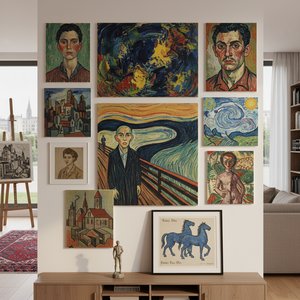
Glavna dela ekspresionizma: 10 remek-dela koja su definisala umetnički pokret
Otkrijte 10 remek-dela ekspresionizma! Uronite u svet Edvarda Muncha, Ernsta Ludwiga Kirchnera i drugih. Istaknute umetničke slike, intenzivne boje i emocionalni izraz. Pronađite inspiraciju za svoj enterijer na OriginalUniqueArt.com – vrhunski izbor reprodukcija slika!

Slate Blue Masterpieces: 10 Iconic Paintings & Timeless Home Decor Ideas
Immerse yourself in the captivating world of slate blue! Explore 10 iconic paintings by Monet, Van Gogh & Renoir. Discover their stories, techniques & find museum-quality art reproductions for your home at .
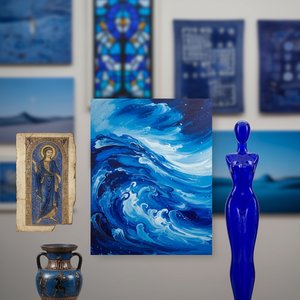
The Allure of Azure: Exploring the Symbolic & Aesthetic Depths of Blue in Art History
Explore the rich history of blue in art! Discover its symbolism, from ancient pigments to modern masterpieces by Kandinsky & Seurat. Uncover the psychological impact and cultural meanings behind this captivating hue.

Edvard Munch: Anxiety, Modernity & the Dawn of Expressionism
Explore the profound world of Edvard Munch, pioneer of Expressionism. Discover the origins of 'The Scream' & his haunting depictions of anxiety, mortality, and love. Expert analysis & high-quality reproductions at OriginalUniqueArt.


