

 Pregledaj u prostoru
 Pošalji
 Podeli
 Detalji o delu

 Преузми
 Slični predmeti
 Rendgenski snimak
 Slajdovi
Starting Prices at the Alexandra Palace


 Pročitaj više
Ručno rađena uljana reprodukcija
Ručno oslikano uljanim bojama na platnu u dimenzijama i okviru po vašem izboru, izrađeno po porudžbini od strane naših umetnika. ( Kupi print Kupi digitalnu sliku)




P118B $10

P118H $10

P118W $10

P438Z $10

P508JH $12

P508YH $12

P805H $10

P805Z $10

P919BZ $10

P919G $10

P919XJ $10

P959ZH $10

P968JZ $12

W106C $8

W218G $10

W218JH $8

W218Y $10

W307PJ $10

W316G $10

W316PJ $8

W316Y $10

W398PJ $8

W4111J $10

W500HY $15

W500JH $15

W692G $12

W849H $8

W940BG $15

W953PJ $8




Izaberite jednu od naših unapred definisanih veličina koje odgovaraju originalnim proporcijama umetničkog dela.

Можете унети сопствене димензије како бисте прилагодили дело одређеном оквиру или простору. Ако одабрана величина не одговара пропорцијама оригинала, слика ће бити исечена или проширена додатним елементима који се ручно насликавају. Дигитални prikaz ће вам бити послат на одобрење пре почетка производње.
Имајте на уму да преглед на екрану не одражава стварно исецање или проширење. Само приказ (mockup) ће тачно приказати коначну композицију.
Иако су доступне прилагођене величине, препоручујемо да одаберете димензију из дефинисане листе како бисте сачували оригиналне пропорције.
Nakon narudžbine, tim OriginalUniqueArt.com će klijentu putem e-pošte poslati uputstva i dostaviti prikaz predloženog rešenja
Isporuka širom sveta () za 3/4 nedelje umesto uobičajenih 5 nedelja. (22 август). Bez kompromisa po pitanju kvaliteta.

Besplatna ekspresna dostava širom sveta

Visokokvalitetno laneno platno

Kompletno osiguranje transporta

Garancija povraćaja carine i uvoznih dažbina

Garancija vernosti boja

Politika povrata u roku od 60 dana (samo u slučaju nedostataka)

Garancija povrata novca od 100%

Popust pri grupnoj kupovini
 Opcija sa staklom dostupna je samo za dimenzije manje od 110 cm

Starting Prices at the Alexandra Palace
Tehnika reprodukcije
Dimenzije reprodukcije
-


Konačna cena
$ 450
Biografija umetnika
Jean-Michel Basquiat: A Voice of the Streets and a Revolutionary Artist
Born in Brooklyn, New York City, on December 22, 1960, Jean-Michel Basquiat emerged from the vibrant, chaotic crucible of the late 1970s and early 1980s art scene. His life was tragically cut short at the age of 27 in August 1988 due to a heroin overdose, but during his brief career, he left an indelible mark on the world of art, becoming one of the most iconic figures of neo-expressionism and a powerful voice for social commentary.
Basquiat’s early life was deeply intertwined with the cultural landscape of New York City. Raised in a diverse neighborhood, he absorbed influences from hip-hop culture, graffiti art, and the burgeoning black arts movement. This environment profoundly shaped his artistic vision, informing his use of language, imagery, and social critique. Initially, Basquiat collaborated with Al Diaz under the pseudonym SAMO, creating enigmatic epigrams that appeared on subway cars throughout Manhattan. These early works established a unique visual vocabulary characterized by bold lettering, fragmented images, and cryptic messages – a precursor to his later, more fully realized paintings.
The Rise of Neo-Expressionism and Basquiat’s Unique Style
By the early 1980s, Basquiat transitioned from graffiti to painting, quickly gaining recognition for his distinctive style. He embraced neo-expressionism, a movement that rejected the cool detachment of minimalism and returned to subjective expression, often employing raw emotion and gestural brushstrokes. However, Basquiat’s work transcended simple categorization; he blended elements of street art, pop culture references, historical imagery, and personal reflections into a complex and layered visual language.
His paintings frequently featured skulls, crowns (a symbol of royalty and power), musical instruments, and portraits – often depicting black figures. He incorporated text extensively, using words, phrases, and names to create narratives that addressed issues of race, poverty, inequality, and the American Dream. Basquiat’s method was remarkably unconventional; he would often sketch directly onto the canvas with charcoal, creating a foundation for his subsequent layers of paint. His works were characterized by a frenetic energy, a sense of urgency, and a deliberate juxtaposition of seemingly disparate elements.
Themes of Power, Identity, and Social Critique
At the heart of Basquiat’s art lay a deep engagement with social and political issues. He confronted themes of racism, police brutality, economic disparity, and the commodification of art – often exposing the hypocrisy and contradictions inherent in American society. His work served as both a personal reflection on his own experiences as a black artist navigating a predominantly white art world and a broader critique of power structures and systemic inequalities.
Works like *Irony of Negro Policeman* (1981) and *Defacement* (1983), depicting a skull with a police badge, powerfully addressed issues of racial injustice. Similarly, paintings such as *Hollywood Africans* (1983) satirized the appropriation of black culture by Hollywood, highlighting the exploitation and misrepresentation that often occurred within the entertainment industry. His art wasn’t simply decorative; it was an active engagement with the world around him.
Legacy and Historical Significance
Despite his tragically short life, Jean-Michel Basquiat achieved remarkable success during his lifetime. He exhibited in prestigious galleries and museums worldwide, including the Whitney Museum of American Art in New York City, and his work quickly gained significant value. His influence on subsequent generations of artists is undeniable, shaping the trajectory of neo-expressionism and inspiring countless creatives to explore themes of social justice and personal identity through their art.
Today, Basquiat’s paintings are among the most valuable in the world, commanding prices that reflect both his artistic genius and the enduring relevance of his message. He remains a potent symbol of creativity, rebellion, and the power of art to challenge the status quo – a true revolutionary artist who dared to speak truth to power through his unique visual language.

daniel james higgins
1980 - , United States of America
Osnovne informacije
- Artistic Movement Or Style: Neo-expressionism
- Artists Or Movements Influenced By This Artist:
- Graffiti art
- Hip-hop culture
- Artists Who Influenced This Artist:
- Andy Warhol
- Keith Haring
- Date Of Birth: December 22, 1960
- Date Of Death: August 12, 1988
- Full Name: Jean-Michel Basquiat
- Nationality: American
- Notable Artworks:
- Irony of Negro Policeman
- Skull of Doom
- Untitled
- Boy and Dog in a Johnnypump
- Defacement
- Place Of Birth: New York City, U.S.
Povezani članci

Etching: A Historical Survey of Technique, Aesthetic Qualities & Enduring Artistic Significance
Explore the rich history of etching, from its origins to Rembrandt's masterful innovations. Discover the technique, aesthetic qualities & enduring legacy of this captivating art form. Expert insights for collectors and enthusiasts.

Džems Abbot MekNil Whistler: 25 Remek-dela Majstora Tonalizma | OriginalUniqueArt
Istražite 25 remek-dela Džemsa Abota MekNila Whistler-a! Uronite u svet Tonalizma, portreta i prelepog pejzaža. Kupite vrhunske reprodukcije slika na OriginalUniqueArt.com i obogatite svoj enterijer luksuznom umetnošću.
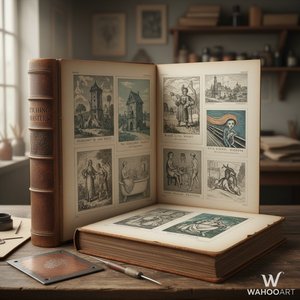
Etching Masters: 10 Legendary Prints That Revolutionized Art | OriginalUniqueArt
Journey through 10 legendary etching masterpieces by Rembrandt, Dürer & Goya. Explore the history of printmaking and discover timeless art for your home. Find museum-quality reproductions at OriginalUniqueArt.com.

The Intricate World of Etching: A Historical Survey of Technique, Aesthetic Evolution, and Enduring Artistic Impact
Explore the rich history of etching, from its origins to modern practice. Discover techniques, key artists like Rembrandt, and insights for collectors. A comprehensive guide by OriginalUniqueArt.

Sir Alfred Munnings' Masterpieces: 25 Paintings That Define Equine Art | OriginalUniqueArt
Explore 25 iconic Sir Alfred Munnings paintings! Discover the beauty of British Impressionism, equine art & rural England. Find museum-quality reproductions and elevate your home decor with OriginalUniqueArt. Explore the full collection online.

