Pređi na štampu
 Pročitaj više







































 Za umetnička dela ili reprodukcije čija je bilo koja strana veća od 105 cm (približno 41 inč), okvir će biti isporučen u obliku rastavljenog seta za sklapanje. Ovaj metod osigurava bezbednu dostavu i sprečava oštećenja tokom transporta.


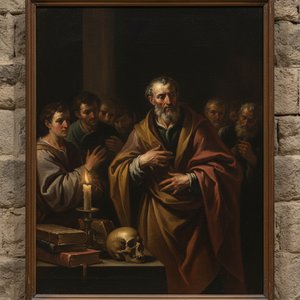
A Vision of Divine Majesty
In the heart of the Spanish Baroque, where the boundaries between the earthly and the divine often blurred through dramatic light and shadow, Claudio Coello crafted one of his most profound achievements. The Triumph of Saint Augustine is not merely a portrait of a holy man; it is a breathtaking window into the spiritual fervor of the 17 and century. As viewers approach this masterpiece, they are immediately swept into a scene of celestial grandeur. The central figure, Saint Augustine of Hippo, emerges from the canvas as an aged patriarch, his face etched with the wisdom of decades spent in deep theological contemplation. Clad in a rich, crimson robe that commands attention, he holds a staff, grounding his spiritual authority within the physical realm. Above him, the heavens seem to open, as an angelic figure descends, bathed in a luminous glow that represents the Holy Spirit, casting a divine light upon the saint’s serene countenance.
The composition is a masterclass in Baroque dynamism. Coello eschews static symmetry in favor of a swirling, energetic arrangement that guides the eye through a complex narrative of faith. To the sides, other figures emerge from the periphery, their presence adding layers of human emotion and communal devotion to the scene. The architectural setting, rendered with meticulous detail, serves as more than just a backdrop; it is a symbolic fortress of divine authority, where every carved ornament and heavy drapery speaks to the permanence and splendor of the Church. This interplay between the solid, ornate architecture and the ethereal, floating angelic presence creates a tension that is both captivating and spiritually uplifting.
The Alchemy of Light and Color
Technically, Coello demonstrates why he was considered the last great master of the 17th-century Spanish school. His use of chiaroscuro—the dramatic contrast between deep, velvety shadows and brilliant, piercing highlights—is nothing short of transformative. Through layers of translucent pigment, Coello achieves a luminous surface that seems to radiate its own internal light. This technique does more than define form; it breathes life into the textures of the painting, from the heavy, tactile folds of the saint's red robes to the soft, almost weightless appearance of the angelic wings. The color palette is opulent and deliberate, utilizing deep reds, golds, and earthy tones to evoke a sense of warmth, richness, and historical gravity.
For the discerning collector or interior designer, this work offers an unparalleled opportunity to introduce a sense of historical depth and sophisticated drama into a space. A high-quality reproduction of this piece serves as a profound focal point, capable of anchoring a room with its intense emotional resonance and classical elegance. It is a painting that demands contemplation, inviting anyone who gazes upon it to reflect on the themes of wisdom, grace, and the enduring triumph of the spirit. Whether placed in a grand library or a curated gallery setting, The Triumph of Saint Augustine brings with it the unmistakable prestige of the Spanish Golden Age.
Pitanja i odgovori
Koliko svetlosti se čini da boje dela "The Triumph of St Augustine" reflektuju?
Boje dela "The Triumph of St Augustine" pokazuju luminancu od Soft Shadow.
Gde mogu da preuzmem „The Triumph of St Augustine”, autor Клаудио Коело?
Preuzimanje je dostupno za "The Triumph of St Augustine": na stranici Preuzimanje digitalnog prikaza ovog umetničkog dela možete preuzimanje digitalne slike visoke rezolucije.
Za šta se preporučuje korišćenje printa dela "The Triumph of St Augustine"?
Predložena upotreba za „The Triumph of St Augustine”, autor Клаудио Коело je Accent. Može služiti i u druge svrhe.
 Pregledaj u prostoru
 Pošalji
 Podeli
 Detalji o delu
 Vodič
Vodič

 Preuzmi
 Slični predmeti
 Rendgenski snimak
 Automatska prezentacija
 Q&A
Q&A Statistika