

 Pregledaj u prostoru
 Podeli
 Podeli
 Detalji
 Vodič
Vodič

 Preuzmi sliku
 Slični predmeti
 Rendgenski snimak
 Automatska prezentacija
 Statistika
Crucifix (detail)
 Acrylic On Canvas
- WallArt
- Early Renaissance
 1268
1268- Renaissance
 45.0 x 28.0 cm
 San Domenico
 Pročitaj više
Ručno rađena uljana reprodukcija
Ručno oslikano uljanim bojama na platnu u dimenzijama i okviru po vašem izboru, izrađeno po porudžbini od strane naših umetnika. ( Pređi na prodaju štampanih primeraka Pređi na prodaju digitalnih slika)




P118B дин10

P118H дин10

P118W дин10

P438Z дин10

P508JH дин12

P508YH дин12

P805H дин10

P805Z дин10

P919BZ дин10

P919G дин10

P919XJ дин10

P959ZH дин10

P968JZ дин12

W106C дин8

W218G дин10

W218JH дин8

W218Y дин10

W307PJ дин10

W316G дин10

W316PJ дин8

W316Y дин10

W398PJ дин8

W4111J дин10

W500HY дин15

W500JH дин15

W692G дин12

W849H дин8

W940BG дин15

W953PJ дин8




Izaberite jednu od naših unapred definisanih veličina koje odgovaraju originalnim proporcijama umetničkog dela.

Unesite širinu i visinu koja vam je potrebna, kako bi se uklopili u vaš ram ili zid. Pošto je ovo ručno oslikano delo, umetnik može naslikati malo više prostora oko slike ili malo skratiti ivice za dimenzije drugačijeg oblika — izbor je na vama. Pre početka rada, poslaćemo vam digitalni prikaz radi potvrde. Slika prikazana na ovoj stranici ne predstavlja konačan rezultat — samo digitalni prikaz pokazuje stvarnu sliku.
Nakon narudžbine, tim OriginalUniqueArt.com će klijentu putem e-pošte poslati uputstva i dostaviti prikaz predloženog rešenja
Svetska isporuka () za 3/4 nedelje umesto uobičajenih 5 nedelja. (22 октобар). Bez kompromisa po pitanju kvaliteta.

Besplatna ekspresna dostava širom sveta

Visokokvalitetno laneno platno

Sveobuhvatno osiguranje transporta

Garancija povraćaja carine i uvoznih dažbina

Garancija vernosti boja i autentičnosti pri reprodukciji

Politika povraćaja u roku od 100 dana (samo u slučaju nedostataka)

Garancija povrata 100% novca

Popust pri većoj količini
 Opcija sa staklom dostupna je samo za dimenzije manje od 110 cm

Crucifix (detail)
Tehnika izrade reprodukcije
Veličina reprodukcije
-


Ukupna cena
дин 33421
A Glimpse into Divine Sorrow: Cimabue’s *Crucifix (detail)*
This exquisite detail from Cimabue's larger *Crucifix* (circa 1268) offers a profoundly moving encounter with the Virgin Mary and infant Jesus. Painted during a pivotal moment in art history, this work transcends mere religious iconography to become a powerful expression of maternal grief and spiritual contemplation. It’s a piece that resonates across centuries, offering both artistic beauty and emotional depth.Historical Context & Artistic Transition
Cimabue – or *Cenni di Pepo* as he was known – stands at the cusp of the Italian Renaissance. He was one of the first artists to actively move away from the rigid conventions of the Italo-Byzantine style, which had dominated Italian painting for generations. While still exhibiting elements of Byzantine formality—note the gold halo and stylized drapery—Cimabue infused his work with a nascent naturalism. This is visible in the attempt to render more lifelike proportions and introduce subtle shading, paving the way for artists like Giotto, who would fully embrace Renaissance ideals. The artwork originates from Florence, Italy, a city rapidly becoming a center of artistic innovation. Originally created for the church of San Francesco in Pisa, it now resides at the Barts Hospital in London.Subject & Symbolism
The detail focuses intensely on the Madonna and Child. Mary cradles the infant Jesus, her expression one of profound sorrow and premonition. This isn’t a joyful depiction of motherhood; rather, it foreshadows the suffering to come – Christ's Passion and crucifixion. Key symbolic elements amplify this emotional weight:- The veil draped over Mary’s head signifies her purity and modesty, traditional attributes associated with the Virgin.
- Her downcast gaze is a powerful visual cue of grief, sorrow, and acceptance of her son's destiny.
- The gold halo surrounding both figures denotes their holiness and divine status.
Technique & Materials
Cimabue masterfully employed tempera paint on a gesso-prepared wood panel. This technique, common in the period, involved layering pigments mixed with egg yolk to create luminous colors. The artist’s skillful use of impasto – applying thick layers of paint – is particularly evident in the folds of Mary's cloak and her skin tones, adding a tactile quality and enhancing the sense of volume. Despite its age, the artwork retains a remarkable vibrancy thanks to the enduring qualities of tempera and the inclusion of gold leaf for highlights. The shallow perspective and limited atmospheric depth are characteristic of panel painting from this era.Emotional Impact & Aesthetic Qualities
The overall effect is one of solemnity, piety, and profound emotional resonance. Cimabue doesn’t simply depict a religious scene; he invites the viewer to share in Mary's sorrow and contemplate the weight of faith and sacrifice. The warm earthy tones – ochre, terracotta, and gold – create a rich, aged aesthetic that evokes a sense of timelessness. While not striving for photorealistic detail, Cimabue’s stylized approach imbues the figures with a dignified grace and emotional power. This *Crucifix (detail)* is more than just an artwork; it's a window into the spiritual world of medieval Italy and a testament to the enduring power of human emotion. It would be a stunning focal point in any collection, adding depth and historical significance to both classic and contemporary interiors.Pitanja i odgovori
O kakvoj vrsti umetničkog dela je „Crucifix (detail)”, Кимбаве?
U katalogu je delo „Crucifix (detail)”, Кимбаве klasifikovano kao WallArt. Ova kategorija pomaže u pronalaženju sličnih radova.
Iz kog je istorijskog perioda "Crucifix (detail)"?
Istorijska epoha dela „Crucifix (detail)”, Кимбаве je Renaissance. Ova klasifikacija smešta delo u okvir istorije umetnosti.
Da li je „Crucifix (detail)”, Кимбаве svetlo ili tamno umetničko delo?
U pogledu percepcije osvetljenosti, „Crucifix (detail)”, Кимбаве je balanced.
Biografija umetnika
Cimabue: Grandfather of the Italian Renaissance
Giovanni Cimabue, born Cenni di Pepo around 1240 in Florence, stands as a monumental figure—a bridge between the established artistic traditions of the Byzantine world and the burgeoning innovations that would define the Italian Renaissance. His life, though partially obscured by time and romanticized accounts – most notably those penned by Giorgio Vasari centuries later – marks an undeniable turning point in Western art history. Cimabue wasn’t simply a painter; he was a courageous innovator who dared to subtly challenge artistic conventions, laying the groundwork for the revolutionary changes that would soon sweep across Italy. Even his nickname, believed to mean “bull-headed,” hints at a strong will and perhaps a rebellious spirit—qualities demonstrably present in his willingness to experiment with form and expression. He represents a crucial moment where art began to shift from being solely devotional imagery towards something more humanistic and emotionally resonant.Early Influences and Artistic Development
Initially immersed in the Italo-Byzantine style prevalent throughout Florence, Cimabue’s early work adhered closely to established aesthetic principles: flattened figures adorned with shimmering gold leaf, symbolic rather than realistic depictions of space, and a profound focus on religious iconography. However, even within these constraints, a nascent desire for naturalism began to emerge. He wasn't content merely replicating existing forms; he sought to imbue his paintings with a greater sense of life and emotional depth. While the precise nature of his early training remains debated, it’s likely he honed his skills within Florentine workshops, absorbing the techniques and influences of the time while simultaneously developing his own unique artistic voice. The Byzantine style, characterized by its formality and spiritual focus, provided him with a solid foundation, but Cimabue began to subtly introduce elements that would foreshadow the coming Renaissance—a greater attention to volume, more expressive facial features, and a nascent understanding of spatial relationships. This wasn’t a sudden break from tradition, but rather a gradual evolution, a delicate balancing act between honoring the past and embracing new possibilities.The Maestro's Vision: Giotto and Beyond
Despite Cimabue’s untimely demise in 1302—leaving behind scant biographical details—his influence on subsequent generations of artists is undeniable. Most notably, he mentored Giotto di Bondone, arguably the first true Renaissance Master. Vasari recounts a legendary tale – one that captures the spirit of their relationship – wherein Cimabue playfully painted a fly onto Giotto’s face, symbolizing his surpassing brilliance. This anecdote underscores not only Cimabue's generosity as a teacher but also the dynamic tension between mentor and pupil—a rivalry fueled by mutual respect and culminating in Giotto’s triumph over his predecessor. Cimabue’s artistic innovations extended beyond Giotto’s training; he challenged the conventions of his time, demonstrating that art could transcend mere symbolism and express profound human emotion. His willingness to experiment with form, proportion, and color paved the way for the groundbreaking achievements of the Renaissance—establishing him as a pivotal transitional figure in Western art history.Notable Works: A Legacy of Innovation
Cimabue’s artistic output is characterized by remarkable stylistic diversity, reflecting his evolving understanding of artistic principles throughout his career. The *Maestà*, commissioned for the Church of San Francesco in Pisa around 1280, stands as a testament to Cimabue's mastery of composition and color—a bold departure from the rigid Byzantine aesthetic that dominated earlier medieval painting. Unlike its predecessors, the *Maestà* achieves a palpable sense of depth and volume, conveying an emotional resonance previously absent from devotional art. The figures are rendered with meticulous detail, capturing subtle nuances of expression and embodying a newfound appreciation for human anatomy. This monumental altarpiece signaled Cimabue’s embrace of Renaissance ideals—a shift toward naturalism and psychological realism that would profoundly reshape the artistic landscape of Italy. Similarly impressive is *The Crucifixion*, executed circa 1270 for the Basilica of San Domenico in Arezzo. Cimabue's depiction of Christ on the cross represents a decisive step away from Byzantine conventions—characterized by stylized figures and distant perspectives. The artist skillfully employs shading to imbue the crucified figure with flesh-like plasticity, conveying the agony of suffering with remarkable sensitivity. Furthermore, Cimabue’s masterful use of color enhances the dramatic impact of the scene—creating a visual experience that transcends mere representation and engages the viewer emotionally. Finally, Cimabue's contribution to Florentine art is cemented through his involvement in the decoration of the Baptistery of Florence – specifically the mosaic depicting Saint John the Evangelist completed between 1301 and 1302. This monumental artwork exemplifies Cimabue’s artistic prowess as a mosaicist—demonstrating his ability to integrate intricate geometric patterns with vibrant colors—creating a visually stunning masterpiece that continues to inspire awe and admiration centuries later. Cimabue's legacy endures not merely as an artist but as a catalyst for change—a visionary who ushered in the dawn of the Renaissance, forever altering the course of Western art history.
Кимбаве
1240 - 1302 , Italija
Brzi pregled
- Artistic Movement Or Style: Byzantine & Renaissance
- Artists Who Influenced This Artist:
- Giunta Pisano
- Coppo di Marcovaldo
- Date Of Birth: c. 1240
- Date Of Death: 1302
- Full Name: Giovanni Cimabue
- Nationality: Italian
- Notable Artworks:
- Maestà
- Crucifixion
- Flagellation of Christ
- Place Of Birth: Florence, Italy
Srodni članci
Jacob Henricus Maris: A Master of Dutch Atmospheric Realism & the Intimate Landscape
Explore the captivating world of Jacob Henricus Maris, a leading figure of the Dutch Hague School. Discover his atmospheric landscapes, signature brushstrokes & lasting influence on 19th-century art. Learn more at OriginalUniqueArt.
Giotto di Bondone: 25 Remek-dela koji definišu renesansu | OriginalUniqueArt
Istražite 25 remek-dela Giotta di Bondonea i otkrijte renesansnu umetnost u punom sjaju. Freske, oltarske slike & istorija italijanske umetnosti na OriginalUniqueArt.com! Reprodukcije vrhunskog kvaliteta za vaš dom.
Late Medieval Masterpieces: 10 Artworks That Defined an Era | OriginalUniqueArt
Journey through 10 defining Late Medieval masterpieces – from Giotto's frescoes to Jan van Eyck’s realism. Explore the stories, techniques & vibrant colors of Gothic art. Find museum-quality reproductions and elevate your home decor with OriginalUniqueArt.com! Discover all masterpieces on OriginalUniqueArt.com
High Medieval Art: 10 Masterpieces That Shaped an Era | OriginalUniqueArt
Journey through High Medieval Art! Explore 10 iconic masterpieces – from Giotto's frescoes to stunning Gothic cathedrals. Discover the stories behind these timeless paintings, sculptures & illuminated manuscripts. Find museum-quality art reproductions at OriginalUniqueArt.com.
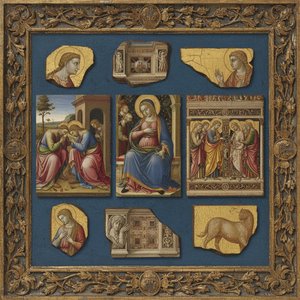
Proto-Renaissance Masters: 10 Artworks That Changed History | OriginalUniqueArt
Journey back to the dawn of Renaissance art! Explore 10 iconic Proto-Renaissance masterpieces by Giotto, Cimabue & Duccio. Discover their stories, techniques & lasting impact. Find museum-quality reproductions for your home at OriginalUniqueArt.com


