

 Pregledaj u prostoru
 Podeli
 Podeli
 Detalji
 Vodič
Vodič

 Preuzmi sliku
 Slični predmeti
 Rendgenski snimak
 Automatska prezentacija
 Statistika
Rural Landscape


 Pročitaj više
Giclee štampa / Umetnički otisak
Giclée štampa ili print na platnu muzejskog kvaliteta uz brzu izradu i raznovrsne opcije završne obrade. ( Naručite ručno oslikano reprodukciju Pređi na prodaju digitalnih slika)




P118B дин10

P118H дин10

P118W дин10

P438Z дин10

P508JH дин12

P508YH дин12

P805H дин10

P805Z дин10

P919BZ дин10

P919G дин10

P919XJ дин10

P959ZH дин10

P968JZ дин12

W106C дин8

W218G дин10

W218JH дин8

W218Y дин10

W307PJ дин10

W316G дин10

W316PJ дин8

W316Y дин10

W398PJ дин8

W4111J дин10

W500HY дин15

W500JH дин15

W692G дин12

W849H дин8

W940BG дин15

W953PJ дин8




Izaberite jednu od naših unapred definisanih veličina koje odgovaraju originalnim proporcijama umetničkog dela.

Unesite širinu i visinu koja vam je potrebna, kako bi se uklopili u vaš ram ili na vaš zid. Štampa se može samo iseći, nikada ne može biti veća od originalne slike, stoga format sa drugačijim proporcijama gubi deo slike. Poslaćemo vam digitalni prikaz radi potvrde pre nego što započnemo štampu. Slika prikazana na ovoj stranici ne pokazuje stvarni rez — to pokazuje samo digitalni prikaz.
Dostava širom sveta () za 2 nedelje umesto uobičajenih 4/5 nedelja. (24 октобар)

Besplatna ekspresna dostava širom sveta

Visokokvalitetno laneno platno

Sveobuhvatno osiguranje transporta

Garancija povraćaja carine i uvoznih dažbina

Garancija vernosti boja i autentičnosti pri reprodukciji

Politika povraćaja u roku od 100 dana (samo u slučaju nedostataka)

Garancija povrata 100% novca

Popust pri većoj količini
 Opcija sa staklom dostupna je samo za dimenzije manje od 110 cm

Rural Landscape
Giclee štampa / Umetnički otisak
Veličina reprodukcije
-


Ukupna cena
дин 8263
A Serene Vision of Rural America: Charles Harold Davis’ “Rural Landscape”
Charles Harold Davis' "Rural Landscape," painted in 1905, isn’t merely a depiction of a field and trees; it’s an invitation to step into a moment of profound tranquility. Born in Amesbury, Massachusetts, in 1856, Davis honed his artistic skills under the tutelage of prominent figures like Jules Joseph Lefebvre and Gustave Boulanger in Paris, absorbing the vibrant energy of the European art scene before returning to America and embracing a distinctly American aesthetic. His work, particularly during his time in Mystic, Connecticut, shifted towards a Tonalist style, characterized by its muted colors, atmospheric perspective, and an almost meditative focus on capturing the essence of nature – a legacy deeply influenced by the Barbizon School’s emphasis on light and shadow.
The painting immediately draws the eye with its harmonious blend of blues, greens, and browns. Davis masterfully employs a technique reminiscent of Impressionism, though tempered with a Tonalist sensibility. He doesn't strive for photographic realism; instead, he uses broken brushstrokes and subtle gradations of color to evoke a feeling of atmosphere—the hazy warmth of the afternoon sun filtering through the trees, the gentle movement of clouds across the sky. The composition is carefully balanced, leading the viewer’s eye through the scene towards a distant horizon, creating a sense of depth and spaciousness. Note the delicate rendering of the foliage – not sharply defined, but rather suggested with loose, expressive strokes that capture the texture and vitality of the landscape.
The Language of Light and Shadow
Davis’s genius lies in his ability to translate light into color and form. The painting is bathed in a soft, diffused light, characteristic of the late afternoon. He skillfully uses shadows to define shapes and create a sense of volume, particularly in the trees that frame the scene. These aren't dark, ominous shadows; they are gentle, almost luminous, suggesting warmth and inviting the viewer into the heart of the landscape. The clouds themselves are rendered with remarkable subtlety, shifting between shades of gray and blue, creating an ethereal quality that elevates the painting beyond a simple depiction of weather.
The inclusion of figures in the foreground adds a layer of narrative to the scene without disrupting its overall sense of serenity. These individuals – likely farmers or laborers – are rendered with minimal detail, serving primarily as anchors for the viewer’s eye and subtly hinting at human connection within this vast landscape. They represent not just a rural life but also a timeless harmony between humanity and nature.
Symbolism and Emotional Resonance
“Rural Landscape” is more than just a pretty picture; it's imbued with symbolism. The scene evokes a sense of nostalgia for a simpler time, a longing for connection to the land, and an appreciation for the beauty of the natural world. It speaks to the values of hard work, community, and resilience – themes that were particularly resonant in America at the turn of the 20th century.
The painting’s quietude is profoundly calming. It invites contemplation and offers a respite from the stresses of modern life. Davis's masterful use of color and light creates an emotional atmosphere of peace, contentment, and connection to something larger than oneself. The scene feels both familiar and timeless, tapping into a deep-seated human desire for beauty and tranquility.
A Legacy in American Art
Charles Harold Davis’s “Rural Landscape” stands as a testament to the power of Tonalist and Impressionistic techniques to capture the essence of the American landscape. His work is represented in prominent museums, including the Metropolitan Museum of Art and the Corcoran Gallery of Art, solidifying his place as a significant figure in American art history. Reproductions of this evocative painting offer a beautiful way to bring a touch of rural serenity into any home or office – a reminder of the enduring beauty and tranquility of the natural world.
Pitanja i odgovori
Kako mogu da pregledam reprodukciju dela „Rural Landscape”, Čarls Harold Devis?
Da biste pregledali reprodukciju dela „Rural Landscape”, Čarls Harold Devis, otvorite stranicu Pregled za to umetničko delo.
Gde se "Rural Landscape" nalazi u okviru opusa umetnika Čarls Harold Devis?
„Rural Landscape“ pripada Realism periodu stvaralaštva umetnika Čarls Harold Devis, čije su upečatljive teme obuhvatale realist painting tradition, american impressionism hints, depiction of rural america, early 20th-century life, typical landscape subject, reflects artist's style, focus on natural beauty, part of broader series.
Koji emocionalni ton prati stil Realism u delu "Rural Landscape"?
Calm emocija dela "Rural Landscape" prati njegov Realism stil.
Biografija umetnika
Rani život i edukacija
Čarls Harold Devis, istinski američki slikar pejzaža, došao je na svet 7. januara 1856. godine u Ejmsberiju, u Masačusetsu. Kao talentovani učenik Boston muzeja lepih umetnosti, on je 1880. godine poslat u Pariz kako bi usavršio svoj zanat. Pod mentorstvom Žula Žozefa Lefebvra i Gustava Bulanjera u prestižnoj Akademiji Žulijan, Devis je izgradio duboko razumevanje evropske umetničke scene.Umetnički stil i uticaji
Devisovo delo prepoznatljivo je po svojim spokojnim i idiličnim prikazima pejzaža, koji često sa najvećom preciznošću beleže samu suštinu prirodne lepote. Njegovo vreme provedeno u Barbizonu, gde je intenzivno stvarao, ostavilo je neizbrisiv trag na njegov stil, koji se vremenom transformisao ka impresionizmu. Ova umetnička evolucija najjasnije se ogleda u njegovim prikazima oblaka, po kojima je postao svetski poznat.Značajna dostignuća i pripadnosti
- Postao je punopravni član Nacionalne akademije dizajna 1906. godine.
- Osvojio je srebrnu medalju na Pariskoj izložbi 1889. godine.
- Njegova dela su zastupljena u najznačajnijim muzejima, uključujući Metropolitenski muzej umetnosti (Njujork), Korkoran galeriju umetnosti (Vašington) i Boston muzej lepih umetnosti.
Nasleđe
Devisovo nasleđe prevazilazi njegove umetničke doprinose. On je odigrao ključnu ulogu u osnivanju Udruženja umetnika Mistika 1913. godine, čime je postao vodeća figura umetničke kolonije koja se razvila u Mistiku, u Konektikatu. Pogledajte dela Čarlsa Harolda Devisa na OriginalUniqueArt: https://OriginalUniqueArt.com/@/charles-harold-davis Pročitajte više o Čarlsu Haroldu Devisu na Vikipediji: https://en.wikipedia.org/wiki/charles_harold_davis
Čarls Harold Devis
1856 - 1933
Srodni članci

25 Remek-dela Džona Konstebla: Lepota Engleske na Platnu | OriginalUniqueArt
Uronite u svet Džona Konstebla! Otkrijte 25 remek-dela engleskog pejzaža, romantizma i seoske idile. Kupite reprodukcije slika vrhunskog kvaliteta za dekoraciju enterijera na OriginalUniqueArt.com.

The Unvarnished Truth: A Cultural Journey Through the Soul of American Realism
Explore the profound beauty of American Realism. From the Ashcan School's urban grit to intimate portraits, discover how artists captured the authentic soul of a nation through unvarnished truth and masterful observation.

Grant Wood & American Regionalism: Identity, Myth & the Rural Landscape
Explore the world of Grant Wood & American Regionalism with OriginalUniqueArt. Discover the symbolism behind 'American Gothic', recurring themes, and the movement's lasting impact on art history. High-quality reproductions available.

American Realism's Defining Works: 10 Masterpieces for Your Home
Explore 10 defining American Realism masterpieces – Hopper, Homer & more. Discover the stories behind these iconic paintings and bring timeless art to your home with OriginalUniqueArt's museum-quality reproductions. Explore the full collection online.
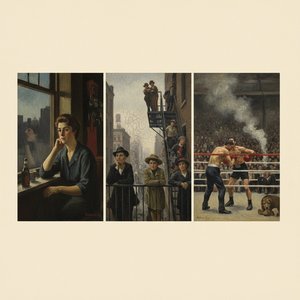
American Realism: Social Commentary & Artistic Representation in Early 20th-Century Painting
Explore the powerful social commentary & artistic representation of American Realism. Discover key artists like Bellows & Sloan, and understand the movement's lasting impact on 20th-century art history.