

 Pregledaj u prostoru
 Podeli
 Podeli
 Detalji
 Vodič
Vodič

 Preuzmi sliku
 Slični predmeti
 Rendgenski snimak
 Automatska prezentacija
 Statistika
Bajamar
 Pročitaj više
Ručno rađena uljana reprodukcija
Ručno oslikano uljanim bojama na platnu u dimenzijama i okviru po vašem izboru, izrađeno po porudžbini od strane naših umetnika. ( Pređi na prodaju štampanih primeraka Pređi na prodaju digitalnih slika)




































Izaberite jednu od naših unapred definisanih veličina koje odgovaraju originalnim proporcijama umetničkog dela.

Možete uneti sopstvene dimenzije kako biste prilagodili umetničko delo određenom okviru ili prostoru. Ako odabrana veličina ne odgovara proporcijama originala, slika će biti isečena ili proširena dodatnim elementima koji se ručno oslikavaju. Digitalni prikaz će vam biti poslat na odobrenje pre početka proizvodnje.
Imajte na umu da pregled na ekranu ne odražava stvarno prisecanje ili proširenje. Samo mockup će precizno prikazati konačnu kompoziciju.
Iako su dostupne prilagođene veličine, preporučujemo da izaberete dimenziju iz unapred definisane liste kako biste sačuvali originalne proporcije.
Nakon narudžbine, tim OriginalUniqueArt.com će klijentu putem e-pošte poslati uputstva i dostaviti prikaz predloženog rešenja
Svetska isporuka () za 3/4 nedelje umesto uobičajenih 5 nedelja. (7 октобар). Bez kompromisa po pitanju kvaliteta.

Besplatna ekspresna dostava širom sveta

Visokokvalitetno laneno platno

Sveobuhvatno osiguranje transporta

Garancija povraćaja carine i uvoznih dažbina

Garancija vernosti boja i autentičnosti pri reprodukciji

Politika povraćaja u roku od 100 dana (samo u slučaju nedostataka)

Garancija povrata 100% novca

Popust pri većoj količini
 Opcija sa staklom dostupna je samo za dimenzije manje od 110 cm

Bajamar
Tehnika izrade reprodukcije
Veličina reprodukcije
-


Ukupna cena
дин 30293
Biografija umetnika
A Pioneer of Spanish Realist Landscape Painting
Carlos de Haes, born in Brussels in 1829 and later a defining figure in Spanish art, occupies a unique position as a bridge between Northern European landscape traditions and the burgeoning realist movement within Spain. His journey began not amidst artistic circles, but within a family of bankers, a background that would subtly inform his meticulous approach to observation and representation. The relocation to Málaga in 1835 proved pivotal, immersing the young artist into a distinctly Spanish light and culture that would become the enduring subject of his work. Early training under Luis de la Cruz y Ríos, a neoclassical portraitist, provided a foundational skill set, but it was his subsequent studies with Joseph Quinaux, a Flemish landscape painter, that truly ignited his artistic path. Quinaux instilled in him the revolutionary practice of *en plein air* painting – working directly from nature – a method that would become synonymous with de Haes’s name and fundamentally alter Spanish art education. These formative years were further enriched by extensive travels throughout Europe—Holland, France, and Germany—exposing him to diverse artistic styles and broadening his understanding of landscape representation.Forging a New Path in Spain
Returning to Spain in 1855, de Haes actively engaged with the National Exhibitions of Fine Arts, steadily gaining recognition for his increasingly sophisticated landscapes. However, it was his appointment as professor of landscape painting at the Real Academia de Bellas Artes de San Fernando in 1857 that cemented his legacy. This wasn’t merely a professional advancement; it was a paradigm shift. De Haes championed *en plein air* painting and direct observation from nature—a radical departure from the then-prevalent studio-bound academic tradition. He became an Academician at the Royal Academy in 1860, further solidifying his influence. His teaching extended far beyond technical instruction; he fostered a generation of landscape painters who embraced outdoor work and sought to capture the essence of Spain’s diverse topography. Among his most notable students were Jaime Morera, Aureliano de Beruete, and Darío de Regoyos—artists who would themselves become leading figures in Spanish Realism. While *La Canal de Mancorbo en los Picos de Europa*, submitted to the 1876 National Exhibition, didn’t initially receive a prize, its profound impact was undeniable. The painting's realistic depiction of the rugged Spanish landscape resonated deeply and was subsequently acquired by the Museo del Prado, marking a significant moment in the acceptance of landscape as a serious genre within the Spanish art world.Style, Influences, and Artistic Evolution
De Haes is fundamentally recognized as a Realist painter, prioritizing accurate representation over romanticized ideals. His early work reflects this commitment, meticulously capturing the details of light, atmosphere, and terrain. However, his style wasn’t static. Over time, it evolved towards the aesthetic principles of the Barbizon School, characterized by looser brushwork and an increased emphasis on conveying atmospheric effects. This shift is evident in a growing sensitivity to mood and nuance within his landscapes. The influence of Joseph Quinaux remained paramount throughout his career, continually reinforcing the importance of direct observation. Beyond this foundational mentorship, de Haes drew inspiration from broader European landscape traditions encountered during his travels, synthesizing these influences into a uniquely Spanish vision. He wasn’t simply replicating what he saw; he was interpreting it through a lens shaped by his Belgian origins and his deep immersion in the Spanish environment. This synthesis allowed him to capture “something of a particularly Spanish ‘essence’” as contemporaries noted—a quality that distinguished his work from purely imitative representations.A Lasting Legacy
Carlos de Haes left behind an extensive body of work – approximately 4,000 paintings and sketches – now scattered across various institutions including the Carmen Thyssen Museum in Málaga, the Lleida Museum, and, most notably, the Museo del Prado. His influence on Spanish landscape painting remains profound. He not only revolutionized artistic practice through his advocacy of *en plein air* painting but also elevated the status of landscape within the broader art world. The generation of artists he mentored continued to build upon his foundations, further developing Spanish Realism and establishing a vibrant tradition of outdoor painting. His dedication to depicting Spain’s natural beauty with accuracy and sensitivity continues to inspire artists today. Even literary figures recognized his contribution; Rubén Darío acknowledged Haes's artistic merit, cementing his place in Spanish cultural history. La Canal de Mancorbo en los Picos de Europa, remains a testament to his skill—a powerful example of how meticulous observation and a deep connection to the land can result in art that transcends mere representation and captures the very soul of a nation.Exploring De Haes’s Work Today
Fortunately, experiencing the artistry of Carlos de Haes is more accessible than ever. OriginalUniqueArt.com offers meticulously hand-painted reproductions of his iconic works, allowing art enthusiasts to bring the beauty and realism of Spanish landscapes into their own homes. From detailed copies of Los Picos de Europa, capturing the grandeur of the mountains, to serene depictions like Left Channel, showcasing his mastery of light and atmosphere, these reproductions offer a tangible connection to a pivotal figure in art history. Exploring his oeuvre through platforms like OriginalUniqueArt provides not only aesthetic pleasure but also an opportunity to appreciate the enduring legacy of a painter who dared to challenge convention and capture the essence of Spain with unparalleled skill and sensitivity.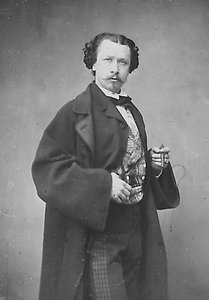
Carlos de Haes
1829 - 1898 , Belgium
Brzi pregled
- Full Name: Carlos Sebastián Pedro Hubert de Haes
- Nationality: Spanish
- Date Of Birth: 1829
- Date Of Death: 1898
- Place Of Birth: Brussels, Belgium
- Notable Artworks: ['La Canal de Mancorbo en los Picos de Europa']
- Artistic Movement Or Style: Realism
- Artists Who Influenced This Artist: ['Joseph Quinaux']
- Artists Or Movements Influenced By This Artist:
- Jaime Morera
- Aureliano de Beruete
- Darío de Regoyos